

If you've ever Googled how to layer your skincare products, chances are a Healthline skincare routine guide popped up near the top. There's a good reason for that. Healthline partners with board-certified dermatologists and medical reviewers to break down exactly which products go where, and why order matters more than most people realize. But reading through multiple articles, cross-referencing steps, and figuring out what actually applies to your skin type can eat up hours you don't have. That's exactly why we put this guide together.
Here, we've distilled Healthline's expert-backed approach into a clear AM and PM routine you can start using right away. You'll learn the correct sequence for cleansers, serums, moisturizers, and sunscreen in the morning, plus how your nighttime lineup should shift to prioritize repair and treatment. We also break down how to customize each step based on whether your skin runs oily, dry, combination, or sensitive.
At Beautifully Within, we believe the right routine only works when you have the right products to match, especially if your skin is reactive or easily irritated. That's why we carry skincare, beauty devices, and wellness products chosen with sensitive skin in mind. This guide will give you the knowledge; our shelves can help you put it into practice. Let's get into the step-by-step breakdown so you can build a routine that actually sticks.
What "Healthline skincare routine" really covers
When people search for a Healthline skincare routine, they often expect to land on one master guide with a numbered list they can copy exactly. What you actually find across Healthline's platform is a collection of expert-reviewed articles covering morning routines, night routines, skin-type-specific breakdowns, and ingredient guides, all reviewed by dermatologists before they go live. The value is real and well-grounded, but it takes effort to pull everything into a single usable system. That's exactly what this section does.
Where Healthline's guidance comes from
Healthline's skincare content operates within a formal medical review process, which separates it from most beauty content online. Dermatologists, licensed estheticians, and other healthcare professionals review articles before publication to check that the claims hold up against current research. That doesn't mean every recommendation fits every person's skin, but it does mean the foundation rests on clinical evidence rather than trends or paid partnerships.
Their editorial team also makes a point of citing primary sources. You'll regularly find references to peer-reviewed studies from databases like the National Institutes of Health, which lets you follow the evidence trail yourself if you want to dig deeper. For readers who want to understand the reasoning behind each product step, not just a list of instructions, that transparency adds real weight to the guidance.
The most useful thing Healthline does is explain the mechanism behind each step, so you understand why cleanser comes before serum, or why SPF is non-negotiable in any morning routine.
The core framework Healthline recommends
Across their published guides, Healthline returns to three consistent organizing principles: apply products from thinnest to thickest consistency, run separate morning and night routines based on your skin's different protective and restorative needs, and introduce any new actives one at a time to track how your skin responds. These aren't arbitrary preferences. Your skin absorbs lighter formulas more efficiently before heavier ones are applied, and layering in the wrong sequence can block ingredient absorption or trigger unnecessary irritation.
The framework also treats your skin type as the baseline, not an afterthought you address after buying products. Healthline segments recommendations across oily, dry, combination, sensitive, and normal skin, and each category carries specific product guidance and ingredient cautions. Oily skin types, for instance, get steered away from heavy occlusives in the morning, while dry skin types are consistently told to layer humectants like hyaluronic acid before applying a richer moisturizer to seal everything in.
What the routine includes at a glance
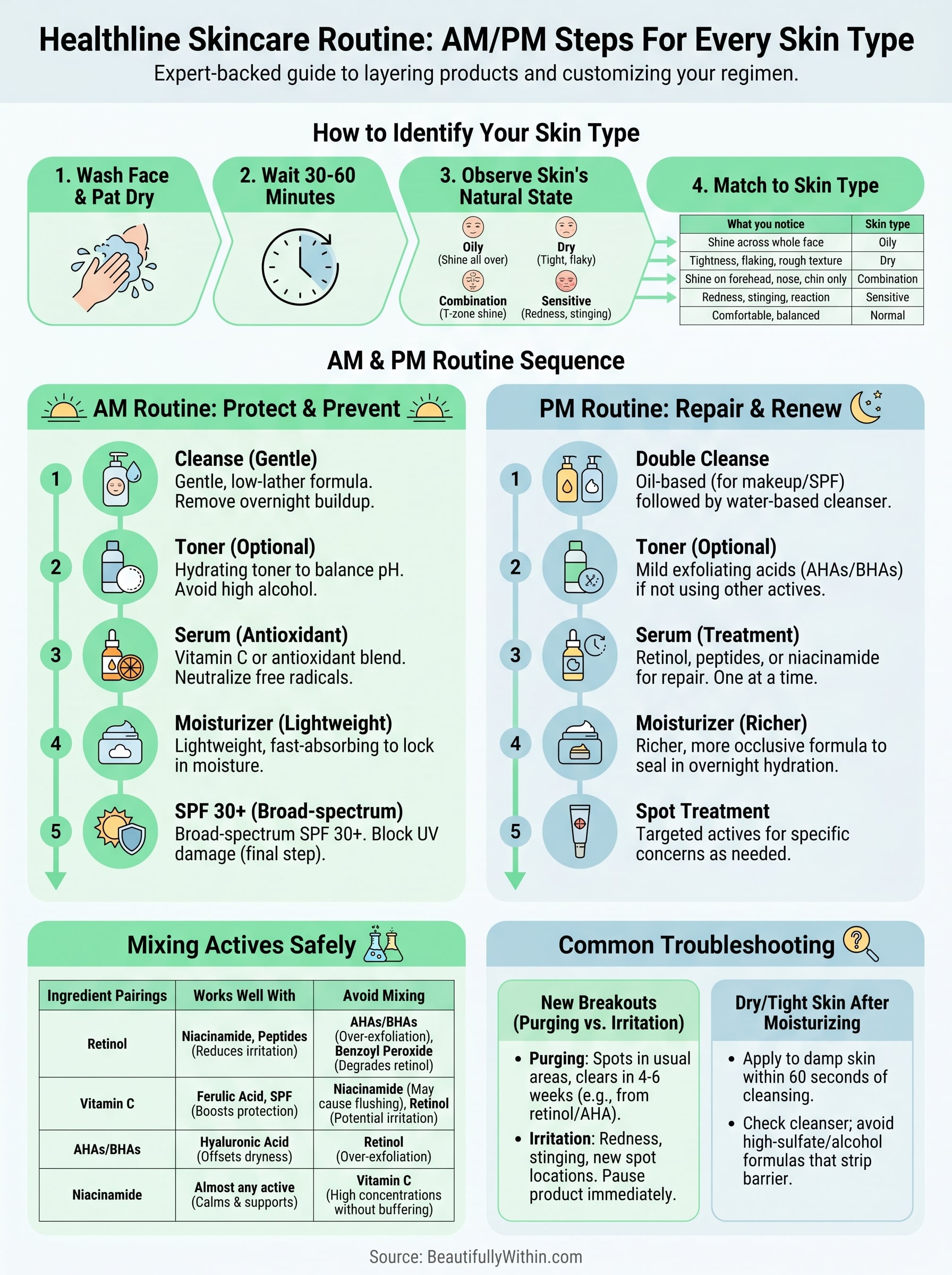
Before going step by step, it helps to see the full picture of what Healthline's framework covers across both routines. Here's a clear breakdown of the core steps for AM and PM:
| Step | AM | PM |
|---|---|---|
| Cleanser | Gentle, low-lather formula | Double cleanse if wearing makeup or SPF |
| Toner | Optional, hydrating | Optional, mild exfoliating acids |
| Serum | Vitamin C or antioxidant blend | Retinol, peptides, or niacinamide |
| Moisturizer | Lightweight, fast-absorbing | Richer, more occlusive formula |
| SPF | Broad-spectrum SPF 30 or higher | Not needed |
| Spot treatment | As needed | Targeted actives for repair |
This split captures the core difference between the two routines: mornings prioritize protection, and nights prioritize repair. Every step outlined in this guide maps directly to one of these categories, so you can build your routine with a clear understanding of what each product is actually doing for your skin.
Step 1. Start with your skin type and base
Before you buy a single product or follow any routine, you need to know what skin type you're working with. Every recommendation within the Healthline skincare routine framework is built on this foundation. If you skip this step, you risk buying products that conflict with your skin's actual needs, which means wasted money and unnecessary breakouts, dryness, or irritation.
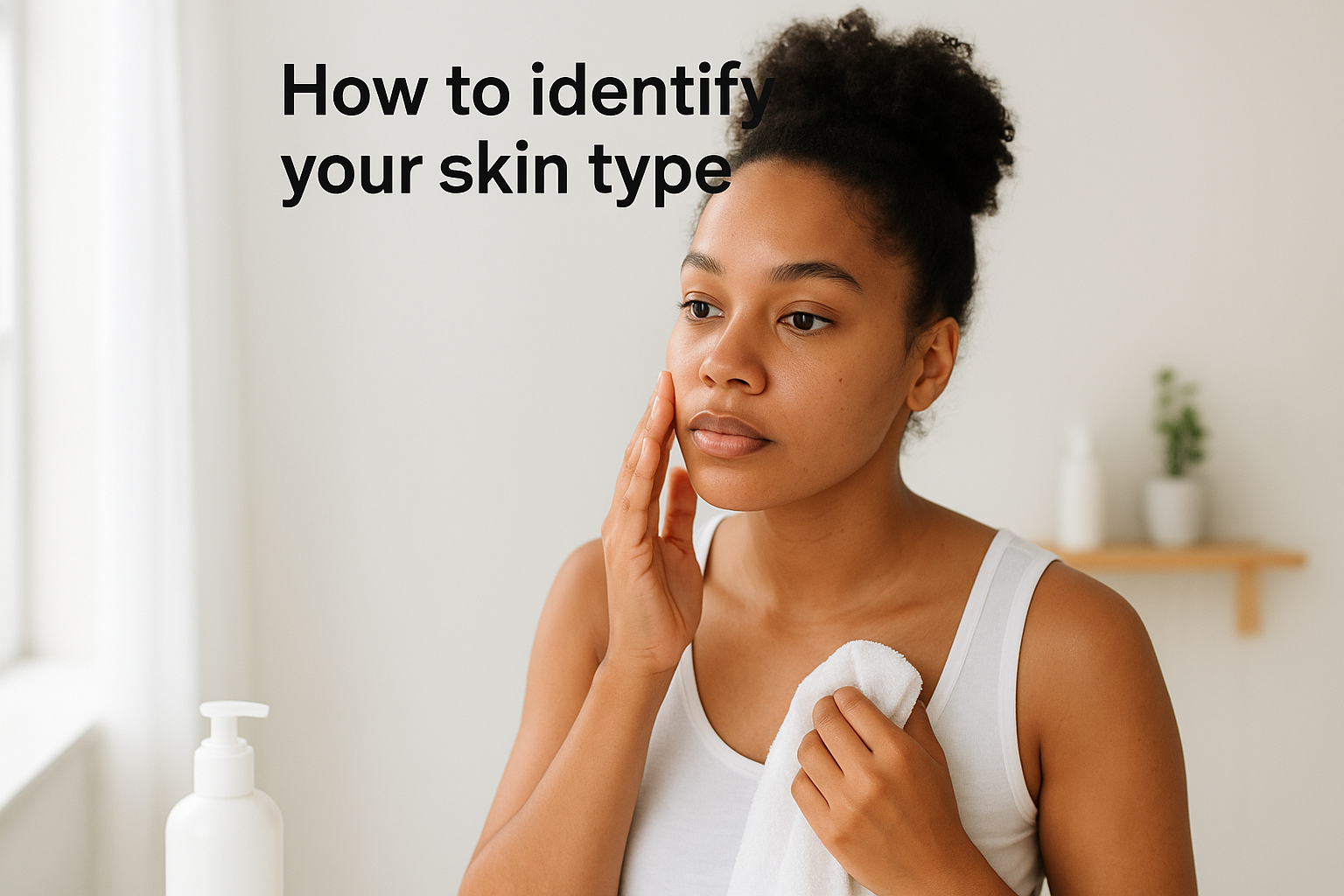
How to identify your skin type
The most reliable at-home method is the bare-face test. Wash your face with a gentle cleanser, pat dry, and wait 30 to 60 minutes without applying anything. Then observe what your skin does on its own. Use the table below to match what you see to your likely skin type:
| What you notice | Skin type |
|---|---|
| Shine across your whole face | Oily |
| Tightness, flaking, or rough texture | Dry |
| Shine on forehead, nose, and chin only | Combination |
| Redness, stinging, or visible reaction | Sensitive |
| Comfortable, balanced, no shine or tightness | Normal |
Your skin type can also shift with seasonal or hormonal changes, or with shifts in your diet and stress levels. Check in with your skin every few months rather than treating your skin type as a fixed label, since what works in winter may not serve you once the weather warms up.
Getting your skin type right before building your routine prevents the most common mistake people make: buying products for the wrong skin profile.
How to choose your base products
Once you know your skin type, your two base products are your cleanser and your moisturizer. These anchor every routine, and they need to match your skin type before you add anything else. Oily skin does well with gel or foaming cleansers and lightweight, oil-free moisturizers. Dry skin benefits from cream or milk cleansers and richer formulas containing ceramides or shea butter. Combination skin often responds well to a gentle, low-lather cleanser and a medium-weight moisturizer that won't overload your oilier zones.
Sensitive skin requires the shortest ingredient lists possible. Look for fragrance-free, alcohol-free formulas with calming ingredients like centella asiatica, oat extract, or allantoin. Once your base is solid, every additional product you layer on top will absorb better and work more effectively.
Step 2. Do the morning routine in order
The morning routine has one primary goal: protect your skin from the oxidative stress, UV exposure, and environmental pollutants it encounters throughout the day. Sequence matters here because each product either primes the skin for what comes next or seals in what came before. Follow the order below and your products will absorb the way they're designed to.
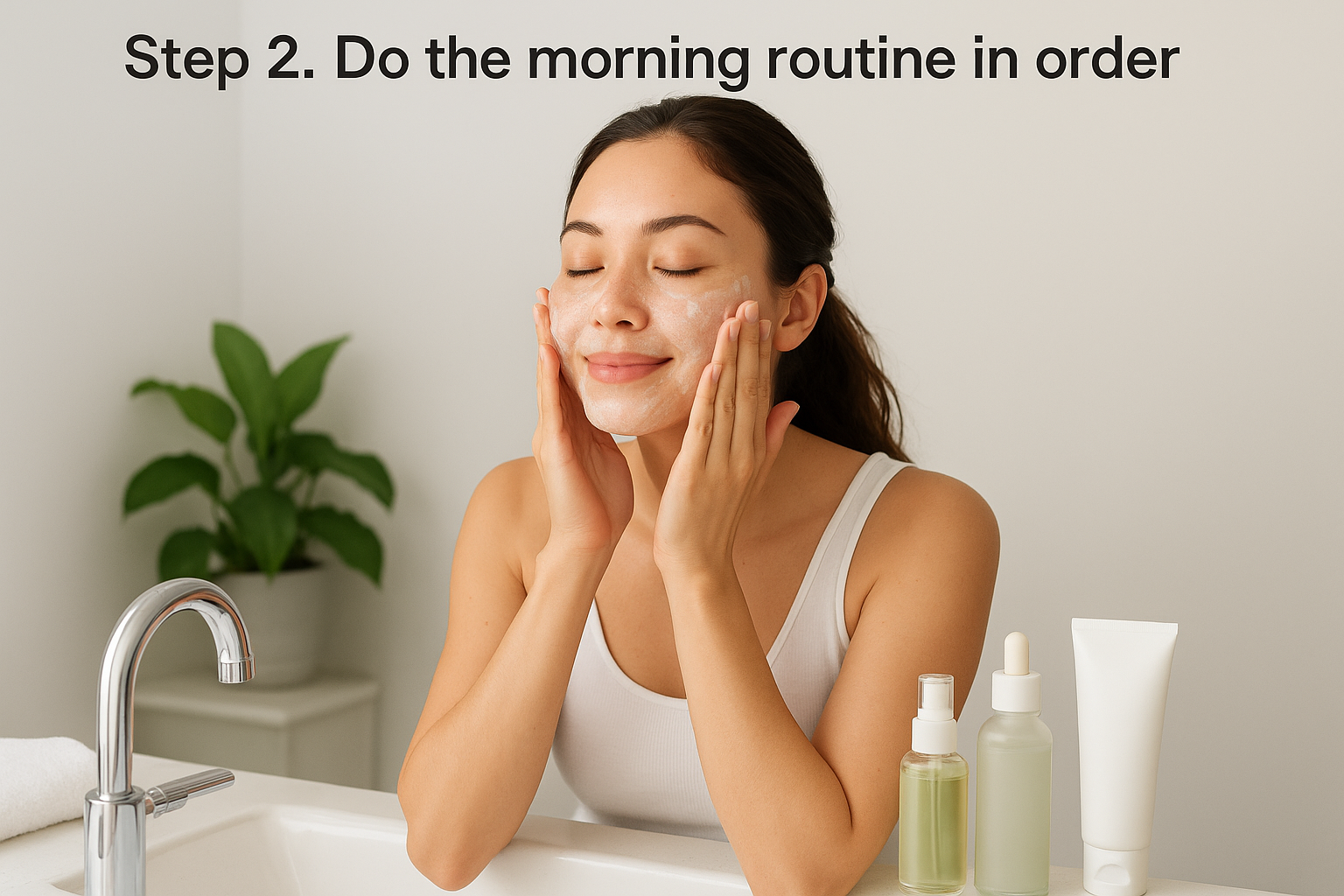
Cleanse and prep
Start with a gentle, non-stripping cleanser suited to your skin type. In the morning, your skin hasn't been exposed to much, so a low-lather formula works better than anything aggressive. Apply it to damp skin, massage for 30 seconds, then rinse with lukewarm water since hot water strips the moisture barrier faster than most people expect.
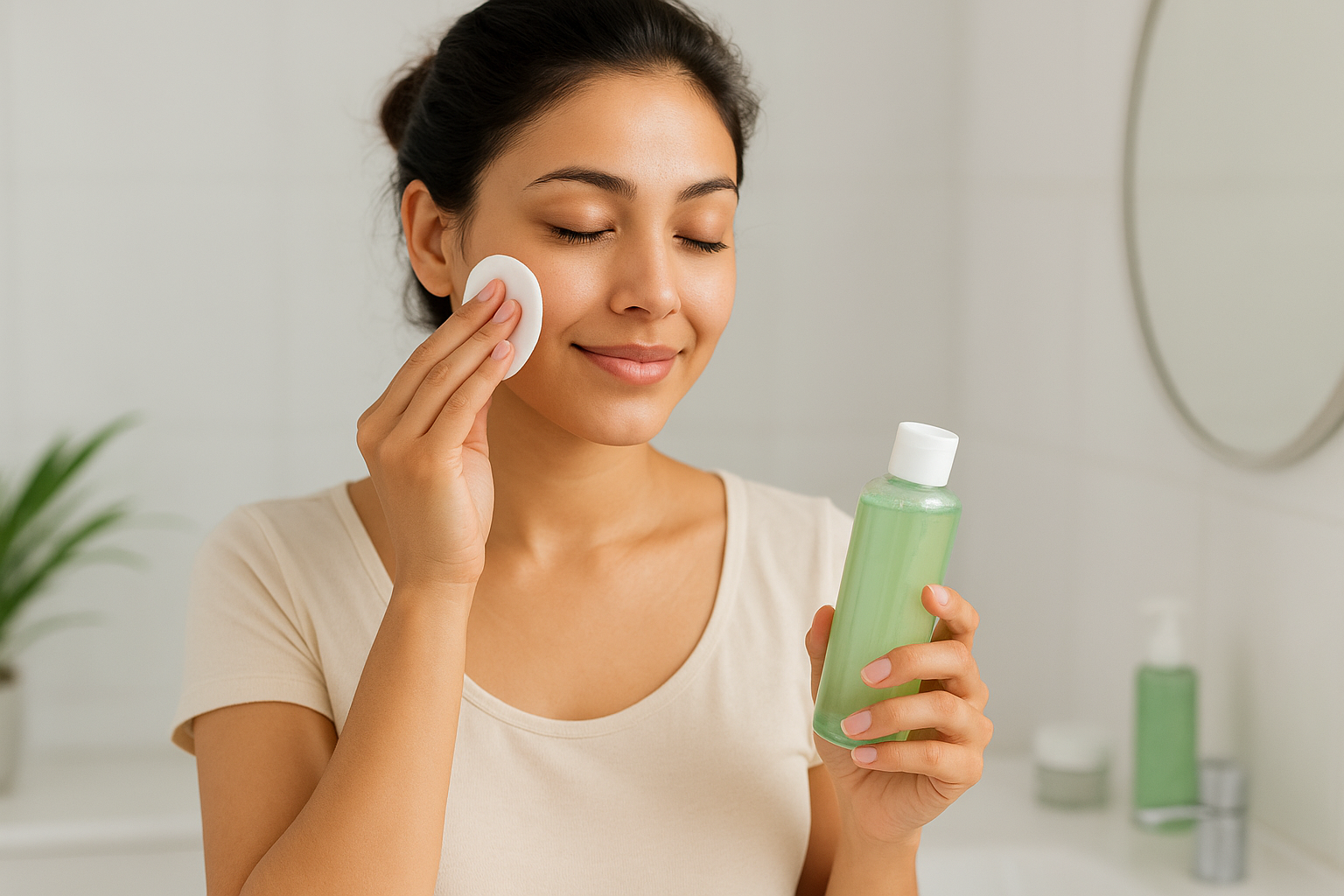
After cleansing, a toner is optional but worth using if your skin runs dry. Apply a hydrating toner with a cotton pad or press it into your skin with clean hands. Avoid anything with a high alcohol content in the morning as it can dehydrate your skin before you've started protecting it.
Apply your serum
Your vitamin C or antioxidant serum goes on next, while the skin is still slightly primed from the toner step. Vitamin C is the most well-researched morning serum ingredient for this purpose because it neutralizes free radicals from UV exposure and pollution and supports your sunscreen's effectiveness when both are applied together. Press 2 to 4 drops into your skin and allow 60 seconds to absorb before moving on.
If you use vitamin C in the morning, store the bottle in a dark, cool place since light and heat degrade the formula quickly.
Lock in moisture and apply SPF
Apply your moisturizer while your skin still feels slightly damp from the serum. This approach seals in hydration rather than leaving it to evaporate. Once the moisturizer absorbs, finish with a broad-spectrum SPF 30 or higher.
The healthline skincare routine framework is consistent on this point: sunscreen is the final morning step, applied after moisturizer, every single day. Use about a quarter teaspoon for your face alone, and don't forget your neck and the backs of your hands. Here's a quick reference for the full AM sequence:
| Order | Product | Key function |
|---|---|---|
| 1 | Cleanser | Remove overnight buildup |
| 2 | Toner (optional) | Hydrate and balance pH |
| 3 | Vitamin C serum | Antioxidant protection |
| 4 | Moisturizer | Strengthen skin barrier |
| 5 | Sunscreen SPF 30+ | Block UV damage |
Step 3. Do the night routine in order
Your skin does its most active repair work while you sleep, which is why the night routine looks different from the morning one. Instead of focusing on protection, the evening sequence focuses on clearing out what built up during the day and delivering ingredients your skin can absorb without UV interference. Follow the steps below in order and you give your skin everything it needs to recover overnight.
Remove the day first
The healthline skincare routine framework is consistent on one point: nighttime always starts with thorough cleansing. If you wore sunscreen, makeup, or both, a double cleanse works better than a single wash. Start with a cleansing balm or micellar water to break down oil-based products on the surface. Then follow with your regular water-based cleanser to clear anything left behind. This two-pass method prevents pore congestion and ensures your treatment products absorb into clean skin rather than sitting on top of residue.
Skipping the double cleanse when you've worn SPF means your active ingredients are competing with a film of sunscreen, which reduces how well they work.
If you skipped sunscreen and makeup that day, a single gentle cleanse is enough. Don't over-cleanse at night just because you feel like your skin needs it. Stripping the skin's moisture barrier creates problems that your moisturizer alone can't undo overnight.
Apply your treatment serum
Your night serum is where you place your most active ingredients. Retinol, niacinamide, and peptides are the most common options in this step, and they belong here because UV exposure degrades many of these ingredients, especially retinol. Apply one serum at a time, press it gently into slightly damp skin, and allow it to absorb fully before moving on. Start with a low concentration if you're new to any of these ingredients, since irritation is easier to prevent than to fix after the fact.
| Night serum ingredient | Main benefit | Good for |
|---|---|---|
| Retinol | Cell turnover, fine lines | Aging, uneven texture |
| Niacinamide | Brightening, pore appearance | Oily, combination, sensitive |
| Peptides | Firmness, barrier support | Dry, mature skin |
Seal with a richer moisturizer
Your final night step is a moisturizer, and this is where you go slightly heavier than your morning formula. Dry skin benefits from a cream with ceramides or hyaluronic acid to lock in overnight hydration. Oily skin can still use a moisturizer here, just choose a lighter gel-cream so you're not blocking pores while you sleep. Apply it as the last step so it seals everything underneath and gives the barrier ingredients time to work.
Step 4. Add treatment steps safely
Treatment steps, which include targeted actives like retinol, exfoliating acids, and spot treatments, are the part of the healthline skincare routine framework where most people run into trouble. The temptation is to add everything at once, especially when a product promises results. But your skin can only process so many new variables at the same time, and piling on actives before your skin adjusts leads to inflammation, peeling, and a frustrating cycle of starting over. The safe approach is slower, but it works.
Introduce one product at a time
When you add a new treatment to your routine, use it alone for at least two to four weeks before introducing anything else. This window gives your skin time to respond and gives you accurate information about what's working and what's causing a reaction. If you add three products in the same week and break out, you won't know which one caused it.
Start new treatments on just two or three nights per week, then increase frequency only after your skin shows no signs of irritation.
A practical schedule for adding retinol looks like this:
| Week | Frequency | What to watch for |
|---|---|---|
| 1 to 2 | Two nights per week | Redness, flaking, tightness |
| 3 to 4 | Three nights per week | Fading irritation, improving texture |
| 5 and beyond | Every other night or nightly | Tolerance confirmed, continue use |
Use the same gradual approach with chemical exfoliants like AHAs and BHAs, since they carry the same risk of over-exfoliation if you push too fast.
Know when to pull back
Your skin gives clear signals when a treatment is too much too soon. Persistent redness that doesn't calm down within a day, stinging that lasts after application, or new breakouts in areas you don't normally get them all point to a product that's disrupting your barrier rather than helping it. When you see those signs, cut the active back to once a week or pause it entirely for a few days while you stick to your cleanser and moisturizer only.
Reintroducing the product after a break at a lower concentration or reduced frequency is usually more effective than pushing through the irritation. A compromised skin barrier absorbs active ingredients poorly anyway, so less product applied to healthy skin consistently outperforms more product applied to reactive skin.
Step 5. Layer actives and avoid bad combos
Knowing which active ingredients work together and which ones fight each other is one of the most practical skills you can build for any healthline skincare routine. The wrong combination doesn't just reduce effectiveness; it can break down your skin barrier, cause chemical burns, or push your skin into a reactive state that takes weeks to settle. Before you layer anything, understand the basic rules of ingredient compatibility so your actives actually deliver results.
Which actives work well together
Some ingredient pairings genuinely enhance each other's performance when applied correctly. Niacinamide calms redness and supports the skin barrier, which makes it an ideal companion for retinol since it helps offset the early irritation that retinol often brings. Hyaluronic acid pairs well with almost everything because it draws water into the skin rather than reacting with other compounds. Vitamin C and ferulic acid work together to stabilize the vitamin C molecule and extend its antioxidant activity throughout your morning routine.
Pairing hyaluronic acid under any active serum is one of the simplest ways to reduce irritation while keeping moisture levels stable.
| Ingredient | Works well with | Why |
|---|---|---|
| Retinol | Niacinamide, peptides | Reduces irritation, supports barrier |
| Vitamin C | Ferulic acid, SPF | Stabilizes, boosts UV protection |
| AHAs/BHAs | Hyaluronic acid | Offsets drying effect |
| Niacinamide | Almost any active | Calms and supports barrier |
Which combinations to avoid
Certain pairings cancel each other out or cause direct skin damage, and the most common offenders appear in the same product category. Avoid using vitamin C and niacinamide together in the same step; when combined at high concentrations without buffering, they can produce a compound that causes skin flushing. Retinol and AHAs or BHAs used in the same routine and on the same night create too much cell turnover at once, which leaves the skin raw and sensitized. Benzoyl peroxide and retinol also conflict directly since benzoyl peroxide oxidizes and degrades retinol on contact, making both products less effective.
The safest approach is to alternate actives across nights rather than stacking them in a single session. Use retinol on Monday, Wednesday, and Friday; use your AHA on Tuesday and Thursday. This keeps your actives separated, your skin barrier intact, and your results steady rather than reactive.
Step 6. Adjust the routine for each skin type
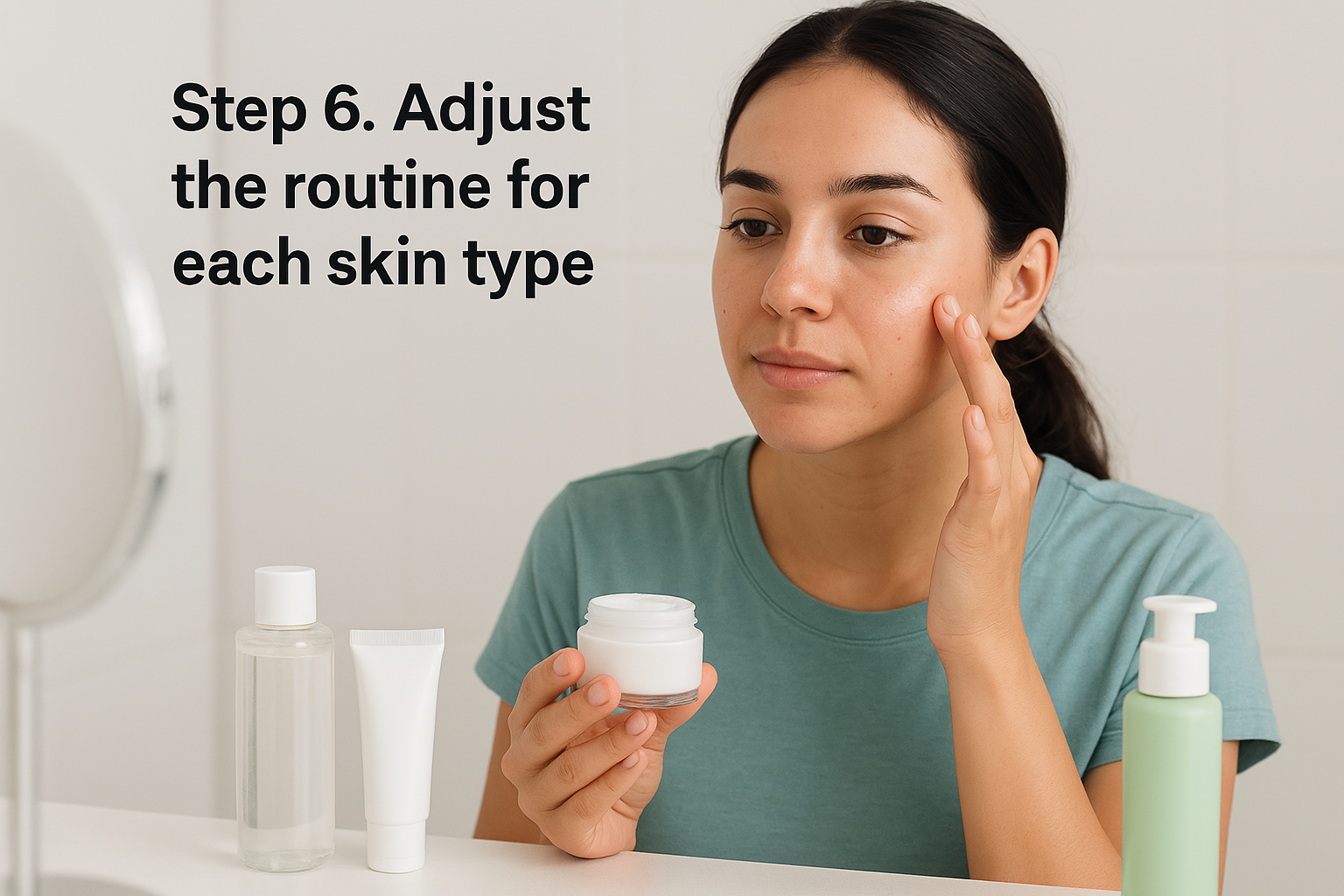
No single routine fits every person equally well, and the healthline skincare routine framework is clear on this: your skin type determines which products belong in each step and which ones you should skip entirely. The base sequence stays the same across all skin types, but the formulas you select within each step should match what your skin actually needs. Use the guidance below to fine-tune your AM and PM routines so every product you apply works with your skin rather than against it.
Oily and combination skin
Your priority with oily or combination skin is controlling excess sebum without stripping the barrier. Use a gel or foaming cleanser twice daily and skip heavy cream moisturizers in favor of lightweight, water-based formulas or oil-free gel-creams. In the morning, a mattifying or non-comedogenic SPF works better than a tinted moisturizer with SPF since it won't add extra weight to skin that already produces its own oil. At night, niacinamide is your best treatment serum because it regulates sebum production and reduces the appearance of enlarged pores over consistent use.
For combination skin, apply a lighter moisturizer on your T-zone and a slightly richer one on your cheeks rather than using the same formula everywhere.
| Routine step | Oily/Combination choice |
|---|---|
| Cleanser | Gel or foaming, low-lather |
| Moisturizer | Oil-free, lightweight gel-cream |
| Serum | Niacinamide or salicylic acid |
| SPF | Non-comedogenic, mattifying |
Dry and sensitive skin
Dry skin needs every step to focus on moisture retention and barrier support. Switch your cleanser to a cream or milk formula that cleans without pulling moisture from the surface. Layer a humectant serum like hyaluronic acid before your moisturizer so it draws water into the skin, then seal with a ceramide-rich cream to keep it there. For sensitive skin, cut your routine to the fewest possible steps and keep ingredient lists short. Fragrance-free and alcohol-free products are non-negotiable here, and you should introduce any new product one at a time with at least two weeks between additions.
| Routine step | Dry/Sensitive choice |
|---|---|
| Cleanser | Cream or milk, fragrance-free |
| Serum | Hyaluronic acid, oat extract |
| Moisturizer | Ceramide-rich cream |
| SPF | Mineral formula, sensitive-skin rated |
Step 7. Troubleshoot common routine problems
Even when you follow the healthline skincare routine framework closely, your skin doesn't always cooperate right away. Most problems you run into in the first few weeks trace back to one of a small set of causes: the wrong product for your skin type, too many actives introduced too fast, or a step that's out of order. Before you scrap your entire routine, work through the specific issues below to find the actual source of the problem.
Your skin is breaking out after starting a new routine
New breakouts after starting a routine are common and fall into two separate categories: purging and genuine irritation. Purging happens when a cell-turnover ingredient like retinol pushes existing congestion to the surface faster than usual. It typically appears in spots where you normally break out, and it clears on its own within four to six weeks. Genuine irritation produces breakouts in new locations, often alongside redness or stinging, and points to a product that's disrupting your barrier.
If breakouts appear in areas you've never had them before, that's a signal to pause the newest product you added and give your skin a week to settle.
Use this decision table to figure out which situation applies to you:
| What you observe | Likely cause | Action |
|---|---|---|
| Breakouts in familiar spots, no redness | Purging from retinol or AHA | Continue, monitor for 4 to 6 weeks |
| Breakouts in new spots with redness | Irritation from a product | Pause newest addition immediately |
| Breakouts across entire face | Over-cleansing or heavy occlusives | Simplify routine, switch cleanser |
Your skin feels dry or tight even after moisturizing
Tightness after moisturizing usually means you're applying your moisturizer to dry skin instead of slightly damp skin, which reduces how much hydration it can actually deliver. Try pressing your moisturizer in within 60 seconds of rinsing your cleanser so the formula seals in residual moisture rather than sitting on a dry surface. If that doesn't resolve the issue within a week, check your cleanser first. A high-sulfate or high-alcohol formula strips more from the skin than any moisturizer can replace, and no amount of layering fixes a routine that strips faster than it replenishes. Switch to a cream or low-lather cleanser and reassess from there.
Next steps
You now have everything you need to build a healthline skincare routine that actually works for your skin type. Start with the bare-face test to confirm your skin type, lock in a cleanser and moisturizer that match it, then build your AM and PM sequences in the correct order. Introduce one active at a time, give it two to four weeks, and adjust based on what your skin tells you. That simple process eliminates most of the frustration people run into when routines stop working.
Products matter just as much as sequence. If you need a solid starting point, check out the premium skincare collection at Beautifully Within, where you'll find hydrating serums, gentle cleansers, and moisturizers suited for sensitive and reactive skin. You can also browse our beauty tools to take your routine further with professional-grade devices built for home use.
✨ Shop the Look at Beautifully Within
Loved this guide? Discover our hand-picked picks that pair perfectly with your routine:
- 👉 Fresh Start Hydrating Cleanser & Toner Duo — Skincare Set
- 👉 Freeze-Dried Brightening Facial Treatment — Skincare Set
- 👉 Ayurvedic Facial Cleansing & Mask Ritual Kit — Skincare Set
- 👉 Korean Moisturizing & Repair Skincare Gift Set — Skincare Set
New customer? Get 15% off orders $50+ with code WITHIN15 — plus free shipping over $75.
0 comments