

Finding out you're pregnant changes everything, including what you can put on your skin. Your favorite retinol serum? Suddenly off-limits. That acne treatment that finally worked? Time to check the label. Building a pregnancy-safe skincare routine doesn't mean abandoning effective skincare altogether, but it does require knowing exactly which ingredients to swap out and which ones remain perfectly safe for you and your baby.
The confusion is real. Conflicting advice floods the internet, and even well-meaning friends share outdated information. Meanwhile, pregnancy hormones are doing their own thing, triggering breakouts, melasma, or unexpected dryness. You deserve a clear, step-by-step morning and evening routine that addresses these concerns without any guesswork about ingredient safety.
At Beautifully Within, we believe skincare is self-care, and that belief doesn't pause during pregnancy. Our focus on products suitable for sensitive skin and overall well-being aligns perfectly with what expectant mothers need: gentle, effective formulas that deliver results without compromise. This guide walks you through exactly how to build your AM and PM routines, which ingredients belong on your avoid list, and dermatologist-recommended options to keep your skin glowing throughout all three trimesters.
Why pregnancy can change your skin and sensitivity
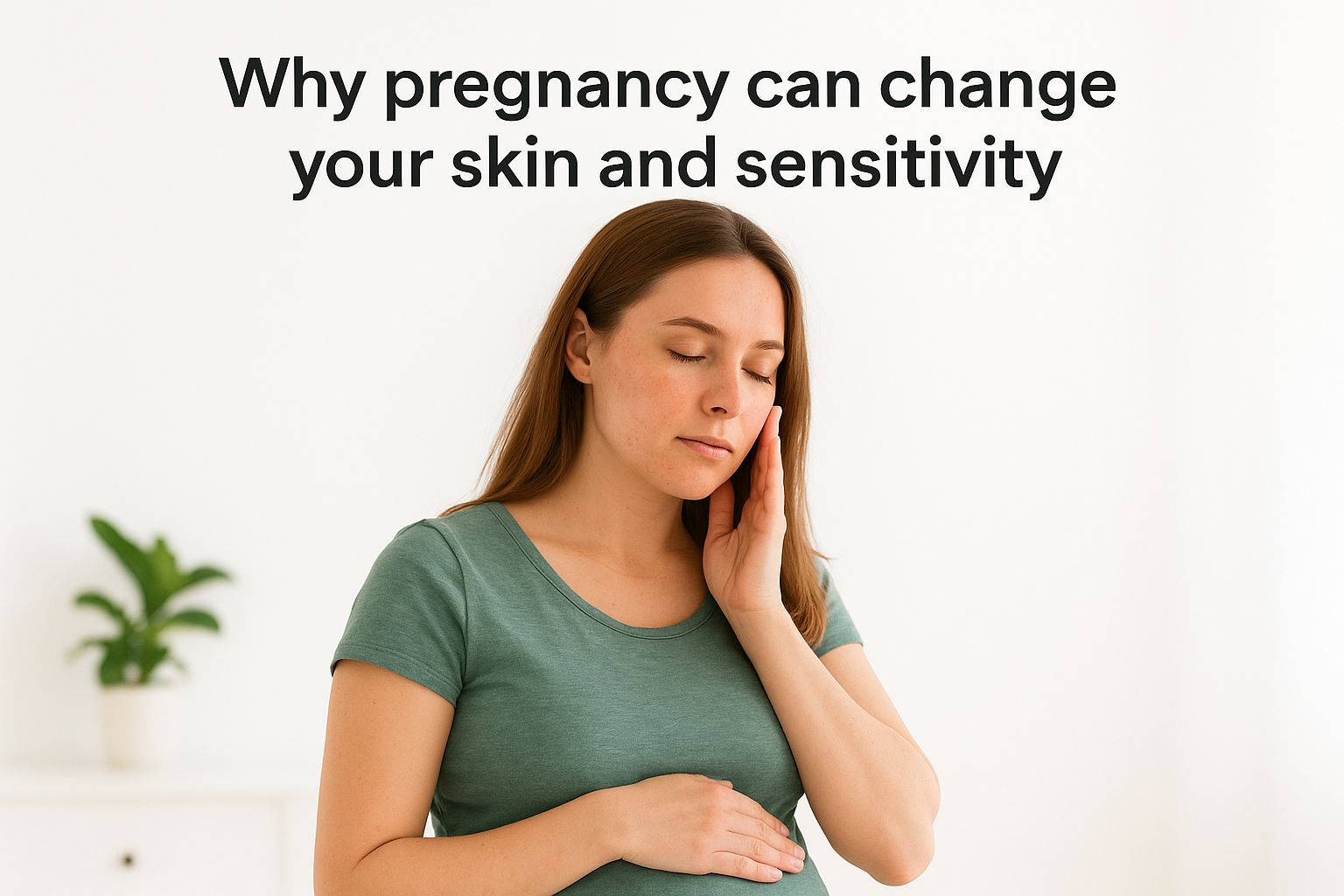
Your body produces up to 50 times more estrogen and progesterone during pregnancy than at any other time in your life. These hormonal surges don't just prepare your body for childbirth; they fundamentally alter how your skin behaves, how it responds to products, and what it can tolerate. Understanding these changes helps you adjust your pregnancy-safe skincare routine before problems escalate.
Hormonal shifts that trigger skin changes
Estrogen increases blood flow and oil production, which explains that pregnancy glow everyone talks about. Your skin holds more moisture, blood vessels dilate, and you might notice a flushed appearance across your cheeks and chest. This sounds purely positive until the flip side emerges: those same elevated estrogen levels can trigger melasma (pregnancy mask), dark patches that appear on your forehead, cheeks, and upper lip when sun exposure combines with hormonal fluctuation.
Progesterone takes a different route. This hormone stimulates sebaceous glands to produce excess oil, which clogs pores and triggers breakouts even if you never struggled with acne before. Your skin's pH balance shifts slightly alkaline, compromising your natural protective barrier and making you more vulnerable to irritation from products that never bothered you previously.
Pregnancy hormones don't just change your skin temporarily; they can rewire your sensitivity thresholds for months after delivery.
Common pregnancy skin concerns you'll likely face
Acne flares affect nearly 50% of pregnant women, typically appearing during the first and second trimesters when progesterone peaks. These breakouts concentrate around your jawline, chin, and cheeks, presenting as deeper, more inflammatory lesions than typical hormonal acne. Your usual benzoyl peroxide or salicylic acid treatments might now sit on your avoid list, forcing you to find gentler alternatives.
Dryness and itching intensify as pregnancy progresses. Your body diverts moisture and nutrients to support fetal development, leaving your skin depleted. Stretch marks emerge not just from expansion but from the breakdown of collagen and elastin fibers, particularly when skin lacks adequate hydration. The itching can become severe, especially across your abdomen and breasts where skin stretches most dramatically.
Spider veins and increased pigmentation become visible as blood volume increases by 50% throughout pregnancy. You might notice darkening of existing moles, freckles, and the linea nigra (dark vertical line down your belly). These changes stem from melanocyte-stimulating hormone, which ramps up pigment production across your entire body.
Why your sensitivity threshold drops
Your immune system deliberately suppresses itself during pregnancy to prevent your body from rejecting the fetus as foreign tissue. This immunological shift means your skin reacts more dramatically to potential irritants, allergens, and active ingredients that previously caused zero problems. Products with fragrance, essential oils, or high concentrations of acids suddenly trigger redness, burning, or contact dermatitis.
Blood vessel dilation makes your skin more reactive to temperature changes and topical ingredients. Your capillaries sit closer to the surface, explaining why your face flushes easily and why certain products cause visible redness within minutes of application. This vascular sensitivity extends to sun exposure, making your skin burn faster and darker spots develop more readily.
Transdermal absorption increases slightly during pregnancy due to enhanced blood flow and altered skin barrier function. While your skin doesn't become a sponge that absorbs every molecule you apply, this heightened permeability explains why dermatologists recommend avoiding certain ingredients entirely. Substances like retinoids absorb in small but potentially significant amounts, creating unnecessary risk when safer alternatives exist.
Your ingredient ground rules: safe, avoid, limit
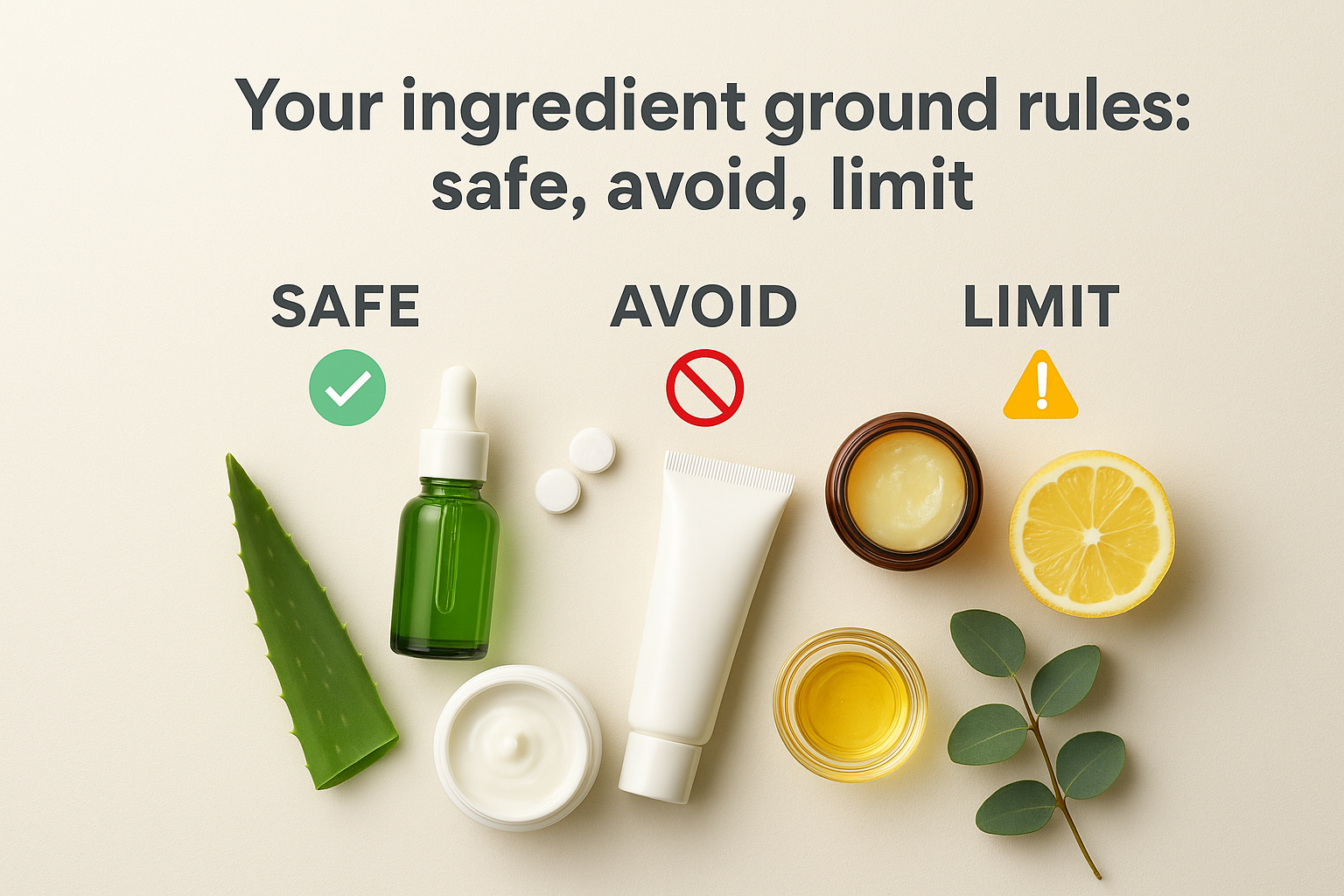
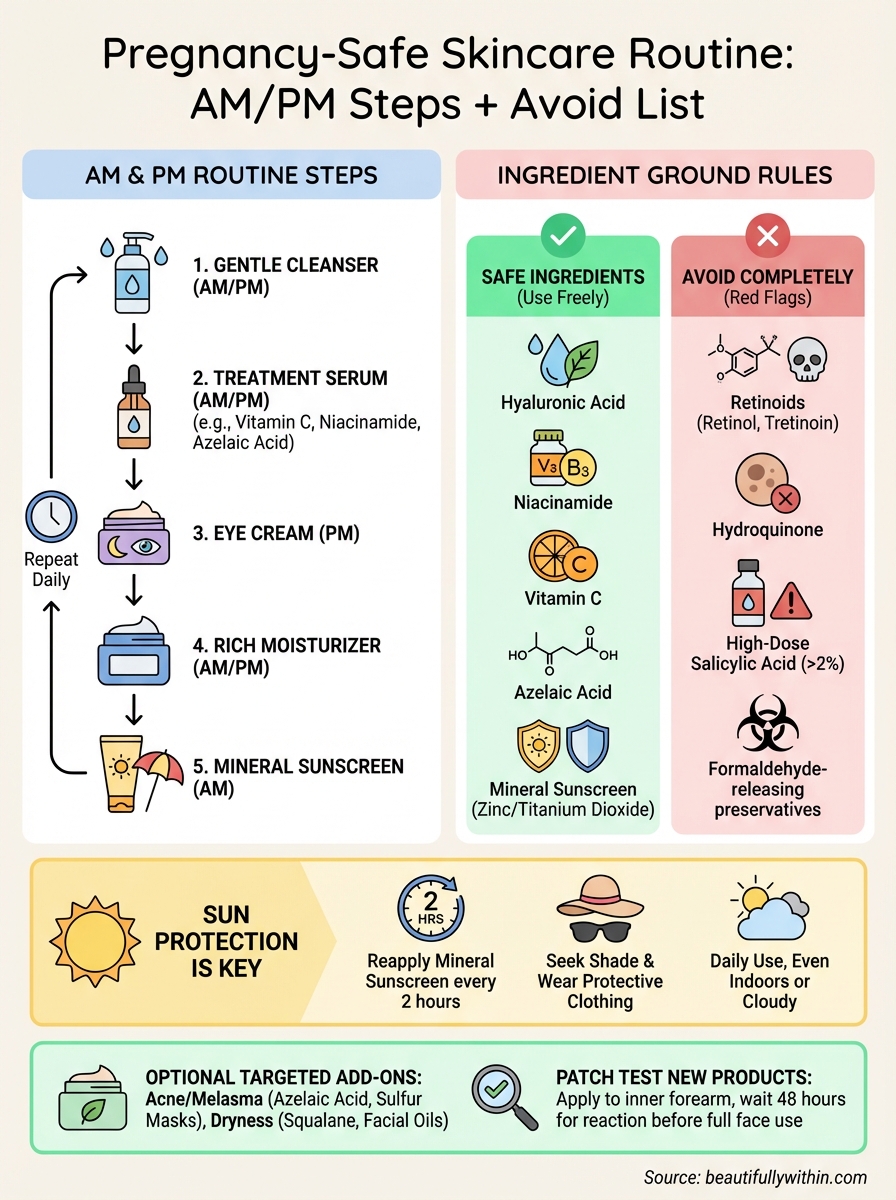
Building a pregnancy-safe skincare routine starts with knowing exactly which ingredients belong in your medicine cabinet and which ones need to disappear immediately. The confusion surrounding ingredient safety stems from limited human studies (for obvious ethical reasons), but dermatologists have established clear guidelines based on animal studies, case reports, and decades of clinical observation. These three categories give you a framework for every product decision you'll make over the next nine months.
Safe ingredients you can use freely
Your core routine can revolve around these dermatologist-approved ingredients that pose zero known risk during pregnancy. Hyaluronic acid draws moisture into your skin without any systemic absorption, making it perfect for combating pregnancy dryness. Niacinamide (vitamin B3) reduces inflammation, controls oil production, and fades dark spots through topical action alone, with no evidence of harm in concentrations up to 10%.
Vitamin C (L-ascorbic acid) brightens your complexion and builds collagen while remaining completely pregnancy-safe in serums and moisturizers. Azelaic acid treats both acne and melasma without the risks associated with retinoids or hydroquinone. Glycolic acid and lactic acid in concentrations under 10% exfoliate dead skin cells safely, though you should avoid chemical peels that use higher concentrations requiring professional application.
Mineral sunscreens containing zinc oxide or titanium dioxide sit on your skin's surface rather than absorbing into your bloodstream, making them the gold standard for pregnancy sun protection. Peptides, ceramides, and squalane support your skin barrier without any systemic effects, and even bakuchiol (the plant-based retinol alternative) shows promise for pregnancy use, though research remains limited.
Ingredients to avoid completely
Retinoids (retinol, tretinoin, adapalene, tazarotene) top every dermatologist's avoid list because oral retinoids like isotretinoin cause severe birth defects, and while topical versions absorb less, no safe threshold exists. Hydroquinone for dark spots absorbs at 35 to 45% systemically, an unacceptably high rate that puts it firmly off-limits.
Salicylic acid requires careful distinction: topical spot treatments under 2% receive mixed opinions, but oral salicylates (aspirin) cause documented pregnancy complications, leading most dermatologists to recommend avoiding all forms. Formaldehyde and formaldehyde-releasing preservatives (DMDM hydantoin, diazolidinyl urea) present unnecessary exposure to a known carcinogen.
Your safest approach treats any ingredient that generates debate or conflicting advice as an automatic avoid during pregnancy.
Ingredients to use with caution
Benzoyl peroxide for acne sits in a gray zone; concentrations under 5% used sparingly on specific breakouts rather than all-over application generally receive approval, though some dermatologists prefer you skip it entirely. Chemical sunscreens (oxybenzone, avobenzone, octinoxate) have raised concerns about hormonal disruption, making mineral alternatives the better choice even though evidence of harm remains inconclusive.
Essential oils require individual evaluation because some (like rosemary and sage) contain compounds that may trigger uterine contractions in high concentrations, while others pose no documented risk. Your best strategy sticks to fragrance-free products during pregnancy to sidestep this entire category of uncertainty.
Step 1. Build your pregnancy-safe AM routine
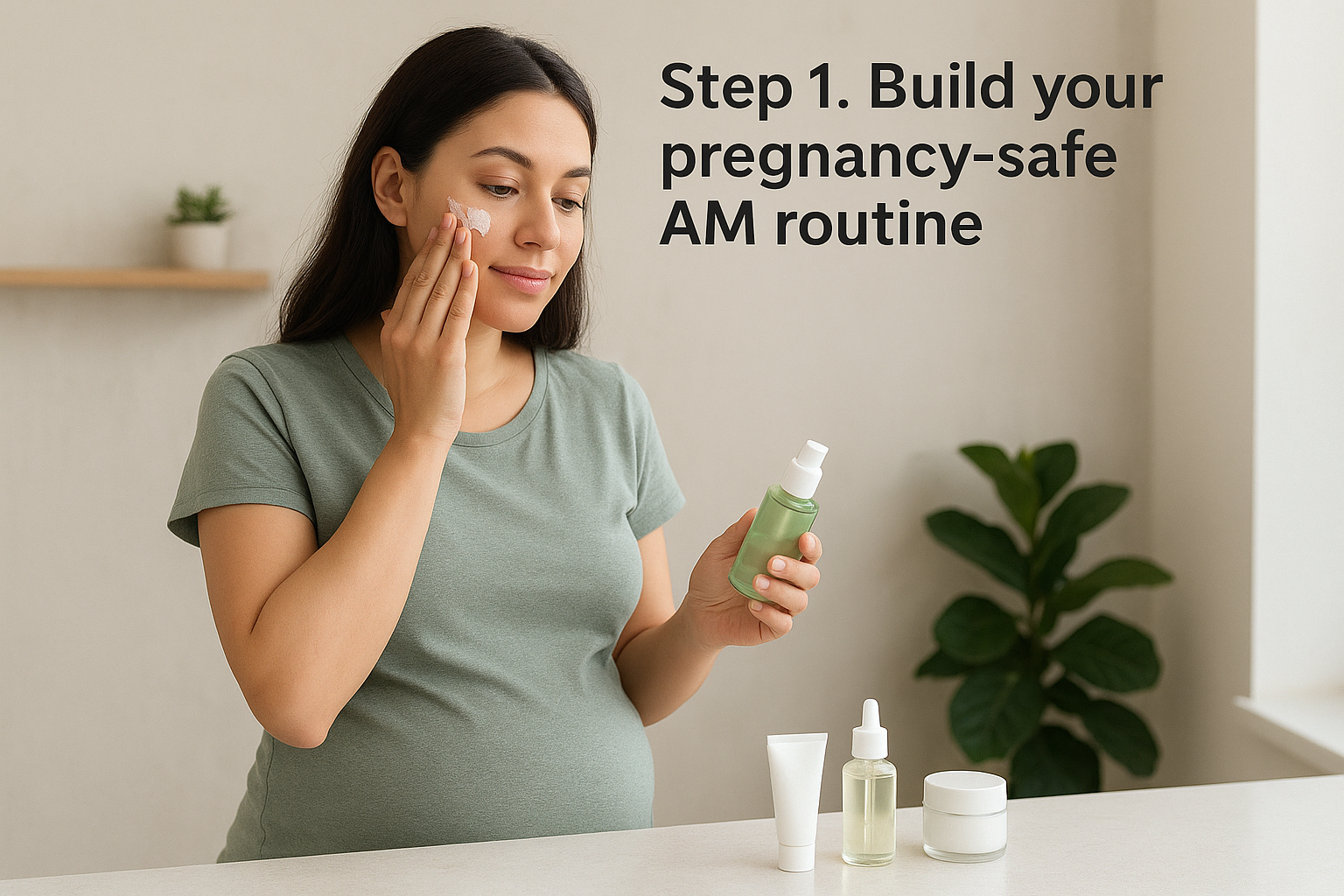
Your morning pregnancy-safe skincare routine protects your skin from environmental damage while addressing hormonal changes that peak during daytime hours. This routine focuses on hydration, antioxidant protection, and broad-spectrum sun defense, creating a barrier against the UV exposure that triggers melasma and the free radicals that accelerate aging. You need exactly four steps, applied in a specific order that maximizes absorption and effectiveness.
Your complete four-step sequence
Start with a gentle, pH-balanced cleanser that removes overnight oil buildup without stripping your skin barrier. Your face produces excess sebum during sleep thanks to elevated progesterone, so you need actual cleansing rather than just a water rinse. Choose cream or gel formulas that contain ceramides or glycerin, avoiding any products with salicylic acid, retinol, or fragrance on the ingredient list.
Apply your treatment step immediately after cleansing, while your skin remains slightly damp. A vitamin C serum (10 to 20% L-ascorbic acid) brightens dark spots and builds collagen, or swap in a niacinamide serum if vitamin C irritates your newly sensitive skin. Press three to four drops between your palms, then pat gently across your face and neck rather than rubbing, which can inflame pregnancy-reactive skin.
Your AM routine succeeds or fails based on consistent sunscreen application, not the serums or treatments you layer underneath.
Lock in your serum with a lightweight moisturizer containing hyaluronic acid to draw water into your skin and ceramides to seal your barrier. Pregnancy dryness intensifies throughout the day as your body diverts hydration to support fetal development, so this step prevents the tight, uncomfortable feeling that emerges by afternoon. Wait two full minutes for absorption before moving to sunscreen.
Finish with mineral sunscreen (SPF 30 or higher) containing zinc oxide or titanium dioxide as your only active ingredients. Chemical sunscreens absorb into your bloodstream at rates that raise safety questions during pregnancy, while mineral formulas sit on your skin's surface and deflect UV rays physically. Apply a quarter-sized amount to your face and another quarter for your neck, reapplying every two hours if you spend time outdoors or near windows.
Application timing that maximizes effectiveness
Complete your entire routine within 10 minutes of waking to capitalize on your skin's overnight repair cycle. Your cell turnover peaks during sleep, leaving fresh skin cells that absorb active ingredients more efficiently in the morning. Delaying your routine by even an hour means you miss this absorption window and reduce the efficacy of your vitamin C or niacinamide treatment.
Wait the full two minutes between each step, particularly between your moisturizer and sunscreen. Layering sunscreen over wet or tacky skin dilutes its protective capacity and creates an uneven film that leaves gaps in your UV defense. Your total routine takes eight to ten minutes from first cleanse to final sunscreen application, a small time investment that prevents pregnancy skin complications from escalating.
Step 2. Build your pregnancy-safe PM routine
Your evening pregnancy-safe skincare routine shifts focus from protection to repair, capitalizing on your skin's natural overnight renewal process. While your morning routine defends against environmental damage, your PM routine removes the day's buildup of oil, pollution, and sunscreen residue, then delivers treatment ingredients that work best during your body's restorative sleep cycle. This routine requires five deliberate steps, starting with thorough cleansing and ending with targeted barrier repair.
Why your PM routine demands more attention
Nighttime presents your optimal treatment window because cell turnover accelerates by up to 30% between 11 PM and 4 AM. Your skin temperature rises slightly, increasing blood flow and allowing active ingredients to penetrate more effectively than during daytime hours. Without sun exposure to trigger melasma or degrade vitamin C, you can incorporate higher concentrations of treatment ingredients that would prove unstable or irritating under UV light.
Your skin loses more water overnight through transepidermal water loss (TEWL), a process that intensifies during pregnancy when your body prioritizes fetal hydration. Evening application of occlusive moisturizers and barrier-repair ingredients prevents this moisture escape and ensures you wake with plump, hydrated skin rather than tight, dehydrated patches. The absence of makeup, sunscreen, and environmental pollutants also means your skin can fully absorb treatment products without competing barriers.
Your complete five-step PM sequence
Follow this exact order to maximize efficacy while maintaining pregnancy safety:
Step 1: Oil-based cleanser or micellar water
Remove sunscreen, makeup, and oil-soluble debris with a gentle cleansing oil or micellar water. Press a cotton pad soaked in micellar water across your face, or massage cleansing oil for 60 seconds before rinsing with lukewarm water.
Step 2: Water-based cleanser
Use the same gentle, pH-balanced cleanser from your AM routine to remove any remaining residue. This double-cleanse approach ensures completely clean skin without over-stripping your barrier.
Step 3: Treatment serum
Apply azelaic acid (for acne and dark spots), niacinamide (for oil control and brightening), or hyaluronic acid (for intense hydration). Use three to four drops, pressing gently into damp skin.
Step 4: Eye cream
Pat a pea-sized amount of pregnancy-safe eye cream containing peptides or caffeine around your orbital bone to address puffiness and dark circles that often worsen during pregnancy.
Step 5: Rich moisturizer
Seal everything with a ceramide-rich night cream or facial oil like squalane. Apply more generously than your AM moisturizer since you won't layer sunscreen over it.
Your PM routine works hardest while you sleep, making consistency more critical than adding extra steps or products.
Application timing that supports skin repair
Begin your PM routine 60 to 90 minutes before bed to allow full absorption before your face hits the pillow. Starting too close to bedtime means products transfer onto your pillowcase rather than penetrating your skin, wasting both product and the treatment opportunity. Complete the entire sequence within 15 minutes, maintaining the two-minute wait between each step to prevent pilling or dilution of active ingredients.
Step 3. Add-ons for acne, melasma, and dryness
Your core AM and PM routines establish the foundation of your pregnancy-safe skincare routine, but hormonal changes often demand targeted treatments for specific concerns. These optional add-ons slot into your existing routine without replacing your essential steps, giving you precise control over acne flares, dark spots, or dehydration that intensifies during different trimesters. You layer these treatments after cleansing but before moisturizing, using them only on days when your specific concern needs extra attention.
Safe acne fighters beyond your core routine
Azelaic acid (15 to 20% concentration) targets pregnancy acne through dual action that kills acne bacteria and fades post-inflammatory marks without the risks associated with retinoids or high-strength salicylic acid. Apply it as a thin layer over your entire face after cleansing, or spot-treat active breakouts if you have combination skin. You can use azelaic acid both morning and evening, though starting with once-daily application prevents the mild tingling that sometimes occurs during the first week.
Sulfur masks (up to 10% concentration) draw out excess oil and calm inflamed breakouts when used two to three times per week. Leave the mask on for 10 minutes before rinsing with lukewarm water, then continue with your regular serum and moisturizer. Sulfur smells unpleasant but works effectively for hormonal acne that concentrates around your jawline and chin.
Pregnancy acne responds best to consistent, gentle treatments rather than aggressive spot-drying products that damage your barrier.
Brightening options for melasma and dark spots
Vitamin C at 15 to 20% concentration delivers stronger brightening effects than the 10% versions suitable for daily use in your AM routine. Use this higher concentration three times per week in the evening, alternating with gentler treatment nights to prevent irritation. Tranexamic acid (2 to 5%) offers another pregnancy-safe option that reduces melanin production without the risks of hydroquinone, though availability remains limited compared to vitamin C serums.
Kojic acid soaps or cleansers used once daily provide mild brightening without adding another serum step to your routine. These products work slowly but safely, requiring eight to twelve weeks of consistent use before you notice visible fading of dark patches.
Intensive moisture for pregnancy dryness
Facial oils containing squalane, marula, or rosehip seed oil seal in moisture when applied as the final step in your PM routine, creating an occlusive barrier that prevents overnight water loss. Press three to four drops between your palms and pat over your moisturizer, focusing on areas where you notice tightness or flaking. Hyaluronic acid sheet masks deliver instant plumping and hydration for special occasions or particularly dry days, worn for 15 to 20 minutes before applying your regular moisturizer and serum.
Step 4. Sunscreen and sun habits that prevent dark spots
Sunscreen becomes your most critical defense during pregnancy because elevated estrogen levels make your skin up to 70% more susceptible to UV-triggered pigmentation changes. Those dark patches (melasma) that appear on your forehead, cheeks, and upper lip develop when melanocytes overreact to even brief sun exposure, creating stubborn discoloration that persists months after delivery. Your pregnancy-safe skincare routine fails completely if you skip this step or apply sunscreen incorrectly, because no amount of vitamin C or azelaic acid can reverse damage that daily UV exposure continues to worsen.
Application rules for maximum protection
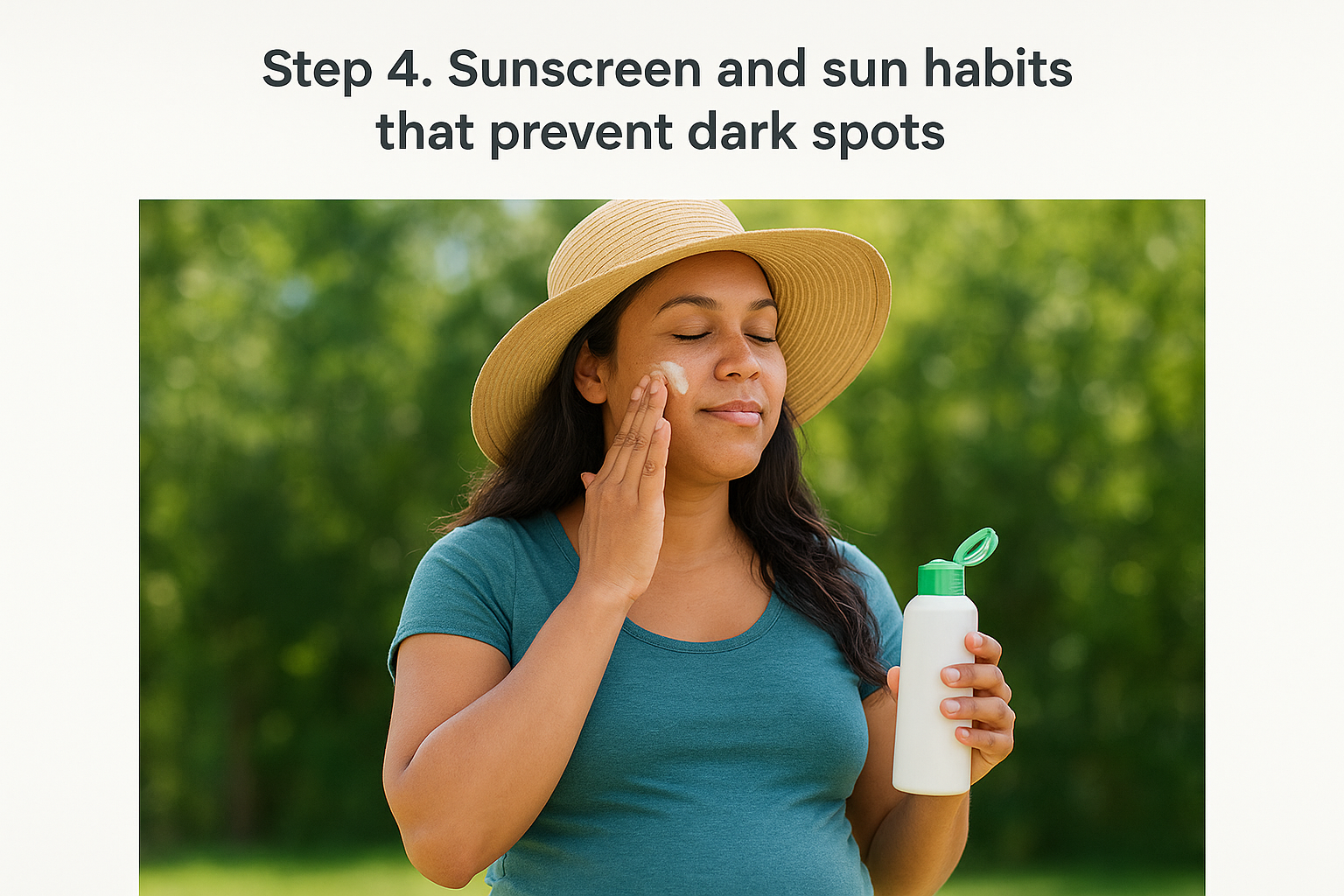
Apply sunscreen as the absolute final step in your AM routine, using a full quarter-sized amount for your face alone and another quarter for your neck and chest. Most people use one-third of the recommended amount, creating gaps in protection that allow UV rays through. Dot your sunscreen in five places (forehead, both cheeks, nose, chin), then spread outward using gentle patting motions rather than rubbing, which can leave thin spots.
Wait three full minutes after application before stepping outside or applying makeup. Your mineral sunscreen needs this time to settle into an even protective film across your skin surface. Reapply immediately if you towel-dry your face after morning cleansing, because even gentle patting can displace the sunscreen layer you just created.
Pregnancy melasma develops from cumulative UV exposure, meaning every unprotected minute in sunlight adds to your risk of permanent dark spots.
Reapplication schedule throughout your day
Reapply your mineral sunscreen every two hours if you spend time near windows or outdoors, regardless of cloud cover. UVA rays penetrate glass and clouds, triggering the same melanin response that causes visible dark patches. Set phone reminders for 10 AM, 12 PM, 2 PM, and 4 PM if you work near windows or spend time outside during pregnancy.
For makeup wearers, mineral powder sunscreens let you reapply over foundation without disturbing your base. Swirl a kabuki brush in the powder and apply in circular motions across your entire face, paying extra attention to your cheekbones and forehead where melasma appears first.
Sun-avoidance habits that matter as much as SPF
Seek shade between 10 AM and 4 PM when UV radiation peaks at its most intense levels. Your 15-minute lunch walk delivers the same UV exposure as an hour outdoors at 8 AM, exponentially increasing your melasma risk. Wide-brimmed hats (at least 3 inches all around) block 70% of UV rays that sunscreen alone misses, especially protecting your hairline and ears where pregnancy dark spots frequently develop.
Avoid deliberate sun exposure entirely during pregnancy, including tanning beds which emit concentrated UVA rays that penetrate deeper than natural sunlight. Your pregnancy glow comes from increased blood flow, not a tan, and any intentional darkening signals melanocyte damage that manifests as uneven pigmentation you'll spend years trying to fade.
Step 5. How to patch test and introduce new products
Your skin's heightened sensitivity during pregnancy means you cannot simply swap out your old products for pregnancy-safe alternatives without testing them first. Even ingredients that receive universal dermatologist approval can trigger unexpected reactions when your immune system operates differently to protect your developing baby. Patch testing every new product before full-face application prevents widespread irritation that forces you to start your pregnancy-safe skincare routine from scratch, wasting both time and money on products your newly reactive skin refuses to tolerate.
The 48-hour patch test protocol
Apply a dime-sized amount of your new product to a small area behind your ear or on your inner forearm, locations where skin remains thin and reactive but reactions stay hidden from view. Choose behind your ear if you plan to use the product on your face, or your inner forearm for body products. Leave the test spot completely untouched for 48 hours, avoiding water, other products, or any manipulation that might interfere with your observation.
Check the test area at 24 hours and again at 48 hours for signs of redness, itching, burning, bumps, or flaking. Mild tingling that disappears within five minutes indicates normal product penetration, but persistent discomfort signals incompatibility. Take a clear photo at each checkpoint to track subtle changes you might dismiss or forget between checks.
Your patch test succeeds only if you resist the urge to apply the product to your face while waiting the full 48 hours for confirmation.
One product at a time introduction method
Introduce each new product individually, waiting one full week between additions to your routine. This spacing lets you identify exactly which product causes problems if irritation develops. Your pregnancy hormones fluctuate weekly, particularly during the first trimester, so a product that tests fine on Monday might trigger sensitivity by Friday if you rush the introduction process.
Follow this specific timeline for building your complete routine:
Week 1: Introduce cleanser only
Week 2: Add treatment serum
Week 3: Add moisturizer
Week 4: Add sunscreen
Week 5+: Introduce any targeted add-ons (azelaic acid, vitamin C, etc.)
Signs that tell you to stop immediately
Stop using any product that causes burning sensations lasting longer than two minutes after application, visible redness that intensifies rather than fading, or raised bumps that appear within hours of use. Pregnancy skin reacts faster than your pre-pregnancy tolerance, so symptoms develop quickly rather than building gradually over days. Wash the product off immediately with lukewarm water if you experience tightness that restricts your facial expressions or itching that persists after 10 minutes.
Watch specifically for these warning signals:
- Stinging that worsens with each application
- New breakouts appearing in clusters within 24 hours
- Dry patches or flaking in areas that felt normal before
- Swelling around your eyes or lips
- Burning sensation when you sweat or apply makeup
Discontinue the product permanently if symptoms return after a second patch test, because repeated exposure increases sensitization risk rather than building tolerance during pregnancy.
Step 6. When to call your OB-GYN or dermatologist
Building your pregnancy-safe skincare routine requires vigilance beyond just choosing the right products. Certain skin changes signal underlying complications that demand professional medical evaluation rather than continued at-home treatment. Your hormonal fluctuations create a gray zone where normal pregnancy skin changes blur into symptoms that require prescription intervention, making it critical to recognize the exact thresholds that separate wait-and-see from call-right-now situations.
Red flag symptoms that need immediate attention
Contact your OB-GYN or dermatologist within 24 hours if you develop sudden, severe itching without visible rash, particularly on your palms and feet. This symptom indicates possible intrahepatic cholestasis of pregnancy (ICP), a liver condition that poses serious risks to your baby and requires immediate blood work. The itching intensifies at night and spreads rapidly across your body, distinguishing it from normal pregnancy dryness that responds to moisturizer.
Call immediately if you notice painful, warm, red streaks spreading from a pimple or cut, accompanied by fever above 100.4°F. These signs indicate bacterial infection that requires oral antibiotics, not topical treatments from your routine. Pustular psoriasis appearing as pus-filled bumps across large areas of your body also demands emergency dermatology evaluation, as this pregnancy-specific condition escalates quickly without medical intervention.
Severe skin reactions during pregnancy can signal systemic complications that affect both you and your developing baby, making professional evaluation non-negotiable.
Persistent issues worth professional evaluation
Schedule an appointment within one to two weeks if your acne worsens progressively despite eight weeks of consistent azelaic acid or pregnancy-safe treatments. Your dermatologist can prescribe topical erythromycin or clindamycin, antibiotics proven safe throughout pregnancy that work when over-the-counter options fail. Cystic acne that leaves deep scars or painful nodules under your skin particularly benefits from professional intervention before permanent damage occurs.
Melasma covering more than 30% of your face or darkening despite religious sunscreen application and indoor shade-seeking warrants dermatology consultation. Your provider can assess whether prescription-strength azelaic acid (20%) or combination treatments offer better control than the products available in your current pregnancy-safe skincare routine.
Which specialist to contact first
Call your OB-GYN first for any symptom accompanied by fever, abdominal pain, or unusual discharge, as these combinations suggest pregnancy complications rather than isolated skin issues. Contact a dermatologist directly for concerns limited strictly to your skin, like worsening acne, expanding melasma, or new moles that change shape or color. Dermatologists also handle severe eczema flares or contact dermatitis that fails to improve after eliminating suspected trigger products.
Ask your OB-GYN for a dermatology referral if your insurance requires authorization, mentioning specific concerns like uncontrolled acne or rapidly spreading rashes to expedite approval.
Your next step
You now have the complete framework for a pregnancy-safe skincare routine that addresses hormonal changes, protects against dark spots, and delivers results without compromising safety. Your AM and PM routines take fewer than 15 minutes combined, yet they create the foundation for healthy skin throughout all three trimesters and beyond. The ingredient avoid list eliminates guesswork, while the patch testing protocol prevents reactions that derail your progress.
Start by auditing your current products against the safe and avoid lists, replacing any questionable ingredients immediately. Purchase your core four products (cleanser, treatment serum, moisturizer, mineral sunscreen) before adding optional treatments for acne or melasma. Building slowly prevents both financial waste and skin overwhelm during a time when your body already manages enough change.
Ready to stock your routine with pregnancy-safe essentials? Explore our curated skincare collection featuring gentle, effective formulas that support your skin's changing needs while keeping you and your baby safe.
✨ Shop the Look at Beautifully Within
Loved this guide? Discover our hand-picked picks that pair perfectly with your routine:
- 👉 Fresh Start Hydrating Cleanser & Toner Duo — Skincare Set
- 👉 Freeze-Dried Brightening Facial Treatment — Skincare Set
- 👉 Rice Brightening Skincare Collection — 6-Piece Ritual — Skincare Set
- 👉 Blueberry Radiance Skincare Collection — 4-Piece Set — Skincare Set
New customer? Get 15% off orders $50+ with code WITHIN15 — plus free shipping over $75.
0 comments