

Your T-zone is shiny by noon, but your cheeks feel tight and dry. Sound familiar? Building a skincare routine for combination skin requires a different approach than simply following generic advice. You're essentially dealing with two different skin types on one face, which means products that work perfectly for one area might make another worse.
The solution isn't choosing between products for oily or dry skin, it's finding the right balance and knowing exactly when to apply what. Many people with combination skin either over-moisturize their oily zones or neglect their dry patches, creating a frustrating cycle of breakouts and flakiness that never seems to end. The good news? Once you understand how to layer products strategically, managing combination skin becomes much more straightforward.
This guide walks you through exactly how to build both an AM and PM routine that addresses both oily and dry concerns simultaneously. You'll learn the correct order of products, which ingredients actually help balance combination skin, and how to customize your approach based on what your face needs. At Beautifully Within, we're all about helping you feel your best from the inside out, and that starts with skincare that works with your unique skin, not against it.
What combination skin is and how to confirm it
Combination skin means your face produces different amounts of oil in different zones. Your T-zone (forehead, nose, and chin) typically looks shiny and feels oily, while your cheeks, temples, and jawline feel dry or normal. This happens because your skin has more active sebaceous glands concentrated in the center of your face.

What makes combination skin different
Your skin type isn't random. Genetics determine where your oil glands concentrate and how active they are. People with combination skin essentially deal with two competing needs: the oily zones require oil control and pore care, while the dry areas need hydration and barrier protection. This split makes finding the right skincare routine for combination skin more complex than dealing with one consistent skin type.
The oily areas produce excess sebum throughout the day, leading to shine, enlarged pores, and potential breakouts. Meanwhile, your dry zones lack sufficient natural oils, resulting in tightness, flakiness, and sensitivity. You might notice your makeup slides off your T-zone but clings to dry patches on your cheeks. This contrast creates a unique challenge that requires strategic product placement.
Combination skin isn't a flaw in your skincare routine, it's simply how your genetics programmed your oil production.
Confirm your skin type with these tests
You can verify combination skin through a simple observation test. Wash your face with a gentle cleanser, pat it dry, then wait 30 minutes without applying any products. After this waiting period, examine your face in natural light and touch different zones.
Your T-zone will show visible shine or feel slightly slick to the touch if you have combination skin. Press a clean tissue against your forehead and nose. If it picks up oil, that confirms excess sebum production in those areas. Now check your cheeks and temples. These areas should feel comfortable or slightly tight, without the same oily residue.
Pay attention to how your skin behaves throughout the day. Track these signs:
- Your forehead, nose, and chin develop shine by midday
- Your cheeks feel tight after cleansing
- You get breakouts primarily in your T-zone
- Your cheeks show dry patches or flaking
- Matte products work well on your T-zone but make your cheeks look dull
- Rich moisturizers feel great on your cheeks but cause congestion on your nose
Why knowing your skin type matters
Understanding that you have combination skin changes everything about how you should approach your routine. Generic skincare advice often assumes your entire face needs the same treatment, which leads to either over-moisturizing your oily zones or under-hydrating your dry areas. You end up wasting money on products that solve one problem while creating another.
When you confirm combination skin, you unlock the ability to customize product application by zone. This means you can use different products or amounts in different areas, preventing the frustration of breakouts on your forehead while your cheeks peel. Your skincare routine for combination skin needs this targeted approach to actually work.
The confirmation step also helps you identify patterns and triggers. You might notice your combination skin becomes more oily during certain times of your cycle, or that winter makes your dry zones worse. This awareness lets you adjust products seasonally rather than sticking to a rigid routine that stops working.
The rules that keep combo skin balanced
Managing combination skin successfully comes down to following a few core principles that prevent you from accidentally making one zone worse while treating another. These rules apply whether you're building a morning or night routine, and they help you avoid the common trap of using products that work against your skin's natural balance. Your skincare routine for combination skin needs these fundamental guidelines to deliver consistent results.
Apply products strategically by zone
You don't need to treat your entire face the same way. Apply products based on what each zone needs, not what the bottle tells you to do. When you use an oil-control toner or mattifying serum, concentrate it on your T-zone only. For richer moisturizers or hydrating serums, focus on your cheeks, temples, and jawline where dryness occurs.
This zone-based approach means you might go through products at different rates. Your lightweight gel moisturizer will empty faster because you use it everywhere, while your heavier cream lasts longer since you only apply it to dry patches. That's normal and exactly how combination skin works.
Treating your entire face with one product assumes all your skin has the same needs, which combination skin never does.
Layer lightweight products instead of heavy formulas
Combination skin responds better to multiple thin layers than one thick application. Heavy creams clog your oily zones, while single light products don't provide enough hydration for dry areas. Build your routine with gel-based or water-based products that absorb quickly and layer easily.
Start with the thinnest consistency and work up to thicker textures. A lightweight hydrating toner followed by a serum and then moisturizer gives you better control than slapping on one heavy cream. You can add extra layers to dry zones without overwhelming your T-zone.
Never skip moisturizer on oily areas
Your oily zones still need hydration, even if they produce excess sebum. Skipping moisturizer on your T-zone sends a signal that your skin needs to produce more oil to compensate. This creates a cycle where your forehead and nose get oilier, not better.
Choose a gel or gel-cream moisturizer for your entire face, then add a richer formula only to dry areas if needed. Oil-free doesn't mean moisture-free. Your oily zones need water-based hydration to maintain their barrier function and regulate oil production properly. When you moisturize consistently, your skin stops overcompensating with excess sebum.
Build your morning routine step by step
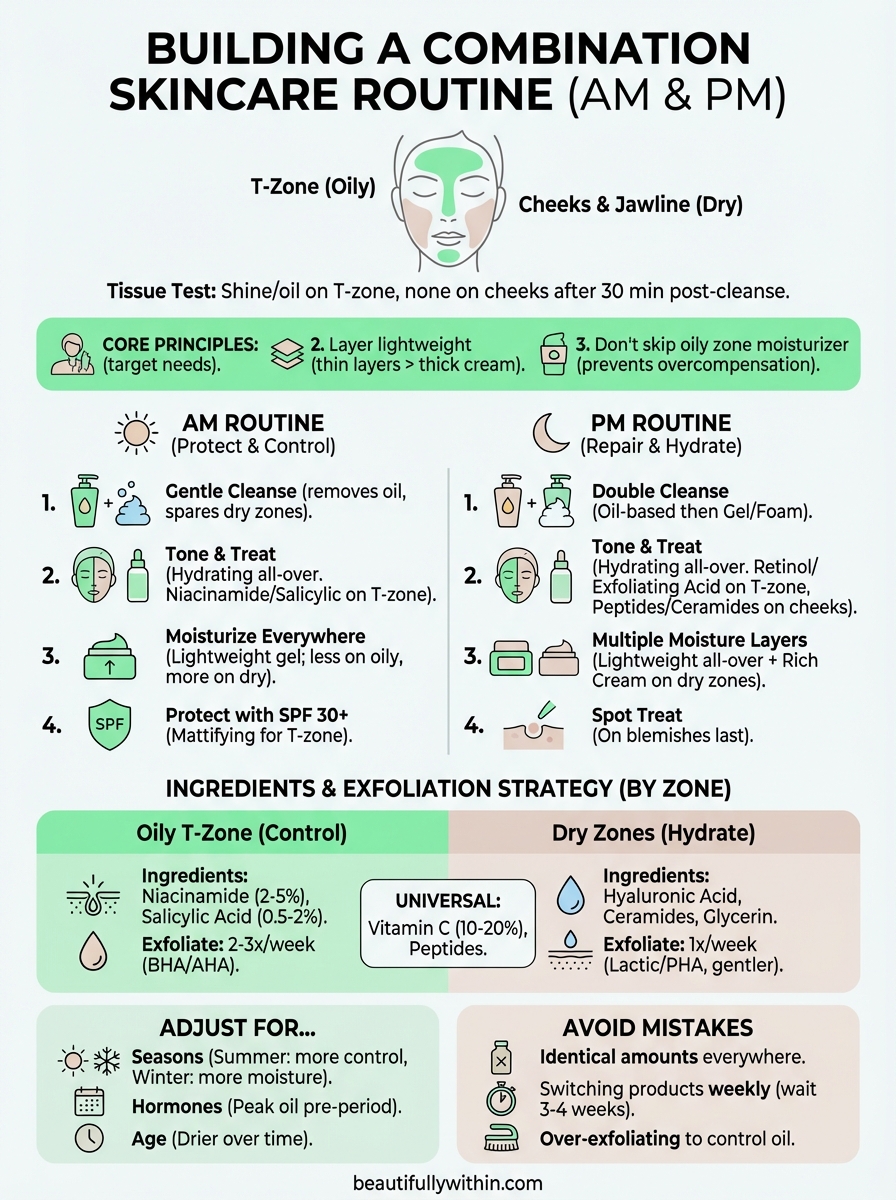
Your morning skincare routine for combination skin needs to protect both zones throughout the day while controlling oil and maintaining hydration. This routine takes 5 to 8 minutes and sets up your skin to handle environmental stress, makeup application, and sebum production. Each step serves a specific purpose, and skipping one creates gaps that show up by afternoon.

Step 1: Cleanse gently
Start with a gel or foam cleanser that removes overnight oil buildup without stripping your dry zones. Wet your face with lukewarm water, apply a dime-sized amount of cleanser, and massage for 30 to 60 seconds. Focus on your T-zone where oil accumulates, but don't scrub your cheeks aggressively.
Rinse thoroughly with cool water to close pores and pat dry with a clean towel. Your face should feel clean but not tight. If your cheeks feel squeaky or uncomfortable, your cleanser is too harsh. Morning cleansing removes dead skin cells and excess sebum that built up overnight, creating a fresh canvas for your products.
Step 2: Tone and treat by zone
Apply a hydrating toner to your entire face immediately after cleansing while your skin is still slightly damp. This step preps your skin to absorb serums better. Press the toner in with your palms rather than rubbing it around.
Next, apply any treatment serums based on what each zone needs. Use a niacinamide or salicylic acid serum on your T-zone to control oil and minimize pores. Apply a hydrating serum with hyaluronic acid to your cheeks and dry areas. Let each product absorb for 30 seconds before moving to the next step.
Your morning routine should address immediate concerns like oil control while building protection against daily stressors.
Step 3: Moisturize everywhere
Use a lightweight gel moisturizer across your entire face, including your T-zone. Apply it in upward motions, using less product on oily areas and more on dry zones. Your forehead and nose need moisture to regulate oil production, while your cheeks need it to prevent tightness throughout the day.
Wait two minutes for the moisturizer to absorb before applying sunscreen. This prevents pilling and ensures each layer works independently.
Step 4: Protect with SPF
Apply broad-spectrum SPF 30 or higher as your final morning step. Use about a nickel-sized amount for your face and spread it evenly across all zones. Choose a mattifying or gel-based sunscreen for your T-zone if standard formulas make you too shiny.
Reapply every two hours if you're outdoors. Sunscreen protects against UV damage that worsens both oiliness and dryness over time.
Build your night routine step by step
Your nighttime skincare routine for combination skin focuses on deep cleansing, repair, and intensive hydration while you sleep. This routine removes the day's buildup of oil, sunscreen, makeup, and environmental pollutants, then delivers active ingredients that work overnight. Your skin regenerates faster while you rest, making nighttime the ideal window for treatment products and richer moisturizers that might feel too heavy during the day.

Step 1: Double cleanse to remove everything
Start with an oil-based cleanser or micellar water to break down sunscreen, makeup, and sebum. Apply it to dry skin and massage for 60 seconds, paying extra attention to your T-zone where oil and product residue accumulate. This first cleanse dissolves oil-based debris that water-based cleansers can't touch.
Rinse thoroughly, then follow with your gel or foam cleanser from your morning routine. This second cleanse removes any remaining impurities and ensures your skin is completely clean. Your face should feel fresh and slightly bouncy, not tight or stripped. Double cleansing prevents clogged pores in your T-zone while ensuring your dry areas get clean without excessive scrubbing.
Step 2: Apply toner and targeted treatments
Pat a hydrating toner across your entire face immediately after cleansing. Your skin absorbs products better when it's slightly damp, so don't wait until your face is completely dry. Press the toner in with your palms or fingertips rather than using cotton pads, which waste product.
Layer your treatment serums based on zone-specific needs. Apply a retinol or exfoliating acid to your T-zone if you're using active ingredients at night. Use a hydrating serum with peptides or ceramides on your cheeks and dry zones. Wait 30 to 60 seconds between products to let each one absorb properly.
Nighttime gives you the freedom to use stronger active ingredients that work during your skin's natural repair cycle.
Step 3: Add multiple layers of moisture
Apply a lightweight moisturizer to your entire face, including your T-zone. Your oily areas still need overnight hydration to regulate oil production and repair their barrier. Use gentle upward strokes and let it absorb for one minute.
Follow with a richer cream or sleeping mask on your dry zones only. Focus on your cheeks, temples, and any areas that feel tight or flaky. These thicker products seal in all the layers underneath and provide intensive overnight repair where you need it most.
Step 4: Spot treat if needed
Apply any spot treatments for acne as your final step, dotting them directly onto blemishes in your T-zone. Using spot treatments last prevents them from getting diluted by your moisturizers. Let everything absorb for five minutes before your head hits the pillow to avoid transferring products onto your pillowcase.
Choose ingredients that work for oily and dry zones
Your skincare routine for combination skin succeeds or fails based on the specific ingredients you choose and where you apply them. Generic product labels don't account for the fact that your T-zone needs sebum control while your cheeks need intensive hydration. Understanding which ingredients address each concern lets you build a targeted routine that treats both zones effectively without creating new problems.
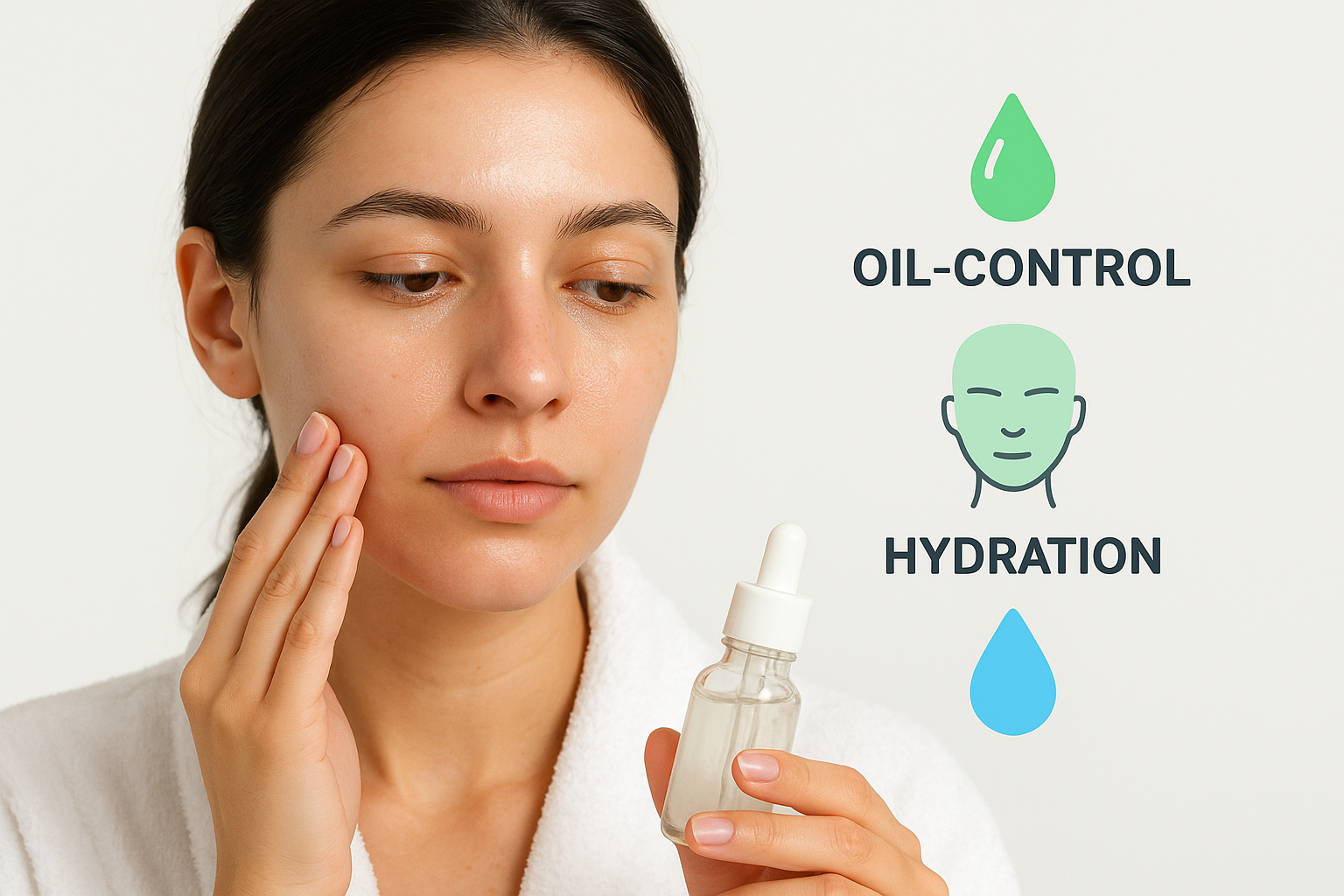
Oil-control ingredients for your T-zone
Your forehead, nose, and chin respond best to ingredients that regulate sebum production and keep pores clear. Niacinamide at concentrations of 2% to 5% reduces oil output while minimizing pore appearance. Apply it in serum form to your T-zone during both morning and night routines.
Salicylic acid penetrates oil-filled pores and dissolves the buildup that causes blackheads and breakouts. Use products with 0.5% to 2% salicylic acid on your T-zone, starting with lower concentrations if you're new to chemical exfoliants. Zinc also controls excess oil when applied topically, making it useful in mattifying moisturizers or spot treatments for your oily zones.
Ingredients that work for oily skin don't automatically make dry areas worse, but applying them everywhere wastes product and disrupts your skin's balance.
Hydrating ingredients for dry areas
Your cheeks, temples, and jawline need ingredients that attract and seal in moisture. Hyaluronic acid pulls water from the environment and deeper skin layers, holding up to 1,000 times its weight in water. Apply hyaluronic acid serums to damp skin on your dry zones, then lock it in with a moisturizer.
Ceramides repair your skin's natural barrier and prevent moisture loss throughout the day. Look for products with ceramide 1, 3, and 6-II to strengthen dry areas that lose hydration quickly. Glycerin draws moisture into your skin and keeps it there, working especially well in cream formulas designed for dry zones.
Universal ingredients that balance both zones
Some ingredients benefit your entire face regardless of oil levels. Vitamin C at concentrations of 10% to 20% brightens skin tone and protects against environmental damage in both oily and dry areas. Apply it in the morning after cleansing but before your zone-specific serums.
Peptides support collagen production and skin repair across all zones without adding oil or drying you out. These work well in lightweight serums that you can apply everywhere. Consider these balancing ingredients for your full face:
- Centella asiatica (cica): Calms inflammation and supports healing
- Green tea extract: Provides antioxidant protection and mild oil control
- Panthenol (vitamin B5): Hydrates without heaviness or greasiness
- Allantoin: Soothes irritation and supports barrier function
Apply these universal ingredients to your entire face, then layer your zone-specific treatments on top for targeted results.
Exfoliation and masks without wrecking your barrier
Exfoliation removes dead skin cells that clog your oily zones while preventing flakiness in dry areas, but overdoing it damages your barrier regardless of your skin type. Your combination skin needs exfoliation in both zones, just at different frequencies and strengths. The key is treating exfoliation and masks as tools you control by zone rather than applying them uniformly across your face. A balanced skincare routine for combination skin includes strategic exfoliation that clears your T-zone without stripping your cheeks.
Exfoliate each zone at different frequencies
Your T-zone tolerates more frequent exfoliation because oil production protects it and dead cells accumulate faster in areas with active sebaceous glands. Exfoliate your forehead, nose, and chin 2 to 3 times per week using chemical exfoliants with salicylic acid or glycolic acid. These ingredients penetrate oil-filled pores and prevent the buildup that causes blackheads and breakouts.
Your dry zones need gentler, less frequent exfoliation to avoid compromising their already-sensitive barrier. Exfoliate your cheeks, temples, and jawline once per week using lactic acid or PHA (polyhydroxy acid) formulas. These milder acids remove dead skin without causing the irritation that stronger exfoliants trigger in dry areas.
Apply your exfoliant to the specific zones that need it rather than spreading it everywhere. Use a cotton pad or your fingertips to control placement, keeping stronger acids away from dry patches. Start with lower concentrations (5% glycolic acid or 0.5% salicylic acid) and increase strength gradually as your skin adapts.
Your skin barrier doesn't recover faster in oily zones, it just tolerates more disruption before showing damage.
Multi-mask to address both concerns
Multi-masking means applying different masks to different zones based on what each area needs. This technique lets you use a clay or charcoal mask on your T-zone to absorb oil while treating your cheeks to a hydrating or nourishing mask at the same time. Apply masks after cleansing and before the rest of your nighttime routine.
Use this approach once or twice per week for targeted treatment:
T-zone (oily areas):
- Clay masks with kaolin or bentonite to absorb excess sebum
- Charcoal masks to deep clean pores
- Leave on for 10 to 15 minutes, then rinse
Dry zones (cheeks, temples):
- Hydrating masks with hyaluronic acid or glycerin
- Nourishing masks with ceramides or squalane
- Leave on for 15 to 20 minutes, then rinse or gently remove
Never let clay masks dry completely on your dry zones, as this pulls moisture from your skin and weakens your barrier. If you accidentally apply a mask everywhere, rinse your dry areas first while the clay is still slightly damp.
Adjust your routine for seasons, hormones, and age
Your combination skin doesn't stay the same year-round or throughout your life. External factors like temperature and humidity change how much oil your T-zone produces and how dry your cheeks become. Internal shifts from hormonal cycles, stress, and aging also alter your skin's behavior. A skincare routine for combination skin that works perfectly in June might leave you greasy or flaky by December. Adapting your routine based on these variables keeps your skin balanced instead of forcing products that no longer match your needs.
Switch products as seasons change
Your skin produces more oil in summer when heat and humidity stimulate your sebaceous glands, while winter air strips moisture from your dry zones. Adjust your products every three to four months to match these seasonal shifts rather than sticking to the same routine all year.
Summer adjustments (June through September):
- Use a lighter gel cleanser if your current formula feels too heavy
- Switch to an oil-free or gel moisturizer on your entire face
- Add a mattifying primer to your T-zone before makeup
- Increase exfoliation to 3 times per week in oily areas if needed
Winter adjustments (December through March):
- Replace gel moisturizers with gel-cream formulas that provide more barrier protection
- Layer a facial oil on dry zones at night
- Reduce exfoliation frequency to prevent over-stripping already-compromised skin
- Add a humidifier to your bedroom to prevent overnight moisture loss
Spring and fall serve as transition periods where you gradually shift products rather than making sudden changes. Start incorporating your seasonal swaps one product at a time to see how your skin responds.
Track hormonal fluctuations and adjust
Your combination skin becomes oilier during the week before your period when progesterone peaks and stimulates sebum production. You might also notice more breakouts in your T-zone during this time. Keep a simple log in your phone noting when your skin feels oilier or drier, then match those patterns to your cycle.
Add these temporary adjustments during high-oil phases:
- Use a salicylic acid toner on your T-zone daily instead of every other day
- Apply clay masks twice per week instead of once
- Blot your T-zone with oil-absorbing sheets midday
- Skip heavy night creams on your entire face, using them only on dry patches
Hormonal changes affect everyone differently, so tracking your specific patterns matters more than following generic advice.
Modify your approach as you age
Combination skin typically becomes drier overall as you age because your oil glands slow down production after your mid-30s. Your T-zone might still get oily, but less intensely than before. Meanwhile, your dry zones need richer products and more barrier support to combat decreased collagen and natural moisture retention.
Start incorporating these age-appropriate changes:
- Add a retinol product to both zones (lower concentration on dry areas)
- Upgrade to cream-based moisturizers even in your T-zone
- Include peptide serums for collagen support
- Apply eye cream nightly to prevent fine lines in dry orbital areas
Common mistakes and quick fixes
Most people with combination skin make the same preventable errors that sabotage their results, and these mistakes often stem from treating their face as one uniform surface rather than recognizing the different needs of each zone. You might follow your skincare routine for combination skin perfectly but still see breakouts in your T-zone or flaking on your cheeks simply because you're applying products incorrectly. The good news is that each mistake has a straightforward fix that you can implement immediately without buying new products or overhauling your entire routine.
Using identical amounts everywhere
You apply the same pump of product across your entire face because the bottle doesn't specify otherwise. This approach overloads your T-zone with moisture it doesn't need while shortchanging your dry areas that require more. Your oily zones get congested and break out, while your cheeks stay dehydrated no matter what you use.
Quick fix: Use a pea-sized amount of moisturizer for your entire face, but press most of it into your cheeks and dry zones first. Whatever remains on your palms goes onto your T-zone. For serums and treatments, apply two thin layers to dry areas and one layer to oily zones. This zone-based distribution ensures each area gets appropriate product coverage without waste or excess.
Switching products every week
Your skin reacts poorly to a new product, so you immediately swap it for something else. You cycle through products constantly, never giving your skin enough time to adjust or show results. This constant change irritates both your oily and dry zones, creating a cycle of breakouts and sensitivity that seems impossible to fix.
Quick fix: Test new products for three to four weeks minimum before deciding they don't work. Introduce only one new product at a time so you can identify what causes problems. Keep a simple note on your phone tracking what you added and when, then evaluate results after a full skin cycle (approximately 28 days). This patience lets you distinguish between purging, adjustment periods, and actual incompatibility.
Your skin needs consistent exposure to ingredients before it adapts and shows improvement, not constant product rotation.
Over-exfoliating to control oil
Your T-zone gets shiny by afternoon, so you exfoliate daily thinking this will reduce sebum production. Instead, your skin produces more oil to compensate for the barrier damage you're causing, while your dry zones become red and irritated from excessive exfoliation they never needed.
Quick fix: Limit exfoliation to two to three times per week maximum for your T-zone and once weekly for dry areas. Your oily zones need oil control through ingredients like niacinamide and proper hydration, not aggressive scrubbing that strips your barrier. If you've over-exfoliated, stop all active ingredients for one week and focus on gentle cleansing plus barrier-repair products with ceramides.
Your next steps
You now have a complete framework for building a skincare routine for combination skin that addresses both oily and dry zones effectively. Start by identifying which products you already own that fit into the zone-based approach outlined here. You don't need to replace everything at once.
Pick one zone to optimize first, either your T-zone or your dry areas, then adjust products for the other zone within two weeks. This gradual approach prevents overwhelming your skin with multiple changes simultaneously. Track what works in a simple notes app so you can repeat successful combinations and avoid products that caused problems.
Your combination skin will shift with seasons, hormones, and age, so review your routine every three months to ensure it still matches your current needs. Ready to upgrade your skincare? Browse our curated skincare collection for products designed to help you achieve balanced, healthy skin from the inside out.
✨ Shop the Look at Beautifully Within
Loved this guide? Discover our hand-picked picks that pair perfectly with your routine:
- 👉 Fresh Start Hydrating Cleanser & Toner Duo — Skincare Set
- 👉 Tridoshic Ayurvedic Ritual Set — Balanced & Combination Skin — Skincare Set
- 👉 Rice Brightening Skincare Collection — 6-Piece Ritual — Skincare Set
- 👉 Blueberry Radiance Skincare Collection — 4-Piece Set — Skincare Set
New customer? Get 15% off orders $50+ with code WITHIN15 — plus free shipping over $75.
0 comments