

Retinol is one of the most effective ingredients for addressing fine lines, uneven texture, and breakouts, but figuring out how to build a skincare routine with retinol can feel overwhelming. If you've been staring at that bottle wondering when and how to apply it without turning your face into a flaky mess, you're not alone.
The good news? It doesn't have to be complicated. The key lies in understanding the right order of application, starting with an appropriate frequency, and choosing products that complement rather than conflict with this powerhouse ingredient.
At Beautifully Within, we believe great skin starts with the right knowledge and products that actually work for your skin type. This guide breaks down everything you need to know, from when to apply retinol to which ingredients to avoid, so you can confidently incorporate this proven ingredient into your daily regimen.
What retinol does and who should use it
Retinol is a vitamin A derivative that speeds up cell turnover and stimulates collagen production beneath your skin's surface. This process pushes out old, damaged cells while encouraging fresh ones to rise, which directly addresses visible signs of aging and acne at the cellular level.
How retinol transforms your skin
Your skin responds to retinol by increasing cell regeneration and unclogging pores from the inside out. When you apply it consistently, retinol tells your skin cells to behave like younger versions of themselves, resulting in smoother texture, faded dark spots, and fewer breakouts over time.
The ingredient works by penetrating your skin and converting into retinoic acid, the active form your cells recognize and respond to. This conversion triggers your fibroblasts to produce more collagen, which fills in fine lines and improves skin firmness. Studies show that retinol can reduce the appearance of wrinkles by up to 20% after 12 weeks of consistent use.
Retinol is one of the few ingredients backed by decades of clinical research proving it actually changes how your skin functions at a cellular level.
Who benefits most from retinol
You should consider adding retinol to your skincare routine with retinol if you're dealing with acne, fine lines, uneven skin tone, or rough texture. People in their late twenties often start using it as a preventive measure, while those in their thirties and beyond use it to address existing signs of aging.
However, retinol isn't suitable for everyone right away. Pregnant or breastfeeding women should avoid it entirely, and those with extremely sensitive skin conditions like rosacea or eczema need to consult a dermatologist first. Your skin type also matters: dry skin requires more moisturizing support, while oily skin typically tolerates higher concentrations faster.
Beginners should start with a 0.25% to 0.5% concentration and gradually work up as their skin builds tolerance. If you've never used retinol before, expect an adjustment period where your skin might feel slightly dry or sensitive before it adapts to this powerful ingredient.
Step 1. Choose the right retinol for your skin
Your first retinol purchase determines whether you'll see results or deal with unnecessary irritation. The concentration and formulation you select should match your current skin tolerance and specific concerns, not just what worked for someone else's skincare routine with retinol.
Start with the right concentration
Beginners need to start at 0.25% to 0.5% retinol to let their skin adapt without triggering excessive dryness or redness. If you've used retinol successfully for three months, you can move up to 0.5% to 1% for faster cell turnover and more visible results.
Your skin type dictates how quickly you can increase strength. Oily or combination skin typically tolerates higher concentrations sooner, while dry or sensitive skin benefits from staying at lower percentages longer with added hydrating ingredients like hyaluronic acid or ceramides.
Starting with a lower concentration prevents the irritation that makes most people quit retinol before seeing any real improvements.
Match the formula to your skin needs
Cream-based retinol products work best for dry skin types because they deliver the active ingredient alongside moisturizing agents that prevent flaking. Gel or serum formulas suit oily skin since they absorb quickly without adding extra heaviness or clogging pores.
Look for products that combine retinol with soothing ingredients like niacinamide, peptides, or green tea extract. These combinations reduce initial sensitivity while maintaining the ingredient's effectiveness. Avoid retinol products with added fragrances or essential oils, which can amplify irritation during your adjustment period.
Step 2. Apply retinol in the right order at night
The order of application directly impacts how well retinol penetrates your skin and whether it causes unnecessary irritation. Applying products in the wrong sequence can create barriers that block retinol from reaching the deeper layers where it actually works, or worse, increase sensitivity by combining it with incompatible ingredients.
The correct layering sequence
You need to apply retinol after cleansing and toning but before heavier moisturizers in your nighttime skincare routine with retinol. This placement lets the active ingredient absorb into clean skin while giving you the option to buffer with moisturizer if needed.
Follow this exact order for your evening routine:
- Cleanser (remove makeup, sunscreen, and daily buildup)
- Toner (wait 5 minutes for skin to dry completely)
- Retinol (pea-sized amount on dry skin)
- Wait 10-15 minutes (allows full absorption)
- Moisturizer (locks in hydration and reduces potential dryness)
- Eye cream (apply around orbital bone, never on eyelids)
Never apply retinol to damp skin because water increases penetration speed, which sounds beneficial but actually leads to excessive irritation and peeling. Your skin should feel completely dry to the touch before you apply the retinol layer.
Waiting for your skin to dry between steps might feel tedious, but this simple pause prevents the redness and flaking that makes people abandon retinol prematurely.
Step 3. Set a beginner-friendly frequency schedule
Starting too aggressively with retinol is the most common mistake that leads to irritation, peeling, and giving up before you see results. Your skin needs time to build tolerance to this powerful ingredient, which means starting slow and gradually increasing frequency as your skin adapts to your skincare routine with retinol.
Week-by-week application schedule
You should follow this proven schedule that allows your skin to adapt without triggering excessive sensitivity. This timeline works for most beginners using 0.25% to 0.5% retinol concentrations, though you may need to adjust based on your individual response.
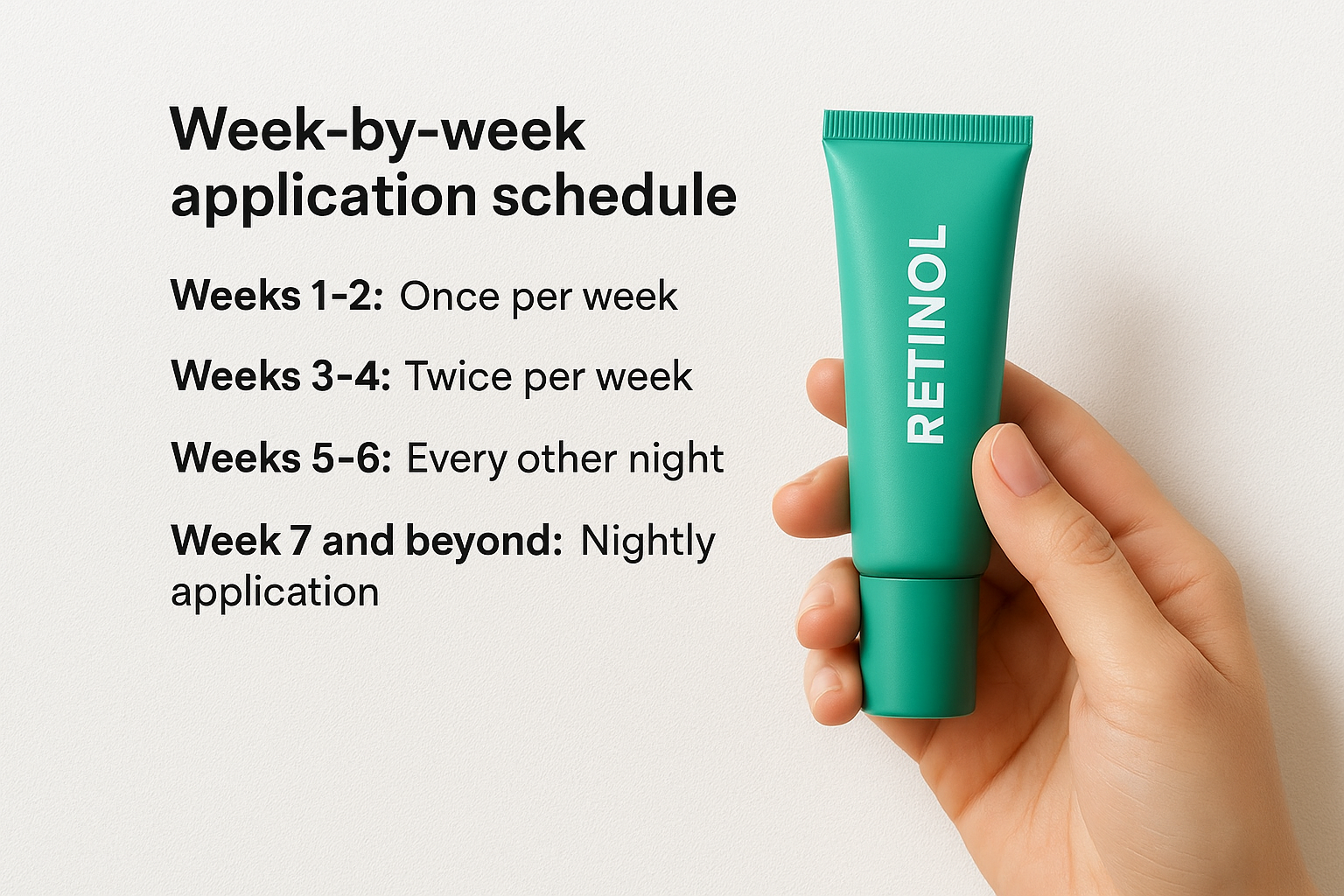
Weeks 1-2: Apply retinol once per week (same night each week, like every Wednesday)
Weeks 3-4: Increase to twice per week (spaced 3-4 days apart, like Monday and Thursday)
Weeks 5-6: Move to every other night if your skin shows no irritation
Week 7 and beyond: Attempt nightly application only if your skin tolerates the previous frequency without redness or flaking
Your skin will tell you if you're moving too fast. Persistent dryness, stinging when applying other products, or redness that lasts beyond a few hours means you need to drop back to the previous frequency for another two weeks before trying again.
Building up slowly might feel frustratingly gradual, but this approach prevents the peeling and irritation that forces most people to stop using retinol altogether.
Signs you can increase frequency
Watch for these positive indicators that your skin has adapted and can handle more frequent application. Your face should feel normal the morning after retinol use, with no tightness, visible flaking, or sensitivity to your regular morning products like cleanser or sunscreen.
Step 4. Prevent irritation and avoid bad combos
The wrong product combinations can turn your skincare routine with retinol from effective to damaging within a single application. Certain ingredients either neutralize retinol's benefits or multiply its irritating effects, creating redness, peeling, and sensitivity that takes weeks to recover from.
Ingredients that destroy your progress
You need to completely separate retinol from vitamin C, AHAs (glycolic, lactic acid), BHAs (salicylic acid), and benzoyl peroxide in your routine. These active ingredients either change your skin's pH level in ways that deactivate retinol or create compounding irritation that damages your skin barrier.
Apply vitamin C in your morning routine and retinol at night to keep them apart. If you use chemical exfoliants like glycolic acid, schedule them on nights when you skip retinol or use them exclusively in the morning. Never layer these actives thinking you'll get faster results because you'll only get faster irritation.
Physical exfoliants like scrubs or cleansing brushes should also move to your non-retinol nights since they create microscopic tears that retinol can penetrate too deeply, causing unnecessary stinging and redness.
Separating conflicting ingredients by time of day or alternating nights prevents the irritation that makes your skin worse instead of better.
Products that protect and support retinol use
Your moisturizer becomes essential, not optional, when using retinol consistently. Look for formulas with ceramides, hyaluronic acid, or squalane that rebuild your moisture barrier without blocking retinol absorption. Apply a generous layer after your retinol has fully absorbed to prevent overnight dryness.
Morning sunscreen is mandatory because retinol increases your sun sensitivity by up to 30%. Choose SPF 30 or higher and reapply every two hours during extended sun exposure to protect the new skin cells your retinol routine generates.
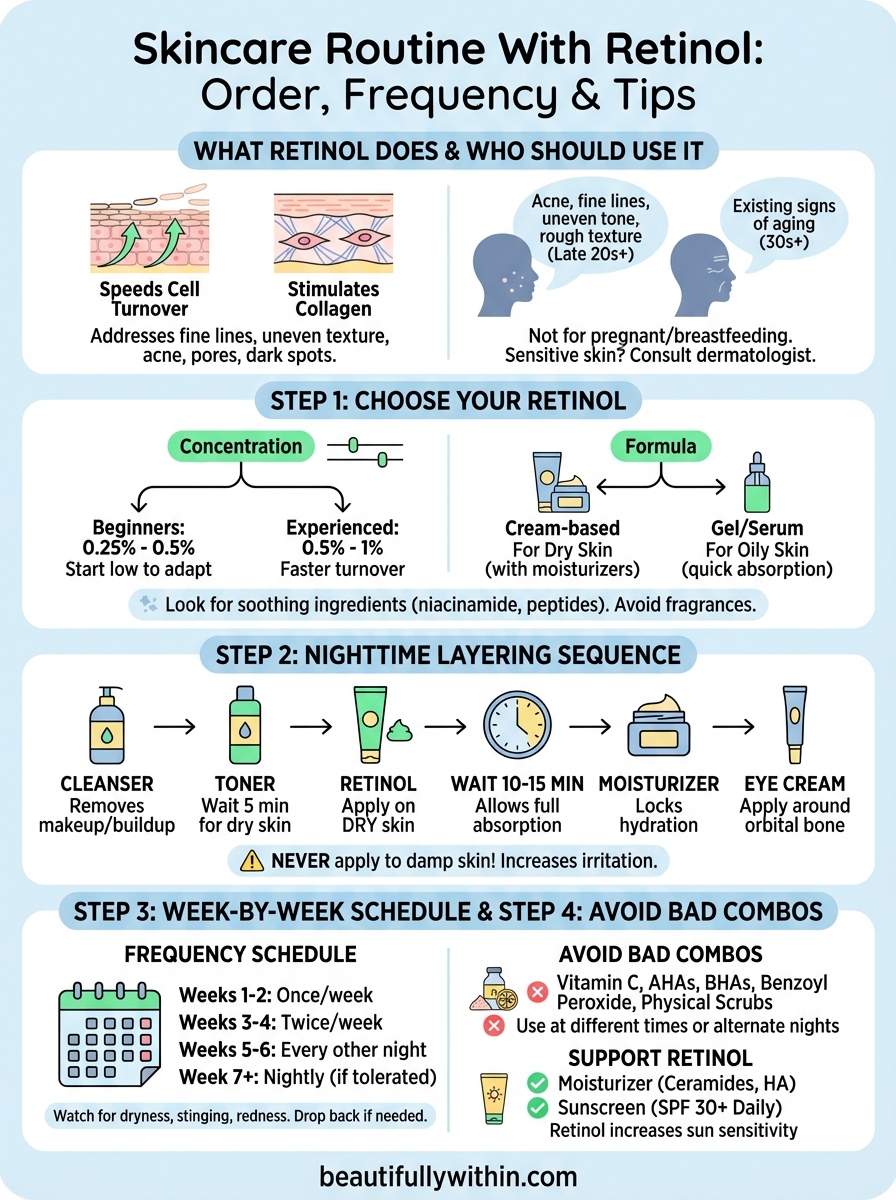
Make retinol work long term
Long-term success with retinol depends on consistent application and protecting your results with the right supporting products. Your skin will continue improving for up to a year as collagen production increases, but only if you maintain your routine without skipping weeks at a time.
Track your progress by taking photos every four weeks under the same lighting conditions. This documentation helps you see the gradual improvements that happen too slowly to notice day-to-day, from fading dark spots to smoother texture around your eyes and forehead.
Your skincare routine with retinol requires ongoing adjustments as seasons change and your skin adapts. You might need to reduce frequency during winter months when indoor heating dries out your skin, or add extra moisturizing layers during your adjustment period. The key is listening to your skin's feedback and responding before irritation forces you to stop completely.
Ready to build a complete routine that supports your retinol use? Browse our curated skincare collection to find the moisturizers, cleansers, and serums that work alongside retinol for healthier, more radiant skin.
✨ Shop the Look at Beautifully Within
Loved this guide? Discover our hand-picked picks that pair perfectly with your routine:
- 👉 Bakuchiol Gentle Retinol Alternative Serum — Serum
- 👉 Advanced Anti-Aging Daily Serum — Serum
- 👉 Vitamin C 20% Brightening Face Serum — Serum
- 👉 Caribbean Emerald Marine Elastin Serum — 30ml — Serum
New customer? Get 15% off orders $50+ with code WITHIN15 — plus free shipping over $75.
0 comments