

Your Best Skincare Routine for Mature Skin, AM to PM Guide
Your skin behaves differently now than it did a decade ago. Fine lines settle in deeper. Your complexion looks duller. That moisturizer you swore by suddenly feels like it does nothing. Mature skin loses collagen, produces less oil, and turns over cells more slowly. This means your old skincare routine stops delivering results.
The good news? You can address these changes with a targeted routine built around proven ingredients and the right application order. Your skin still responds to care. It just needs different support than it used to.
This guide walks you through a complete morning and night routine designed specifically for mature skin. You'll learn which ingredients actually work for firmness and hydration, how to layer products correctly, and which steps matter most. We've also included product recommendations and practical habits that support healthy aging skin. By the end, you'll have a clear plan to follow every day.
Why mature skin needs special care
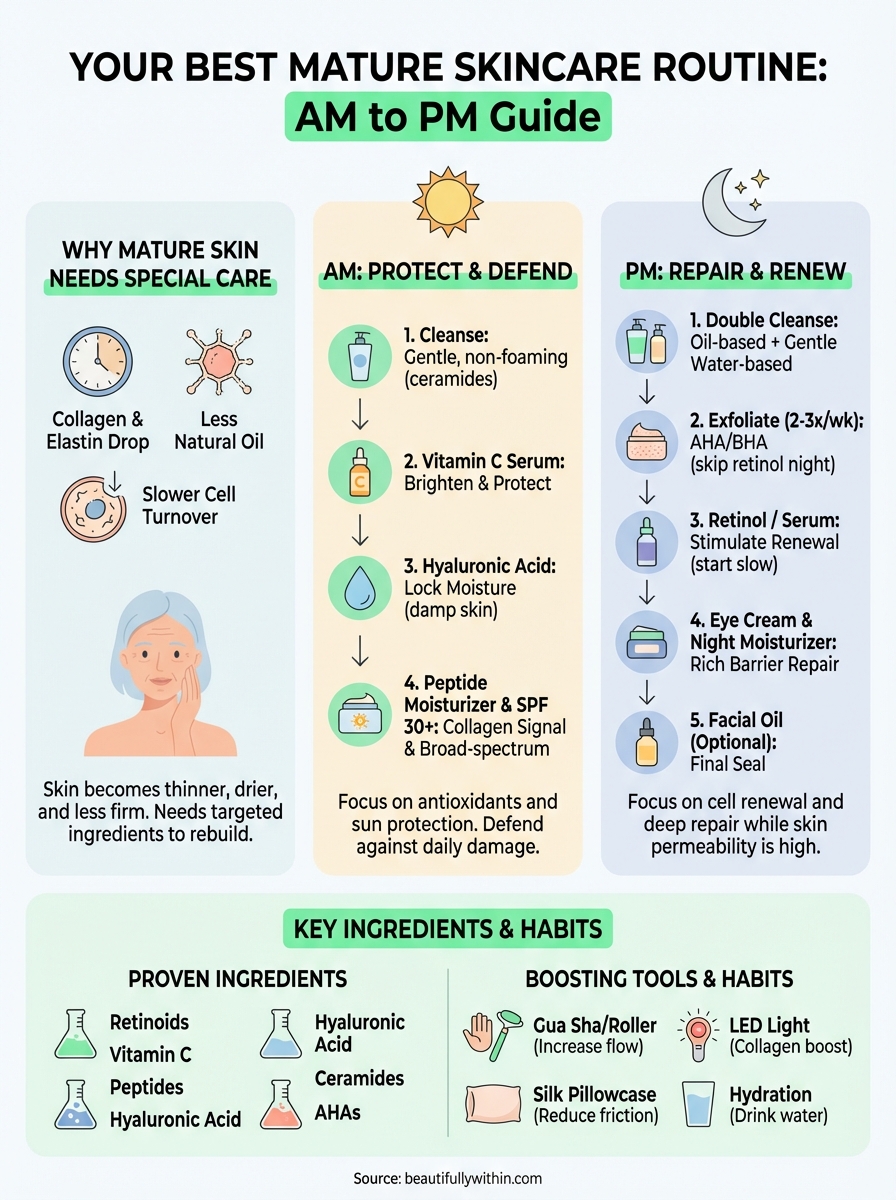
Your skin undergoes fundamental biological changes as you age. Collagen production drops by about 1% each year after your mid-20s, which means the structural support that kept your skin firm gradually weakens. At the same time, your skin produces less natural oil, leaving it drier and more prone to irritation. These changes aren't cosmetic quirks. They represent actual shifts in how your skin functions and what it needs to stay healthy.
What changes in aging skin
Three major changes define mature skin biology. Cell turnover slows from about 28 days to 45-60 days, which means dead skin cells linger longer on the surface and create a dull appearance. Elastin fibers break down, robbing your skin of its ability to snap back after stretching or movement. Your skin also becomes thinner, losing fatty tissue in the deeper layers that once provided cushioning and volume.
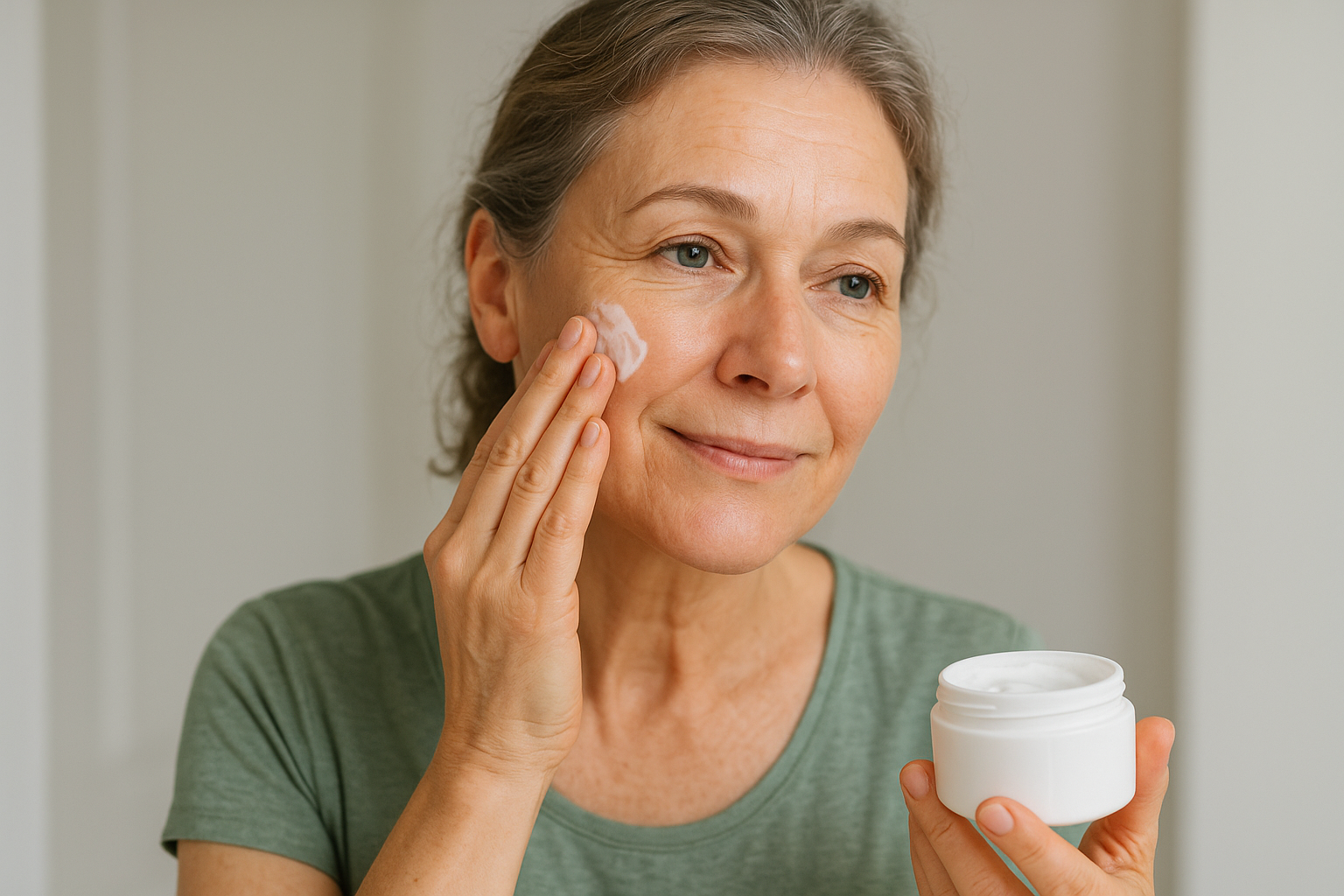
These changes make your skin more vulnerable. You'll notice that products absorb differently, irritation happens more easily, and damage from sun exposure becomes more visible. A basic cleanser and moisturizer routine that worked in your 20s simply can't address these deeper structural issues.
Why standard routines fall short
Generic skincare routines ignore the specific needs of mature skin. Most products target concerns like acne or oil control, which become less relevant as your skin produces less sebum. You need ingredients that actually rebuild what time breaks down, like retinoids for cell turnover and peptides for collagen support.
A skincare routine for mature skin must focus on barrier repair, hydration retention, and active ingredients that stimulate renewal rather than just surface-level cleansing.
Standard routines also skip layering strategies that help mature skin absorb products more effectively. Your thinner, drier skin needs a specific order of application to maximize ingredient penetration. Without this structure, you waste money on products that sit on the surface instead of working in the layers where aging actually happens.
Step 1. Build your daytime routine
Your morning routine sets up your skin's defense system for the entire day. Mature skin faces constant attack from UV rays, pollution, and environmental stress that accelerate aging. A proper daytime skincare routine for mature skin doesn't just make you look better. It actively protects against the damage that creates new wrinkles, dark spots, and sagging.
Why your morning routine matters most
Daytime is when your skin needs protection, not repair. While you sleep, your skin goes into recovery mode. When you wake up, it needs shields against external threats. UV exposure alone accounts for up to 80% of visible facial aging, which makes your morning routine your most important line of defense.
Your daytime products should focus on antioxidants and sun protection rather than aggressive treatments. Mature skin has a compromised barrier, so you need ingredients that defend without irritating. Morning application also matters because certain ingredients work better with sun exposure (like vitamin C), while others increase photosensitivity and belong only in your night routine.
Your morning routine exists to protect your skin from new damage, while your evening routine repairs existing damage.
Your step-by-step AM routine
Follow this exact order every morning for optimal absorption and protection. Each step builds on the previous one, creating layers of defense for your skin.
Step 1: Cleanse gently
Use a creamy, non-foaming cleanser that removes overnight buildup without stripping natural oils. Apply to damp skin and rinse with lukewarm water. Your morning cleanse should feel mild, not tight or squeaky. Look for cleansers with glycerin or ceramides that add moisture while cleaning.
Step 2: Apply a vitamin C serum
Pat 3-4 drops onto clean, slightly damp skin immediately after cleansing. Vitamin C brightens your complexion, builds collagen, and neutralizes free radicals from UV exposure. The dampness helps it penetrate deeper into your skin layers where it actually works.
Step 3: Layer on hyaluronic acid
Apply while your skin is still damp from the vitamin C serum. Hyaluronic acid pulls moisture from the air and locks it into your skin. This step plumps fine lines and creates a hydrated base for your moisturizer to seal in.
Step 4: Moisturize with peptides
Use a peptide-rich moisturizer designed for mature skin. Apply a nickel-sized amount and massage upward in gentle circles. Peptides signal your skin to produce more collagen, which directly addresses the structural loss that causes sagging and wrinkles.
Step 5: Protect with broad-spectrum SPF
Apply SPF 30 or higher as your final step, waiting 2-3 minutes after your moisturizer absorbs. Use a mineral sunscreen with zinc oxide if your skin reacts to chemical filters. Reapply every two hours if you spend extended time outdoors or near windows.
Wait 15 minutes before applying makeup to let your sunscreen set properly. This timing ensures each product layer absorbs fully and maximizes the protective benefits you need throughout the day.
Step 2. Build your night routine
Your skin does its heaviest repair work while you sleep. Night is when cell renewal peaks and your skin rebuilds damage from the day. This makes your evening skincare routine for mature skin the perfect time to use active ingredients that stimulate collagen production, accelerate cell turnover, and deeply hydrate. Unlike your morning routine that focuses on protection, your night routine focuses entirely on repair and renewal.
Why nighttime is for repair
Your skin's permeability increases at night, which means ingredients penetrate deeper and work more effectively. Blood flow to your face also increases during sleep, delivering more nutrients and oxygen to your skin cells. These biological changes create the ideal environment for powerful treatments that would be too harsh or unstable in daylight.
Mature skin responds best to nighttime retinoids and acids because these ingredients increase sun sensitivity. Retinol breaks down under UV exposure, so applying it at night protects its effectiveness while your skin repairs itself. You also avoid the photosensitivity that makes daytime use risky.
Nighttime skincare works with your body's natural repair cycle to rebuild the collagen, elasticity, and moisture that aging depletes.
Your evening routine should feel richer and more intensive than your morning one. Heavier textures absorb well overnight without interfering with makeup or sun protection. This is when you layer treatments that actually reverse signs of aging rather than just maintaining what you have.
Your step-by-step PM routine
Follow these steps every evening to maximize repair while you sleep. Each step prepares your skin for deeper penetration of the next product.
Step 1: Double cleanse
Start with an oil-based cleanser to dissolve makeup, sunscreen, and sebum. Massage it onto dry skin for 60 seconds, then rinse. Follow with a water-based gentle cleanser to remove any remaining residue. This two-step process ensures completely clean skin that can absorb treatments effectively.
Step 2: Exfoliate (2-3 times per week)
Apply a chemical exfoliant with AHAs or BHAs on nights you're not using retinol. Glycolic acid or lactic acid work well for mature skin. Wait 10-15 minutes before the next step to let the exfoliant work at the proper pH level.
Step 3: Apply your treatment serum
Use a pea-sized amount of retinol serum or retinoid cream on non-exfoliation nights. Start with retinol two nights per week and gradually increase as your skin adjusts. Apply to completely dry skin and wait 5 minutes before moisturizing. If you have sensitive areas, skip the eye zone and mouth corners.
Step 4: Add eye cream
Dot a rice-grain amount of eye cream around your orbital bone using your ring finger. Pat gently without pulling or tugging. Look for eye creams with peptides and ceramides specifically formulated for mature skin. This area needs extra support because the skin is thinner and shows aging first.
Step 5: Apply night moisturizer
Use a richer cream than your daytime moisturizer, one that contains ceramides, niacinamide, or hyaluronic acid. Apply a generous amount and massage upward in circular motions. Night creams for mature skin should feel substantial without being greasy or heavy.
Step 6: Seal with facial oil (optional)
Add 2-3 drops of facial oil as your final step if your skin still feels tight or dry. Rosehip, marula, or squalane oils work well for mature skin. Press the oil into your skin rather than rubbing it in. This creates an occlusive layer that locks in all the treatments you applied earlier.
Wait 20 minutes after your full routine before lying down to let products absorb fully. Your pillowcase will thank you, and your skin will get the full benefit of every layer.
Step 3. Choose the right products
The right products make the difference between a routine that works and one that wastes your money. Mature skin needs specific ingredients that target collagen loss, dryness, and compromised barrier function. Generic anti-aging claims mean nothing if the formula lacks the concentrations and delivery systems that actually penetrate your skin. You need to become a label reader who knows exactly what works and what belongs in the trash.
What to look for on the label
Read ingredient lists from top to bottom because ingredients appear in order of concentration. The first five ingredients make up the bulk of any product, so your active ingredients need to appear early in the list. If retinol shows up after preservatives and fragrance, you're not getting enough to make a difference.
Look for these proven ingredients in your skincare routine for mature skin:
- Retinol or retinoids (0.25% to 1% concentration)
- Vitamin C (L-ascorbic acid at 10-20% or stable derivatives like tetrahexyldecyl ascorbate)
- Peptides (Matrixyl, Argireline, or copper peptides)
- Hyaluronic acid (multiple molecular weights for deeper penetration)
- Niacinamide (5-10% concentration)
- Ceramides (ideally ceramides 1, 3, and 6-II)
- Alpha hydroxy acids (glycolic acid 5-10% or lactic acid 5-12%)
Concentrations matter as much as ingredient presence. A product with 0.01% retinol delivers nothing compared to one with 0.5%. Check percentages on the label or research the brand's formulation before buying. Most effective products list their active ingredient percentages clearly because they want you to know you're getting clinical-strength treatment.
Products without transparent ingredient percentages often hide weak formulations behind marketing claims instead of proven results.
Products that actually work for mature skin
Start with a gentle cleanser that cleans without stripping your skin's natural oils. Look for cream or oil-based formulas rather than foaming cleansers that contain harsh sulfates. Your cleanser should leave your skin feeling soft, not tight or squeaky.
Choose serums over all-in-one products because serums deliver higher concentrations of active ingredients. A vitamin C serum with 15% L-ascorbic acid works better than a moisturizer with vitamin C listed as the tenth ingredient. Layer lightweight serums under your moisturizer to target specific concerns like dark spots, fine lines, or loss of firmness.
Pick moisturizers based on your skin's texture needs. Gel-creams work if your skin still produces some oil, while rich creams suit truly dry mature skin. Both should contain barrier-repair ingredients like ceramides and cholesterol. Night creams should feel heavier than day creams because your skin can handle occlusive textures while you sleep.
What to avoid in your products
Skip products with fragrance or essential oils that irritate your already sensitive mature skin. These ingredients provide zero benefit while increasing inflammation that accelerates aging. Even natural fragrances like lavender oil or rose extract can trigger reactions in compromised skin barriers.
Avoid alcohol denat (SD alcohol) listed in the first five ingredients because it strips moisture and damages your barrier over time. Some fatty alcohols like cetyl alcohol are fine, but drying alcohols have no place in mature skin care. Also skip harsh physical scrubs with walnut shells or apricot kernels that create micro-tears in your thinner, more fragile skin. Chemical exfoliants with AHAs work better and more safely for your needs.
Step 4. Upgrade with tools and habits
Your skincare routine for mature skin works better when you pair products with the right tools and lifestyle choices. These additions don't replace your core routine, but they amplify results by improving product absorption, stimulating circulation, and supporting your skin's natural repair processes. Think of tools and habits as the multipliers that turn a good routine into an exceptional one.
Tools that boost your routine
Face massage tools like gua sha stones or jade rollers increase blood flow and lymphatic drainage, which reduces puffiness and helps products penetrate deeper. Use these tools after applying your serum but before your moisturizer. Drag the tool upward and outward in gentle strokes, following the natural contours of your face. Store your tools in the refrigerator for extra de-puffing benefits in the morning.

LED light therapy devices target specific aging concerns through different wavelengths. Red light (630-660nm) stimulates collagen production and reduces inflammation, while near-infrared light (810-850nm) penetrates deeper to support healing. Use your LED device for 10-15 minutes daily after cleansing but before applying products. These tools cost more upfront but deliver professional-level treatment at home without the recurring expense of clinic visits.
Tools enhance your routine's effectiveness but never replace the fundamental importance of proven active ingredients and consistent application.
Daily habits that support aging skin
Sleep on a silk or satin pillowcase to reduce friction that creates sleep lines and wrinkles. Cotton pillowcases absorb moisture from your skin and create drag that etches lines into your face night after night. Silk prevents both problems while keeping your nighttime products on your skin instead of your pillow.
Drink water throughout the day to support your skin's moisture levels from the inside. Hydration affects how well your skin barrier functions and how plump your cells appear. Aim for half your body weight in ounces daily as a baseline, adjusting based on activity level and climate.
Protect your skin from repetitive facial expressions by becoming aware of tension patterns. Squinting, frowning, and jaw clenching all create dynamic wrinkles that eventually become permanent. Notice when you're making these expressions and consciously relax your face muscles throughout the day.
Next steps for your routine
You now have a complete skincare routine for mature skin that targets the specific changes your skin experiences with age. Start by implementing your morning routine for one week, then add your evening routine gradually. This phased approach prevents overwhelming your skin with too many new products at once.
Track your progress with weekly photos taken in the same lighting and position. Changes happen slowly, so visual records help you see improvements that daily mirror checks miss. Give each new product at least four weeks before deciding if it works for your skin.
Browse our curated collection of products specifically formulated for mature skin concerns. Consistency matters more than perfection, so stick with your routine even on tired nights when you'd rather skip steps.
✨ Shop the Look at Beautifully Within
Loved this guide? Discover our hand-picked picks that pair perfectly with your routine:
- 👉 Fresh Start Hydrating Cleanser & Toner Duo — Skincare Set
- 👉 Korean Moisturizing & Repair Skincare Gift Set — Skincare Set
- 👉 Rice Brightening Skincare Collection — 6-Piece Ritual — Skincare Set
- 👉 Freeze-Dried Brightening Facial Treatment — Skincare Set
New customer? Get 15% off orders $50+ with code WITHIN15 — plus free shipping over $75.
0 comments