

Morning Skincare Routine: Step-by-Step in the Right Order
You splash water on your face. You grab whatever products are within reach. You hope it all works together. But deep down you know this random approach might not be giving your skin what it needs. And you wonder if there's a better way to start your day.
The truth is that your morning skincare routine needs structure. When you apply products in the right order, each one works better. Your skin absorbs more of the good stuff. You get lasting hydration, protection from the sun, and a smooth base for makeup if you wear it. Plus you stop wasting money on products that never had a chance to work.
This guide walks you through a simple morning skincare routine that actually makes sense. You'll learn the five essential steps, why each one matters, and how to pick the right products for your skin type. Whether you're dealing with dryness, oiliness, sensitivity, or you just want healthier skin, you'll know exactly what to do each morning. No guesswork. No confusion. Just clear steps that set you up for great skin all day long.
Why your morning skincare matters
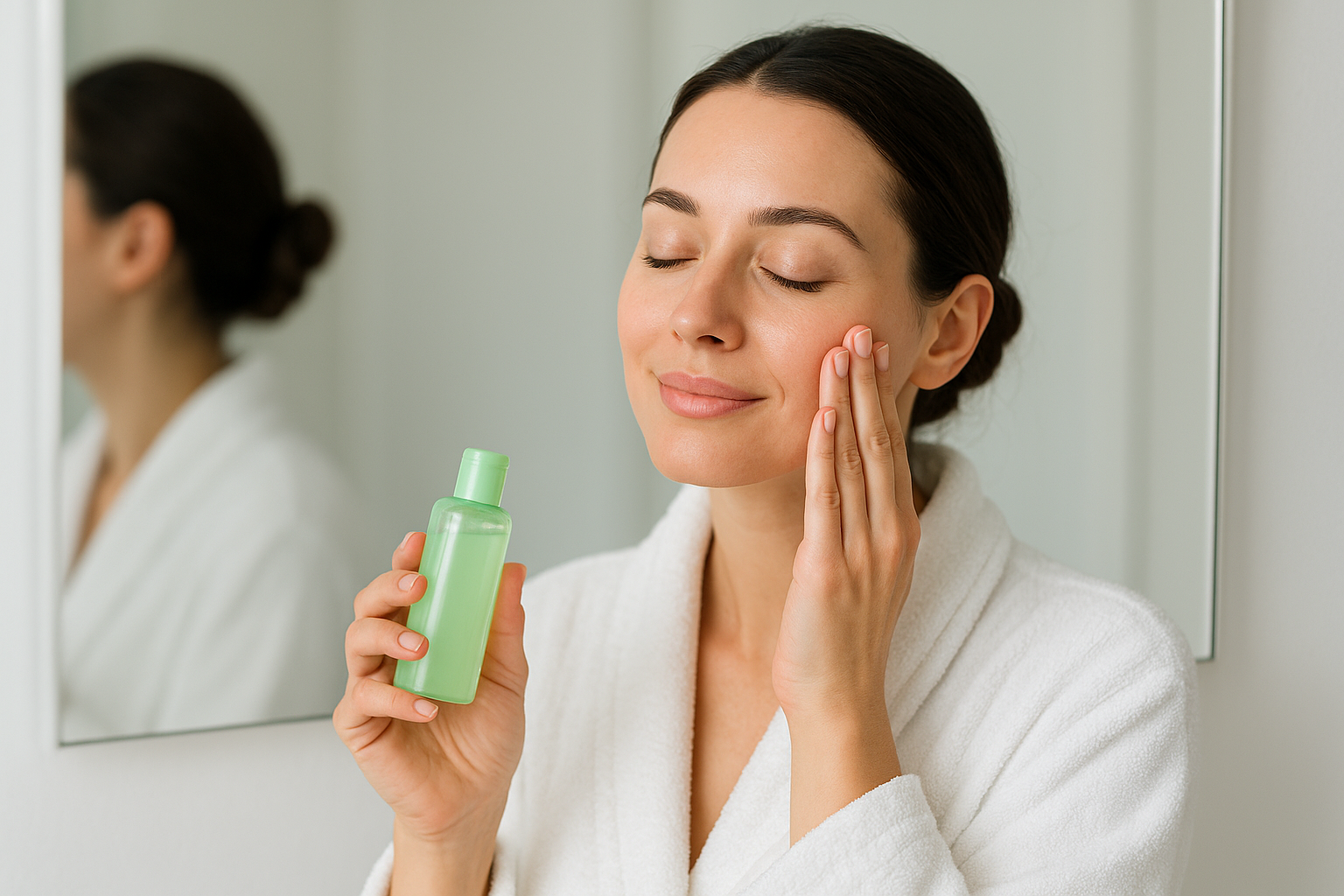
Your skin works hard overnight. It repairs damage, produces new cells, and sheds dead ones while you rest. By morning, your face carries a mix of natural oils, sweat, and leftover residue from your nighttime products. This buildup needs attention before you face the day. A proper morning skincare routine removes what your skin has shed, delivers fresh hydration, and creates a protective barrier against environmental stress.
Your skin rebuilds while you sleep
During sleep, your skin cell turnover speeds up. Your body focuses energy on healing and renewal instead of defending against external threats. Blood flow to your face increases, which is why you might wake up with a slight glow or puffiness. Your skin loses more water at night through a process called transepidermal water loss. This natural overnight cycle means your morning routine serves a different purpose than your evening one. You need to rehydrate, rebalance, and reset your skin for what lies ahead.
Morning products prep your skin for the day
The products you apply in the morning do more than make your skin look good. They shield you from UV damage, which happens even on cloudy days and through windows. They lock in moisture so your skin stays comfortable instead of getting tight and flaky by noon. Your morning routine also creates a smooth canvas if you wear makeup, helping foundation and other products sit better and last longer throughout the day.
A morning skincare routine that follows the right order lets each product work at its full potential instead of fighting against the others.
Think of your morning routine as preventive maintenance rather than just a cosmetic step. You protect your skin from pollution, blue light from screens, and the drying effects of indoor heating or air conditioning. Each layer you apply builds on the previous one, creating a system that keeps your skin healthy today and helps prevent visible aging down the road.
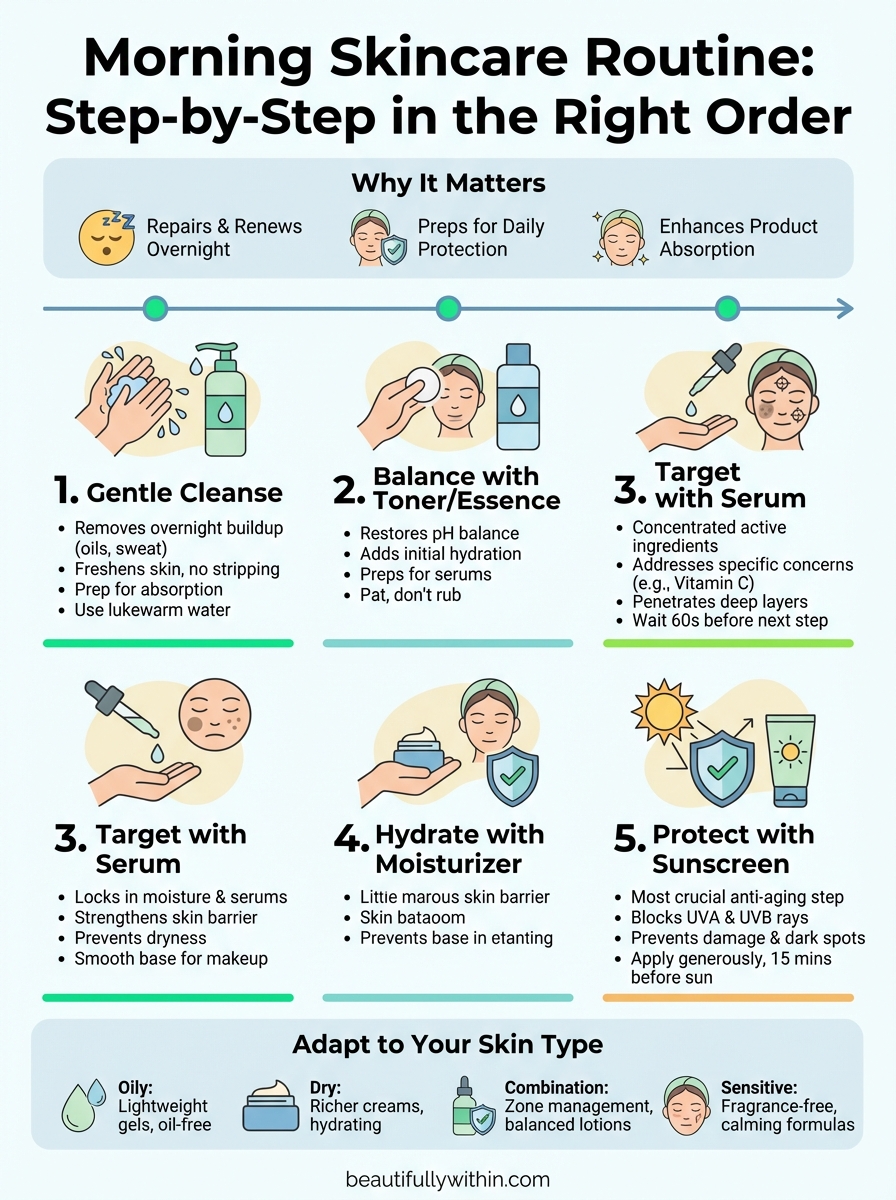
Step 1. Start with a gentle cleanse
Your first step removes the natural oils, sweat, and product residue that built up overnight. You don't need an aggressive scrub here. Your skin hasn't faced pollution or makeup yet, so a gentle cleanse does the job without stripping away the protective barrier your skin needs. This step prepares a clean surface for everything that follows in your morning skincare routine.
Why morning cleansing differs from evening
Your morning cleanse serves a lighter purpose than your nighttime wash. You face fewer impurities in the morning because you've been resting in a clean environment. Your skin has produced sebum and shed some dead cells, but it hasn't collected dirt, makeup, or environmental pollutants. A mild cleanser removes just enough to refresh without disrupting your skin's natural moisture balance. If you over-cleanse in the morning, you trigger your skin to produce extra oil to compensate, which can lead to that greasy feeling by afternoon.
A gentle morning cleanse removes overnight buildup without compromising the protective oils your skin needs to stay healthy throughout the day.
How to cleanse your face properly
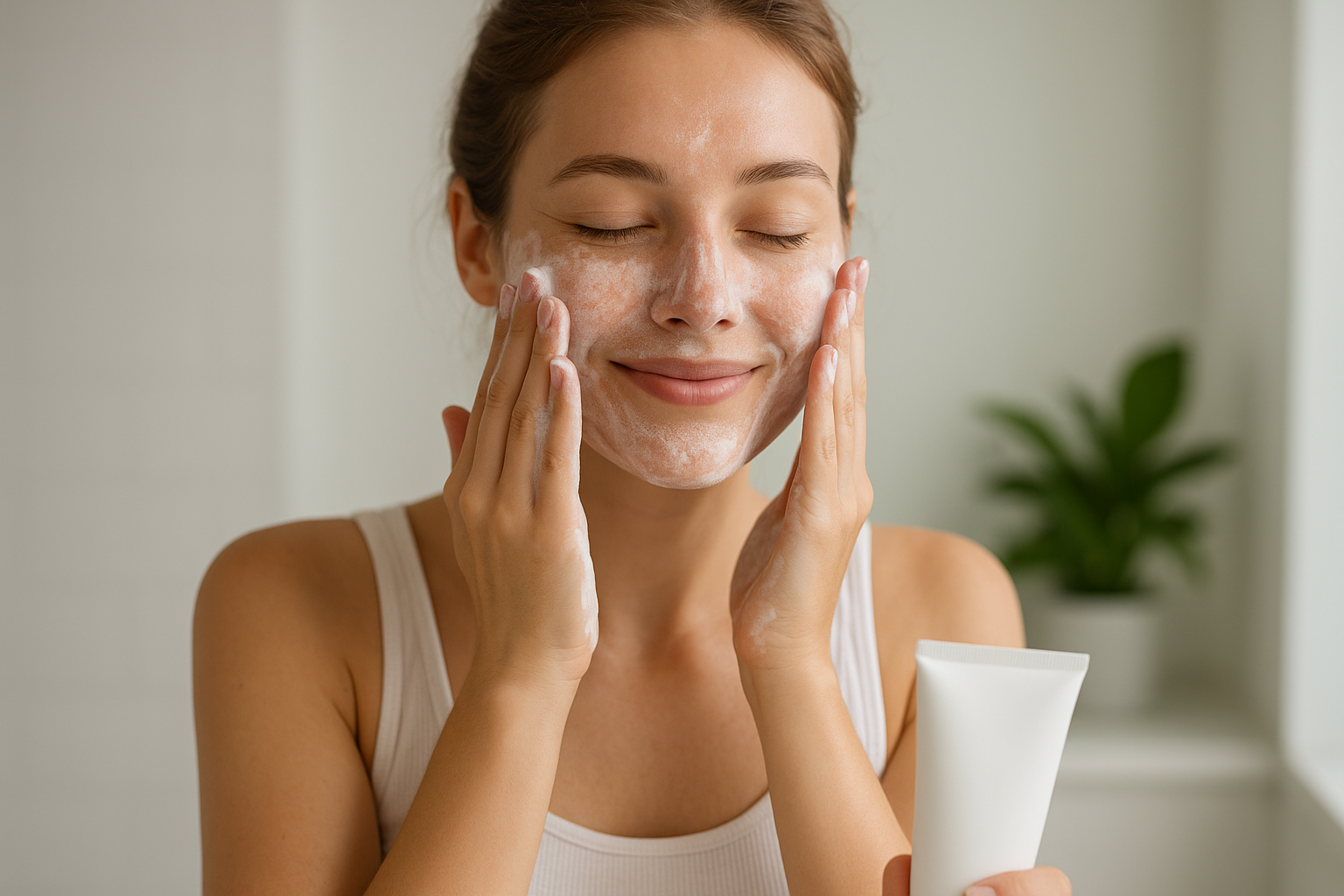
Start by wetting your face with lukewarm water, not hot. Hot water strips your skin and can cause redness or irritation. Dispense a small amount of cleanser into your palm, about the size of a dime. Gently massage the product onto your skin using circular motions for 30 to 60 seconds. Focus on your forehead, nose, chin, and cheeks, where oil tends to collect. Rinse thoroughly with lukewarm water and pat your face dry with a clean towel. Never rub your skin dry because that creates unnecessary friction.
Picking your morning cleanser
Your cleanser choice depends on your skin type. If you have dry or sensitive skin, look for cream or milk cleansers that hydrate as they clean. Oily or combination skin does better with gel or foaming cleansers that remove excess oil without leaving residue. For normal skin, you can use almost any gentle cleanser that doesn't contain harsh sulfates or strong fragrances. Many people with dry skin even skip cleanser in the morning and just rinse with water, then move straight to toner. That works if your skin feels comfortable, though most people benefit from using at least a mild cleanser to ensure the products that follow absorb properly.
Step 2. Balance with toner or essence
After cleansing, your skin needs to restore its pH balance and prepare for the products that follow. Toner or essence fills this gap in your morning skincare routine. This step might seem optional, but it makes a real difference in how well your serums and moisturizers absorb. You add a layer of hydration right when your skin needs it most, and you create the perfect foundation for everything else.
What toner and essence do for your skin
Toner and essence both deliver lightweight hydration and help your skin absorb the next products more effectively. Traditional toners were harsh and alcohol-based, designed to strip oil. Modern toners work differently. They replenish moisture, soothe irritation, and sometimes deliver active ingredients like niacinamide or hyaluronic acid. Essences originated in Korean skincare and tend to be slightly thicker than toners. They focus more on deep hydration and often contain fermented ingredients or concentrated extracts that improve skin texture over time.
Toner and essence prep your skin to absorb serums and moisturizers more effectively by balancing pH and adding a base layer of hydration.
How to apply toner or essence
Pour a small amount onto a cotton pad or directly into your palms. If you use a cotton pad, gently sweep it across your face in outward motions, avoiding harsh rubbing. Many people prefer the patting method with their hands because it wastes less product and feels more gentle. Press the toner or essence into your skin using light tapping motions. Focus on your cheeks, forehead, and any dry areas that need extra attention. Wait 30 to 60 seconds before moving to your next step, giving your skin time to absorb the product fully.
Choosing between toner and essence
You don't need both. Pick the one that matches your skin concerns and budget. Toners work well if you want a simple, refreshing step that removes any last traces of cleanser and preps your skin quickly. They tend to be more affordable and easier to find. Essences make more sense if you want to add targeted benefits like brightening or anti-aging properties in a lightweight formula. If your skin feels tight after cleansing, lean toward a hydrating toner or essence with ingredients like glycerin or aloe. Oily skin benefits from toners with witch hazel or tea tree oil that help control sebum without drying you out.
Step 3. Target concerns with serum
Serums deliver concentrated active ingredients deep into your skin where they can work most effectively. This step in your morning skincare routine targets your specific concerns, whether that means fading dark spots, fighting fine lines, or controlling breakouts. Serums have a lightweight, fast-absorbing formula that penetrates layers your moisturizer can't reach. You apply them after toner because your freshly balanced skin absorbs these powerful ingredients better.
Why serums work differently than other products
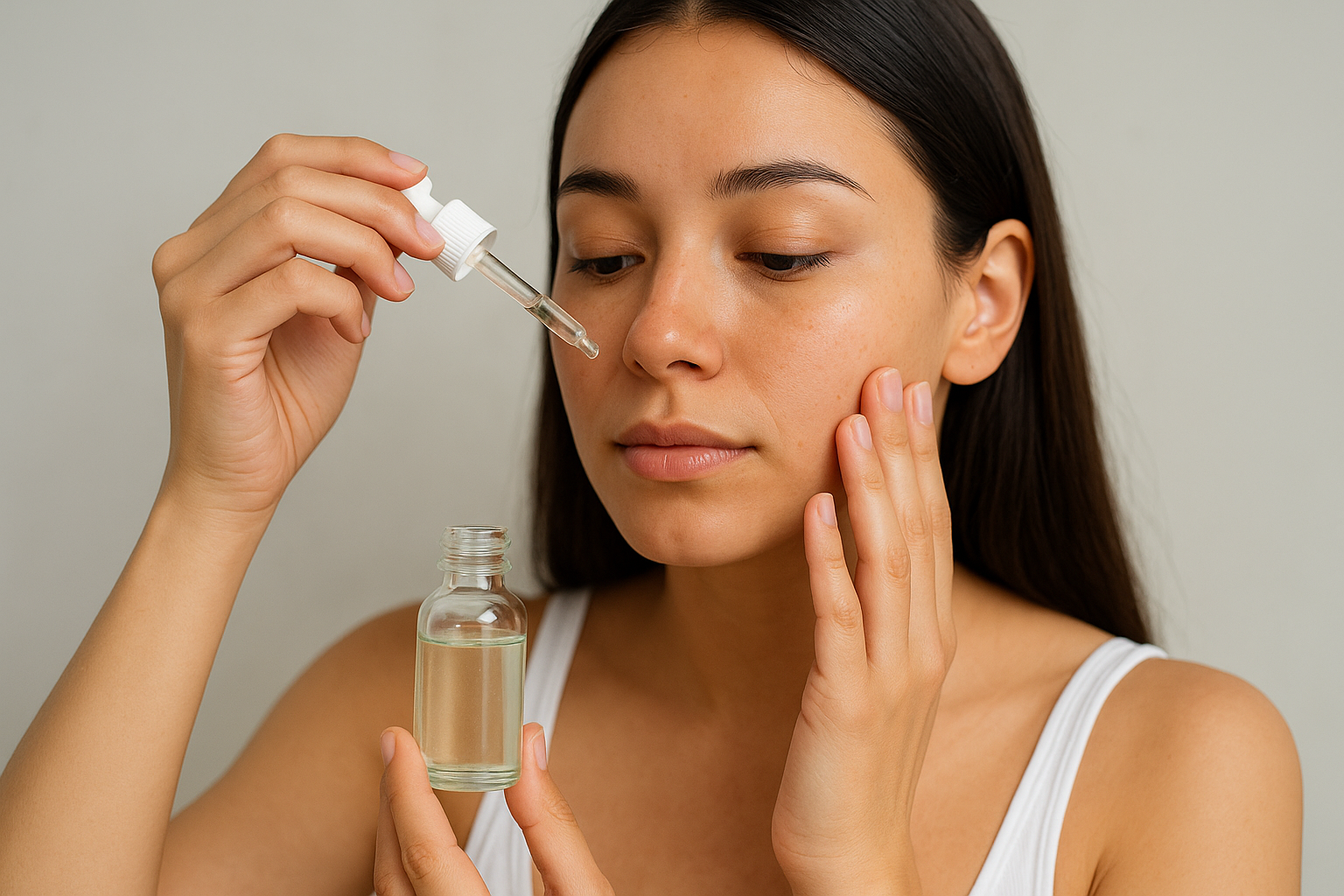
Serums contain higher concentrations of active ingredients compared to moisturizers or toners. The molecules in serums are smaller, which lets them travel deeper into your skin's layers. A moisturizer sits mostly on the surface to create a protective barrier, but a serum goes underneath to address issues at their source. You get targeted treatment for problems like hyperpigmentation, acne, or loss of firmness. Most people see visible changes within a few weeks of consistent serum use because these products deliver ingredients your skin can actually use.
Serums penetrate deeper than moisturizers because they contain smaller molecules and higher concentrations of active ingredients.
How to apply your morning serum
Dispense 2 to 3 drops of serum into your palm or directly onto your fingertips. You don't need much because these formulas are concentrated. Press the serum gently into your skin using upward motions, starting from the center of your face and working outward. Focus on areas where you need the most help, like your forehead for wrinkles or your cheeks for dark spots. Avoid rubbing or pulling at your skin. Let the serum absorb for 60 seconds before moving to moisturizer. This wait time matters because it prevents product pilling and ensures maximum absorption.
Choosing serums for your morning routine
Morning serums should focus on protection and prevention rather than aggressive treatment. Vitamin C serums work perfectly in the morning because they protect against free radical damage from sun exposure and pollution. They also brighten your complexion and fade existing dark spots over time. Niacinamide serums help control oil production, minimize pores, and strengthen your skin barrier. Hyaluronic acid serums deliver intense hydration without feeling heavy, which keeps your skin plump throughout the day.
Save your retinol and strong acid treatments for nighttime. These ingredients make your skin more sensitive to sunlight and work better during your skin's natural repair cycle. If you deal with breakouts, look for a morning serum with salicylic acid or tea tree oil that treats acne without increasing sun sensitivity. For anti-aging, peptide serums build collagen and improve firmness while playing nice with your sunscreen. You can layer two serums if you have multiple concerns, but apply the thinnest consistency first, then wait a minute before adding the second.
Step 4. Hydrate with moisturizer
Moisturizer seals in everything you've applied so far and creates a protective barrier that keeps your skin hydrated throughout the day. This step in your morning skincare routine prevents water loss, shields your skin from environmental stress, and creates a smooth base for makeup if you wear it. Without moisturizer, your serum evaporates quickly and your skin produces extra oil to compensate for dryness, leaving you with either tight, flaky patches or an unwanted greasy shine by midday.
Why moisturizer locks in your previous steps
Your serum delivers powerful ingredients, but those ingredients need a protective layer to stay where your skin can use them. Moisturizer acts like a seal that prevents evaporation and helps active ingredients work longer. It also strengthens your skin barrier, which is your first line of defense against pollution, bacteria, and irritation. A healthy barrier keeps moisture in and harmful elements out, which means fewer breakouts, less redness, and better overall skin health.
Moisturizer doesn't just add hydration; it creates a protective seal that prevents water loss and helps your serum ingredients work more effectively.
How to apply moisturizer correctly
Warm a pea-sized amount of moisturizer between your fingertips before applying. This makes the product spread more easily and feel less heavy on your skin. Press the moisturizer onto your face using gentle upward motions, starting from your neck and working up to your forehead. Don't forget your neck and jawline, which show signs of aging just as quickly as your face. Use your ring finger under your eyes if your moisturizer is safe for that area, since this finger applies the least pressure. Wait two to three minutes before moving to sunscreen so your moisturizer absorbs fully and doesn't pill or ball up under your SPF.
Finding your ideal morning moisturizer
Your skin type determines which moisturizer works best for you. Oily skin needs lightweight, gel-based moisturizers that hydrate without adding shine or clogging pores. Look for labels that say "oil-free" or "non-comedogenic." Dry skin requires richer cream formulas with ingredients like ceramides, shea butter, or squalane that provide lasting moisture. Combination skin does well with lotion-textured moisturizers that balance hydration without overwhelming your T-zone. Sensitive skin needs fragrance-free options with soothing ingredients like colloidal oatmeal or centella.
Some moisturizers combine hydration with other benefits. You might find options with built-in SPF, though many dermatologists recommend using separate sunscreen for better protection. Others include light-reflecting particles that give you a subtle glow or tinted formulas that even out your skin tone while they moisturize.
Step 5. Protect with sunscreen
Sunscreen stands as the most important product in your morning skincare routine because it prevents UV damage that causes premature aging, dark spots, and skin cancer. You need broad-spectrum protection against both UVA and UVB rays, even on cloudy days when up to 80% of UV radiation still reaches your skin. This final step shields everything you've applied before it and keeps your skin healthy for the long term. Without daily sunscreen, all your other skincare efforts lose much of their value because sun damage undoes the benefits faster than your products can deliver them.
Why sunscreen completes your morning routine
Sun exposure triggers free radical damage that breaks down collagen, creates wrinkles, and causes uneven pigmentation. Your vitamin C serum and moisturizer help protect against these issues, but they can't block UV rays from reaching your skin in the first place. Sunscreen acts as a physical shield that either reflects or absorbs harmful radiation before it penetrates your skin layers. Dermatologists point to consistent sunscreen use as the single most effective anti-aging measure you can take, more powerful than any serum or treatment.
Daily sunscreen prevents up to 90% of visible signs of aging by blocking the UV damage that breaks down collagen and creates dark spots.
Research shows that people who wear sunscreen daily develop fewer wrinkles, less hyperpigmentation, and maintain more even skin tone compared to those who skip this step. Protection matters year-round, not just during summer. UV rays penetrate windows while you work or drive, and reflection off snow, water, or pavement increases your exposure even when you're not in direct sunlight.
How much sunscreen to apply and when
You need approximately one-fourth of a teaspoon to cover your face properly, which equals about two finger lengths squeezed from the tube. Most people apply far less than this, which cuts protection by more than half. Dot the sunscreen on your forehead, cheeks, nose, and chin, then blend it evenly across your entire face and down your neck. Don't forget your ears and the back of your neck if they're exposed. Wait at least 15 minutes after application before going outside to let the sunscreen set and bond with your skin for maximum effectiveness.
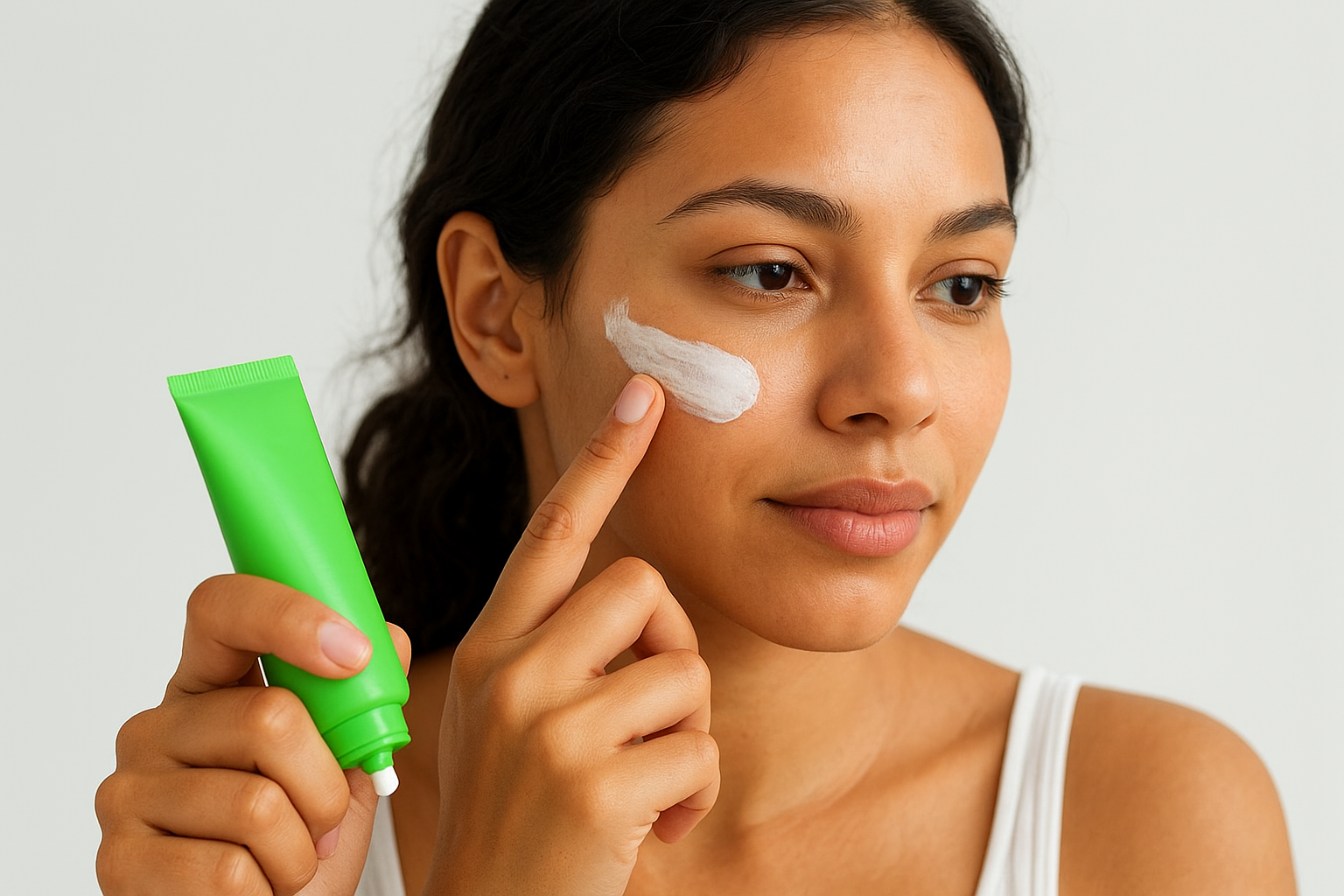
Apply sunscreen as the absolute last step in your skincare routine, after your moisturizer has fully absorbed. If you wear makeup, let your sunscreen set for those 15 minutes before applying foundation or concealer. Reapply every two hours when you're outdoors, or after swimming or heavy sweating. Indoor workers can often skip midday reapplication unless they sit near windows.
Choosing the right SPF for daily wear
Look for SPF 30 or higher for everyday protection. SPF 30 blocks about 97% of UVB rays, while SPF 50 blocks about 98%. The difference seems small, but it matters if you spend significant time outdoors. Choose broad-spectrum formulas that protect against both UVA rays (which cause aging) and UVB rays (which cause burning). Chemical sunscreens absorb UV radiation and convert it to heat, feeling lighter on your skin and working well under makeup. Physical or mineral sunscreens with zinc oxide or titanium dioxide sit on top of your skin and reflect rays away, which sensitive skin often tolerates better but may leave a white cast on deeper skin tones.
Adapt your routine to your skin type
Your morning skincare routine works best when you match each product to your specific skin type and its unique needs. The five core steps stay the same, but the formulas you choose and how you apply them change based on whether your skin runs oily, dry, combination, or sensitive. This customization turns a generic routine into one that actually solves your daily skin challenges instead of creating new ones.
Oily skin needs lightweight layers
Your oily skin produces excess sebum throughout the day, which leads to shine, enlarged pores, and potential breakouts. Start with a gel or foaming cleanser that removes oil without triggering your skin to produce more. Skip heavy cream moisturizers and choose oil-free gel formulas with dimethicone or hyaluronic acid that hydrate without adding grease. Your serum should contain niacinamide or salicylic acid to control oil production and keep pores clear. Pick a lightweight, matte-finish sunscreen labeled oil-free or non-comedogenic. These formulas absorb quickly and won't leave you looking shiny within an hour.
Dry skin requires richer formulas
Dry skin loses moisture faster than it can produce natural oils, leaving you with tightness, flaking, and sometimes rough patches. Use a creamy or milk cleanser that cleans without stripping your protective oils. Layer a hydrating toner with glycerin or hyaluronic acid immediately after cleansing to lock in moisture. Choose serums with hyaluronic acid, peptides, or ceramides that draw water into your skin and repair your barrier. Your moisturizer should feel rich and nourishing, with ingredients like shea butter, squalane, or oils that create a protective seal. Pick a sunscreen with added moisturizing ingredients rather than alcohol-based formulas that dry you out.
Match your product textures to your skin type by choosing gel formulas for oily skin, cream formulas for dry skin, and lotion textures for combination or normal skin.
Combination skin demands zone management
Combination skin means your T-zone runs oily while your cheeks stay normal or dry. This common pattern requires a targeted approach to your morning skincare routine. Use a gentle gel cleanser that balances without extremes. Apply your toner everywhere, but consider using a mattifying version on your forehead and nose. When you apply serum and moisturizer, use lighter amounts on oily areas and slightly more on dry zones. Some people keep two moisturizers and apply the gel version to their T-zone and a cream version to their cheeks. Your sunscreen should have a balanced texture that doesn't emphasize either oiliness or dryness.
Sensitive skin calls for minimal irritation
Sensitive skin reacts to fragrance, alcohol, and harsh active ingredients with redness, burning, or breakouts. Choose a fragrance-free cream cleanser with minimal ingredients and no sulfates. Skip toners with alcohol or strong acids, opting instead for calming formulas with centella or chamomile. Your serum should focus on barrier repair with ceramides or niacinamide rather than aggressive acids or retinol. Use a gentle, fragrance-free moisturizer designed for sensitive skin. Pick a physical sunscreen with zinc oxide or titanium dioxide rather than chemical filters, since sensitive skin tolerates mineral formulas better even though they may leave a slight white cast.
Bring your routine to life
You now have a complete morning skincare routine that follows the right order and makes sense for your skin. Each step builds on the previous one, creating a system that protects your skin throughout the day while addressing your specific concerns. The key to seeing results lies in consistency, not perfection. Start with the basics if you feel overwhelmed, then add steps as you get comfortable with your routine.
Your skin changes with seasons, stress, and age, so expect to adjust your products over time. Pay attention to how your skin responds after a few weeks. When you commit to this structured approach each morning, you give your skin the best chance to stay healthy, hydrated, and protected from damage that speeds up aging.
Ready to build your morning skincare routine? Explore quality products that fit each step and match your skin type, so you can start your day with confidence.
✨ Shop the Look at Beautifully Within
Loved this guide? Discover our hand-picked picks that pair perfectly with your routine:
- 👉 Fresh Start Hydrating Cleanser & Toner Duo — Skincare Set
- 👉 Rice Brightening Skincare Collection — 6-Piece Ritual — Skincare Set
- 👉 Blueberry Radiance Skincare Collection — 4-Piece Set — Skincare Set
- 👉 Brightening Skincare Trio — Toner, Serum & Cream — Skincare Set
New customer? Get 15% off orders $50+ with code WITHIN15 — plus free shipping over $75.
0 comments