

Skincare Routine for Dry Skin: Derm-Approved AM-to-PM Steps
Your face feels tight after washing. Flakes appear by midday no matter how much moisturizer you slather on. That uncomfortable tightness never quite goes away. If this sounds familiar, your skin is begging for a routine that actually works for dryness instead of fighting against it.
The fix is simpler than you think. A strategic morning and night routine built around hydration can transform dry, uncomfortable skin into a soft, healthy looking complexion. You need the right ingredients in the right order. You need products that lock in moisture instead of stripping it away.
This guide walks you through everything your dry skin needs. You'll learn how to spot true dryness, which ingredients dermatologists recommend, and how to build both morning and evening routines that deliver real results. We'll cover adjustments for sensitive or acne prone skin, budget friendly product choices, and lifestyle tweaks that support your efforts. By the end, you'll have a complete roadmap for relieving dryness and maintaining comfortable, hydrated skin every single day.
What dry skin is and how to spot it
Dry skin happens when your skin barrier can't hold onto water effectively. Your outermost layer loses moisture faster than it can replace it, which leaves your face feeling tight, rough, and uncomfortable. Unlike oily skin that overproduces sebum or combination skin that acts differently across zones, dry skin lacks sufficient natural oils across your entire face. This shortage creates visible cracks in your skin barrier and allows water to evaporate too quickly. The result is a complexion that never feels quite comfortable, even after you moisturize.
Signs your skin is truly dry
You'll recognize dry skin through several telltale signs that show up throughout the day. Flaking and visible patches appear most often around your nose, cheeks, and forehead. Your skin feels tight immediately after cleansing, almost like it's shrinking. Fine lines become more visible because dehydrated skin emphasizes every crease. You might notice rough texture when you run your fingers across your face, or see dull, ashy undertones instead of a healthy glow.

Dry skin shows consistent symptoms across your entire face, while dehydrated skin can affect any skin type temporarily.
Physical discomfort separates genuinely dry skin from other conditions. Itching, redness, and sensitivity all point to a compromised barrier. Your makeup sits poorly on top of dry patches and emphasizes flakes you didn't even know existed. Products that work beautifully on other skin types might sting or burn when you apply them.
How dry skin differs from dehydrated skin
Many people confuse dry skin with dehydrated skin, but they require different approaches in a skincare routine for dry skin. Dry skin lacks oil, while dehydrated skin lacks water. You can have oily yet dehydrated skin that produces excess sebum but still feels tight. Dry skin is a skin type you're born with, controlled by genetics and how much oil your glands produce. Dehydration is a temporary condition caused by weather, diet, or harsh products that any skin type can experience.
Core ingredients that actually hydrate
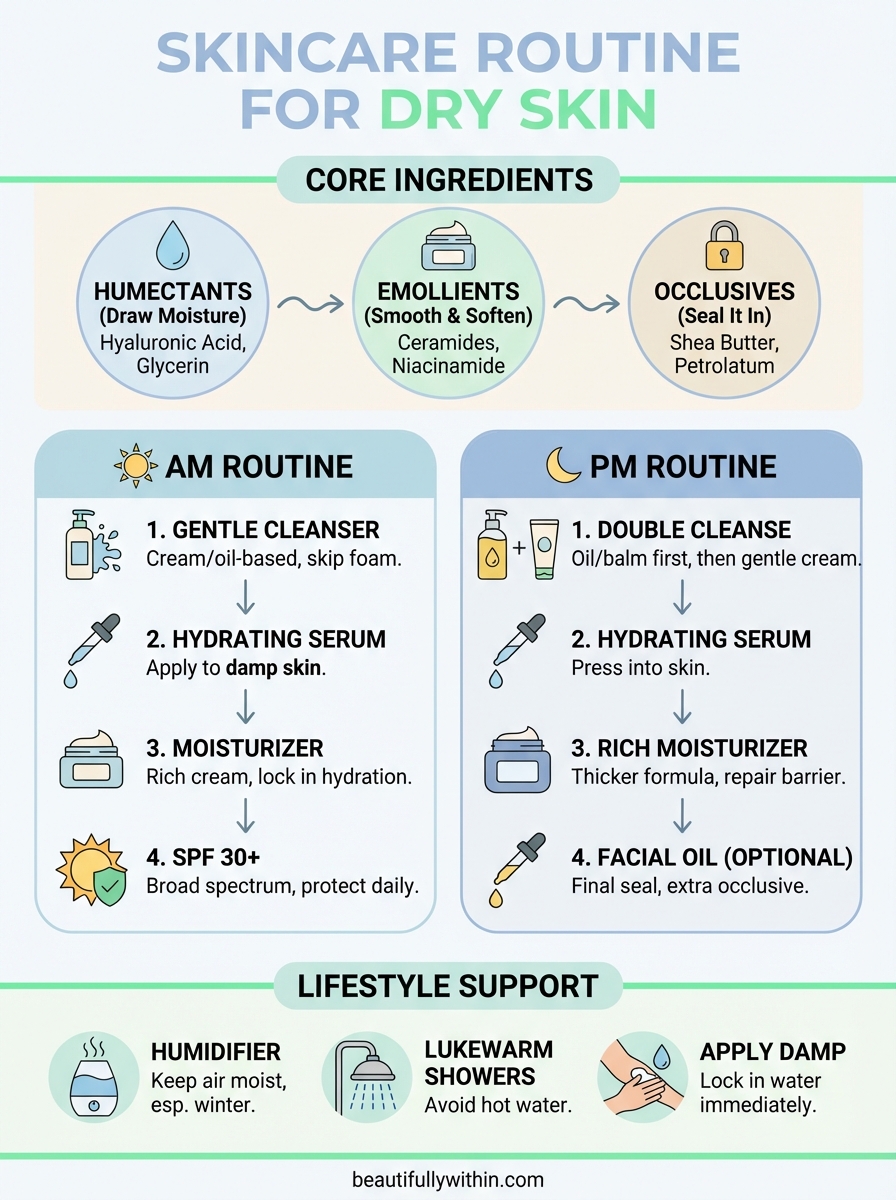
Building an effective skincare routine for dry skin starts with understanding which ingredients actually deliver hydration and which just sit on the surface. Your skin needs three types of ingredients working together: humectants that draw water in, emollients that smooth rough texture, and occlusives that lock everything down. Each category plays a specific role in repairing your compromised barrier and maintaining moisture throughout the day. When you know what to look for on product labels, you can choose formulas that work with your skin instead of against it.
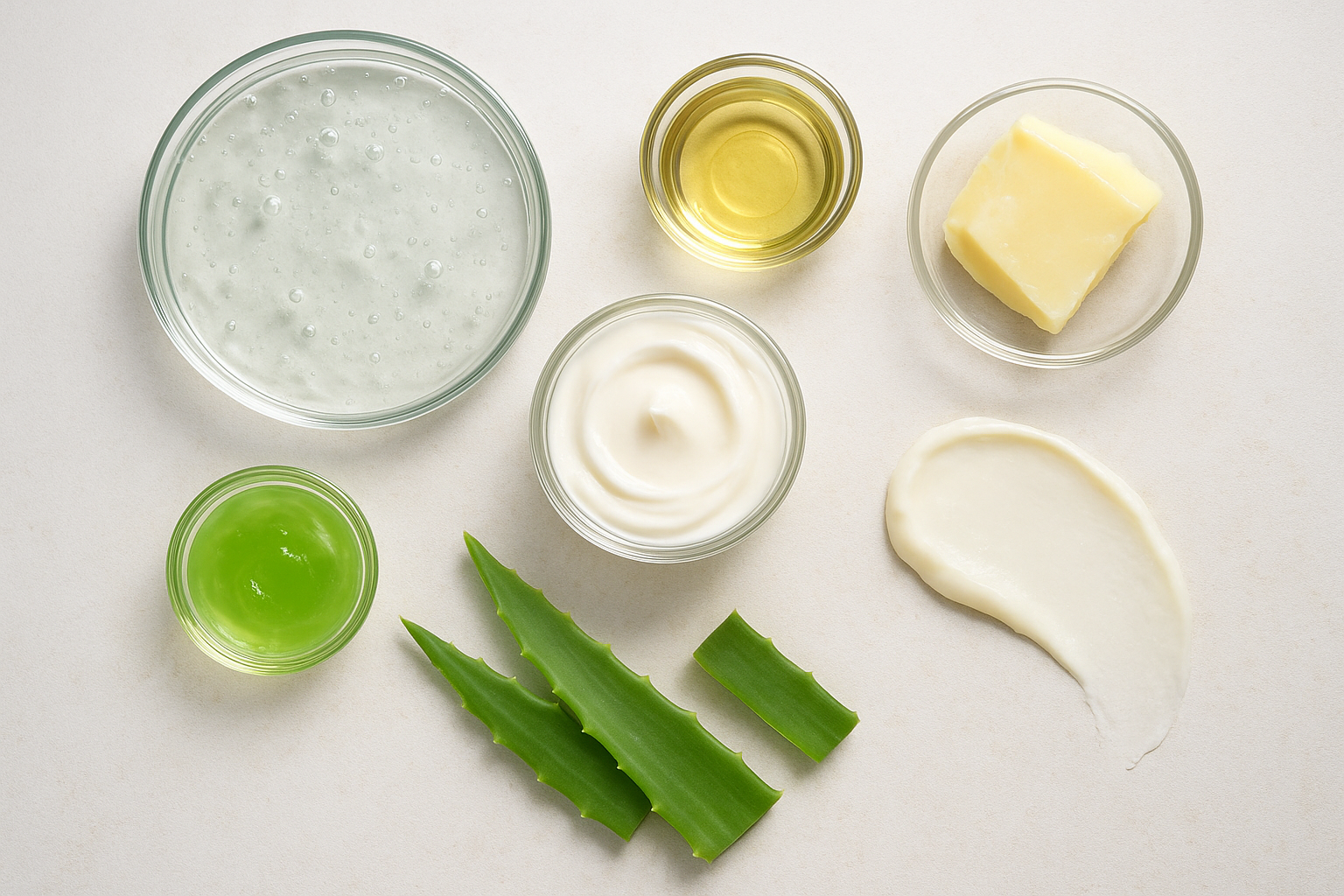
Humectants that pull moisture in
Humectants act like magnets for water molecules. They draw moisture from the air and from deeper layers of your skin up to the surface, where you need it most. Hyaluronic acid stands as the most powerful humectant available in skincare products. This ingredient holds up to 1,000 times its weight in water, which makes it incredibly effective for plumping dry, dehydrated skin. You'll find hyaluronic acid listed on ingredient labels as sodium hyaluronate or hyaluronic acid itself.
Hyaluronic acid can hold up to 1,000 times its weight in water, making it the most effective humectant for dry skin.
Glycerin ranks as another reliable humectant that appears in countless moisturizers and serums. It pulls water into your skin and helps prevent moisture loss throughout the day. Look for products that list glycerin within the first five ingredients to ensure you're getting a meaningful concentration. Other effective humectants include panthenol (vitamin B5), sodium PCA, and urea, which also offers gentle exfoliation to remove dry flakes without irritation.
Emollients that smooth and soften
Emollients fill in the cracks between your skin cells to create a smoother surface. They soften rough patches and improve how your skin feels to the touch. Ceramides deserve special attention because they're naturally present in your skin barrier and decrease as you age or when your skin becomes damaged. Products that contain ceramides 1, 3, and 6-II help restore your barrier's structure and improve its ability to retain moisture.
Niacinamide (vitamin B3) functions as both an emollient and a barrier repair ingredient. It reduces water loss through your skin and calms inflammation that often accompanies dryness. Squalane, derived from olives or sugarcane, mimics your skin's natural oils without feeling heavy or greasy. Plant oils like jojoba, argan, and rosehip also act as emollients, though some people find certain oils trigger breakouts if they have combination concerns.
Occlusives that seal everything in
Occlusives create a physical barrier on your skin's surface to prevent water from evaporating into the air. Think of them as the final lock on your moisture. Petrolatum (petroleum jelly) provides the most effective occlusive barrier, but many people avoid it because of its thick, greasy texture. Dimethicone offers a lighter alternative that still creates a protective seal without the heavy feel.
Shea butter and cocoa butter work as both emollients and occlusives, which makes them excellent choices for nighttime moisturizers when you can tolerate richer textures. Beeswax and lanolin also function as occlusives, though lanolin can cause reactions in people with wool sensitivities. Apply occlusive ingredients as the last step in your routine to seal in all the hydrating layers underneath.
| Ingredient Type | Key Examples | What It Does |
|---|---|---|
| Humectants | Hyaluronic acid, glycerin, panthenol | Pulls moisture into skin |
| Emollients | Ceramides, niacinamide, squalane | Smooths and softens texture |
| Occlusives | Dimethicone, shea butter, petrolatum | Seals in moisture |
Step 1. Build your ideal morning routine
Your morning skincare routine for dry skin focuses on gentle hydration and protection. You need to prep your skin for the day ahead while maintaining the moisture you built up overnight. The goal is simple: cleanse without stripping, add water based hydration, seal everything in, and protect against environmental damage. This four step process takes less than five minutes but makes a dramatic difference in how your skin looks and feels throughout the day.
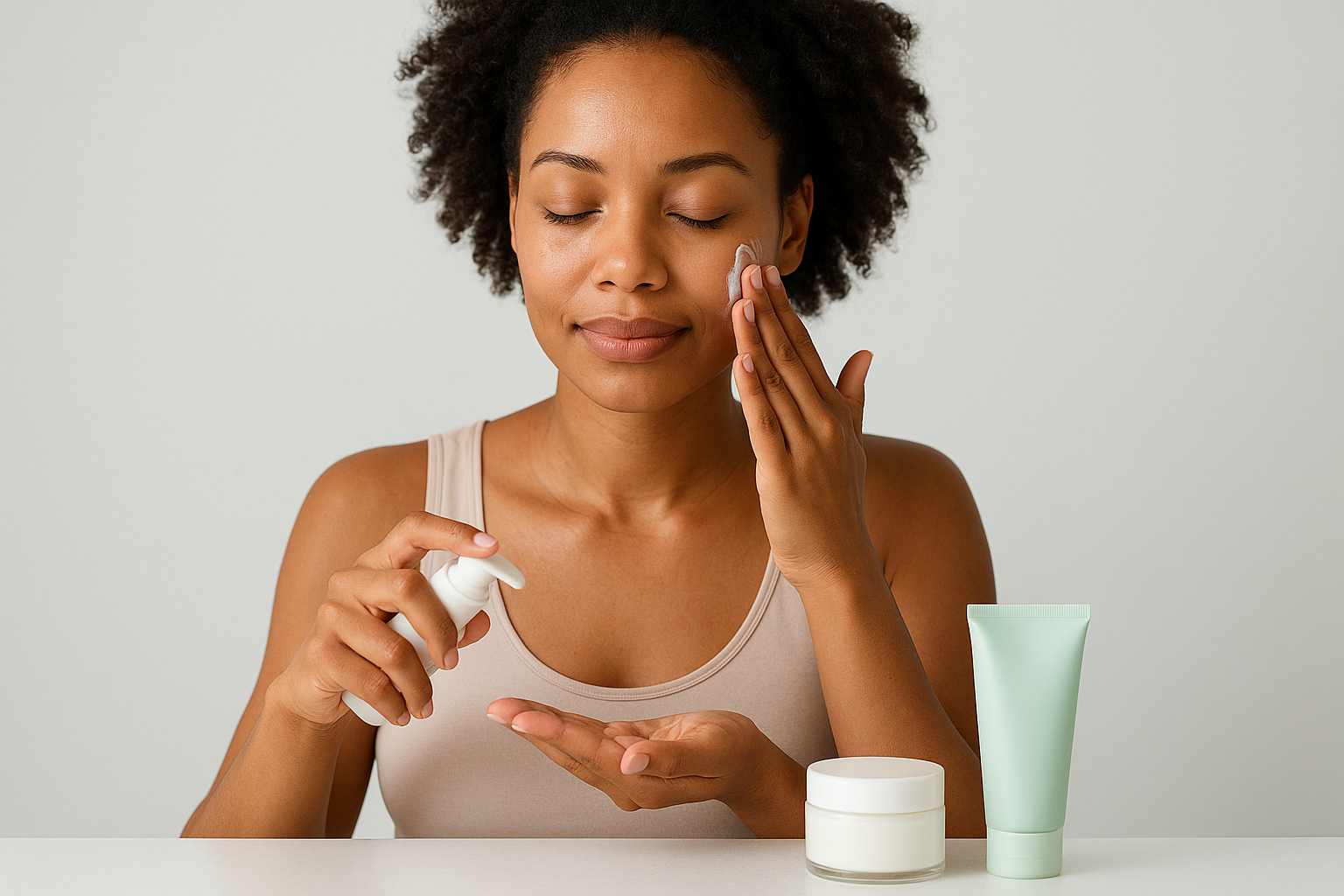
Start with a gentle cleanser
Your morning cleanse should refresh your skin without removing the natural oils that accumulated overnight. Skip foaming cleansers entirely because they contain surfactants that strip away protective lipids your dry skin desperately needs. Instead, reach for cream or oil based cleansers that dissolve overnight buildup while leaving your barrier intact. Look for products with glycerin, ceramides, or hyaluronic acid listed in the first five ingredients.
Splash your face with lukewarm water, then massage a nickel sized amount of cleanser across your skin for 30 to 60 seconds. Rinse thoroughly but avoid scrubbing or using hot water, which triggers more moisture loss. Pat your face dry with a clean towel, leaving it slightly damp for the next step. Some people with extremely dry skin benefit from skipping cleanser entirely in the morning and simply rinsing with water, especially during winter months when indoor heating creates additional dryness.
Layer hydrating serums
Serums deliver concentrated active ingredients deep into your skin before you apply heavier products. Apply serums to damp skin within 60 seconds of cleansing to trap water molecules against your face. This technique, called the damp skin method, enhances absorption and maximizes hydration benefits. Press two to three drops of serum into your skin using gentle patting motions rather than rubbing.
Applying serums to damp skin within 60 seconds of cleansing maximizes hydration by trapping water molecules against your face.
Choose serums with hyaluronic acid as the star ingredient for maximum moisture retention. You can layer multiple serums if you have specific concerns like dullness or fine lines, but always apply from thinnest to thickest consistency. Wait 30 to 60 seconds between each serum to allow proper absorption. Your skin should feel plump and slightly tacky before you move to the next step.
Lock in moisture with cream
Your moisturizer seals in all the hydration you've layered underneath. Select a cream rather than a lotion because creams contain more oils and fewer water based ingredients that evaporate quickly. Apply while your serum still feels slightly damp to create better slip and ensure even coverage. Use gentle upward motions and don't forget your neck, which shows dryness just as readily as your face.
The best moisturizers for morning use balance richness with a finish that works under makeup or sunscreen. Look for formulas containing niacinamide, squalane, and ceramides that repair your barrier while providing immediate comfort. Avoid anything with alcohol high on the ingredient list or strong fragrances that can irritate compromised skin.
Protect with SPF every single day
Sunscreen is the most critical step in your morning routine because UV damage worsens dryness and breaks down the collagen that keeps your skin supple. Choose a mineral or chemical sunscreen with at least SPF 30 and broad spectrum protection. Apply a full teaspoon to your face and neck, which is more than most people think they need.
Mineral sunscreens containing zinc oxide or titanium dioxide tend to feel more moisturizing than pure chemical filters, though they can leave a white cast on deeper skin tones. Many brands now offer tinted versions that blend seamlessly. Reapply every two hours if you're outdoors, or at midday if you work inside near windows. Your complete morning routine should look like this:
| Step | Product Type | Wait Time |
|---|---|---|
| 1 | Cream cleanser | Rinse, pat dry |
| 2 | Hydrating serum | 30-60 seconds |
| 3 | Face cream | Until absorbed |
| 4 | SPF 30+ sunscreen | 15 minutes before sun exposure |
Step 2. Build your ideal night routine
Your nighttime skincare routine for dry skin focuses on repair and intensive hydration while you sleep. This is when your skin enters its recovery phase, working overtime to rebuild and restore itself. You can use richer, more concentrated products at night because you don't need to worry about makeup application or sun protection. The extra hours allow deeper penetration of active ingredients and give occlusives time to work their magic without interruption.
Remove the day completely
Double cleansing transforms your nighttime routine by removing every trace of sunscreen, makeup, and environmental buildup that accumulated throughout the day. Start with an oil based cleanser or cleansing balm that breaks down oil soluble debris like SPF and sebum. Massage the product across dry skin for 60 to 90 seconds, paying attention to areas where makeup tends to cling. Add a splash of water to emulsify the cleanser into a milky consistency, then rinse thoroughly.
Follow immediately with your gentle cream cleanser from your morning routine to remove any remaining residue and water based impurities like sweat and dirt. This second cleanse ensures your skin is completely clean without over stripping. Your face should feel soft and comfortable, never tight or squeaky. If you experience tightness after cleansing, switch to an even gentler formula or reduce your massage time.
Apply targeted treatments first
Treatments and active ingredients penetrate most effectively on clean, slightly damp skin. Pat your face with a clean towel until it's about 70% dry, leaving some moisture on the surface. If you use retinol, vitamin C, or other active ingredients, apply them now before your hydrating products. Start with the thinnest consistency and work your way up to thicker formulas.
Apply active ingredients to slightly damp skin for maximum penetration, then wait 2 to 3 minutes before layering hydrating products.
Wait two to three minutes after applying actives before moving to your hydrating serum. This pause prevents dilution and allows proper absorption. Your hydrating serum should contain hyaluronic acid, glycerin, or both to flood your skin with moisture. Press the product into your skin using firm, gentle patting motions that encourage absorption without tugging.
Seal with rich moisturizer
Your nighttime moisturizer should feel substantially richer than your morning cream because you don't need it to sit well under other products. Look for formulas containing shea butter, ceramides, and peptides that work synergistically to repair your barrier overnight. Apply a generous layer while your serum still feels slightly tacky to trap maximum hydration beneath the surface.
Don't forget the delicate skin around your eyes, which tends to show dryness faster than other areas. Tap a pea sized amount of eye cream around your orbital bone using your ring finger, which applies the gentlest pressure. Extend your night cream down onto your neck and décolletage, areas that age quickly when neglected.
Optional: Add a facial oil
Facial oil serves as the final seal in your nighttime routine, sitting on top of everything else to prevent transepidermal water loss while you sleep. Choose oils high in fatty acids like rosehip, marula, or squalane that absorb relatively quickly without leaving a greasy residue on your pillowcase. Warm two to three drops between your palms, then press the oil across your face and neck.
Skip this step if your moisturizer already contains sufficient occlusives or if you find oils trigger breakouts. Your complete nighttime routine should follow this order:
| Step | Product Type | Key Action |
|---|---|---|
| 1 | Oil cleanser | Remove makeup and SPF |
| 2 | Cream cleanser | Remove remaining impurities |
| 3 | Treatment (optional) | Apply actives, wait 2-3 minutes |
| 4 | Hydrating serum | Pat into damp skin |
| 5 | Night cream | Apply generously |
| 6 | Facial oil (optional) | Press 2-3 drops to seal |
Step 3. Adjust for sensitive or acne prone skin
Dry skin often overlaps with sensitivity or acne, which complicates your product choices and routine structure. You can't simply load up on rich creams when your skin reacts to fragrance or breaks out from heavy oils. The key is identifying which modifications your specific skin needs while maintaining the hydration that resolves dryness. Your skincare routine for dry skin must balance multiple concerns without sacrificing effectiveness in any single area.
Modifications for reactive, sensitive skin
Sensitive skin requires a stripped down approach that eliminates potential irritants while still delivering moisture. Remove any products containing fragrance, essential oils, or alcohol from your routine immediately. These ingredients trigger inflammation that worsens both dryness and sensitivity in a cycle that's difficult to break. Switch to fragrance free versions of every product, from cleanser to sunscreen.
Patch test new products on your inner arm for 48 hours before applying them to your face. This simple precaution prevents full face reactions that set your progress back weeks. Introduce one new product every two weeks so you can identify the exact culprit if irritation develops. Look for formulas marked "hypoallergenic" or "dermatologist tested," though these claims don't guarantee you won't react.
Patch testing new products for 48 hours on your inner arm prevents full face reactions and helps you identify problem ingredients quickly.
Simplify your routine to just cleanser, one serum, moisturizer, and sunscreen. More products equal more opportunities for irritation, and your sensitive, dry skin benefits from consistency rather than experimentation. Stick with mineral sunscreens containing zinc oxide or titanium dioxide, which cause fewer reactions than chemical filters.
Adjustments for dry, acne prone skin
Acne prone dry skin seems contradictory, but it happens when your barrier damage triggers excess oil production as a compensation mechanism. You need lightweight, non-comedogenic hydration that won't clog your pores while you treat breakouts. Replace heavy creams with gel cream hybrids that contain hyaluronic acid and niacinamide but skip butter and oil heavy formulas.
Use salicylic acid or benzoyl peroxide as spot treatments only, applying them directly to active breakouts rather than across your entire face. These acne fighters dry out surrounding skin when used too liberally. Apply your hydrating serum first, wait until your skin dries completely, then dot your acne treatment only on blemishes. Seal everything with a lightweight moisturizer that contains dimethicone or squalane.
Avoid physical exfoliants like scrubs that tear compromised skin and worsen both acne and dryness. If you need exfoliation, use a gentle chemical exfoliant with lactic acid once weekly, followed immediately by extra hydration. Your morning routine stays identical to the standard dry skin routine, but your evening routine requires strategic placement of acne treatments between your hydrating layers.
Step 4. Choose products that fit your budget
Building an effective skincare routine for dry skin doesn't require luxury price tags. You can assemble a complete routine for under $50 that rivals products costing ten times more. The difference lies in knowing which steps deserve investment and which work just as well at drugstore prices. Your skin responds to active ingredients and formulation quality, not brand names or elegant packaging.
Drugstore staples that actually work
Start with affordable cleansers and moisturizers that contain the core ingredients you learned earlier. CeraVe, Cetaphil, and Eucerin all offer fragrance-free options with ceramides, hyaluronic acid, and glycerin for less than $15 per product. These brands use the same active ingredients found in prestige formulas, just without the markup for fancy jars or celebrity endorsements.
Drugstore brands like CeraVe and Eucerin contain the same active ingredients as luxury products, just without the premium packaging markup.
Your cleanser and basic moisturizer represent the best places to save because these products don't need complicated technology to work effectively. Look for multipacks or larger sizes that reduce your per-ounce cost significantly. Generic store brands often copy popular formulas with identical ingredient lists at half the price.
Where investment pays off
Reserve your budget for treatment serums and sunscreen where formulation technology makes a measurable difference. A quality hyaluronic acid serum costs between $10-$30 and lasts three to four months with daily use. Sunscreen deserves careful selection because you need a formula that applies comfortably enough for consistent daily use. Spend $15-$25 on a sunscreen you'll actually wear rather than saving $5 on one that sits in your drawer.
Watch for sales and subscribe-and-save programs that cut costs by 15-20% on products you repurchase regularly. Most drugstores offer loyalty programs with rotating discounts on skincare categories. Stock up during these promotions rather than paying full price. Your complete basic routine should cost $40-$60 initially, then $15-$20 monthly for replacements as products run out.
Step 5. Support dry skin beyond your routine
Your skincare routine for dry skin works harder when you address lifestyle factors that affect your barrier function. Indoor heating, hot showers, and poor hydration all undermine the products you apply. Making strategic changes to your environment and daily habits creates conditions where your skin can actually hold onto moisture instead of constantly fighting against external stressors. These adjustments complement your topical routine rather than replacing it.
Control indoor humidity levels
Add a humidifier to your bedroom and run it while you sleep, especially during winter months when heating systems strip moisture from the air. Your skin loses water faster in dry environments, which means even the best moisturizers can't compensate for humidity below 30%. Target 40 to 50% relative humidity in rooms where you spend the most time. Place the humidifier near your bed but not so close that moisture condenses on surfaces.

Change your furnace filter monthly during heating season to maintain consistent humidity throughout your home. Keep room temperatures between 68 to 72°F rather than cranking the heat higher, which accelerates moisture evaporation from your skin.
Modify your bathing routine
Limit showers to five to ten minutes maximum using lukewarm rather than hot water. Hot water strips your natural lipid barrier faster than any harsh cleanser. Pat your skin about 70% dry immediately after bathing, then apply your moisturizer while dampness remains on your face and body. This technique traps water against your skin where it belongs.
Applying moisturizer to damp skin within three minutes of bathing locks in up to 10 times more hydration than waiting until you're completely dry.
Skip daily body washes on areas that don't produce much oil or sweat. Your arms, legs, and torso need full cleansing only two to three times weekly, which prevents unnecessary barrier disruption.
Support hydration from within
Drink water consistently throughout the day rather than chugging large amounts at once. Your body absorbs steady intake more effectively than flood-and-drought patterns. Add foods rich in omega-3 fatty acids like salmon, walnuts, and flaxseeds, which strengthen your skin barrier from the inside and reduce inflammation that worsens dryness.
Extra tips and common questions
You'll encounter situations that your basic skincare routine for dry skin doesn't directly address. Real world use brings up questions about timing, product rotation, and handling unexpected flare-ups. These practical considerations determine whether your routine succeeds long term or becomes another abandoned experiment. Understanding how to adjust and troubleshoot transforms your approach from rigid rules into a flexible system that adapts to your changing needs.
When to rotate or adjust products
Your skin changes with seasons, hormones, and age, which means your routine needs periodic evaluation. Check your products every three months to determine if they still deliver the results you need. Winter demands richer moisturizers and more frequent application, while summer allows lighter formulas that won't feel suffocating in humidity. Switch to heavier occlusives between November and March if you live in cold climates.
Watch for signs that a product no longer works effectively. Your skin might absorb moisturizer immediately without staying hydrated, or flaking might return despite consistent use. These signals indicate you need a more intensive formula or additional hydrating layers. Add a facial oil before bed during particularly dry periods, or double up on your morning moisturizer when indoor heating peaks.
Emergency relief for sudden dryness
Handle unexpected dry patches with immediate intensive treatment rather than waiting for your regular routine to catch up. Apply a thick layer of plain petroleum jelly or a ceramide rich ointment directly to compromised areas and leave it on for 20 to 30 minutes like a mask. This technique floods the area with moisture and creates a temporary barrier that stops further water loss.
For severe dry patches, apply petroleum jelly as a 20-minute mask to deliver emergency hydration and stop immediate moisture loss.
Keep hydrating sheet masks in your routine for quick fixes when your entire face feels tight and uncomfortable. Lie down for 15 minutes with the mask on, then massage any remaining serum into your skin before applying your regular moisturizer. Your skin should feel plump and comfortable within an hour.
Answers to frequent concerns
Can you use the same routine year round? Your core steps stay consistent, but product thickness and application frequency need seasonal adjustments. Add extra hydration during winter and potentially lighter formulas during humid summer months.
Why does your skin feel worse after starting new products? Your barrier might be adjusting to different ingredients, or you could be experiencing a sensitivity reaction. Stop all new products immediately and return to your basic routine for one week. Reintroduce products one at a time with two weeks between each addition.
Should you exfoliate dry skin? Yes, but only with gentle chemical exfoliants like lactic acid once weekly. Physical scrubs tear compromised skin and worsen dryness rather than improving it. Apply your chemical exfoliant on clean skin, wait 10 minutes, then continue with your hydrating serum and moisturizer.
What if your skin stays dry despite everything? Persistent dryness that doesn't respond to a proper routine might signal an underlying condition like eczema, psoriasis, or thyroid issues. Schedule an appointment with a dermatologist who can diagnose the root cause and prescribe prescription strength treatments if necessary. Medical intervention becomes essential when over-the-counter products fail after six to eight weeks of consistent use.
Your next steps
You now have a complete skincare routine for dry skin that works from morning through night. Start with the basics – a gentle cleanser, hydrating serum, moisturizer, and SPF – then add treatments and adjustments as your skin responds. Your barrier needs consistent daily care to repair itself and maintain comfortable hydration levels.
Begin implementing these changes today rather than waiting for the perfect moment. Pick three to five products that fit your budget and skin concerns, then stick with them for six to eight weeks before evaluating results. Track your progress with quick photos or notes about how your skin feels each week.
Browse through high-quality skincare products at Beautifully Within to find formulas that match the ingredient guidelines you learned here. Your dry skin deserves products that actually work, not guesswork or empty promises. Take action now and give your skin the hydration and repair it needs to thrive.
✨ Shop the Look at Beautifully Within
Loved this guide? Discover our hand-picked picks that pair perfectly with your routine:
- 👉 Fresh Start Hydrating Cleanser & Toner Duo — Skincare Set
- 👉 Korean Moisturizing & Repair Skincare Gift Set — Skincare Set
- 👉 Rice Brightening Skincare Collection — 6-Piece Ritual — Skincare Set
- 👉 Blueberry Radiance Skincare Collection — 4-Piece Set — Skincare Set
New customer? Get 15% off orders $50+ with code WITHIN15 — plus free shipping over $75.
0 comments