

You've invested in quality serums, moisturizers, and treatments, but are they actually working? If you're applying products in the wrong order, you might be wasting both money and effort. Understanding how to layer skincare products correctly is the difference between a routine that transforms your skin and one that just sits on the surface.
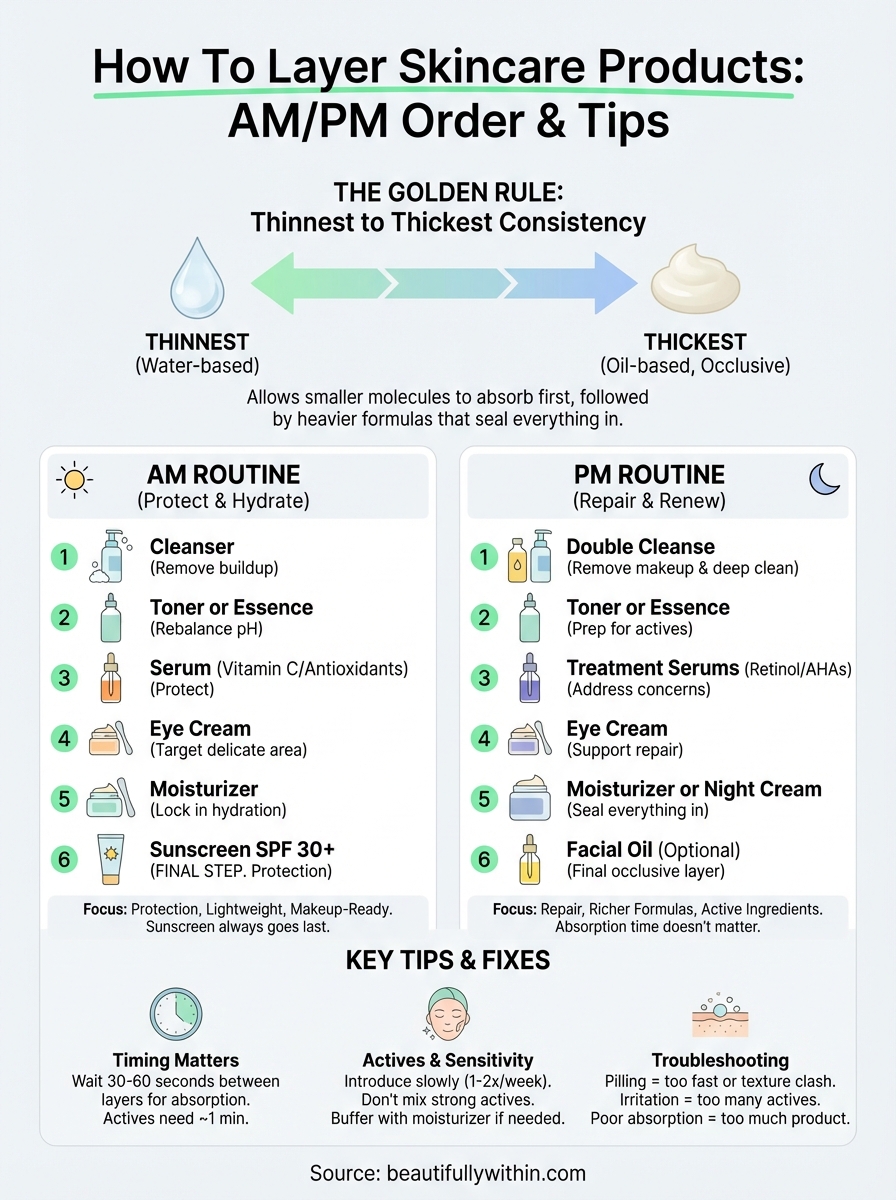
The good news? The basic principle is simple: apply products from thinnest to thickest consistency. This allows each formula to absorb properly and deliver its active ingredients where they're needed most. But timing, product types, and whether it's morning or night all play a role in getting this right.
At Beautifully Within, we believe skincare should work as hard as you do. This guide breaks down the exact order for your AM and PM routines, explains why sequence matters, and shares practical tips to help you get the most from every product in your collection. Whether you're dealing with acne, dryness, or sensitive skin, you'll walk away knowing exactly how to build a routine that actually delivers results.
How layering works and what matters most
Your skin can only absorb products effectively when you apply them in a sequence that makes biological sense. The outermost layer of your skin, the stratum corneum, acts as a selective barrier. When you understand how to layer skincare products based on molecular size and consistency, you allow each formula to penetrate properly instead of sitting on top of products applied before it.
Why product texture determines absorption order
The "thinnest to thickest" rule exists because lighter formulas have smaller molecules that can slip through your skin's barrier more easily. When you apply a thick cream first, it creates an occlusive layer that blocks everything you put on afterward. Your expensive serum can't push through a moisturizer that's already formed a protective seal on your skin's surface.
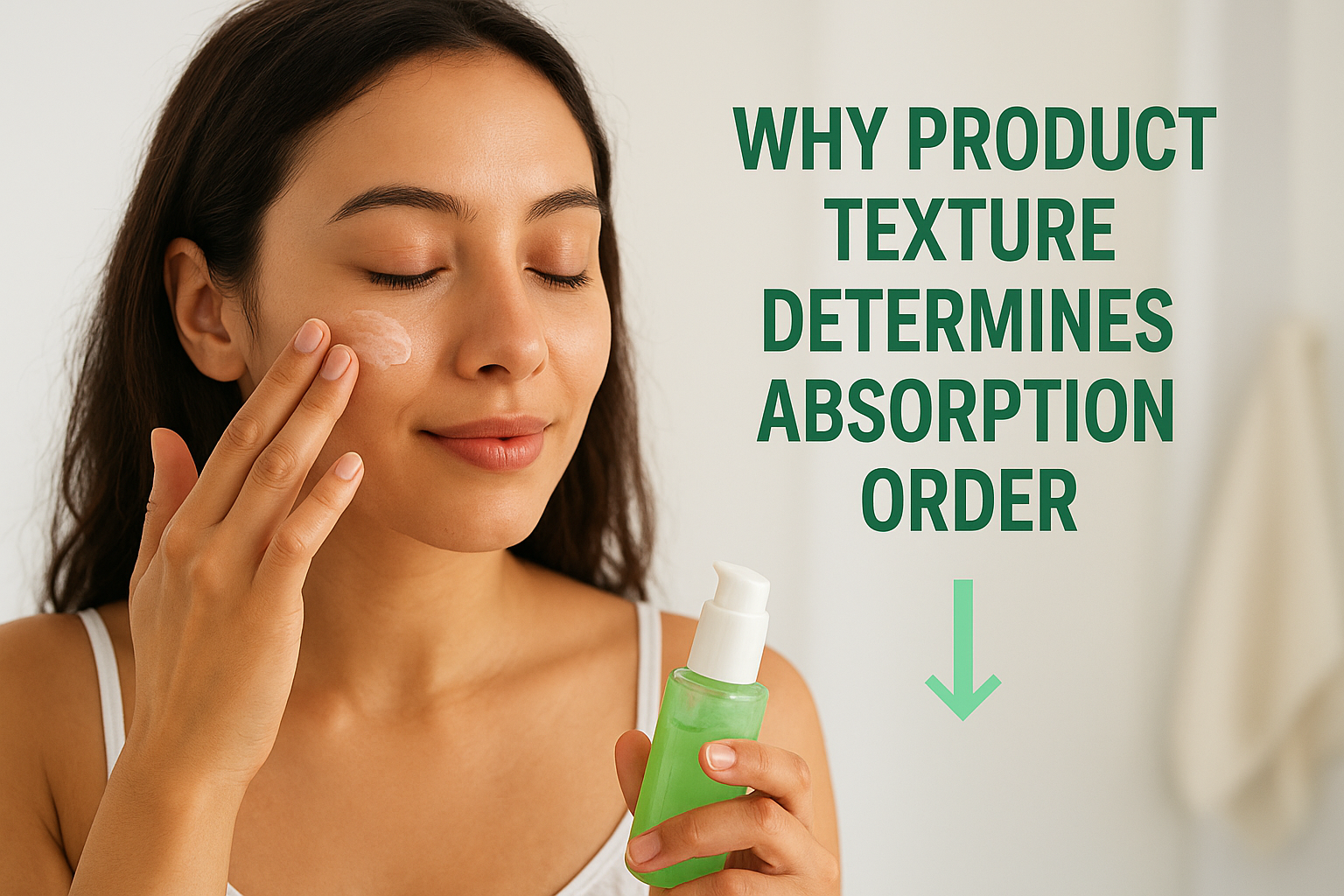
Water-based products always go before oil-based ones. Your skin absorbs water-soluble ingredients more readily than oil-soluble ones, and oil creates a barrier that repels water. This means toners and serums come before facial oils and heavy creams, regardless of their specific benefits or active ingredients.
Applying products in the wrong texture order can reduce absorption by up to 70%, essentially throwing away most of what you paid for.
The timing factor between products
You don't need to wait 10 minutes between every layer, but you do need to give each product 30 to 60 seconds to absorb before adding the next one. This brief pause allows the formula to start penetrating your skin instead of immediately mixing with whatever you apply next. Products that pill or ball up on your skin are usually a sign you're moving too quickly.
Active ingredients like retinol or vitamin C require slightly more patience. Give these products a full minute to sink in before layering anything on top. This ensures they reach the deeper skin layers where they actually work, rather than getting diluted or deactivated by other formulas.
Morning vs. evening layering differences
Your morning routine focuses on protection and hydration because you're preparing your skin to face environmental stressors. This means you prioritize antioxidants like vitamin C, lighter moisturizers that sit well under makeup, and always finish with SPF as your final step. Sunscreen goes on last, even after moisturizer, because it needs to form an even film on your skin's surface to work properly.
Evening routines shift toward repair and renewal. Your skin does most of its healing work while you sleep, so this is when you use stronger actives like retinoids, AHAs, or targeted treatments. You can layer heavier creams and oils at night because you won't be applying makeup or going out in the sun. The order still follows the same basic principle (thin to thick), but you have more flexibility to use richer formulas without worrying about how they'll perform throughout your day.
Prescription treatments always go on clean, dry skin before anything else in your evening routine, unless your dermatologist specifically instructs otherwise. This gives them direct access to your skin without any barriers.
Step 1. Build your core routine first
Before you worry about complex layering techniques, you need to establish a solid foundation of three to five products that address your basic skin needs. Trying to master how to layer skincare products with ten different items at once overwhelms both you and your skin. Start simple, make sure these essentials work for your skin type, and build from there.
The three non-negotiables for every skin type
Every functional routine starts with three essential steps: cleanser, moisturizer, and SPF. These form the backbone that keeps your skin healthy regardless of what concerns you're targeting. Your cleanser removes dirt and excess oil without stripping your skin, your moisturizer maintains your barrier function, and your SPF prevents damage that creates most aging concerns in the first place.
You can address specific issues like acne, hyperpigmentation, or fine lines only after these basics are in place. Add one targeted treatment at a time once you've used your core products consistently for at least two weeks. This approach helps you identify what actually works instead of guessing which product in a ten-step routine is causing problems.
Building a minimal routine first gives you a stable baseline before you introduce potentially irritating actives or treatments.
Selecting products that layer well together
Choose formulas within the same pH range (around 5.5) when building your core routine. Products with drastically different pH levels can neutralize each other or cause irritation. Your cleanser should leave your skin feeling clean but not tight, your moisturizer should absorb within a minute, and your sunscreen should sit smoothly without pilling.
Water-based products pair easily with almost anything, making them ideal choices when you're starting out. Look for gel cleansers, lightweight serums, and fluid moisturizers if you want to minimize compatibility issues. Save thick balms and heavy oils for after you've established your routine and understand how your skin responds to different textures throughout the day.
Step 2. Apply products in the right order
Your routine should follow a predictable sequence based on product consistency and function. This step-by-step approach removes guesswork and ensures each product performs at its best without interference from what you applied before or after. The exact order matters less than the logic behind it: water-based before oil-based, treatment before protection, and always thinnest to thickest.
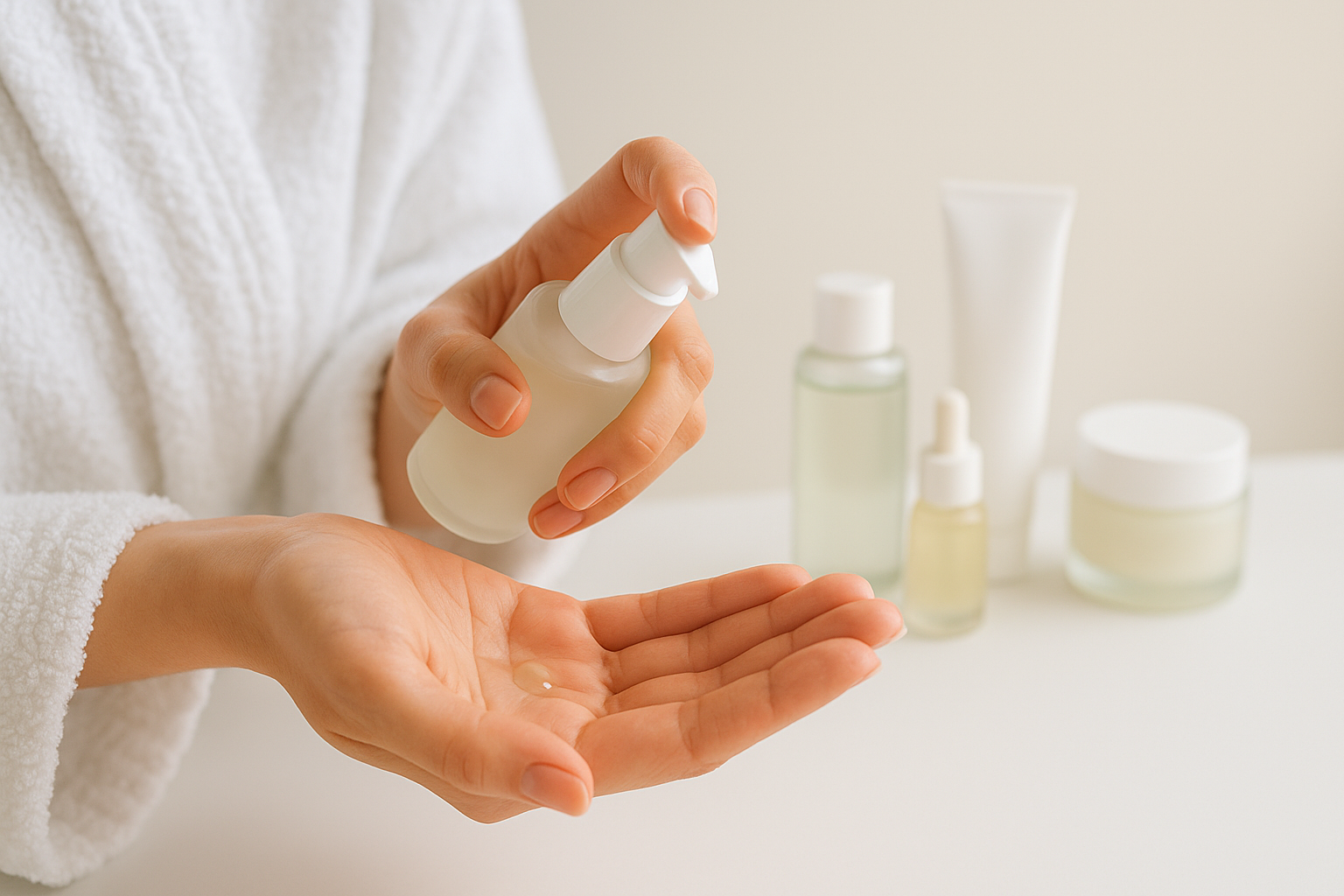
Your morning routine sequence
Start your day with products that protect and prepare your skin for environmental exposure. Each layer builds on the previous one to create a shield against pollution, UV rays, and daily stress.
- Cleanser (remove overnight oils and product buildup)
- Toner or essence (rebalance pH and prep skin)
- Serum with vitamin C or antioxidants (protect against free radicals)
- Eye cream (target delicate under-eye area)
- Moisturizer (lock in hydration)
- Sunscreen SPF 30+ (always your final step before makeup)
Your morning routine stays lighter because you need products that absorb quickly and layer smoothly under makeup. Skip heavy oils or thick creams that take more than two minutes to sink in.
Apply sunscreen last, even over moisturizer, to ensure it forms an uninterrupted protective barrier on your skin's surface.
Your evening routine sequence
Nighttime is when you repair and renew because your skin enters recovery mode while you sleep. This is your chance to use stronger actives and richer formulas without worrying about sun exposure or makeup compatibility.
- First cleanser (remove makeup, SPF, and surface dirt)
- Second cleanser (deep clean pores)
- Toner or pH-adjusting essence (prep for actives)
- Treatment serums with retinol, AHAs, or targeted actives (address specific concerns)
- Eye cream (support collagen production overnight)
- Moisturizer or night cream (seal everything in)
- Facial oil (optional final occlusive layer for extra dryness)
You can layer heavier products at night because absorption time doesn't matter when you're sleeping. This is also when prescription treatments fit in, typically right after cleansing on dry skin before you continue with understanding how to layer skincare products for the rest of your evening routine.
Step 3. Adjust for actives and sensitivity
Active ingredients like retinol, vitamin C, and chemical exfoliants deliver real results, but they also require strategic placement in your routine to avoid irritation. Understanding how to layer skincare products that contain potent actives means respecting your skin's tolerance limits while still getting the benefits you're after. The right approach lets you build up strength gradually instead of dealing with redness, peeling, or damaged skin barriers.
How to introduce potent actives safely
Start with the lowest concentration available of any new active ingredient and use it just two nights per week for the first two weeks. This gives your skin time to build tolerance without overwhelming its repair mechanisms. Apply the active on clean, completely dry skin after cleansing, then wait a full minute before continuing with your routine.
Your introduction schedule should follow this progression:
- Weeks 1-2: Use twice per week (example: Monday and Thursday nights)
- Weeks 3-4: Increase to every other night if no irritation appears
- Week 5+: Move to nightly use only after your skin shows zero sensitivity
Never introduce two new actives in the same week. Add one product at a time with at least three weeks between new additions so you can identify exactly what's causing problems if irritation occurs.
Your skin needs time to adjust to actives, rushing the process creates more problems than it solves and can set your progress back by weeks.
Managing multiple actives without irritation
Once your skin tolerates individual actives, you can combine them strategically by alternating nights or using morning and evening slots differently. Place vitamin C in your morning routine for antioxidant protection, then reserve your evening for retinol or chemical exfoliants. This separation prevents interactions that could either neutralize effectiveness or amplify irritation.
Buffer sensitive skin by applying your moisturizer first, then layering the active on top. This technique, called "sandwich buffering," reduces penetration speed without eliminating benefits completely. Your skin still absorbs the active ingredients, just at a gentler pace that minimizes stinging or redness.
Common layering problems and quick fixes
Even when you think you've mastered how to layer skincare products, certain issues can still disrupt your routine. These problems usually signal incompatible formulas, incorrect timing, or simply too many products fighting for space on your skin. The good news is that most layering mistakes have straightforward solutions that don't require you to replace your entire routine.
Products pilling or balling up
Your products roll into little balls on your skin when you're applying them too quickly or mixing incompatible textures. Silicone-based primers and serums often clash with water-based moisturizers, creating those frustrating clumps that ruin your makeup application.
Fix this by waiting 60 seconds between each layer and gently patting products in instead of rubbing them. If pilling continues, check your product ingredients for silicone conflicts (look for ingredients ending in "-cone" or "-siloxane"). Switch to all water-based or all silicone-based products in your morning routine to eliminate texture clashes completely.
Irritation from too many actives
Red, stinging, or flaky skin means you've overwhelmed your skin barrier with too many strong ingredients at once. This commonly happens when you layer vitamin C, retinol, and exfoliating acids without proper spacing.
Your skin can only handle so much chemical activity before its protective barrier breaks down, no matter how carefully you layer products.
Scale back to just one active ingredient per routine until irritation clears. Use your strongest active at night and a gentle antioxidant in the morning. Add a basic moisturizer with ceramides to repair your barrier, and avoid all exfoliation for at least one week.
Products not absorbing properly
When moisturizer sits on your skin's surface after several minutes, you're either using too much product or applying on damp skin that hasn't properly dried. Your toner or essence might also be creating a barrier that blocks heavier products.
Apply products to completely dry skin and use smaller amounts than you think you need. One pump of serum and a pea-sized amount of moisturizer typically covers your entire face. If absorption remains slow, switch to lighter gel formulas during the day and save richer creams for nighttime when absorption speed matters less.
Final takeaways
Understanding how to layer skincare products comes down to three core principles: start with the thinnest consistency and work your way to the thickest, give each product 30 to 60 seconds to absorb, and adjust your routine based on whether it's morning (protection) or evening (repair). These rules apply regardless of your skin type or concerns.
Your routine doesn't need ten products to work. Start with three essentials (cleanser, moisturizer, SPF), then add one targeted treatment at a time. This approach helps you identify what actually delivers results without overwhelming your skin or your budget. Pay attention to how your skin responds when you introduce new actives, and always prioritize barrier health over aggressive treatment.
Ready to build a routine that actually works? Browse our curated skincare collection to find products specifically formulated to layer seamlessly together, from lightweight serums to protective moisturizers that deliver visible results.
✨ Shop the Look at Beautifully Within
Loved this guide? Discover our hand-picked picks that pair perfectly with your routine:
- 👉 Fresh Start Hydrating Cleanser & Toner Duo — Skincare Set
- 👉 Advanced Anti-Aging Night Renewal Cream — Moisturizer
- 👉 Caribbean Emerald Marine Elastin Serum — 30ml — Serum
New customer? Get 15% off orders $50+ with code WITHIN15 — plus free shipping over $75.
0 comments