

Your bathroom counter overflows with partially used serums, toners, essences, and creams. You spend 30 minutes following a routine with ten different products twice a day. Yet your skin still breaks out, feels irritated, or looks dull. The problem is not that you are doing too little. You are doing too much.
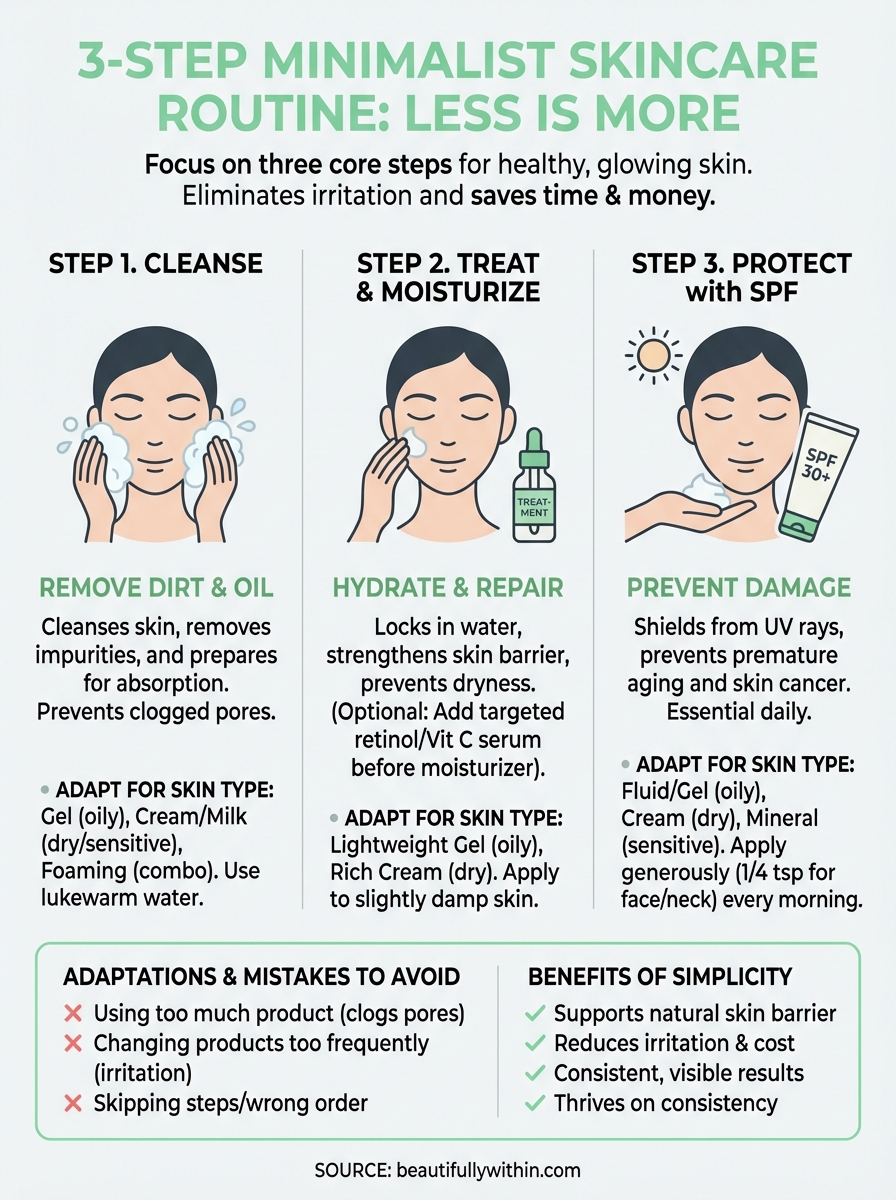
A minimalist skincare routine with just three steps can give you better results than a dozen products layered on your face. Cleanse, treat and moisturize, protect with SPF. That is all your skin truly needs to stay healthy, clear, and glowing. More products do not equal better skin. They often cause irritation, clog pores, and waste your money on things that do not work.
This guide breaks down the only three steps you need for effective skincare. You will learn what each step does, which products to choose for your skin type, and how to avoid common mistakes that sabotage simple routines. Whether you have oily, dry, combination, or sensitive skin, you can simplify your routine and see real results starting today.
What is a minimalist skincare routine
A minimalist skincare routine uses only the essential products your skin needs to stay healthy. Instead of layering multiple serums, toners, essences, and treatments, you focus on three core steps that address your skin's basic requirements: cleansing, treating and moisturizing, and sun protection. This approach eliminates unnecessary products that can irritate your skin, waste your money, and complicate your daily routine.
The core philosophy
You strip away everything except what truly works. A minimalist skincare routine prioritizes quality over quantity, choosing products with proven ingredients rather than trendy additives or elaborate packaging. Each product in your routine serves a specific, essential function that you cannot skip without compromising your skin's health.
The philosophy rejects the idea that more products create better results. Your skin has a natural barrier that protects against environmental damage and maintains moisture. When you overload it with ten different products, you risk disrupting this barrier, causing sensitivity, breakouts, or inflammation. Simplifying your routine lets your skin function as it should.
Fewer products mean less chance of ingredient conflicts, allergic reactions, or wasted money on items that sit unused on your shelf.
What stays and what goes
Your minimalist routine keeps three non-negotiables: a gentle cleanser to remove dirt and oil, a moisturizer to hydrate and repair your skin barrier, and sunscreen to prevent premature aging and skin cancer. You can add one targeted treatment (like retinol or vitamin C) if you have specific concerns, but that remains optional.
Everything else gets eliminated. You do not need separate eye creams, neck creams, facial mists, toners, or five different serums. These products either duplicate the benefits of your core three items or provide minimal additional value for the extra cost and effort. Your skin thrives on consistency and simplicity, not on an overloaded vanity.
Why three steps are all you need
Your skin functions as a self-regulating organ that maintains its own moisture balance, repairs damage, and protects against environmental threats. When you stick to a minimalist skincare routine with three essential steps, you support these natural processes instead of disrupting them with unnecessary products. The science backs this approach: studies show that simpler routines often produce better results than complex multi-step regimens.
Your skin barrier does the heavy lifting
Your skin's outermost layer, the stratum corneum, acts as your body's first line of defense. This barrier consists of dead skin cells held together by lipids (fats) that lock in moisture and keep irritants out. A gentle cleanser, moisturizer, and sunscreen provide everything this barrier needs to function optimally. You do not need ten products because your skin already produces sebum, sheds dead cells naturally, and maintains its pH balance without external interference.
When you overload your skin with multiple actives, you risk compromising this barrier. The result shows up as increased sensitivity, persistent redness, or chronic dryness. Your three-step routine gives your skin the support it requires without overwhelming its natural defenses.
More products create more problems
Layering five serums and three creams increases your risk of ingredient conflicts that cancel out benefits or cause irritation. Retinol and vitamin C, for example, can destabilize each other when applied together. Adding unnecessary products also multiplies your exposure to potential allergens, preservatives, and fragrances that trigger breakouts or allergic reactions.
Each additional product in your routine raises the likelihood of adverse reactions by approximately 10 to 15 percent, according to dermatological research.
Your wallet suffers too. The average person who follows a complex skincare routine spends $300 to $500 annually on products they do not need. A three-step minimalist routine typically costs under $100 per year while delivering comparable or superior results. You eliminate waste, save time, and avoid the frustration of trying to figure out which product in your 12-item lineup caused that new breakout or rash.
Step 1. Cleanse your skin
You need to remove dirt, oil, makeup, and environmental pollutants that accumulate on your skin throughout the day. Cleansing prepares your skin to absorb the products that follow and prevents clogged pores that lead to breakouts. This first step in your minimalist skincare routine takes less than 60 seconds but determines how well your moisturizer and sunscreen work.
Choose the right cleanser type
Your cleanser should match your skin type and remove impurities without stripping your natural oils. Gel cleansers work best for oily and acne-prone skin because they cut through excess sebum without leaving residue. Cream or milk cleansers suit dry and sensitive skin by providing gentle cleansing while adding moisture. Foaming cleansers offer a middle ground for combination skin, though you should avoid versions with sulfates that cause irritation.
Look for cleansers with a pH between 4.5 and 6.5 to maintain your skin's natural acid mantle. Ingredients like glycerin, ceramides, and hyaluronic acid help your cleanser clean without causing tightness or dryness. You do not need cleansers with added actives like salicylic acid or retinol unless you have specific concerns like persistent acne.
Follow the proper cleansing technique
Your cleansing method matters as much as the product you choose. Wet your face with lukewarm water (hot water damages your skin barrier and increases redness). Apply a dime-sized amount of cleanser to your fingertips and gently massage it onto your face using circular motions for 30 to 60 seconds. Focus on your T-zone where oil accumulates but avoid harsh scrubbing that irritates your skin.
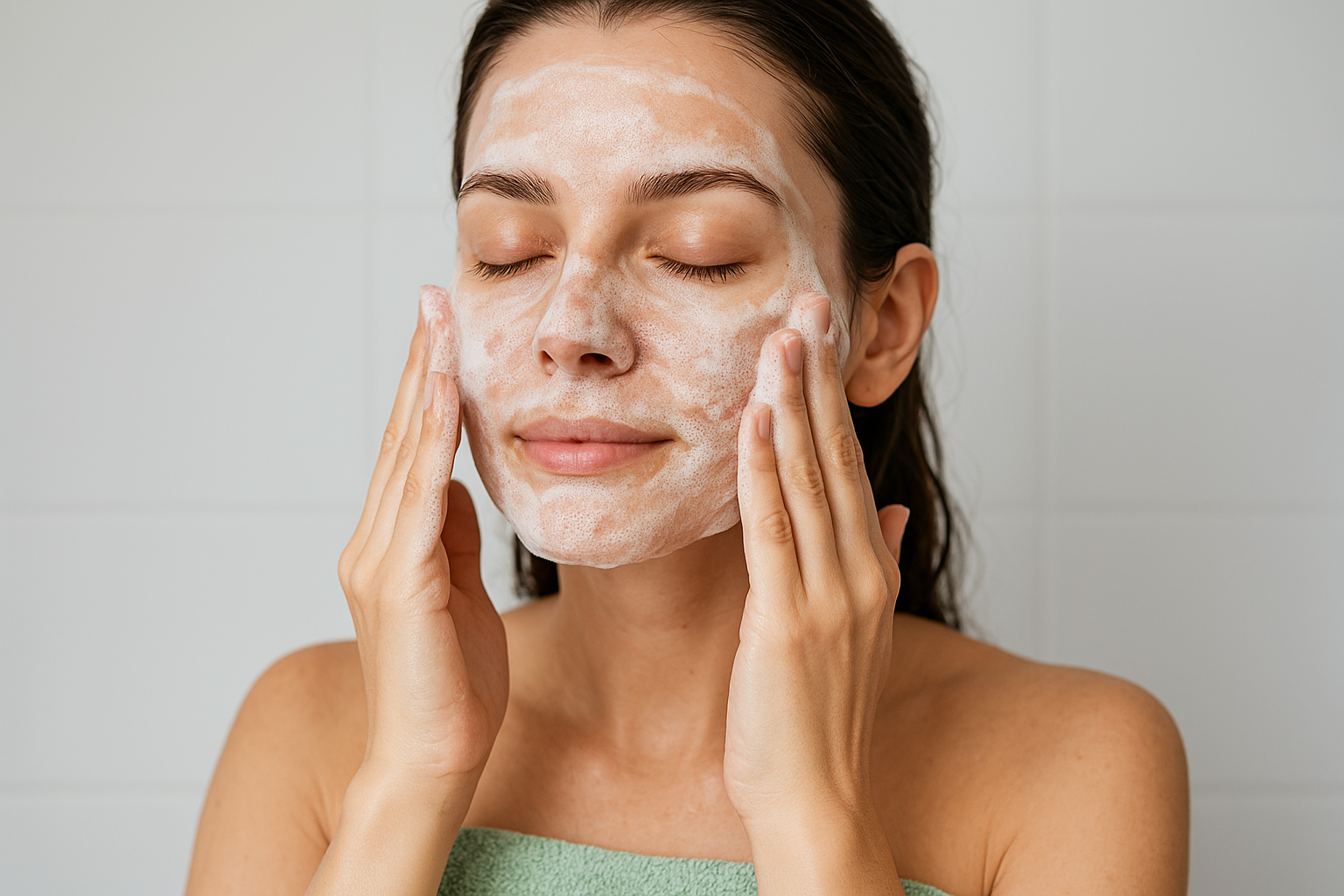
Rinse thoroughly with lukewarm water until no product residue remains. Pat your face dry with a clean towel instead of rubbing, which can cause micro-tears in your skin. Your face should feel clean but not tight or squeaky. That squeaky-clean feeling actually indicates you have stripped your natural oils, which triggers your skin to produce even more oil to compensate.
If your skin feels tight, dry, or irritated after cleansing, your cleanser is too harsh for your skin type.
Morning vs. evening cleansing
Cleanse your face twice daily as part of your minimalist skincare routine: once in the morning and once before bed. Your morning cleanse removes oil and sweat that accumulated overnight, preparing your skin for moisturizer and sunscreen. Your evening cleanse removes makeup, sunscreen, pollution, and the day's buildup before you apply your nighttime moisturizer.
Some dermatologists suggest skipping cleanser in the morning if you have extremely dry skin, using only lukewarm water instead. This approach preserves your skin's natural oils while still removing surface debris. Test this method for two weeks to see if your skin responds positively. Everyone else benefits from gentle cleansing twice daily to maintain clear, healthy skin.
Step 2. Treat and moisturize
Your second step combines hydration and targeted treatment into one efficient action. Moisturizing locks in water, repairs your skin barrier, and prevents the tightness or flaking that follows cleansing. Optional treatments like retinol or vitamin C address specific concerns such as acne, hyperpigmentation, or fine lines. You apply these products when your skin is still slightly damp from cleansing to maximize absorption.
Why moisturizer is non-negotiable
Every skin type requires moisturizer, including oily and acne-prone skin. When you skip this step, your skin compensates by producing excess oil, which leads to more breakouts and clogged pores. A good moisturizer contains three key components: humectants that draw water into your skin, emollients that smooth and soften, and occlusives that seal in moisture.
Dehydrated skin shows up as dullness, fine lines, and increased sensitivity regardless of whether you have oily or dry skin. Your moisturizer prevents this by maintaining your skin's water content at optimal levels. This single product in your minimalist skincare routine does more for your skin's appearance than any serum or treatment ever could.
Moisturizer strengthens your skin barrier by up to 40 percent within two weeks of consistent use, according to dermatological studies.
Select your moisturizer formula
Match your moisturizer texture to your skin type and climate. Lightweight gels or gel-creams work best for oily skin because they hydrate without adding heaviness or shine. These formulas typically contain hyaluronic acid and glycerin as their primary humectants. Cream or lotion moisturizers suit normal to dry skin by providing richer hydration through ingredients like ceramides, shea butter, and squalane.
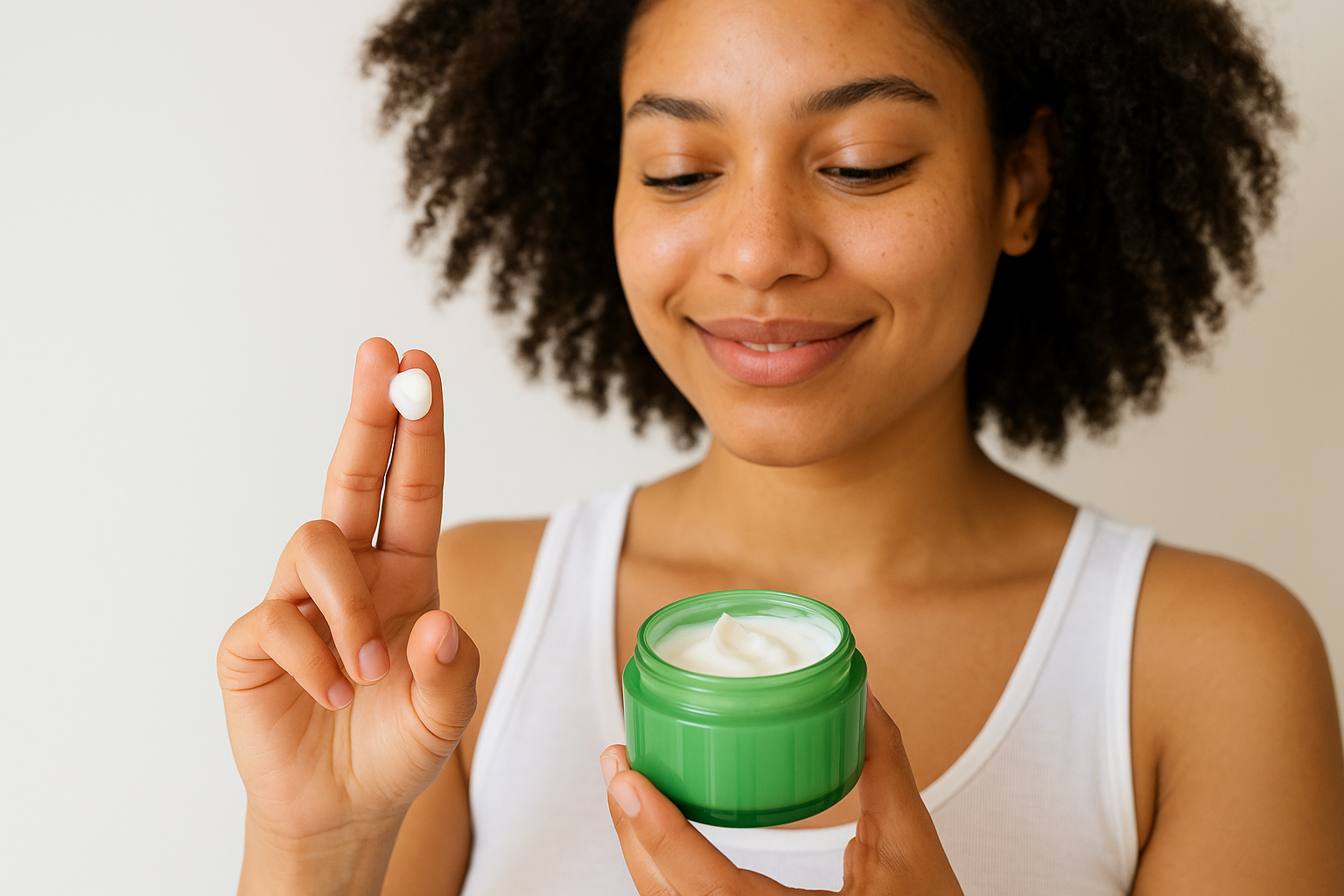
Look for moisturizers with minimal ingredients (10 to 15 components maximum) to reduce irritation risk. Your ideal formula should contain at least one humectant, one emollient, and one occlusive. Avoid products with added fragrance, essential oils, or denatured alcohol if you have sensitive skin. These ingredients provide no benefit and frequently cause redness or allergic reactions.
When to add a treatment
Treatments remain optional in a true minimalist skincare routine. You only need them if you have specific concerns that moisturizer and sunscreen cannot address. Retinol (vitamin A) reduces fine lines, improves skin texture, and treats acne by increasing cell turnover. Vitamin C serums brighten skin and fade hyperpigmentation through antioxidant action. Niacinamide calms inflammation and regulates oil production for acne-prone skin.
Start with one treatment maximum. Apply it after cleansing but before moisturizer. Use treatments at night to avoid potential interactions with sunscreen or increased sun sensitivity. Begin with the lowest concentration available (0.25 to 0.5 percent for retinol, 10 percent for vitamin C, 5 percent for niacinamide) and use it twice weekly for the first month before increasing frequency.
Apply in the correct order
Your application sequence determines how well your products absorb and work. After cleansing, wait 30 seconds until your face feels slightly damp but not dripping wet. If using a treatment serum, apply 2 to 3 drops and gently press it into your skin using your fingertips. Let the treatment absorb for one minute before moving to the next step.
Dispense a nickel-sized amount of moisturizer and warm it between your palms. Press the product onto your face and neck using gentle patting motions rather than rubbing. Focus on areas that tend toward dryness like your cheeks and forehead but do not neglect your T-zone. The entire process takes 90 seconds and gives your skin everything it needs to stay healthy, hydrated, and protected until you apply sunscreen in the morning.
Step 3. Protect with SPF
Sunscreen protects your skin from ultraviolet radiation that causes premature aging, dark spots, and skin cancer. This final step in your minimalist skincare routine prevents more damage than any anti-aging serum or expensive treatment ever could. You apply SPF every morning after moisturizer, regardless of weather, season, or whether you plan to stay indoors. UV rays penetrate windows and clouds, exposing your skin to damage even when you cannot see the sun.
Why SPF matters every single day
UVA rays cause long-term skin damage that shows up as wrinkles, sagging, and age spots decades after exposure. UVB rays burn your skin and contribute to skin cancer risk. Both types penetrate your skin every day, even during winter or cloudy weather when you assume you are safe. Studies show that 90 percent of visible aging stems from sun exposure rather than genetics or natural aging processes.
Skipping sunscreen accelerates aging faster than any other factor you can control. Your skin loses collagen and elastin when UV rays break down these structural proteins. Dark spots, uneven texture, and deep wrinkles develop over years of accumulated damage. People who wear sunscreen daily show 24 percent less skin aging than those who skip this step, according to long-term dermatological research.
Choose your sunscreen formula
You need broad-spectrum protection with at least SPF 30 that blocks both UVA and UVB rays. Chemical sunscreens absorb UV radiation through ingredients like avobenzone and octinoxate, working well under makeup and leaving no white cast. Physical (mineral) sunscreens containing zinc oxide or titanium dioxide sit on your skin's surface and reflect UV rays, making them ideal for sensitive skin that reacts to chemical filters.
Select your formula based on your skin type and lifestyle. Lightweight fluid or gel sunscreens suit oily skin without causing breakouts or shine. Cream formulas provide extra hydration for dry skin. Tinted sunscreens offer light coverage that replaces foundation while protecting your face. Your sunscreen should feel comfortable enough that you actually want to wear it every single day.
Apply the right amount correctly
You need one-quarter teaspoon of sunscreen for your face and neck, which equals roughly two finger-lengths of product squeezed onto your index and middle fingers. Most people apply only 25 to 50 percent of this amount, which reduces protection to SPF 10 or less even when using SPF 50 sunscreen. The application amount matters more than the SPF number on the bottle.
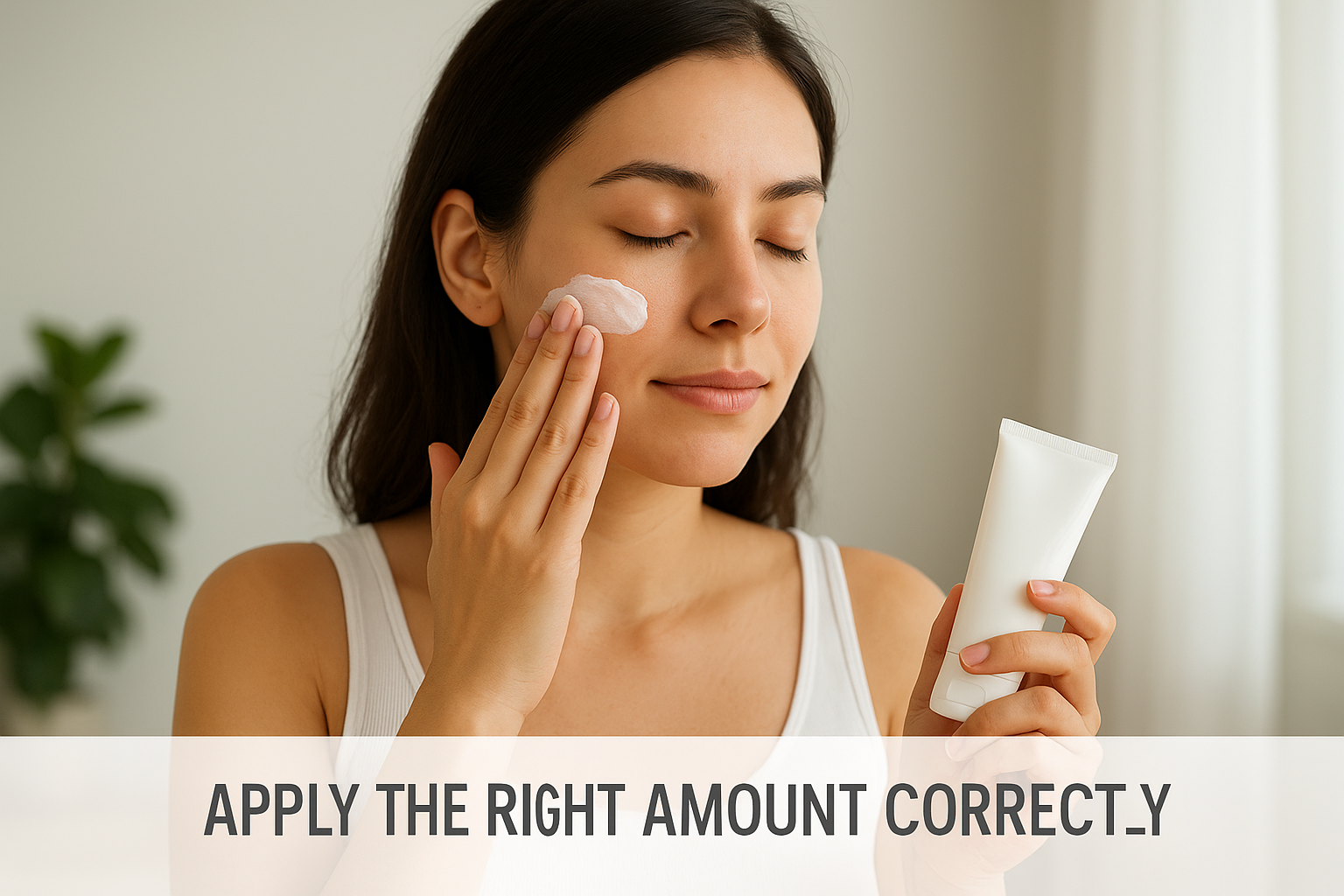
Apply sunscreen as your final morning step after your moisturizer has absorbed for one to two minutes. Dot the product across your forehead, cheeks, nose, and chin, then blend outward using gentle patting motions. Cover your entire face, neck, ears, and any exposed chest area. Let the sunscreen set for two to three minutes before applying makeup.
Reapply sunscreen every two hours if you spend time outdoors, or after swimming or heavy sweating, to maintain protection throughout the day.
Your minimalist skincare routine ends here. Three simple steps take less than five minutes total but give your skin everything it needs to stay healthy, clear, and protected from damage.
How to adapt for oily, dry, combo, sensitive skin
Your three-step minimalist skincare routine stays the same regardless of skin type, but you adjust the specific products and application techniques to match your skin's needs. The core steps remain identical: cleanse, treat and moisturize, protect. Your skin type determines which formulas work best and how often you apply certain products. These adaptations prevent common problems like excess oil, tight dry patches, or irritation while maintaining the simplicity that makes minimalist skincare effective.
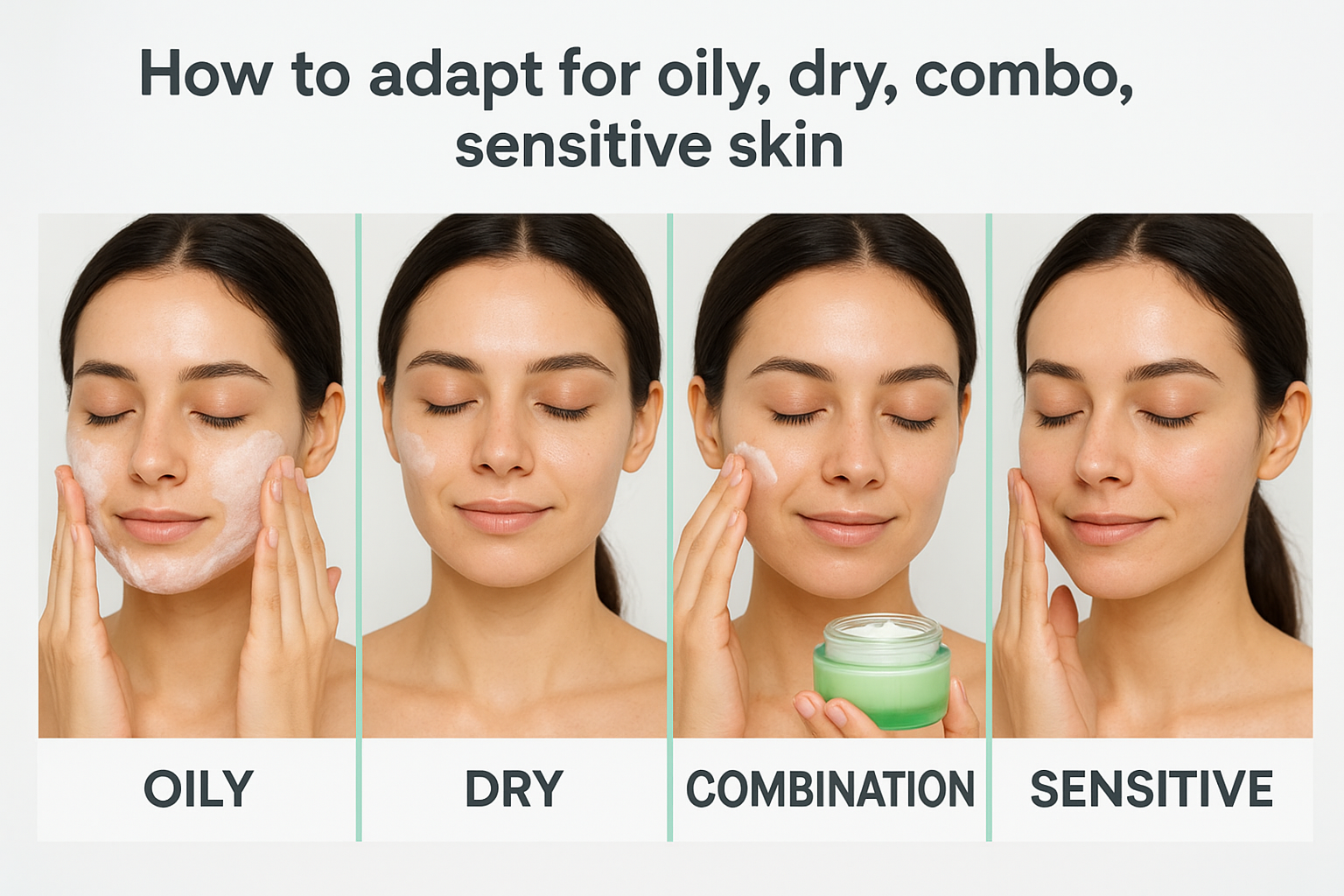
Oily skin modifications
Your oily skin produces excess sebum that can lead to clogged pores and breakouts if you use the wrong products. Choose a gel or foaming cleanser with salicylic acid (0.5 to 2 percent) that cuts through oil without over-stripping. Apply your cleanser twice daily, spending 45 to 60 seconds massaging it into your T-zone where oil accumulates most.
Select a gel moisturizer or water-based lotion labeled oil-free that contains hyaluronic acid and niacinamide. These ingredients hydrate your skin without adding heaviness or causing shine. Use lightweight, matte-finish sunscreens with chemical filters rather than heavy mineral formulas that can feel greasy. You can add a salicylic acid treatment two to three times weekly if you deal with persistent breakouts, applying it after cleansing but before moisturizer.
Dry skin adjustments
Dry skin lacks sufficient oil production and loses moisture rapidly, leading to flakiness, tightness, and visible fine lines. Switch to a cream or milk cleanser that removes impurities while adding hydration. Cleanse once daily in the evening and use only lukewarm water in the morning to preserve your natural oils.
Your moisturizer should have a rich cream texture containing ceramides, shea butter, and squalane. Apply it immediately after cleansing while your skin remains damp to lock in maximum moisture. Choose cream-based sunscreens that double as additional hydration rather than lightweight fluids. Layer a hydrating serum with hyaluronic acid or glycerin between cleansing and moisturizing if your skin feels extremely tight. Apply moisturizer twice daily and reapply during the day if you experience mid-day tightness.
Combination skin strategy
Combination skin produces oil in your T-zone (forehead, nose, chin) while your cheeks remain normal or dry. This requires targeted application rather than treating your entire face the same way. Use a gentle gel cleanser that balances oil control with hydration, cleansing twice daily with lukewarm water and gentle circular motions.
Apply different moisturizer textures to different facial zones: lightweight gel or lotion on your T-zone and richer cream on your cheeks and dry areas.
Your sunscreen can follow the same zoning approach or use a single medium-weight formula that compromises between too heavy and too light. Add a clay mask once weekly to your oily zones only, avoiding your dry areas entirely. This targeted method gives each area what it needs without overcomplicating your minimalist skincare routine.
Sensitive skin considerations
Sensitive skin reacts to ingredients, temperature changes, and physical friction with redness, stinging, or irritation. Select fragrance-free, hypoallergenic products with short ingredient lists (fewer than 15 components). Use a gentle cream cleanser without sulfates, essential oils, or chemical exfoliants that trigger reactions.
Choose moisturizers specifically formulated for sensitive skin containing soothing ingredients like colloidal oatmeal, centella asiatica, or allantoin. Apply mineral sunscreen with zinc oxide or titanium dioxide rather than chemical filters that commonly cause sensitivity. Introduce new products one at a time, waiting two weeks between additions to identify potential irritants. Pat products onto your skin instead of rubbing and avoid temperature extremes when washing your face.
Common mistakes and easy fixes
You can sabotage your minimalist skincare routine by making simple errors that reduce product effectiveness or harm your skin. These mistakes often stem from good intentions like wanting faster results or trying to maximize value from expensive products. The problems they create range from mild irritation to persistent breakouts and wasted money. Identifying these common errors and implementing straightforward fixes helps your three-step routine deliver the clear, healthy skin you expect.
Using too much product
Your instinct tells you that more product equals better results, but this wastes money and clogs your pores. Cleansers need only a dime-sized amount to clean your entire face effectively. Moisturizers work best at a nickel-sized portion for your face and neck combined. Sunscreen requires one-quarter teaspoon, which seems like a lot but provides the SPF protection stated on the bottle.
Overloading your skin with thick layers prevents proper absorption and creates a greasy, uncomfortable feeling that tempts you to skip applications. Your skin can only absorb so much product at once. The excess sits on the surface, mixing with dead skin cells and oil to form comedones (clogged pores) that lead to blackheads and breakouts. Measure your products until you develop muscle memory for the correct amounts.
Using the proper amount of each product reduces your annual skincare costs by 30 to 40 percent while improving results.
Changing products too frequently
You switch products every few weeks when you do not see immediate results, never giving your skin time to adjust and respond. Most skincare ingredients need four to eight weeks to show visible improvements. Your skin barrier requires at least two weeks to adapt to new products without triggering sensitivity or breakouts. Constant switching prevents you from identifying which products actually work for your skin type.
Stick with your chosen products for a minimum of six weeks before deciding they do not work. Take photos in consistent lighting every two weeks to track subtle changes you might miss in daily mirror checks. The only exception occurs when a product causes persistent burning, redness, or severe breakouts within the first week of use. These signs indicate an allergic reaction or incompatibility that requires immediate product change.
Skipping steps or applying in wrong order
You rush through your routine or skip steps when you feel tired or pressed for time. Skipping sunscreen exposes your skin to UV damage that accumulates over decades. Forgetting moisturizer triggers increased oil production that leads to more breakouts. Your application order determines absorption: treatments before moisturizer, sunscreen always last in the morning.
Create a consistent application sequence that becomes automatic habit rather than conscious effort. Keep your products in the order you use them so you never forget a step. Set phone reminders for your evening routine until it becomes second nature. Apply products immediately after showering or washing your face when your skin remains slightly damp for maximum absorption. These small adjustments eliminate the most common mistakes that prevent your minimalist skincare routine from working properly.
Keep your routine simple
Your minimalist skincare routine works because it eliminates everything your skin does not need. Three steps give you healthy, clear skin without the confusion, expense, or time commitment of complex regimens. Cleanse away dirt and oil, moisturize to repair your barrier, protect with SPF to prevent damage. These fundamentals address your skin's actual requirements while leaving your wallet and bathroom counter uncluttered.
Start with the basic products that match your skin type and stick with them for at least six weeks. Resist the temptation to add serums, essences, or treatments unless you have specific concerns that your core routine cannot address. Your skin thrives on consistency and simplicity, not on constant experimentation with trending ingredients.
Ready to build your perfect routine? Browse our curated selection of skincare essentials that deliver real results without unnecessary complexity. Your skin will thank you for keeping things simple.
✨ Shop the Look at Beautifully Within
Loved this guide? Discover our hand-picked picks that pair perfectly with your routine:
- 👉 Fresh Start Hydrating Cleanser & Toner Duo — Skincare Set
- 👉 Korean Moisturizing & Repair Skincare Gift Set — Skincare Set
- 👉 Ayurvedic Facial Cleansing & Mask Ritual Kit — Skincare Set
- 👉 Rice Brightening Skincare Collection — 6-Piece Ritual — Skincare Set
New customer? Get 15% off orders $50+ with code WITHIN15 — plus free shipping over $75.
0 comments