

You wash your face every night, yet your skin still feels congested. Breakouts appear out of nowhere. Your complexion looks dull even though you follow a skincare routine. The culprit might not be what you're putting on your skin but what you're leaving behind. A single cleanse often fails to remove stubborn sunscreen, makeup, and the environmental grime that accumulates throughout the day.
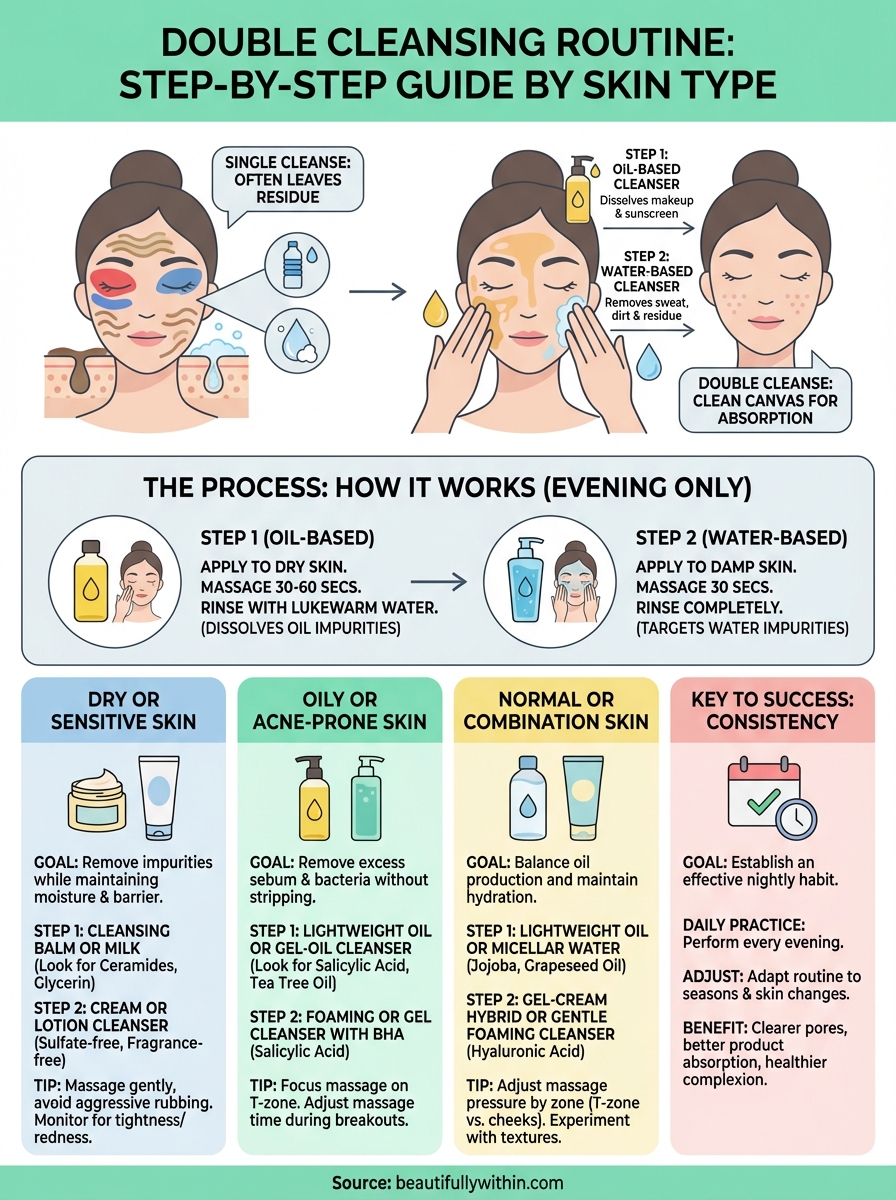
Double cleansing solves this by using two different cleansers in sequence. The first cleanser, typically oil based, dissolves makeup and sunscreen. The second cleanser, water based, removes sweat, dirt, and any remaining residue. This method originated in Korean skincare and has become essential for anyone serious about healthy skin.
This guide breaks down exactly how to build a double cleansing routine tailored to your skin type. You'll learn which products work best for dry, oily, combination, or sensitive skin. We'll walk through each step so you can finally get that clean canvas your skin needs to truly benefit from the rest of your routine.
What is a double cleansing routine
A double cleansing routine uses two different types of cleansers in one session to remove everything from your skin. You apply an oil-based cleanser first, which binds to oil-soluble impurities like sunscreen, sebum, and makeup. Water alone can't break down these substances, which is why a single water-based cleanser often leaves residue behind.
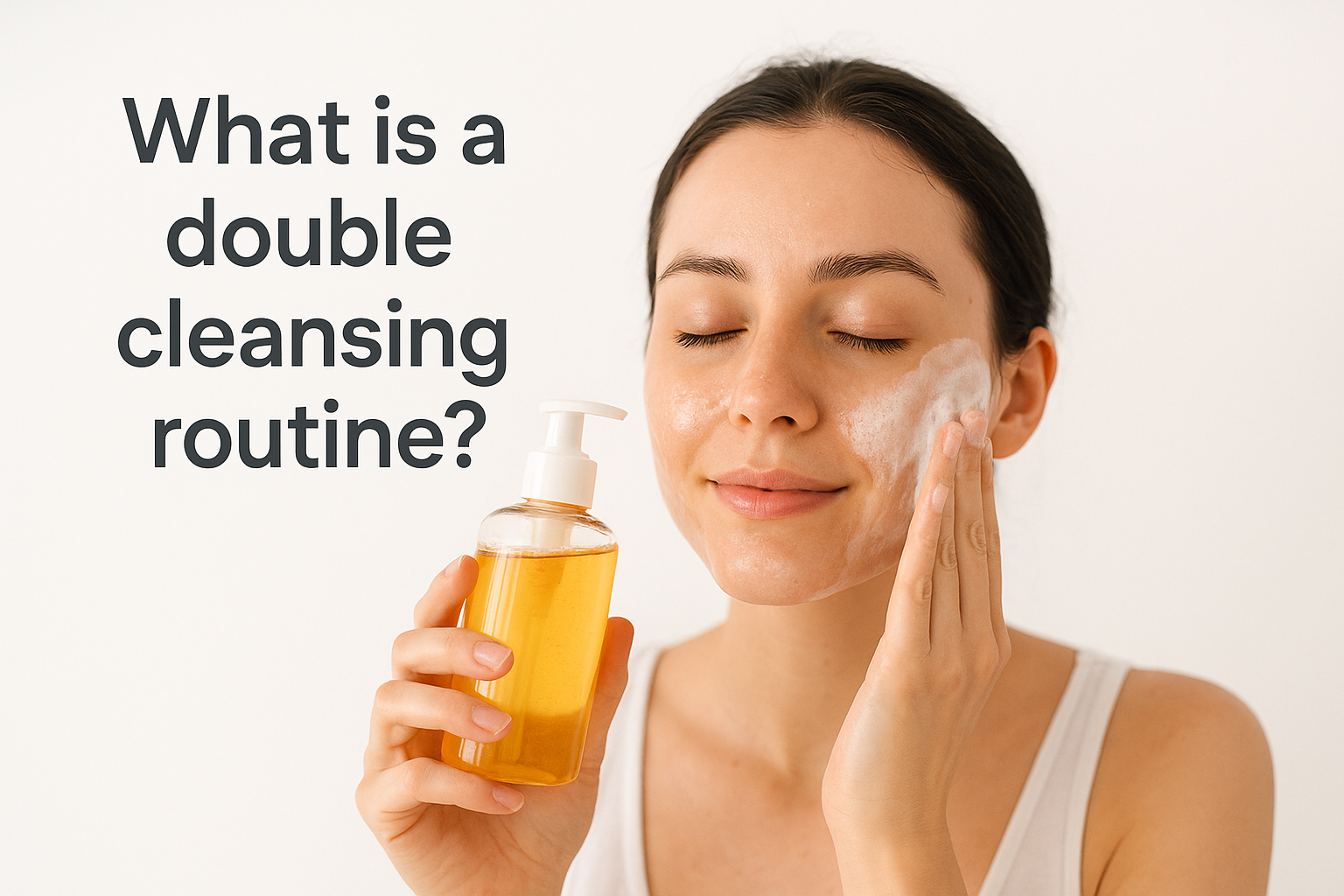
The second cleanser is water-based and targets what the oil cleanser missed. This includes sweat, dirt, and water-soluble debris that accumulate on your skin throughout the day. Together, these two steps create a clean slate without stripping your skin's natural protective barrier.
How the Method Works
Your first cleanser doesn't need to lather. Oil-based formulas come as cleansing oils, balms, or micellar waters that dissolve makeup on contact. You massage the product onto dry skin for 30 to 60 seconds, allowing it to break down everything thoroughly. Then you rinse with lukewarm water.
The secret lies in the chemistry: oil dissolves oil, while water-based cleansers tackle water-soluble impurities.
Your second cleanser should match your skin type. Gel cleansers work well for oily skin, while cream cleansers suit drier complexions. Apply this to damp skin, massage for another 30 seconds, and rinse completely. The entire process takes about two minutes but makes a significant difference in how well your skin absorbs serums and moisturizers afterward. You perform this routine in the evening when you need to remove the day's buildup from your face.
Step 1. Understand your skin and needs
You can't build an effective double cleansing routine without knowing what your skin actually needs. Your skin type determines which cleansers work best and which ones might cause irritation or breakouts. Choosing products blindly wastes money and potentially damages your skin barrier. Start by accurately identifying whether your skin falls into dry, oily, combination, or sensitive categories.
Identify Your Skin Type
Your skin reveals its type through specific patterns you can observe. Oily skin produces excess sebum, especially in the T-zone (forehead, nose, and chin), and often shows enlarged pores or a shiny appearance by midday. Dry skin feels tight after cleansing, shows flaky patches, and may develop fine lines more readily than other types.
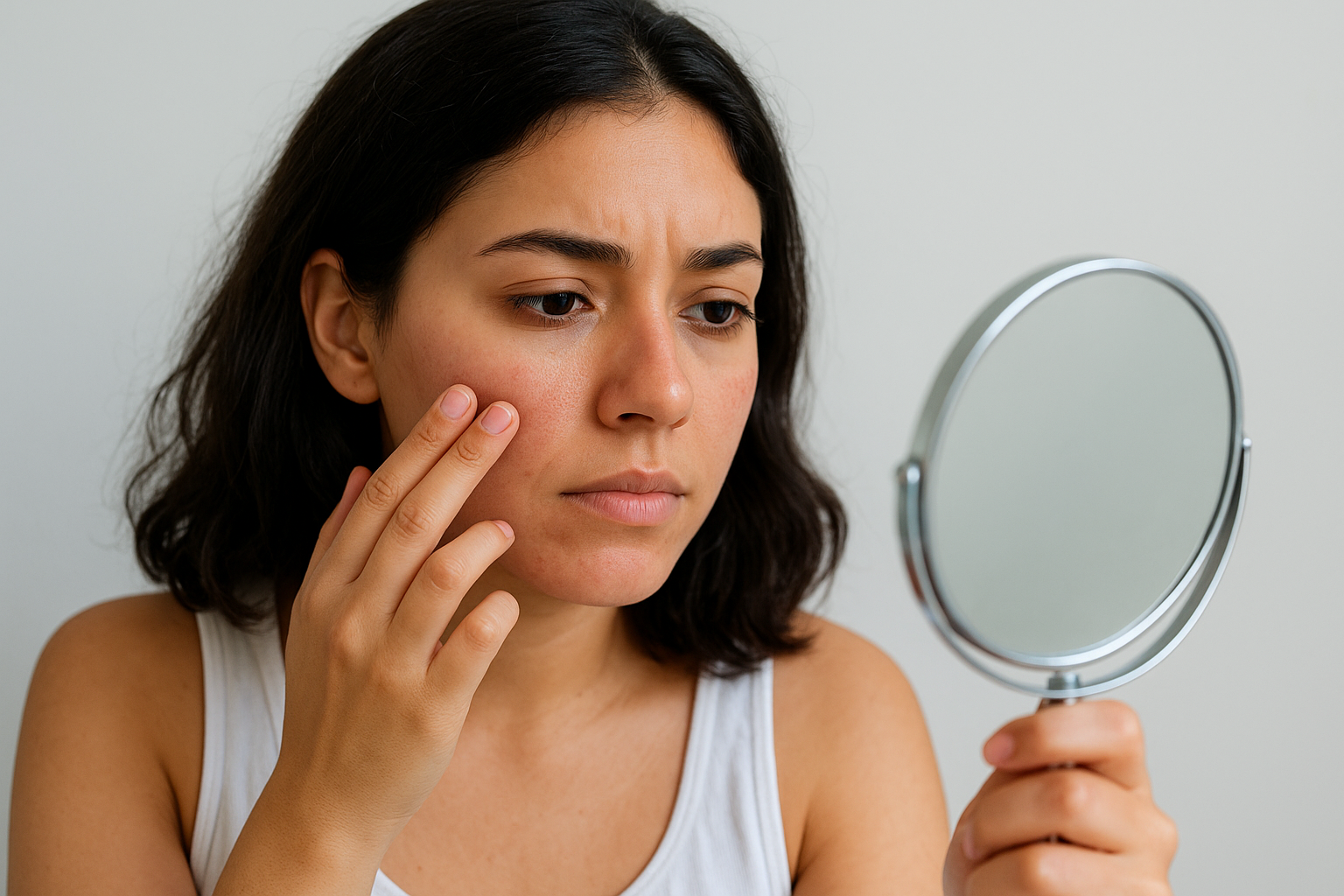
Combination skin displays traits of both, with oiliness in the T-zone but dryness on the cheeks. Sensitive skin reacts easily to products, showing redness, burning, or itching when exposed to harsh ingredients. You can determine your type by washing your face with a gentle cleanser, waiting one hour without applying any products, then examining how your skin looks and feels.
Assess Your Daily Exposure
What touches your face throughout the day directly impacts which cleansers you need. Makeup wearers require stronger first-step cleansers to break down long-wear formulas and pigments. If you apply sunscreen daily (which you should), you need an oil-based cleanser capable of dissolving these protective but stubborn products.
Your environment matters too. Working in air-conditioned offices, spending time in polluted cities, or exercising regularly all affect what accumulates on your skin. Heavy exposure to environmental pollutants or sweat means you benefit more from a thorough double cleansing routine than someone who stays mostly indoors in clean environments.
Consider Your Current Concerns
Active skin issues change which products serve you best. Acne-prone skin needs non-comedogenic cleansers that won't clog pores further, while aging skin benefits from hydrating formulas with gentle ingredients. If you currently experience breakouts, excessive dryness, or irritation, factor these concerns into your product selection.
Your skin's current condition matters more than its base type when choosing cleansers during flare-ups or problem periods.
Take notes about when your skin feels best and worst. This information guides you toward the specific double cleansing routine that addresses your unique combination of skin type, lifestyle, and concerns.
Step 2. Routine for dry or sensitive skin
Dry and sensitive skin requires extra gentleness during a double cleansing routine. Your skin barrier is already compromised, which means harsh cleansers strip away protective oils and worsen dryness or irritation. The goal is to remove impurities while maintaining the moisture your skin desperately needs to function properly.
Choose the Right Products
Your first cleanser should be a cleansing balm or milk rather than a straight oil. Balms transform into silky oils that dissolve makeup without feeling heavy, while cleansing milks provide gentle cleansing power with added hydration. Look for formulas containing ceramides, glycerin, or squalane, which support your skin barrier while removing surface debris.
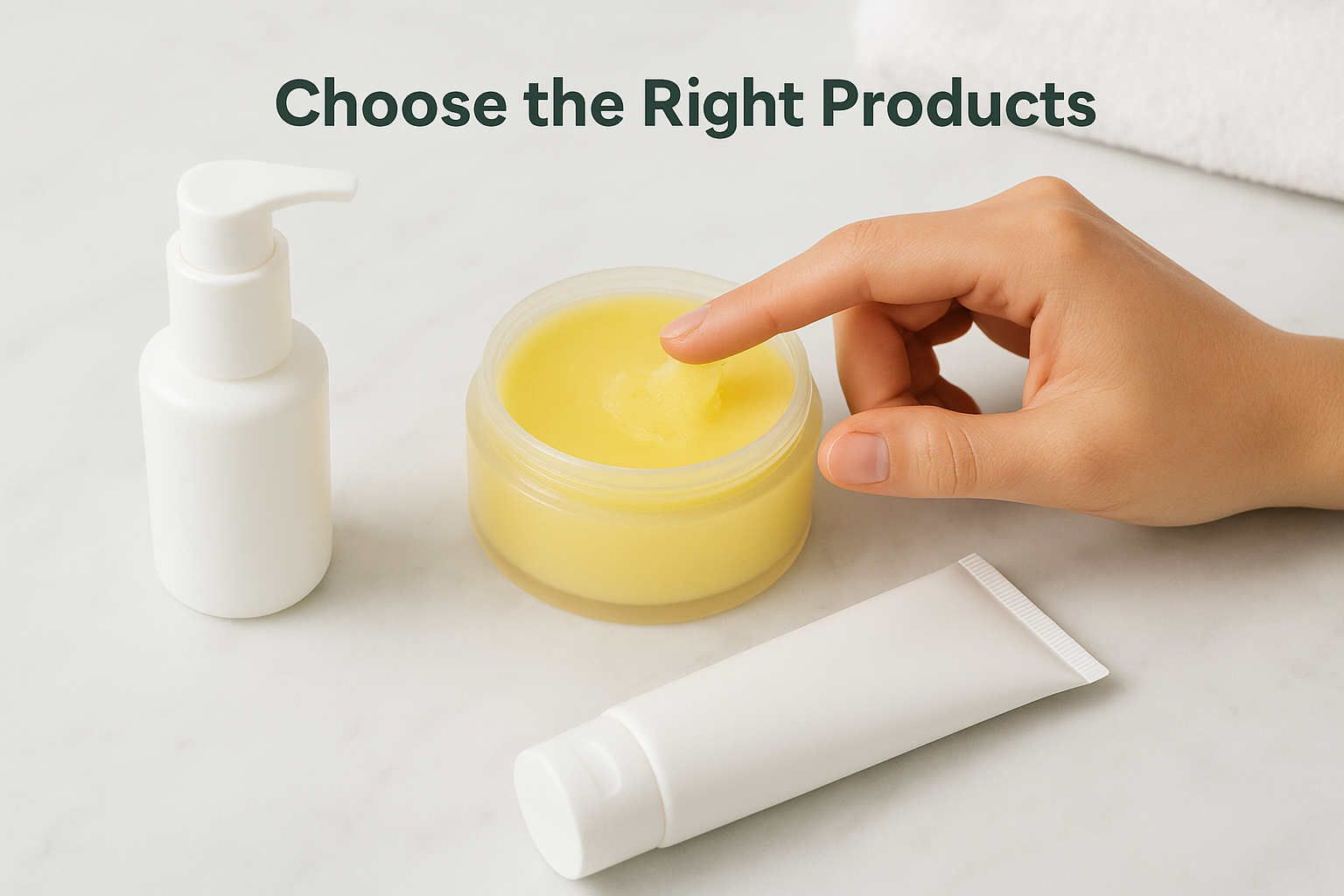
For your second cleanser, select a cream or lotion-based formula designed specifically for sensitive skin. Avoid anything with sulfates, fragrances, or harsh surfactants that create excessive foam. Products labeled "gentle," "hydrating," or "barrier-repair" typically work best for your skin type.
Apply Your Routine
Follow these specific steps each evening for your double cleansing routine:
- Dispense a quarter-sized amount of cleansing balm onto completely dry hands
- Massage gently onto dry skin for 45 to 60 seconds using circular motions
- Add a small amount of lukewarm water to emulsify the balm into a milky texture
- Rinse thoroughly with lukewarm (never hot) water and pat dry
- Apply your cream cleanser to damp skin and massage for 30 seconds
- Rinse completely and gently pat your face dry with a soft towel
Never rub your face aggressively when drying, as this creates friction that damages already vulnerable skin.
Monitor Your Skin's Response
Watch how your skin reacts during the first two weeks. Tightness or redness after cleansing signals that your products are too harsh. Your skin should feel clean but comfortable and slightly hydrated, never stripped or stinging. If you experience persistent irritation, switch to an even gentler second cleanser or reduce your routine to once every other evening until your skin adjusts. Some people with extremely sensitive skin find that double cleansing every other night provides enough deep cleaning without overwhelming their protective barrier.
Step 3. Routine for oily or acne prone skin
Oily and acne-prone skin benefits most from a double cleansing routine because excess sebum traps dead skin cells and bacteria inside your pores. Your skin produces more oil than other types, which means you accumulate more buildup throughout the day. However, stripping away all oil backfires by triggering your skin to produce even more sebum in response. The right approach removes impurities while maintaining balance.
Select Oil-Control Products
Your first cleanser should be a lightweight cleansing oil or gel-based oil cleanser that dissolves sebum without adding heaviness. Look for formulas containing salicylic acid, tea tree oil, or niacinamide, which help control oil production and prevent pores from clogging. Avoid thick balms that leave residue, as these can worsen congestion on already oily skin.
Choose a foaming or gel cleanser with BHA (beta hydroxy acid) as your second step. These cleansers penetrate deep into pores to clear out trapped debris and dead skin cells. Products containing 2% salicylic acid or glycolic acid work particularly well for acne-prone skin, though you should start with lower concentrations if you're new to active ingredients.
Execute Your Cleansing Steps
Follow this precise double cleansing routine each evening:
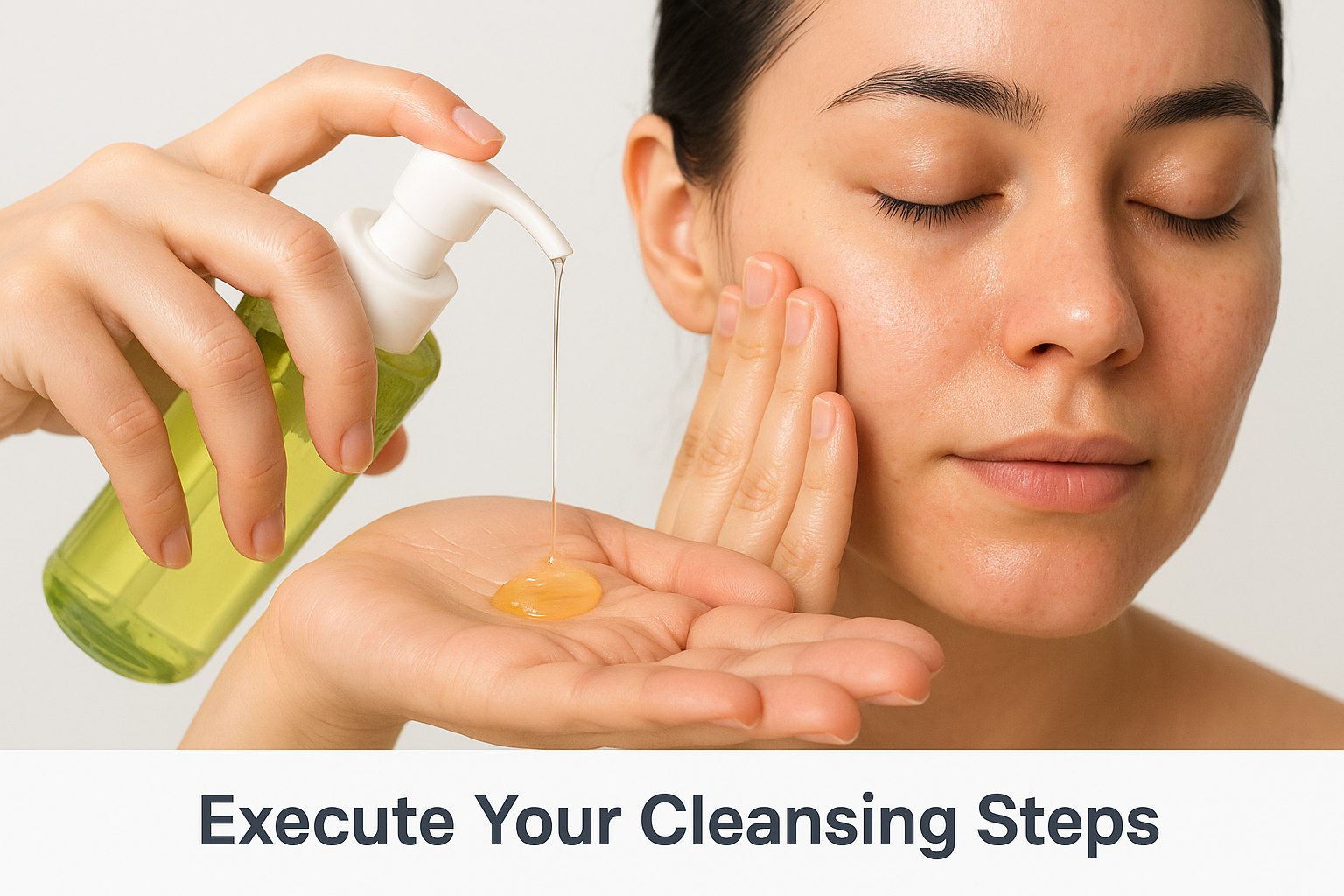
- Pump two to three pumps of cleansing oil into dry hands
- Massage onto dry skin for 60 seconds, focusing extra time on congested areas
- Wet your hands slightly and continue massaging to emulsify the oil
- Rinse thoroughly with lukewarm water until no oily residue remains
- Apply your foaming cleanser to damp skin and create a light lather
- Massage for 45 seconds, paying attention to your T-zone and chin
- Rinse completely and pat dry with a clean towel
Double cleansing removes the excess oil that feeds acne-causing bacteria without triggering your skin to overproduce sebum in response.
Adjust Based on Breakouts
Pay attention to how your skin responds during active breakout periods. If you experience increased inflammation or irritation, reduce the massage time during your first cleanse to 30 seconds. Some people with severe acne find that using a non-foaming second cleanser on particularly inflamed days prevents further irritation while still providing thorough cleansing. Your skin may also need gentler products during treatment with prescription retinoids or other acne medications, as these already increase sensitivity. Track which products cause new breakouts versus which ones help clear your skin, then adjust your routine accordingly.
Step 4. Routine for normal or combination skin
Normal or combination skin gives you more flexibility in product selection than other skin types. Your T-zone might produce excess oil while your cheeks remain dry, or your skin may balance itself naturally throughout the day. This dual nature means you can experiment with different textures and formulas to find what works best for your specific needs. The key is choosing products that neither overstimulate oil production nor strip away necessary moisture.
Balance Your Product Selection
Your first cleanser works best as a lightweight cleansing oil or micellar water that removes makeup and sunscreen without leaving heavy residue. Products with gentle plant oils like jojoba or grapeseed provide effective cleansing while maintaining balance across different facial zones. Avoid thick balms if your T-zone tends toward oiliness, but don't fear oil-based cleansers entirely, as they won't clog pores when properly rinsed.
Choose a gel-cream hybrid or gentle foaming cleanser for your second step. These formulas provide enough cleansing power for oily areas without drying out normal or drier patches. Look for ingredients like hyaluronic acid or ceramides that support your skin barrier while removing remaining impurities.
Follow the Complete Routine
Execute your double cleansing routine using these specific steps:
- Apply three pumps of cleansing oil to dry skin
- Massage for 60 seconds across your entire face
- Add water to emulsify and continue massaging for 15 seconds
- Rinse thoroughly with lukewarm water
- Apply your gel-cream cleanser to damp skin
- Massage for 30 to 45 seconds, adjusting pressure based on each zone
- Rinse completely and pat dry with a clean towel
Combination skin benefits from adjusting massage intensity by zone rather than using different products on different areas.
Your double cleansing routine should leave your face feeling clean but comfortable, with no tight sensation in dry areas and no excess oil in your T-zone.
Bring your routine together
Your double cleansing routine becomes effective when you practice it consistently every evening. Start with the products that match your skin type, then observe how your skin responds over two to three weeks. You'll notice clearer pores, better product absorption, and a healthier complexion once you establish this habit.
Adjust your routine based on seasonal changes and how your skin behaves throughout the year. Your combination skin might need gentler products during winter when dryness increases, while oily skin might require more active ingredients during humid summer months. Listen to what your skin tells you through these transitions.
Building this foundation allows the rest of your skincare products to work properly. Clean skin absorbs serums, moisturizers, and treatments more effectively than skin with leftover residue blocking absorption. Browse our complete collection of cleansers and skincare essentials to find the products that complete your double cleansing routine and support your journey to healthier skin.
✨ Shop the Look at Beautifully Within
Loved this guide? Discover our hand-picked picks that pair perfectly with your routine:
- 👉 Ayurvedic Facial Cleansing & Mask Ritual Kit — Skincare Set
- 👉 Fresh Start Hydrating Cleanser & Toner Duo — Skincare Set
- 👉 4-in-1 Sonic Facial Cleansing System — Beauty Machine
New customer? Get 15% off orders $50+ with code WITHIN15 — plus free shipping over $75.
0 comments