

Starting a skincare routine can feel overwhelming when you're staring at shelves full of products and drowning in conflicting advice. Here's the good news: a beginner skincare routine doesn't need to be complicated. Three core products, a cleanser, a moisturizer, and sunscreen, are enough to protect your skin and build habits that actually stick.
At Beautifully Within, we're all about helping people look and feel their best from the inside out. I personally spent years buying products I didn't need before learning what actually worked for my skin, and I want to save you that same frustration and wasted money. Whether your skin runs oily, dry, sensitive, or somewhere in between, the right routine meets you exactly where you are.
This guide walks you through a simple morning and nighttime skincare routine step by step. You'll learn the essential products for your skin type, how to layer them correctly, and when to apply each one. No fluff, no overcomplicated 12-step regimens, just a clear starting point for healthier skin.
What to know before you start
Before you buy anything or change what you're already doing, take a few minutes to understand your skin. Jumping straight into a full routine without this foundation is one of the most common beginner mistakes. Two things will shape every product decision in your beginner skincare routine: your skin type and your willingness to give products enough time to actually work.
Identify your skin type
Your skin type determines which ingredients and formulas work in your favor and which ones work against you. Using the wrong products, even high-quality ones, can cause breakouts, dryness, or irritation that has nothing to do with the product itself.
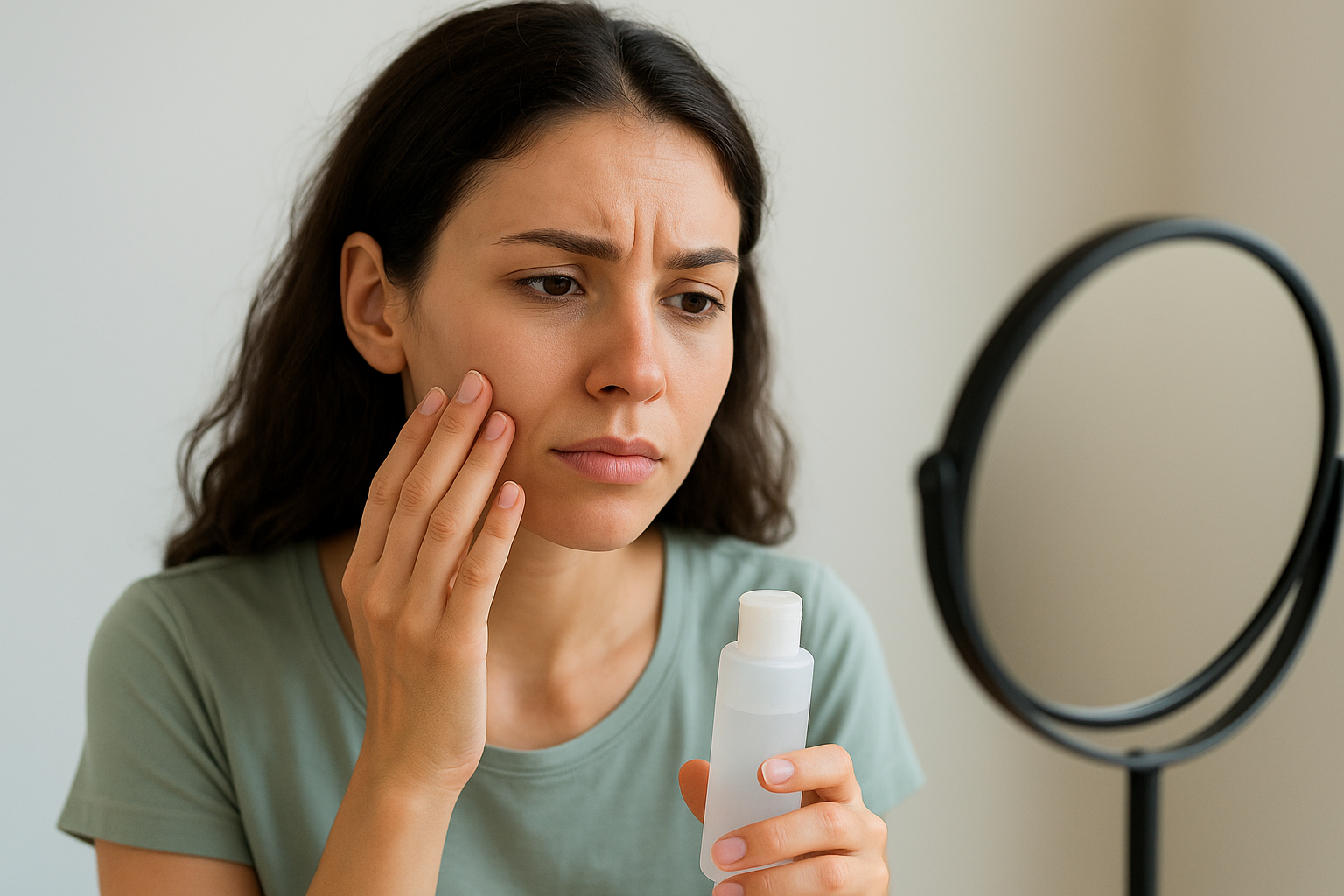
Knowing your skin type before you buy anything will save you money, frustration, and weeks of guessing.
Here's a quick reference to help you figure out where your skin falls:
| Skin Type | What You'll Notice |
|---|---|
| Normal | Balanced, rarely oily or dry, minimal sensitivity |
| Oily | Shiny appearance, enlarged pores, prone to breakouts |
| Dry | Tight feeling, flaky patches, dull or rough texture |
| Combination | Oily T-zone (forehead, nose, chin), dry or normal cheeks |
| Sensitive | Redness, stinging, or easy reactions to new products |
To test your skin type at home, wash your face with a gentle cleanser and wait 30 to 60 minutes without applying anything. Then check how your skin feels. Tightness or flaking points to dry skin, while shine across your forehead or nose suggests oily or combination skin.
Patch test before applying anything new
Apply any new product to a small test area first, like the inside of your wrist or behind your ear. Leave it for 24 hours and watch for redness, itching, or swelling. This single step can protect you from a full-face reaction, especially if your skin runs sensitive or reactive.
Even products labeled as gentle or fragrance-free can cause irritation depending on your skin's individual chemistry. Patch testing costs nothing and takes almost no time, so there's no reason to skip it.
Give your routine time to work
One of the hardest parts of starting out is resisting the urge to swap products after a few days. Most skincare products need at least four to six weeks of consistent use before you can fairly judge whether they're working. Skin cell turnover is a slow process, and visible improvement follows that same timeline.
Introduce one new product at a time so that if your skin reacts badly, you can identify the exact cause. Adding three new items at once makes it nearly impossible to pinpoint what triggered a breakout or irritation. Consistency and patience are what separate a routine that delivers results from one that feels like it never does.
Build your AM routine in 3 steps
Your morning routine sets up your skin's defense for the day ahead. This three-step beginner skincare routine takes less than five minutes and covers everything your skin needs before you head out. Start with a clean face, lock in hydration, and finish with protection.
Step 1: Cleanse
Washing your face in the morning removes sweat, oil, and overnight residue that built up while you slept. Use a gentle, pH-balanced cleanser suited to your skin type, and apply it to damp skin using small circular motions. Rinse with lukewarm water and pat dry with a clean towel. Avoid hot water, as it strips your skin's natural moisture barrier faster than you might expect.
Skipping a morning cleanse means you're applying moisturizer and sunscreen directly onto a layer of overnight buildup, which reduces how well those products absorb.
Step 2: Moisturize
Apply your moisturizer while your skin is still slightly damp, right after cleansing. This helps seal in moisture rather than just sitting on top of dry skin. Use a lightweight, non-comedogenic formula if you're oily or combination, and reach for a richer cream if your skin runs dry or tight after washing. A pea-sized amount is usually enough for your full face and neck.
Sensitive skin types should look for formulas with minimal ingredients and no added fragrance. Shorter ingredient lists reduce the chance of a reaction and make it easier to identify what's working when you eventually bring in new products.
Step 3: Apply sunscreen
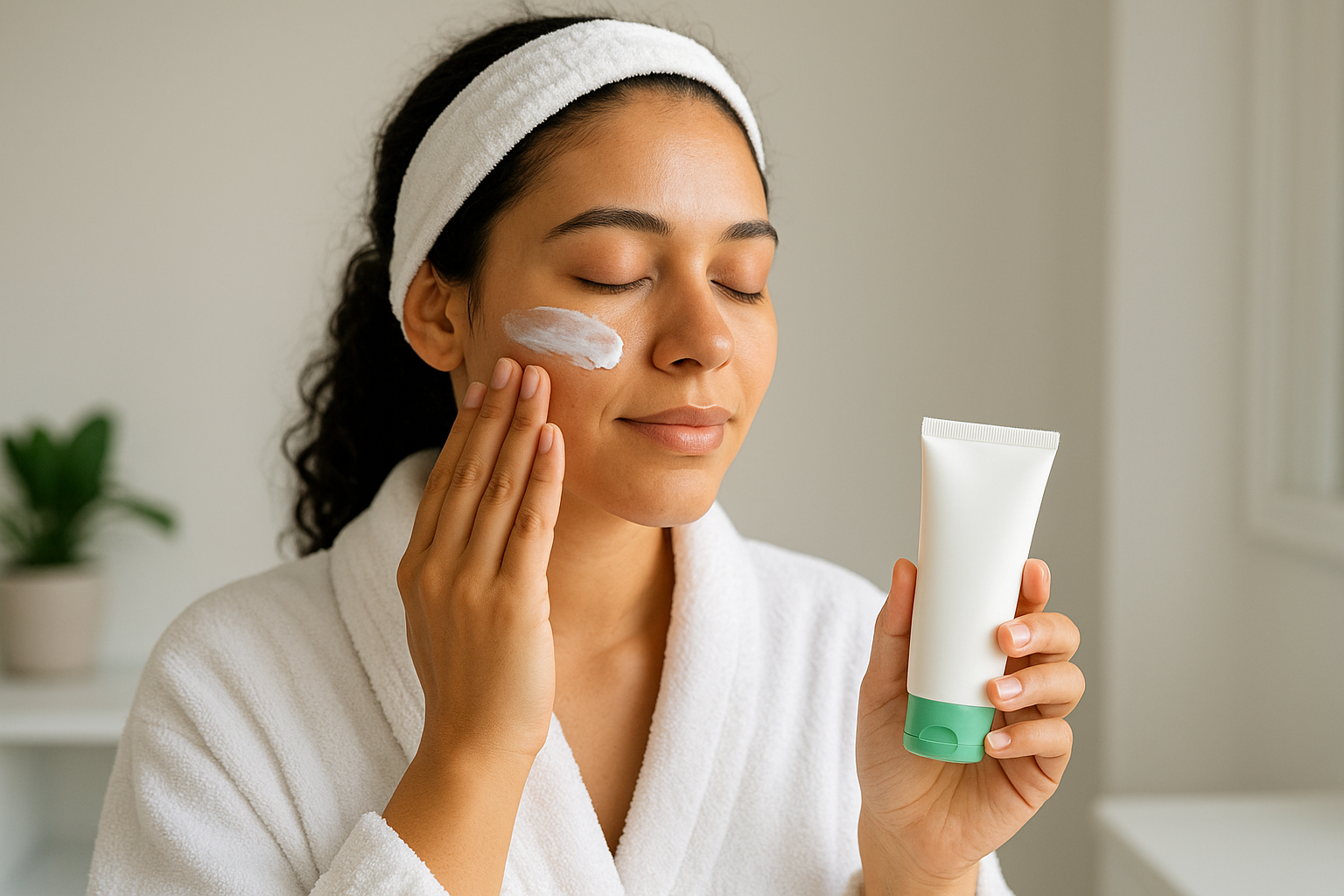
Sunscreen is the most important step in your morning routine. Apply a broad-spectrum SPF 30 or higher as your final step, after your moisturizer has had a moment to absorb. Use about a quarter teaspoon for your face and don't skip your neck and ears.
| Skin Type | Recommended Sunscreen Formula |
|---|---|
| Oily | Gel or fluid, matte finish |
| Dry | Cream-based with hydrating ingredients |
| Sensitive | Mineral (zinc oxide or titanium dioxide) |
| Combination | Lightweight lotion or fluid SPF |
Build your PM routine in 3 steps
Your nighttime routine gives your skin a chance to repair while you sleep. At night, there's no sunscreen needed, which means you can focus entirely on cleansing away the day and restoring moisture. This three-step beginner skincare routine for the evening mirrors your morning one in simplicity but shifts the focus from protection to recovery.
Step 1: Cleanse thoroughly
Evening cleansing is more important than your morning wash because your skin collects sunscreen, makeup, pollution, and excess oil throughout the day. If you wore sunscreen or any face makeup, start with a micellar water or cleansing oil to break it down before following up with your regular face wash. This two-pass approach, often called double cleansing, makes sure nothing sits on your skin overnight and interferes with how well your moisturizer absorbs.
Sleeping with sunscreen and makeup residue on your skin clogs pores and can cause breakouts that have nothing to do with your skin type.
If you wore no makeup and kept sunscreen minimal, a single gentle cleanse is enough. Apply your cleanser to damp skin, rinse with lukewarm water, and pat dry.
Step 2: Apply a treatment (optional)
Once your skin is clean, this is the right moment to use a targeted treatment product like a retinol, exfoliating acid, or vitamin C serum if you decide to add one later. For a true beginner, you can skip this step entirely until your skin adjusts to the basics. If you do use a treatment, apply it to dry skin before your moisturizer and use only a small amount to reduce the risk of irritation.
Step 3: Moisturize with a richer formula
Nighttime is when your skin repairs itself, so this is the right time to use a slightly richer moisturizer than your morning one, especially if your skin runs dry or combination. Apply it as your final step, covering your full face and neck, and let your skin absorb it while you sleep. Oily skin types can stick with a lightweight gel moisturizer rather than a thick cream.
Add-ons that actually help and when to use them
Once your beginner skincare routine feels consistent, meaning you've been doing it daily for at least four to six weeks without issues, you can start layering in targeted products. These add-ons are not essential at the start, but the right ones introduced at the right time can make a real difference in your results. Introduce them one at a time so you can track how your skin responds.
Vitamin C serum
A vitamin C serum is one of the most practical upgrades you can make to your morning routine. It works by neutralizing free radicals from UV exposure and environmental pollution before they can damage your skin cells. Apply it after cleansing and before your moisturizer, using two to three drops across your entire face and neck. Look for a stable form of vitamin C, like L-ascorbic acid or ascorbyl glucoside, in concentrations between 10% and 20%.
Start with a lower concentration around 10% if your skin is sensitive or new to active ingredients, then build from there.
Retinol
Retinol is a vitamin A derivative that helps speed up cell turnover and improves the appearance of texture, uneven tone, and fine lines over time. It belongs in your nighttime routine only, applied to dry skin after cleansing and before your moisturizer. Begin with a low concentration, such as 0.025% or 0.05%, two nights per week and increase frequency gradually as your skin adjusts. Some initial dryness and flaking is normal and usually settles within a few weeks.
Chemical exfoliants
Exfoliants remove dead skin cells that accumulate on the surface and cause dullness or uneven texture. Chemical options like glycolic acid (AHA) or salicylic acid (BHA) work more evenly and with less friction than physical scrubs. Use them one to two nights per week, never on the same nights you use retinol, to avoid stacking too many actives at once.
| Add-on | When to Use | Frequency |
|---|---|---|
| Vitamin C serum | Morning, after cleansing | Daily |
| Retinol | Night, after cleansing | 2 to 3x per week |
| Chemical exfoliant | Night, after cleansing | 1 to 2x per week |
Troubleshooting and FAQs
Even a simple beginner skincare routine can hit a few bumps in the first few weeks. Most issues have a straightforward explanation and an easy fix. Below are the most common problems people run into and what you can actually do about them.
My skin is breaking out after I start a new routine
A small increase in breakouts during the first two to four weeks is often normal, particularly when you add a new cleanser or moisturizer. Your skin is adjusting to the change in products, and this process is sometimes called purging. The key difference between a purge and a true reaction is location and timeline: purging tends to show up where you already break out and clears within a month, while a reaction can appear anywhere and tends to worsen the longer you use the product.
If breakouts spread to new areas or intensify after four weeks, stop using the product that you introduced most recently and give your skin a week to settle.
- Check that your moisturizer is labeled non-comedogenic
- Reduce cleansing to once daily if you're washing your face more than twice
- Cut any new add-on products like exfoliants or serums until your skin stabilizes
My skin feels dry or tight after washing
This usually means your cleanser is too stripping for your skin type. Harsh foaming cleansers can disrupt your moisture barrier, leaving skin tight even before you've applied anything. Switch to a cream or gel-based cleanser with a gentle formula and no sulfates, and see if the tight feeling improves within a few days. Also check your water temperature since washing with hot water removes natural oils faster than lukewarm water does.
Do I need a separate eye cream?
You do not need a dedicated eye cream as a beginner. Gently patting your regular moisturizer around the orbital bone works fine when you are just starting out. The skin around your eyes is thin and sensitive, so use your ring finger to apply light pressure and avoid dragging.
Your next steps
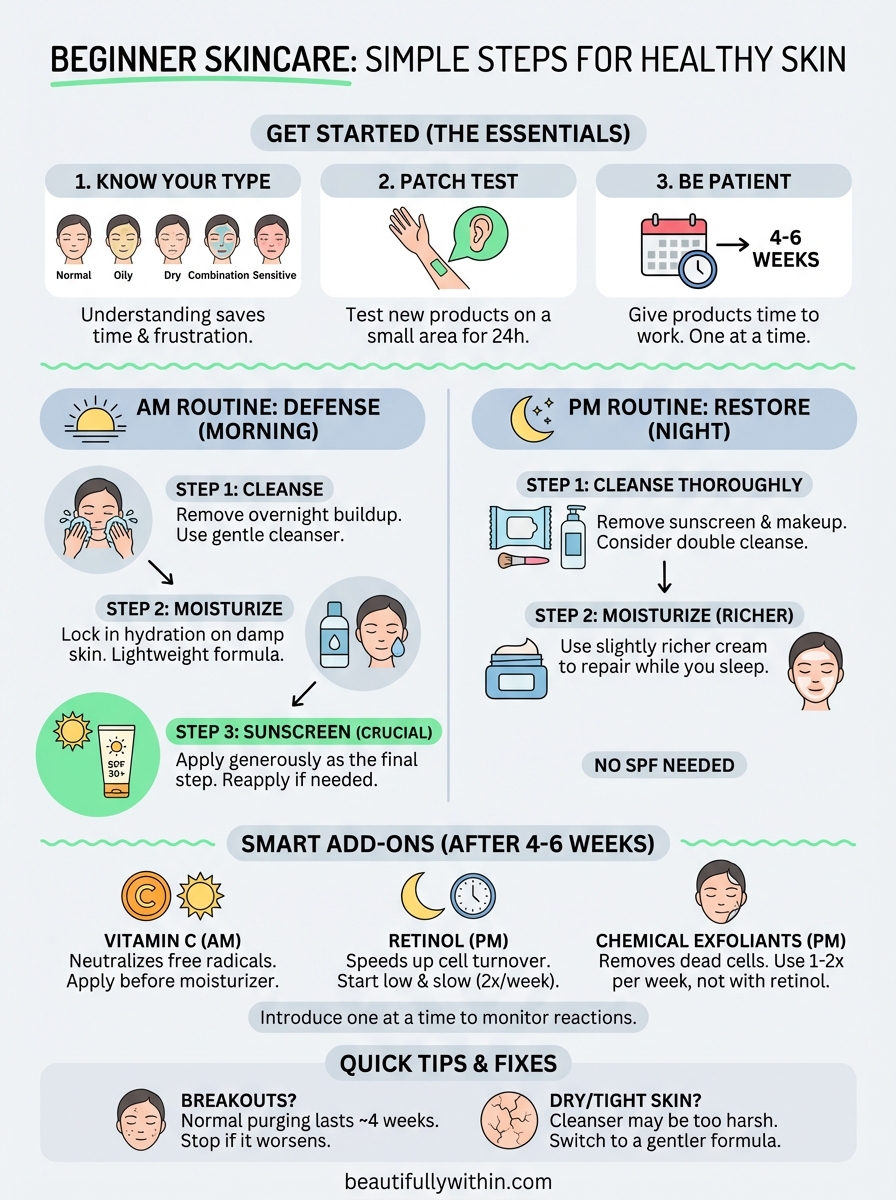
You now have everything you need to build a beginner skincare routine that works. Start with the three core steps each morning and evening: cleanse, moisturize, and protect with SPF. Give yourself at least four to six weeks before adding anything new, and introduce products one at a time so you can actually tell what's working. That patience is what turns a routine into real results.
When you're ready to upgrade what you're working with, the products you choose matter. Look for formulas built around your specific skin type and concerns rather than whatever's trending. Sensitive or dry skin especially benefits from targeted, high-quality ingredients rather than a crowded shelf of products you don't need.
Browse the skincare collection at Beautifully Within to find cleansers, moisturizers, and serums suited to where you're starting from. Your skin will thank you for keeping it simple.
✨ Shop the Look at Beautifully Within
Loved this guide? Discover our hand-picked picks that pair perfectly with your routine:
- 👉 Fresh Start Hydrating Cleanser & Toner Duo — Skincare Set
- 👉 Tridoshic Ayurvedic Ritual Set — Balanced & Combination Skin — Skincare Set
- 👉 Ayurvedic Facial Cleansing & Mask Ritual Kit — Skincare Set
- 👉 Rice Brightening Skincare Collection — 6-Piece Ritual — Skincare Set
New customer? Get 15% off orders $50+ with code WITHIN15 — plus free shipping over $75.
0 comments