

If you've ever asked yourself "what is a skincare routine?" you're already one step ahead of most people. A skincare routine is simply a set of steps you follow, morning, night, or both, to cleanse, treat, and protect your skin. It doesn't have to be complicated, and it doesn't require a bathroom counter full of products. It just has to work for you.
The benefits go beyond clear skin. A consistent routine can help with acne, dryness, sensitivity, and early signs of aging, all while giving you a few minutes of intentional self-care each day. The catch? There's no single routine that works for everyone. Your skin type, concerns, and lifestyle all play a role in what you should use and when.
That's exactly why we built Beautifully Within, to help you find products that actually match your skin's needs, especially if you deal with sensitivity or specific concerns like breakouts or dehydration. In this guide, we'll break down exactly what a skincare routine looks like, walk you through each step, and help you build a beginner-friendly regimen you can stick with. No guesswork, no wasted money on products that don't fit.
What a skincare routine is and why it matters
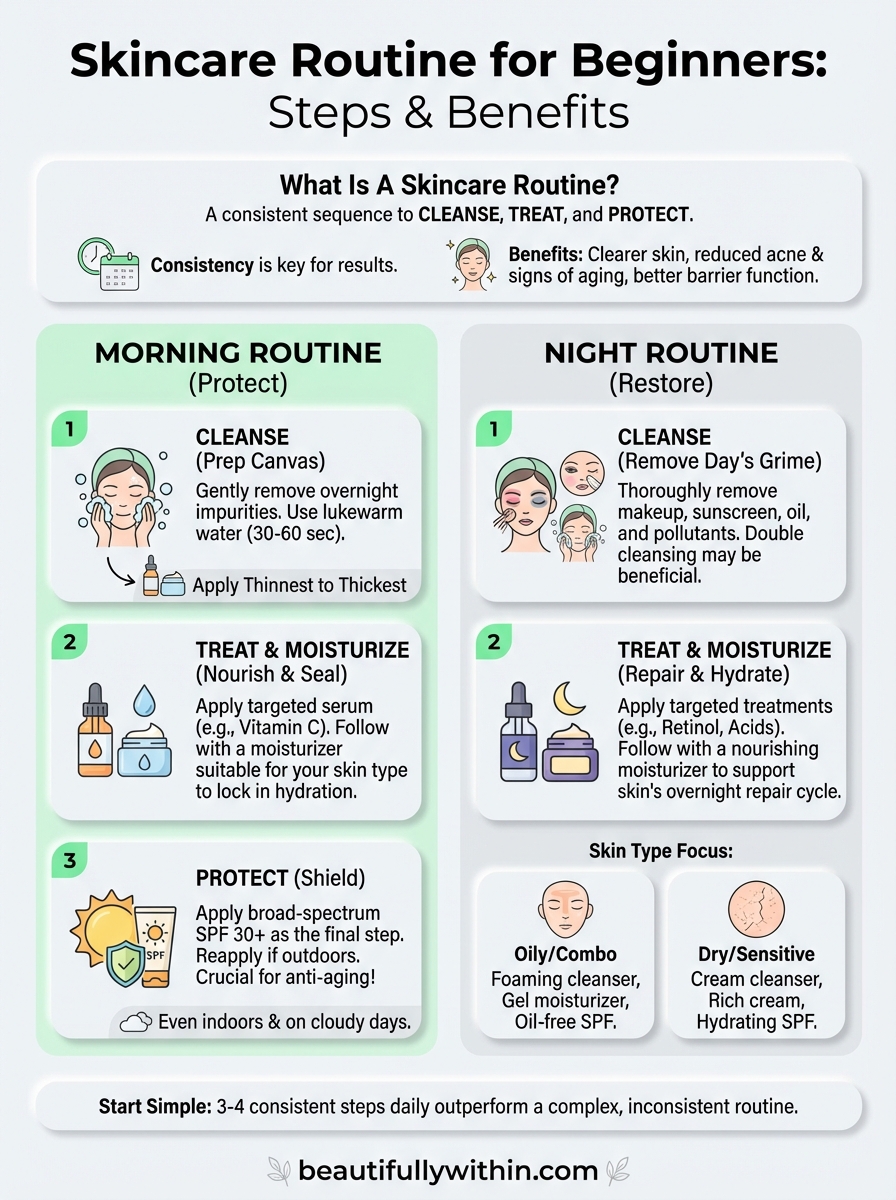
When people ask what is a skincare routine, the answer is simpler than the beauty industry makes it sound. A skincare routine is a consistent, repeatable sequence of steps you apply to your skin, usually in the morning and at night, using products that work together to cleanse, treat, and protect. The word "routine" matters here because the results come from repetition, not from using the most expensive product once or switching formulas every week.
What a routine actually does for your skin
Your skin is your body's largest and most exposed organ, and it works hard every single day. During the day, it faces UV exposure, pollution, and oil buildup. At night, it shifts into repair and regeneration mode. A routine works with this natural cycle: your morning steps protect, and your evening steps restore. When you give your skin the right ingredients at the right time, you see results that a random, inconsistent approach can never deliver.
Skin responds to consistency. Using the right products every day, even simple ones, outperforms an elaborate routine you only follow when you remember.
Think of it like brushing your teeth. You don't brush once a week and expect a clean mouth. Skincare works the same way: regular daily care keeps your skin functioning well, while skipping steps leads to issues that could have been prevented in the first place.
Why what you use matters as much as when you use it
Not every product works for every person. If you have oily or acne-prone skin, a heavy cream designed for dry skin will likely clog your pores and trigger breakouts. If you have dry or sensitive skin, skipping moisturizer leaves your barrier compromised and reactive. This is where a lot of beginners go wrong: they follow a routine that was never built for their skin type, then blame skincare entirely when it does not work.
The order you apply products also changes how well they absorb and perform. A solid rule to follow is thinnest to thickest consistency: cleanser first, then serums or treatments, then moisturizer, and sunscreen last in the morning. Applying a thick moisturizer before a serum blocks the serum from penetrating properly, which wastes both the product and your effort. Getting the order right costs nothing but pays off every time you use it.
Step 1. Cleanse the right way
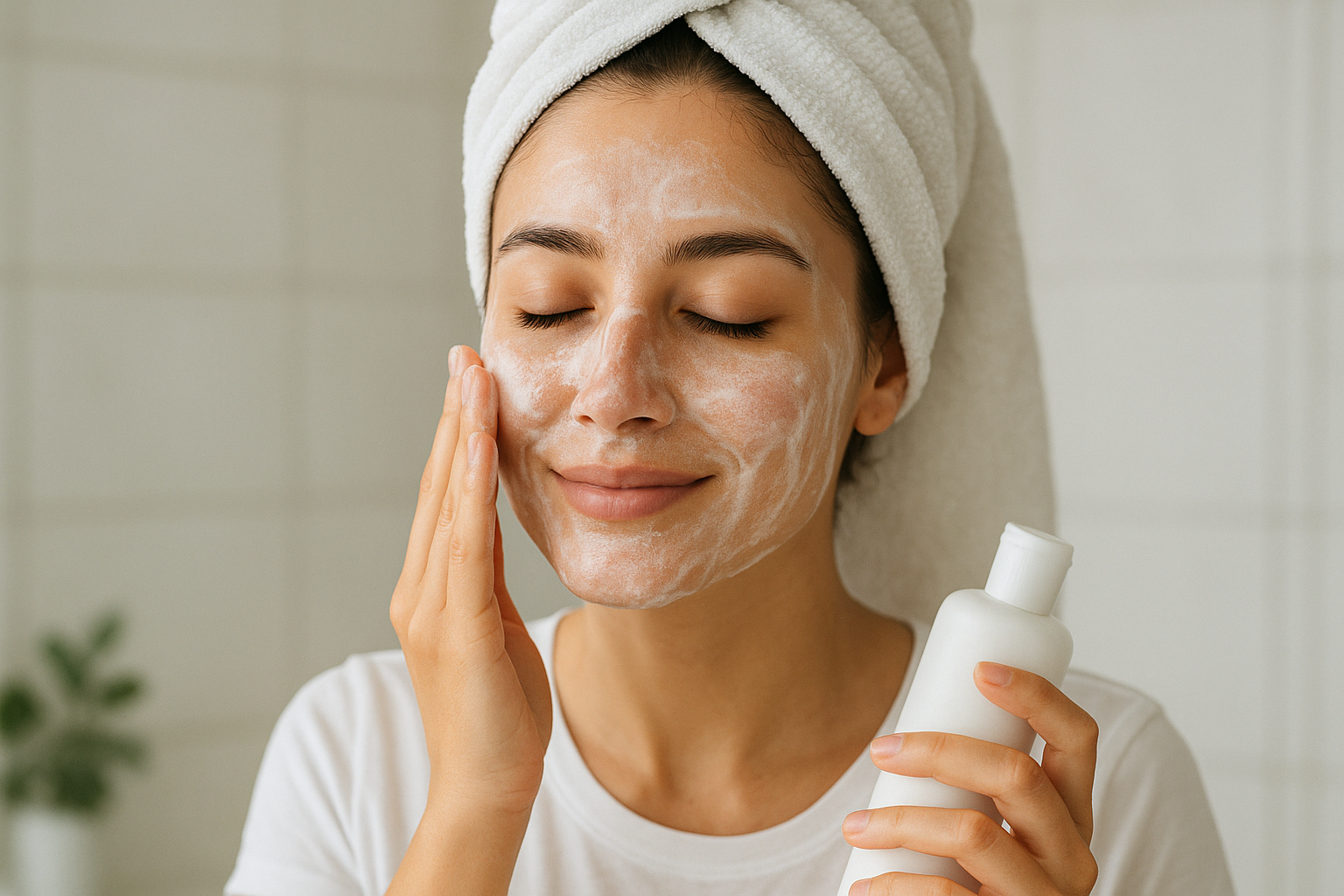
Cleansing is the foundation of any skincare routine. Without it, everything else you apply sits on top of dirt, oil, and leftover product, which blocks absorption and can trigger breakouts. Whether you're figuring out what is a skincare routine for the first time or refining an existing one, getting your cleanse right sets up every other step that follows for success.
Pick the right cleanser for your skin type
Your cleanser choice makes a bigger difference than most people expect. Foaming cleansers work well for oily and acne-prone skin because they cut through excess sebum without leaving residue. Cream or gentle gel cleansers suit dry and sensitive skin better since they remove impurities without stripping your skin's natural moisture barrier. Using the wrong type consistently leaves your skin either tight and reactive, or not truly clean.
| Skin Type | Best Cleanser Type |
|---|---|
| Oily / Acne-prone | Foaming or salicylic acid gel cleanser |
| Dry / Sensitive | Cream or gentle hydrating cleanser |
| Combination | Balanced gel cleanser |
| Normal | Gentle foaming or gel cleanser |
How to cleanse properly
The technique matters just as much as the product you choose. Apply your cleanser to damp skin and work it in for about 30 to 60 seconds using your fingertips in small circular motions, then rinse with lukewarm water. Hot water strips your skin's natural oils and weakens the barrier, while cold water does not rinse away cleanser effectively enough to clear pores.
Thirty to sixty seconds is all you need. Scrubbing harder or longer does not clean better; it only irritates your skin and causes unnecessary redness.
After rinsing, pat your face dry with a clean towel rather than rubbing it. Rubbing drags at the skin and can lead to long-term irritation, especially if your skin runs sensitive or reactive.
Step 2. Add treatments and moisturize
After cleansing, your skin is clean and ready to absorb active ingredients. This is when treatments and moisturizers do their best work. The key is applying them in the right order and choosing formulas that match your skin's current needs.
Choose the right treatment for your concern
Treatments, often called serums, are concentrated formulas designed to target specific skin concerns like acne, dark spots, fine lines, or dehydration. They deliver active ingredients deeper into your skin than a moisturizer alone can. Before you pick one, identify your primary skin concern so you're not layering products that work against each other.
Here's a quick reference for common concerns and the ingredients that address them:
| Skin Concern | Look For |
|---|---|
| Acne / Breakouts | Niacinamide, salicylic acid, benzoyl peroxide |
| Hyperpigmentation | Vitamin C, kojic acid, alpha arbutin |
| Fine lines / Aging | Retinol, peptides, hyaluronic acid |
| Dehydration | Hyaluronic acid, glycerin |
| Sensitivity / Redness | Centella asiatica, ceramides, azelaic acid |
How to apply treatments and moisturizer
Apply your treatment serum to clean, slightly damp skin immediately after cleansing. Use 2 to 3 drops and press it gently into your skin rather than rubbing it in. Rubbing reduces absorption and can cause unnecessary irritation. Let it absorb for 30 to 60 seconds before moving to the next step.
Skipping moisturizer after a treatment is one of the most common beginner mistakes. Even oily skin needs a moisturizer to keep its barrier intact and functioning properly.
Follow your treatment with a moisturizer suited to your skin type: a lightweight gel formula if you run oily, and a richer cream if you lean dry or sensitive. Moisturizer seals in the active ingredients from your treatment and keeps your skin barrier strong throughout the day or overnight. This two-step combination is where understanding what is a skincare routine really starts to click for most beginners.
Step 3. Protect with sunscreen every morning
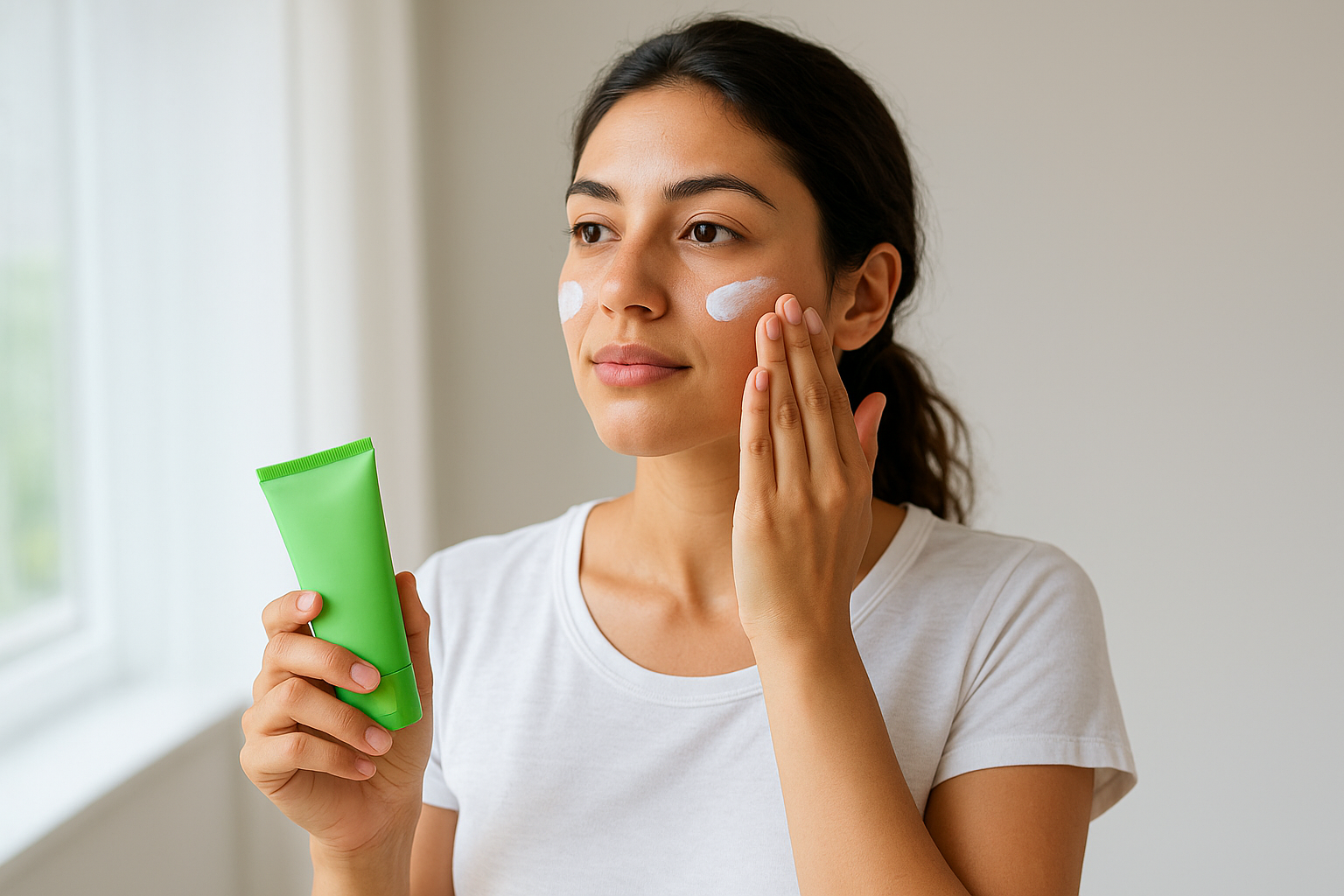
Sunscreen is the one step most beginners skip, and it's the one that protects everything else you've just applied. UV damage is the leading cause of premature aging, dark spots, and uneven skin texture, and no serum or moisturizer can undo that damage once it accumulates. If you're learning what is a skincare routine for the first time, treat sunscreen as the final lock on every other step you completed before it.
Why sunscreen is non-negotiable
Your skin absorbs UV radiation even on cloudy days and through windows, which means sitting near a window at work or in your car counts as real sun exposure. Skipping sunscreen on those days still adds up over weeks and months. The cumulative effect is what causes fine lines, hyperpigmentation, and loss of firmness far earlier than they would otherwise appear.
Daily SPF use is the single most effective anti-aging step you can take, and it works whether you're 20 or 50.
How to apply sunscreen correctly
Choose SPF 30 or higher as your minimum, and look for "broad spectrum" on the label, which means it protects against both UVA and UVB rays. Apply it as the last step in your morning routine, after your moisturizer has had a moment to absorb. Use about a quarter teaspoon for your face, and don't forget your neck and ears since those areas get just as much daily exposure as your face does.
Reapply every two hours if you're spending time outdoors. For indoor days, one morning application is generally enough. Both mineral and chemical sunscreens work well, so the best one is simply the formula you'll actually reach for and use consistently every single day.
Build your routine by skin type
Understanding what is a skincare routine in theory is one thing, but applying it to your specific skin type is where real results start. Your skin type determines which textures, ingredients, and steps belong in your daily regimen. Using the wrong products, even high-quality ones, can trigger breakouts, dryness, or irritation that has nothing to do with the product itself and everything to do with the mismatch.
Oily and combination skin
If your skin looks shiny by midday or you notice congestion and enlarged pores in your T-zone, you have oily or combination skin. Your routine should focus on controlling excess sebum without over-stripping, because stripping your skin actually signals it to produce more oil in response. Stick to lightweight, non-comedogenic formulas across every step.
| Step | Product Type to Use |
|---|---|
| Cleanser | Foaming gel or salicylic acid cleanser |
| Treatment | Niacinamide serum to reduce oil and pores |
| Moisturizer | Lightweight gel or fluid moisturizer |
| Sunscreen | Oil-free or mattifying SPF 30+ |
Skipping moisturizer because your skin feels oily is one of the most common mistakes that makes oiliness worse over time.
Dry and sensitive skin
Dry and sensitive skin needs a routine built around protecting and replenishing the moisture barrier rather than loading it with actives. If your skin feels tight after cleansing, flakes in patches, or reacts easily to new products, keep your routine minimal and barrier-focused. Introduce any new treatment ingredient slowly, one product at a time, and watch how your skin responds over one to two weeks before adding anything else.
| Step | Product Type to Use |
|---|---|
| Cleanser | Cream or hydrating gentle cleanser |
| Treatment | Hyaluronic acid or ceramide serum |
| Moisturizer | Rich cream or balm moisturizer |
| Sunscreen | Mineral SPF 30+ with a hydrating base |
A simple routine you can stick with
Now that you know what is a skincare routine and how each step works, the only thing left is to start. You don't need ten products or a complex multi-step system. Three to four consistent steps, done daily, will deliver more results than an elaborate routine you abandon after a week.
Pick one cleanser, one treatment that targets your biggest skin concern, one moisturizer, and one SPF. Use them every morning and evening, and give your skin at least four to six weeks before judging the results. Consistency and patience are the two things no product can replace.
When you're ready to build your routine, browse our full skincare collection at Beautifully Within. Every product is curated to help you find the right fit for your skin type, whether you're starting from scratch or upgrading what you already use.
✨ Shop the Look at Beautifully Within
Loved this guide? Discover our hand-picked picks that pair perfectly with your routine:
- 👉 Fresh Start Hydrating Cleanser & Toner Duo — Skincare Set
- 👉 Beauty Salon Lyophilised Brightening Treatment — Skincare Set
- 👉 Ohui Korean Moisturising & Repair Skincare Gift Set — Skincare Set
- 👉 BIOAQUA Rice Brightening Skincare Collection — 6-Piece Ritual — Skincare Set
New customer? Get 15% off orders $50+ with code WITHIN15 — plus free shipping over $75.
0 comments