

Dark spots have a way of sticking around long after the breakout, sun damage, or hormonal shift that caused them. If you've been layering on random brightening products without seeing real change, the problem likely isn't the products themselves, it's the order, timing, and combination. A solid skincare routine for dark spots and hyperpigmentation requires more than one hero ingredient. It takes a structured AM and PM approach that targets melanin overproduction at multiple levels.
Hyperpigmentation affects nearly every skin type and tone, and the triggers range from UV exposure and acne scarring to melasma and post-inflammatory marks. The good news? With the right actives applied in the right sequence, you can see meaningful fading within weeks, not months.
That's exactly why we put this guide together at Beautifully Within. Our focus has always been helping you build routines that actually work for your specific concerns, using products that respect your skin, especially if it runs sensitive. Below, you'll find a complete morning and evening regimen with ingredient recommendations, layering order, and practical tips to help you even out your skin tone and feel confident in what you see in the mirror.
Why dark spots happen and what you can treat
Before you can fade dark spots, you need to understand what's creating them. Your skin produces melanin as a protective response to irritation, inflammation, UV exposure, or hormonal changes. When that process goes into overdrive in a localized area, you end up with a patch of skin that's noticeably darker than the surrounding tissue. Knowing the trigger behind your specific spots tells you which active ingredients to reach for and how aggressively you need to approach treatment.
The root cause: melanin overproduction
Melanin is made by cells called melanocytes, and they ramp up production any time your skin perceives a threat. A breakout leaves behind inflammation, which signals your melanocytes to produce more pigment than usual. Sun exposure does the same thing, which is exactly why a small post-acne mark can turn into a much darker spot if you skip sunscreen during healing. Post-inflammatory hyperpigmentation (PIH) is the most common form, and it shows up on every skin tone, though darker skin tones tend to experience more intense discoloration due to higher baseline melanin activity.
Protecting a healing breakout from UV exposure is one of the most effective things you can do to prevent PIH from deepening.
Types of hyperpigmentation you're likely dealing with
Not all dark spots work the same way, and treating the wrong type with the wrong approach wastes time. Here's a quick breakdown of the most common types:
| Type | Cause | Depth | Treatable at home? |
|---|---|---|---|
| Post-inflammatory hyperpigmentation (PIH) | Acne, eczema, injury | Superficial to mid-dermal | Yes, with consistent actives |
| Sunspots (solar lentigines) | Cumulative UV damage | Epidermal | Yes, responds well to brighteners |
| Melasma | Hormones, UV, heat | Epidermal and dermal | Partially, often needs professional help |
| Freckles | Genetic + UV triggered | Epidermal | Manageable but not fully erasable |
Understanding where your spots sit in the skin layers matters a lot. Epidermal pigmentation responds faster to topical actives like vitamin C, niacinamide, and AHAs. Dermal pigmentation, which sits deeper, takes longer and sometimes requires in-office treatments to see significant change.
What you can realistically treat at home
A consistent skincare routine for dark spots and hyperpigmentation can meaningfully reduce epidermal discoloration over six to twelve weeks. PIH and sunspots are the most responsive to at-home care. You'll see the best results when you combine melanin-inhibiting ingredients like niacinamide or alpha arbutin with exfoliating acids that speed up cell turnover, then lock in daily SPF to stop new UV damage from undoing your progress.
Melasma is trickier. It tends to be triggered by heat and hormones, so topicals alone rarely clear it fully. You can still make progress at home, but set realistic expectations and plan to work with a dermatologist if you're not seeing movement after three months of consistent treatment. The other types, PIH, sunspots, and even some stubborn freckles, respond well to the structured routine laid out in the sections below.
Step 1. Build your AM routine for fading spots
Your morning routine has one job: protect your progress. During the day, your skin faces UV exposure and environmental stressors that both create new dark spots and deepen the ones you're already treating. A well-structured skincare routine for dark spots and hyperpigmentation starts in the AM by combining melanin-inhibiting ingredients with physical protection, so you're not undoing overnight repair work before noon.
The morning layering order
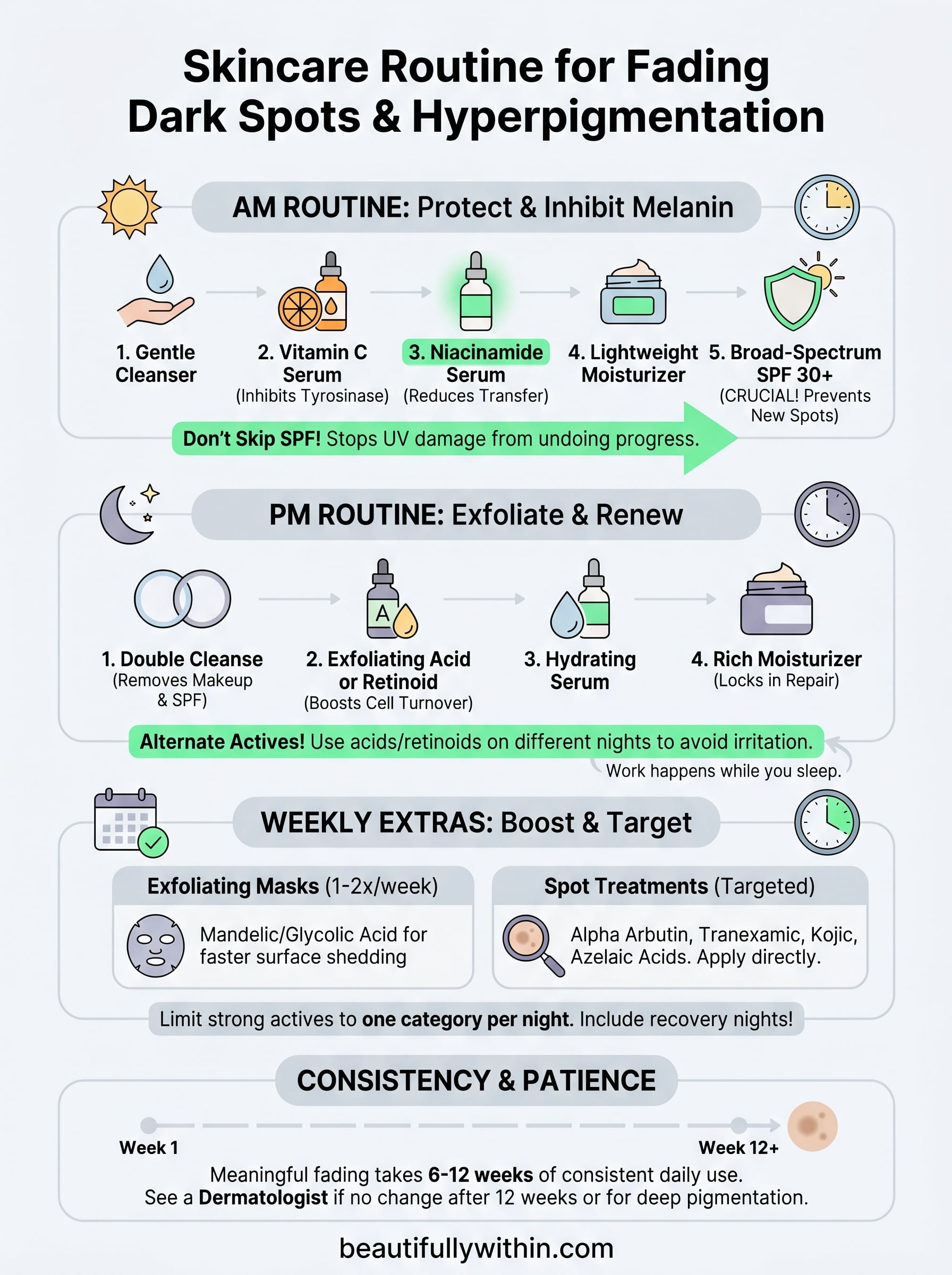
Getting the sequence right matters as much as the products you pick. Applying actives out of order reduces their effectiveness or causes irritation that leads to even more PIH. Follow this layering template every morning:
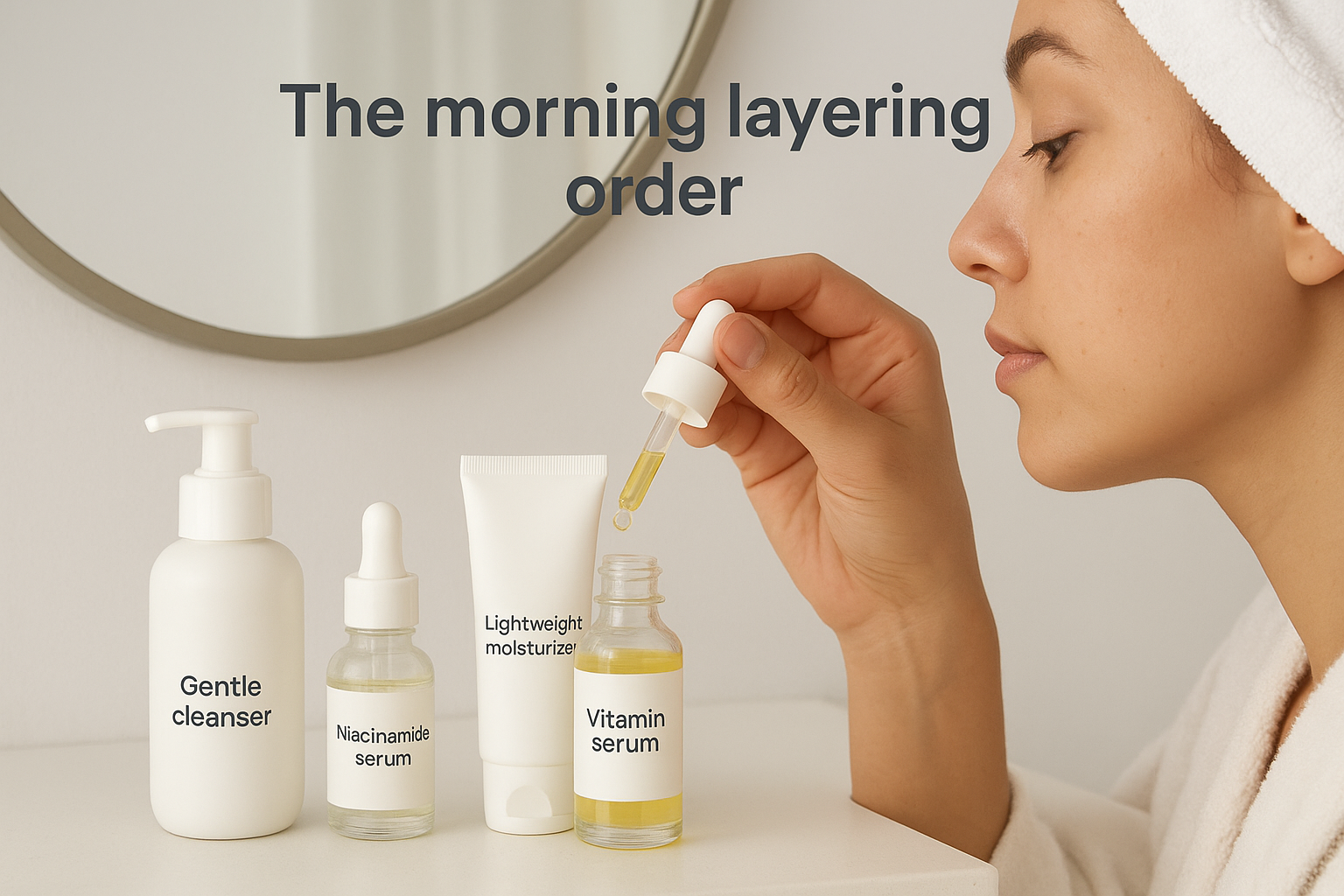
- Gentle cleanser - Use a mild, non-stripping face wash. Avoid formulas with harsh sulfates that compromise your skin barrier.
- Vitamin C serum (10-20% L-ascorbic acid) - Apply to slightly damp skin. Vitamin C inhibits tyrosinase, the enzyme that drives melanin production, and also neutralizes free radicals triggered by UV exposure.
- Niacinamide serum (4-10%) - Wait about 60 seconds after vitamin C, then layer niacinamide on top. It reduces melanin transfer from melanocytes to skin cells, gradually evening out your tone.
- Lightweight moisturizer - Seal in your actives with a hydrating layer. Dehydrated skin makes discoloration look more pronounced.
- Broad-spectrum SPF 30 or higher - Apply generously as your final step every single morning.
Skipping SPF while using brightening actives means UV rays generate fresh pigmentation faster than your actives can fade existing spots. Sunscreen is what makes the rest of your morning routine worth doing.
Why SPF anchors your brightening efforts
Every brightening active you apply works harder when UV exposure is consistently blocked. Vitamin C and niacinamide both make meaningful progress against existing pigmentation, but unprotected sun exposure triggers new melanin production that outpaces their benefits almost immediately. Check the label and reach for a mineral or hybrid sunscreen with zinc oxide if your skin runs sensitive, since some chemical UV filters irritate reactive skin types.
Reapply every two hours if you spend time outdoors, and don't forget your neck and hands, which are common spots for sun-triggered hyperpigmentation that most people overlook.
Step 2. Build your PM routine for faster turnover
Your PM routine is where most of the actual fading work happens. While you sleep, your skin shifts into repair mode, cell turnover accelerates, and active ingredients penetrate more effectively without competing with UV exposure or environmental stressors. That makes nighttime the ideal window to introduce stronger resurfacing actives that drive real, measurable pigmentation change.
The evening layering order
At night, the goal is accelerated cell turnover, which pushes pigmented cells toward the surface so they shed faster and reveal cleaner skin underneath. A consistent skincare routine for dark spots and hyperpigmentation uses your skin's natural repair cycle by applying exfoliating acids or retinoids after cleansing, when your barrier is primed to absorb them most efficiently.
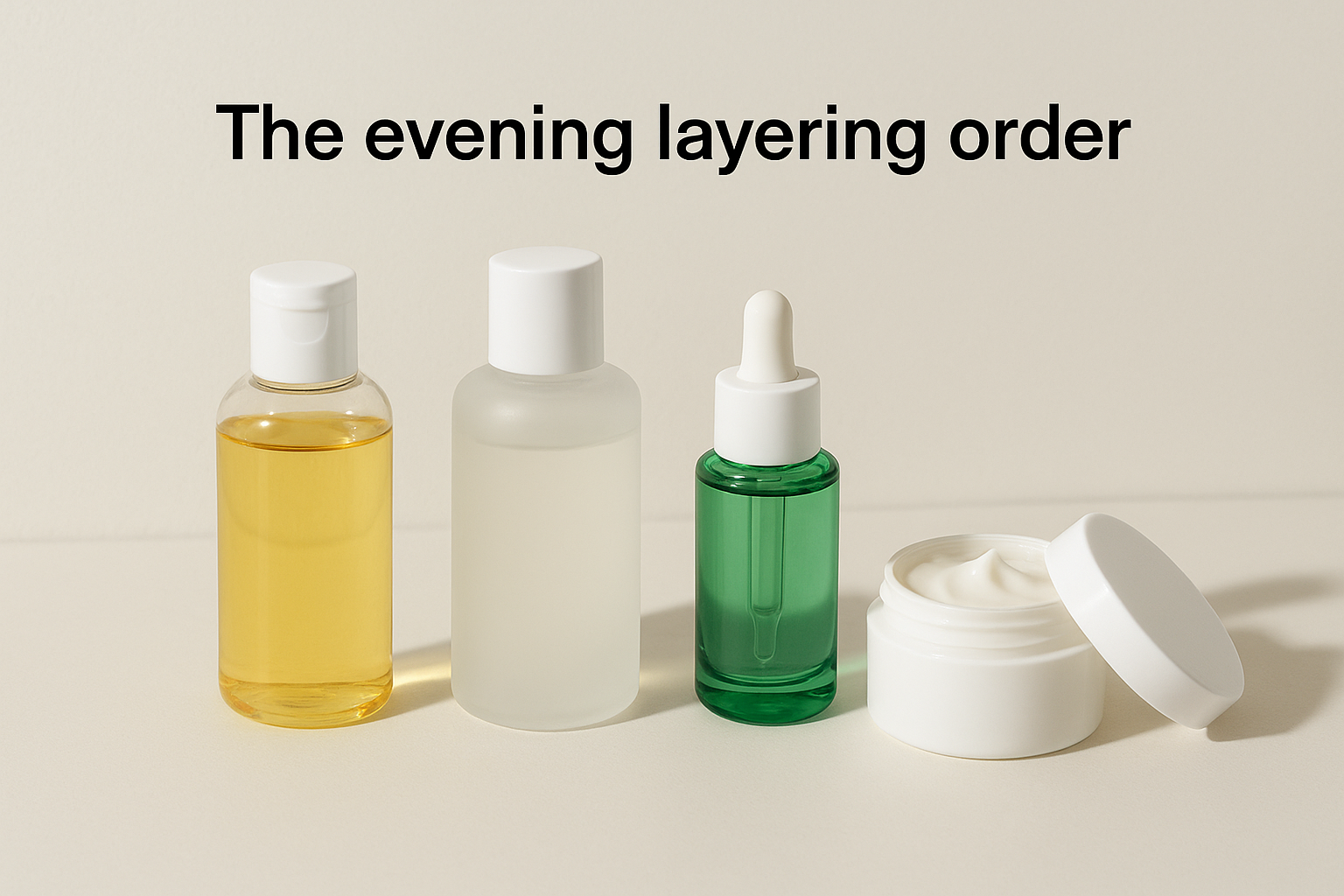
Follow this PM layering template each evening:
- Double cleanse (oil cleanser + gentle face wash) - Remove sunscreen, makeup, and daily buildup thoroughly. Residual SPF blocks active ingredient absorption.
- Exfoliating acid toner or serum - Apply glycolic acid (5-10%) or lactic acid (5-10%) to encourage surface cell shedding and fade epidermal pigmentation. Use nightly if your skin tolerates it, or every other night when starting out.
- Retinoid (retinol or retinal, 0.025-0.3%) - Wait 20-30 minutes after acids, or use on alternating nights. Retinoids accelerate dermal renewal and gradually reduce melanin deposits over time.
- Hydrating serum - Follow with a hyaluronic acid or ceramide serum to offset dryness from actives.
- Rich moisturizer - Lock in moisture and support overnight skin repair.
Never layer a strong AHA directly with a retinoid on the same night when you're new to either ingredient. Combining them too soon triggers irritation that can worsen PIH rather than fade it.
How to handle retinoid sensitivity
Retinoids are among the most research-backed ingredients for hyperpigmentation, but they come with a real adjustment period. Start with retinol two nights per week and gradually increase to five or six nights over four to six weeks. Going slow lets your skin build tolerance without the redness and flaking that causes most people to quit before they see results.
If irritation appears, apply your moisturizer before your retinoid to create a protective buffer. This approach dramatically reduces sensitivity without sacrificing the cell-renewing benefits that make retinoids worth including in your routine in the first place.
Step 3. Add weekly extras and spot treatments safely
Weekly treatments amplify the daily work your AM and PM routine is already doing. Used correctly, they accelerate fading without compromising your skin barrier. The key is knowing which extras to add, how often to use them, and which combinations to avoid in your skincare routine for dark spots and hyperpigmentation.
Weekly exfoliating masks
A chemical exfoliating mask used once or twice a week can significantly speed up the cell turnover your nightly AHAs begin during the rest of the week. Look for masks containing mandelic acid (10-15%) or glycolic acid (10-20%), which target epidermal pigmentation without the downtime of professional peels. Apply to clean, dry skin, leave on for 10 minutes, then rinse thoroughly and follow with your hydrating serum and moisturizer.
Skip your exfoliating mask on any night when you've already applied a retinoid to avoid over-exfoliating and disrupting your barrier.
Targeted spot treatments
Spot treatments let you concentrate stronger actives directly on individual dark spots without applying high-strength formulas across your entire face. Your skin only needs concentrated doses where the discoloration actually lives. Here are the most effective options and how to use them:
| Ingredient | Concentration | Best for | Frequency |
|---|---|---|---|
| Alpha arbutin | 1-2% | PIH and sunspots | Daily, AM or PM |
| Tranexamic acid | 2-5% | Melasma and PIH | Twice daily |
| Kojic acid | 1-4% | Stubborn sunspots | Nightly |
| Azelaic acid | 10-20% | Acne-triggered PIH | Twice daily |
Apply spot treatments after your serum step but before your moisturizer. Use a clean fingertip or cotton swab to press the product directly onto the darkened area, then let it absorb for 30-60 seconds before layering anything on top.
How to layer without overloading your skin
Adding weekly extras on top of your daily routine is easy to overdo. Limit strong actives to one category per night: either an exfoliating mask or a spot treatment, not both simultaneously on the same area. Structure your weekly schedule so your skin gets at least one or two rest nights with only your cleanser, hydrating serum, and moisturizer. Recovery nights protect your barrier and prevent the kind of low-grade inflammation that generates new pigmentation instead of fading what's already there.
When to see a dermatologist for hyperpigmentation
A consistent skincare routine for dark spots and hyperpigmentation handles most common cases well, but some pigmentation goes beyond what topical actives can fully resolve. Recognizing when to bring in a professional saves you months of frustration and helps you avoid wasting money on products that simply cannot reach the root of the problem. If your spots aren't responding after twelve weeks of consistent daily treatment, it's time to reassess with a trained eye.
Signs that at-home treatment isn't enough
Several clear indicators tell you that your hyperpigmentation needs professional evaluation rather than more product layering. If you notice any of the following, book an appointment with a board-certified dermatologist:
- Spots that darken or spread despite consistent SPF use and active ingredient application
- Melasma that covers large areas of your cheeks, forehead, or upper lip with no improvement after three months
- PIH that sits noticeably deeper in the skin, appearing grayish or blue-toned rather than brown on medium to dark skin tones
- New spots appearing rapidly in areas you haven't had sun damage or inflammation before
- Persistent irritation or redness from at-home actives that has created more pigmentation rather than fading existing spots
If a spot changes shape, develops uneven edges, or looks significantly different from your other dark spots, see a dermatologist promptly to rule out anything beyond cosmetic hyperpigmentation.
What a dermatologist can offer that products can't
Dermatologists have access to prescription-strength formulations that go beyond what over-the-counter products provide. Tretinoin at 0.05% or higher, prescription hydroquinone at 4%, and combination formulas containing all three of the Kligman triad ingredients work faster and reach deeper pigmentation than any retail product. Your dermatologist can also determine precisely what type of hyperpigmentation you're dealing with using a Wood's lamp examination, which reveals whether your pigmentation is epidermal, dermal, or mixed.
In-office procedures like chemical peels, microneedling, and laser treatments specifically target dermal pigmentation that topicals cannot reach on their own. Your dermatologist will match the procedure to your skin tone and pigmentation type, reducing the risk of post-treatment PIH that can result from choosing the wrong treatment at a med spa without proper assessment.
Your next step
You now have everything you need to build a skincare routine for dark spots and hyperpigmentation that actually moves the needle. The most important thing to do is start with one structured routine and stick with it for at least six to eight weeks before adding new products or changing your approach. Consistency with a focused regimen beats switching products every two weeks every time.
Your AM and PM routines, along with the weekly extras and targeted spot treatments, work best when your skin barrier stays intact and protected. SPF every morning, retinoids at night, and patience are the core of lasting results. If you want to browse skincare products that support this kind of routine, our premium skincare collection is a solid place to start. Every product you add should earn its spot by serving a specific role in your routine.
✨ Shop the Look at Beautifully Within
Loved this guide? Discover our hand-picked picks that pair perfectly with your routine:
- 👉 Exosome Brightening Cream — Hyperpigmentation & Dark Spots — Moisturizer
- 👉 Fresh Start Hydrating Cleanser & Toner Duo — Skincare Set
- 👉 Tridoshic Ayurvedic Ritual Set — Balanced & Combination Skin — Skincare Set
- 👉 Ayurvedic Facial Cleansing & Mask Ritual Kit — Skincare Set
New customer? Get 15% off orders $50+ with code WITHIN15 — plus free shipping over $75.
0 comments