

Vitamin C is one of the most effective ingredients you can put on your skin, but only if you use it correctly. A skincare routine with vitamin C can brighten dark spots, even out your tone, and protect against environmental damage. The problem? Most people either apply it at the wrong time, layer it with the wrong products, or skip it altogether because they're unsure where it fits.
If you've been wondering whether vitamin C goes on before or after moisturizer, whether morning or night is better, or how it plays with actives like retinol and hyaluronic acid, you're asking the right questions. The order you apply your products matters just as much as the products themselves.
At Beautifully Within, we believe great skin starts with knowing how to care for it, not just what to buy. That's why we put this guide together, to give you a clear, step-by-step breakdown of where vitamin C belongs in your routine, how to layer it safely, and what to avoid. By the end, you'll have a routine that actually works for your skin, without the guesswork.
What vitamin C does and when it makes sense
Vitamin C, also called L-ascorbic acid in its pure form, is an antioxidant that your skin cannot produce on its own. When you apply it topically, it works in two key ways: it neutralizes free radicals from UV exposure and pollution, and it interrupts the process your skin uses to produce excess melanin. That second part is why building a skincare routine with vitamin C is so effective at fading dark spots and giving your skin a more even tone over time.
How vitamin C works on your skin
Your skin builds collagen constantly, but that process slows with age and sun damage. Vitamin C directly supports collagen synthesis by acting as a cofactor for the enzymes that construct collagen fibers. More collagen means firmer, bouncier skin and fewer fine lines. Beyond that, vitamin C brightens your complexion by blocking an enzyme called tyrosinase, which your skin needs to produce melanin. Less tyrosinase activity means fewer dark spots and a more uniform skin tone.

Vitamin C works at a cellular level, making it one of the few topical ingredients with solid, peer-reviewed research behind its brightening and anti-aging effects.
Results are not instant. Most people notice a visible difference in brightness after four to eight weeks of consistent daily use. Fading deeper hyperpigmentation can take three to six months, depending on how concentrated your formula is and how consistently you apply sunscreen on top.
The best time to use vitamin C
Morning is the right time to apply vitamin C, and the reason is straightforward. Antioxidants like vitamin C amplify your sunscreen's protection by neutralizing the free radicals that UV rays generate, which SPF alone cannot neutralize. Applying it in the morning means your skin carries that antioxidant defense throughout the day, right when it is most needed.
You can use vitamin C at night, but it is less strategic without active UV exposure driving oxidative stress. If your skin is sensitive to concentrated formulas or prone to irritation, a nighttime application works as a reasonable alternative rather than stacking it on top of your morning routine.
Choose the right vitamin C for your skin
Not every vitamin C product delivers the same results. The formula you choose depends on your skin type, your tolerance for active ingredients, and what you're trying to address. A first-time user with sensitive skin needs a very different starting point than someone with oily skin who has been using actives for years. Picking the wrong formula often leads to irritation, which makes people abandon vitamin C entirely before it has a chance to work.
The most researched form of vitamin C is L-ascorbic acid, but it works best at a low pH, which can be too harsh for sensitive or reactive skin types.
Match the concentration to your skin's tolerance
Concentration is the first number to check on any vitamin C label. Beginners should start at 10% or lower to minimize the risk of redness and stinging. If your skin handles that well after two to three weeks, you can step up. Going above 20% rarely adds more benefit and usually just increases irritation without improving results.
| Skin Type | Recommended Concentration |
|---|---|
| Sensitive or new to actives | 5-10% |
| Normal or combination | 10-15% |
| Oily or experienced with actives | 15-20% |
Pick a stable formula
Pure L-ascorbic acid oxidizes quickly when exposed to air and light, turning orange or brown and losing its potency before it can do much for your skin. Look for products in dark or opaque packaging with airtight pumps rather than open jars. For a gentler option, choose sodium ascorbyl phosphate or ascorbyl glucoside, which are more stable derivatives that still deliver brightening results in a skincare routine with vitamin C, just at a slightly slower pace.
Build an AM skincare routine with vitamin C
Your morning routine is where a skincare routine with vitamin C makes the most impact. Apply it before your moisturizer and sunscreen so it sits close to your skin and builds that antioxidant layer while your day starts. The steps below follow the standard thin-to-thick rule: start with the lightest textures and finish with the heaviest.
Vitamin C serum goes on clean, slightly damp skin to maximize absorption before any heavier products seal it in.
Step-by-step AM routine order
Every step in your morning routine has a specific job, and the order determines whether each product actually reaches your skin or just sits on top of another layer. Applying vitamin C serum too late in your routine, after a thick moisturizer, limits how much of it your skin absorbs.
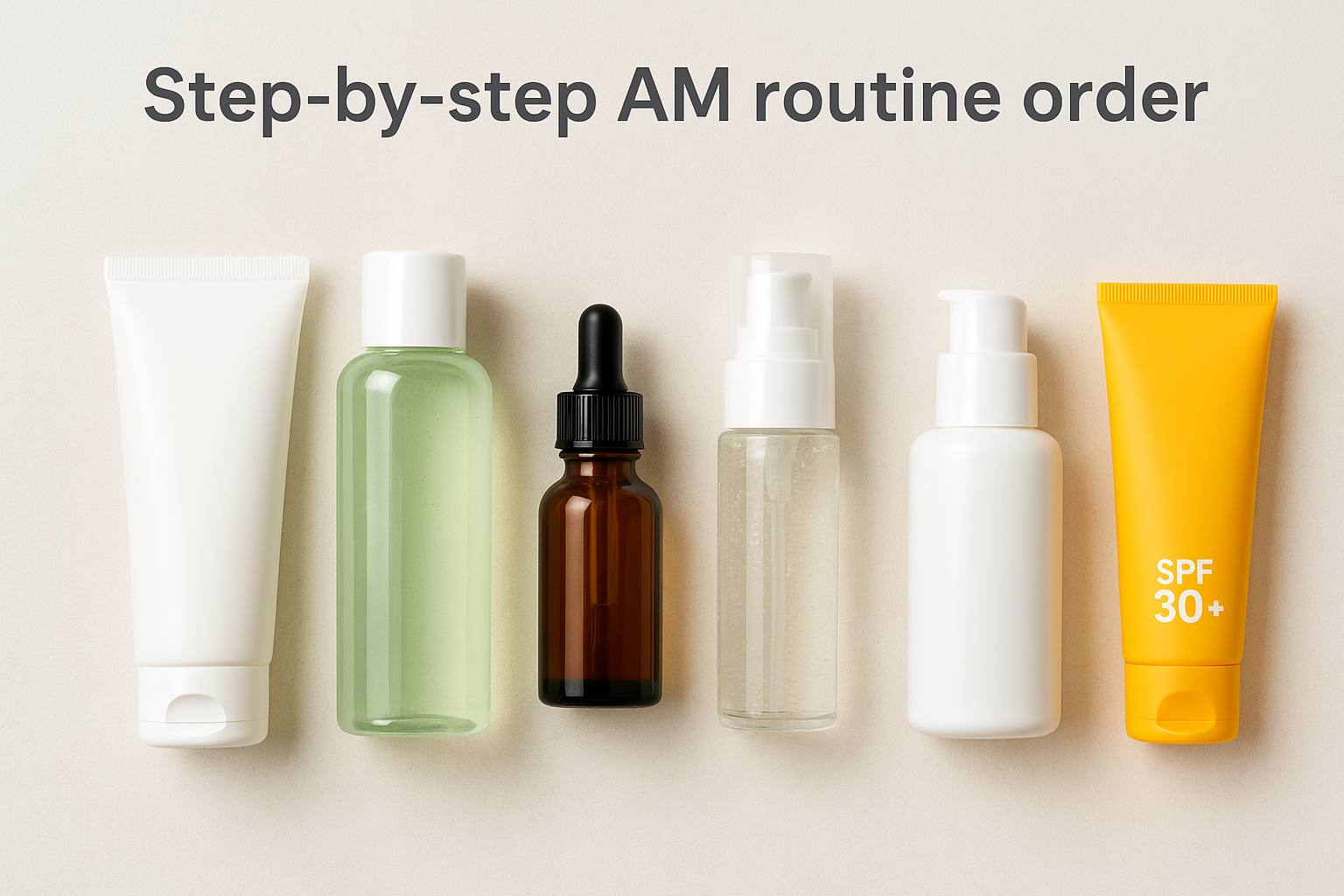
| Step | Product | Why It Goes Here |
|---|---|---|
| 1 | Cleanser | Removes overnight buildup so actives can penetrate |
| 2 | Toner (optional) | Balances skin pH before actives |
| 3 | Vitamin C serum | Goes on clean skin before any heavier layers |
| 4 | Hyaluronic acid (optional) | Adds hydration without blocking vitamin C |
| 5 | Moisturizer | Locks in hydration and serum |
| 6 | SPF 30+ sunscreen | Final step, never skip this with vitamin C |
Vitamin C and sunscreen work better together than either does alone. The antioxidant protection from vitamin C fills in the gaps that SPF leaves against free radical damage, so always finish your morning routine with broad-spectrum SPF 30 or higher.
Build a PM skincare routine with vitamin C
Your nighttime routine focuses on repair and recovery, and vitamin C can still play a role here under the right circumstances. If your skin is too sensitive for a morning application, or if you want to address stubborn hyperpigmentation more aggressively, using vitamin C at night gives your skin consistent daily exposure to the ingredient without the pressure of layering it under sunscreen.
When nighttime vitamin C actually helps
Sensitive skin types often react to vitamin C in the morning, especially if you're also applying actives or living in a dry climate. Switching vitamin C to your PM routine removes one variable from a busy morning lineup and still delivers the brightening and collagen-support benefits over time. However, avoid combining nighttime vitamin C with retinol on the same evening, since both ingredients are potent and can overwhelm your skin barrier together.
If your skin feels tight or irritated after using vitamin C and retinol on the same night, alternate them: vitamin C on even nights, retinol on odd nights.
Step-by-step PM routine order
A skincare routine with vitamin C at night follows the same thin-to-thick principle as the morning version, just without sunscreen at the end.
| Step | Product | Why It Goes Here |
|---|---|---|
| 1 | Cleanser | Removes makeup, sunscreen, and daily buildup |
| 2 | Toner (optional) | Rebalances skin before actives |
| 3 | Vitamin C serum | Applied before heavier treatments |
| 4 | Moisturizer | Seals in serum and supports overnight repair |
Layering rules with retinol, acids, and more
Combining active ingredients in a skincare routine with vitamin C requires some planning. The wrong pairings can cancel each other out, irritate your skin barrier, or reduce how well each ingredient absorbs. Understanding which ingredients work alongside vitamin C and which ones need their own dedicated slot in your routine saves you from weeks of unnecessary trial and error.
Vitamin C and retinol
Retinol and vitamin C are both powerful actives, but they work best on separate evenings rather than stacked in the same routine. Both ingredients can shift your skin's pH in different ways, and combining them at the same time often leads to redness, peeling, and a compromised skin barrier. The simplest fix is to alternate: use vitamin C on even nights and retinol on odd nights.
Keeping retinol and vitamin C on separate nights lets each ingredient do its job without overwhelming your skin.
Watch for these signs that you're overloading your skin with too many actives at once:
- Persistent redness or flushing after application
- Flaking or peeling between uses
- Stinging that lasts more than a few minutes
Vitamin C and acids
AHAs and BHAs like glycolic acid and salicylic acid can cause irritation when layered directly with vitamin C, since all three are acidic and push your skin's tolerance quickly. If you use chemical exfoliants, apply them on days when you skip vitamin C, or use acids in the evening and save vitamin C for your morning routine.
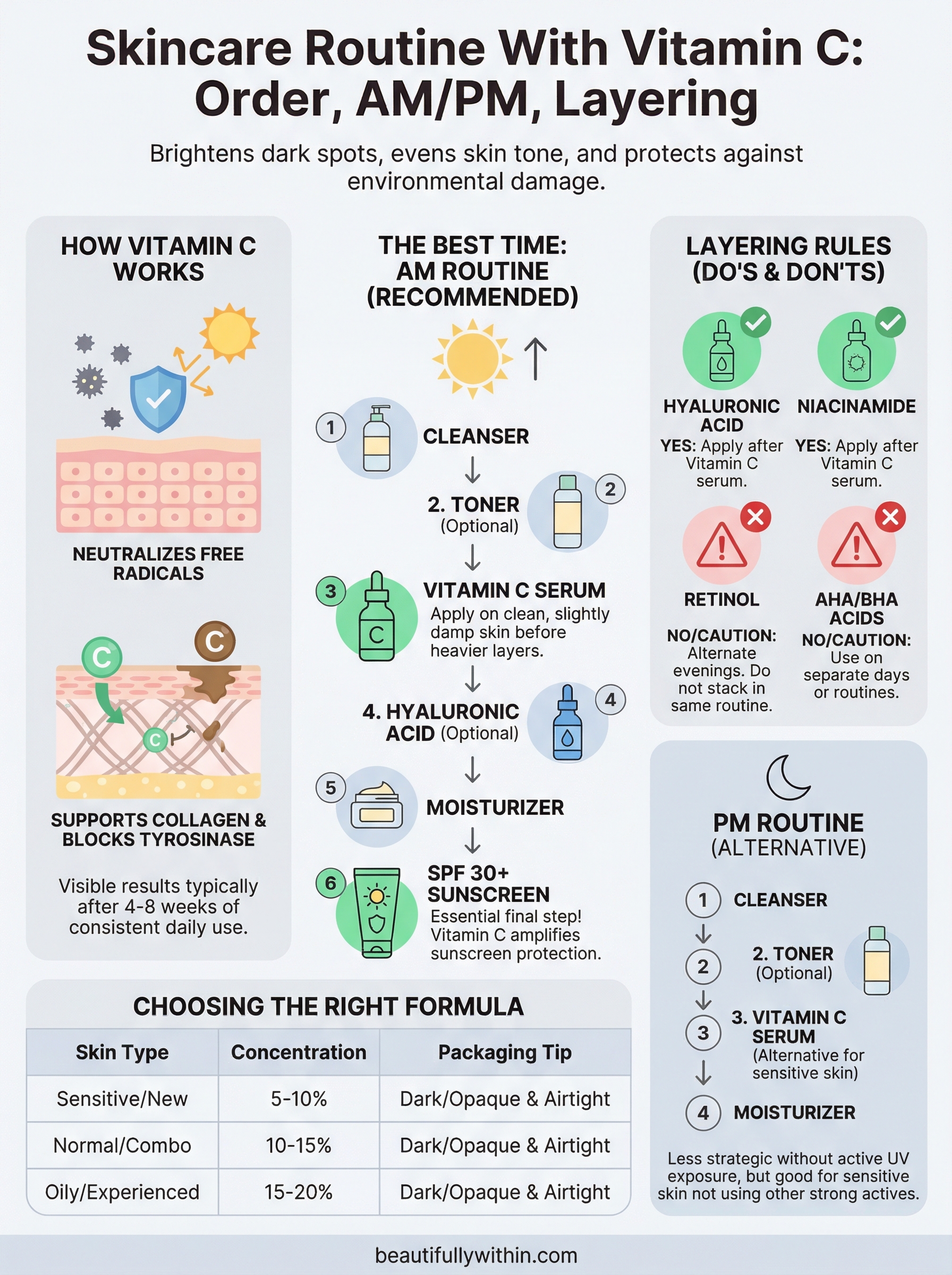
| Ingredient | Safe to Layer with Vitamin C? | Best Approach |
|---|---|---|
| Hyaluronic acid | Yes | Apply after vitamin C |
| Niacinamide | Yes | Apply after vitamin C serum |
| Retinol | No | Alternate evenings |
| AHA/BHA acids | Caution | Separate routines or days |
Final checklist to keep it simple
A solid skincare routine with vitamin C does not need to be complicated. If you follow the steps in this guide, you have everything you need to get real results. Run through this checklist before you finalize your routine:
- Pick a concentration that matches your tolerance (start at 10% or lower)
- Store your vitamin C in dark, airtight packaging to prevent oxidation
- Apply vitamin C in the morning, before moisturizer and SPF
- If you use retinol, alternate evenings rather than stacking both at once
- Pair vitamin C with broad-spectrum SPF 30+ every morning without exception
- Give it four to eight weeks before judging results
Consistency matters more than using every active ingredient at once. Start simple, watch how your skin responds, and adjust from there. When you're ready to find the right products, browse our premium skincare collection to build a routine that works for your skin.
✨ Shop the Look at Beautifully Within
Loved this guide? Discover our hand-picked picks that pair perfectly with your routine:
- 👉 Vitamin C 20% Brightening Face Serum — Serum
- 👉 Exosome Brightening Booster Serum — Kojic Acid & Vitamin C — Serum
- 👉 Bakuchiol Gentle Retinol Alternative Serum — Serum
- 👉 Advanced Anti-Aging Daily Serum — Serum
New customer? Get 15% off orders $50+ with code WITHIN15 — plus free shipping over $75.
0 comments