

If you've ever scrolled through an Into The Gloss skincare routine feature, you know how addictive they are. Real people, editors, founders, makeup artists, walking you through every cleanser, serum, and moisturizer they actually use, morning and night. It's the kind of honest, product-specific detail that makes you rethink your own bathroom shelf.
The problem? Those routines can feel overwhelming if you're just starting out. Some feature ten or more steps, luxury products with steep price tags, and techniques that assume you already know the basics. That's where a simplified breakdown comes in handy. You don't need to copy someone else's routine product-for-product, you need to understand the structure behind it so you can build one that works for your skin.
That's exactly what this guide covers. We're breaking down the core AM and PM steps you'll find across Into The Gloss routines into a beginner-friendly framework you can actually follow. At Beautifully Within, we believe great skin starts with knowing what your skin needs, not just what's trending, and choosing products that genuinely serve you. Whether you're dealing with sensitivity, acne, dryness, or you simply want a routine that feels intentional, this article will help you get there.
What to know before you copy an ITG routine
Into The Gloss publishes routines from people with wildly different skin types, budgets, and daily habits. Before you try to replicate any into the gloss skincare routine step-by-step, you need to understand one key thing: those routines were built around a specific person's skin, not yours. Taking someone else's ten-step nighttime lineup and applying it to your face without any adjustment is a reliable way to end up with irritation, breakouts, or wasted money on products that do nothing for you.
The best routine isn't the one with the most products. It's the one built for your skin specifically.
ITG routines reflect personal skin histories
Most editors and contributors at Into The Gloss have spent years of trial and error to land on what currently works for them. What you're seeing in those features is the result of a long, personal process. An editor with oily, acne-prone skin in a humid city uses very different products than someone with dry, sensitive skin in a colder climate. Copying their exact lineup without adjusting for your own skin type can lead to barrier damage, breakouts, or a routine that simply does not perform.
Here are three things to identify about your skin before you build anything:
- Skin type: oily, dry, combination, normal, or sensitive
- Primary concern: acne, hyperpigmentation, fine lines, dehydration, or redness
- Skin tolerance: how well your skin handles actives like retinol, AHAs, or vitamin C
Budget shapes every routine more than you think
ITG features regularly include high-end serums and treatments that run $80 to $200 per bottle. You do not need to spend that much to build an effective routine. Many drugstore options deliver comparable results because they rely on the same core ingredients.
When a featured moisturizer works because of hyaluronic acid and ceramides, search for those exact ingredients at a price point that fits your budget. The routine structure matters far more than the brand name on the label.
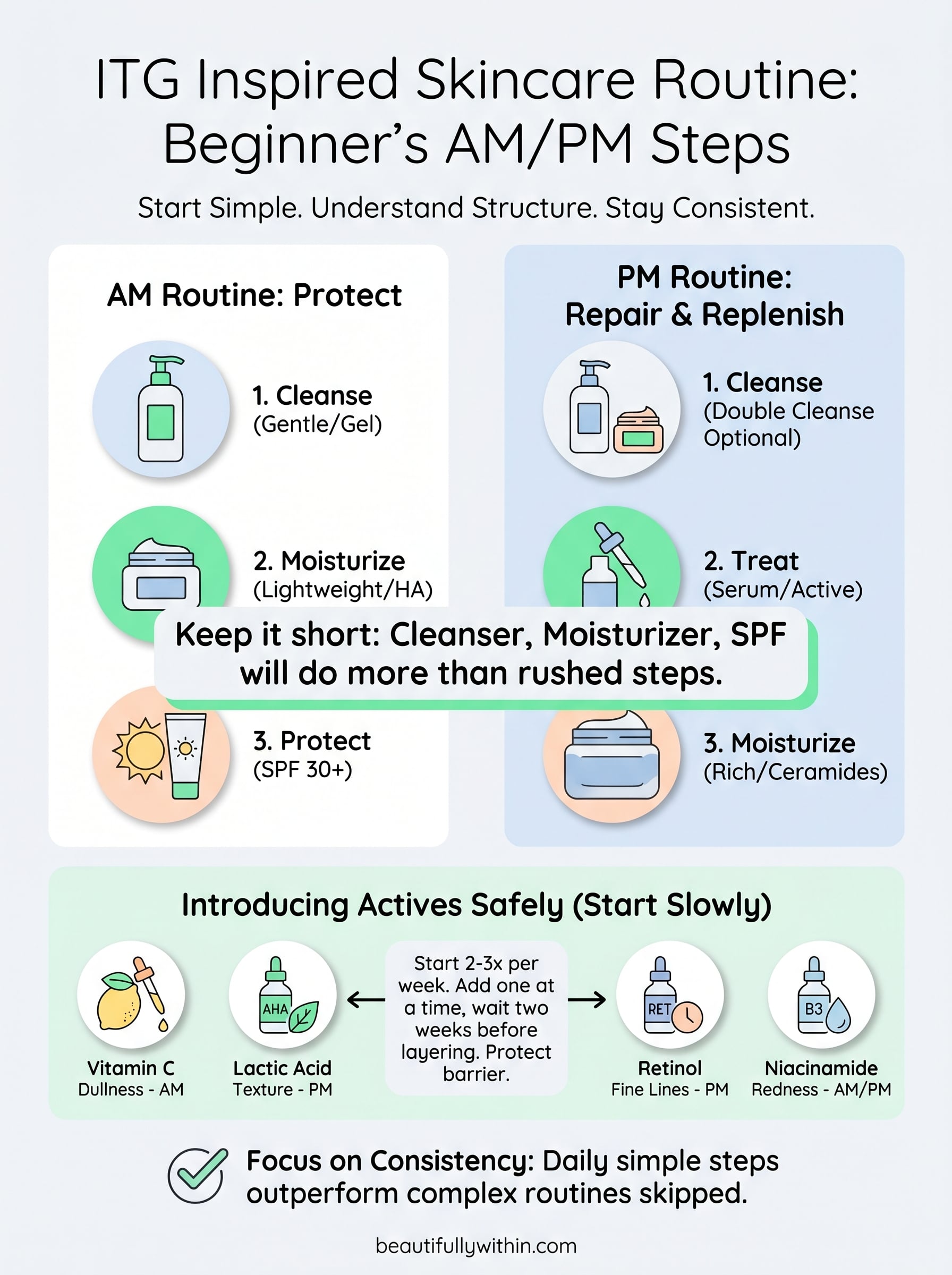
Step 1. Build your simple AM routine
Your morning routine has one job: protect your skin from the day ahead. Most into the gloss skincare routine features reflect this same core structure, even when the product list looks long. Strip it down and you will find three essential steps every time.
Keep your AM routine short. A cleanser, moisturizer, and SPF will do more for your skin than seven products you rush through before work.
The three AM steps that actually matter
Start with a gentle cleanser to remove overnight oil and any residue left from your PM products. You do not need a foaming or stripping formula in the morning. A mild gel or cream cleanser works for most skin types and will not disrupt your barrier before it faces the day.
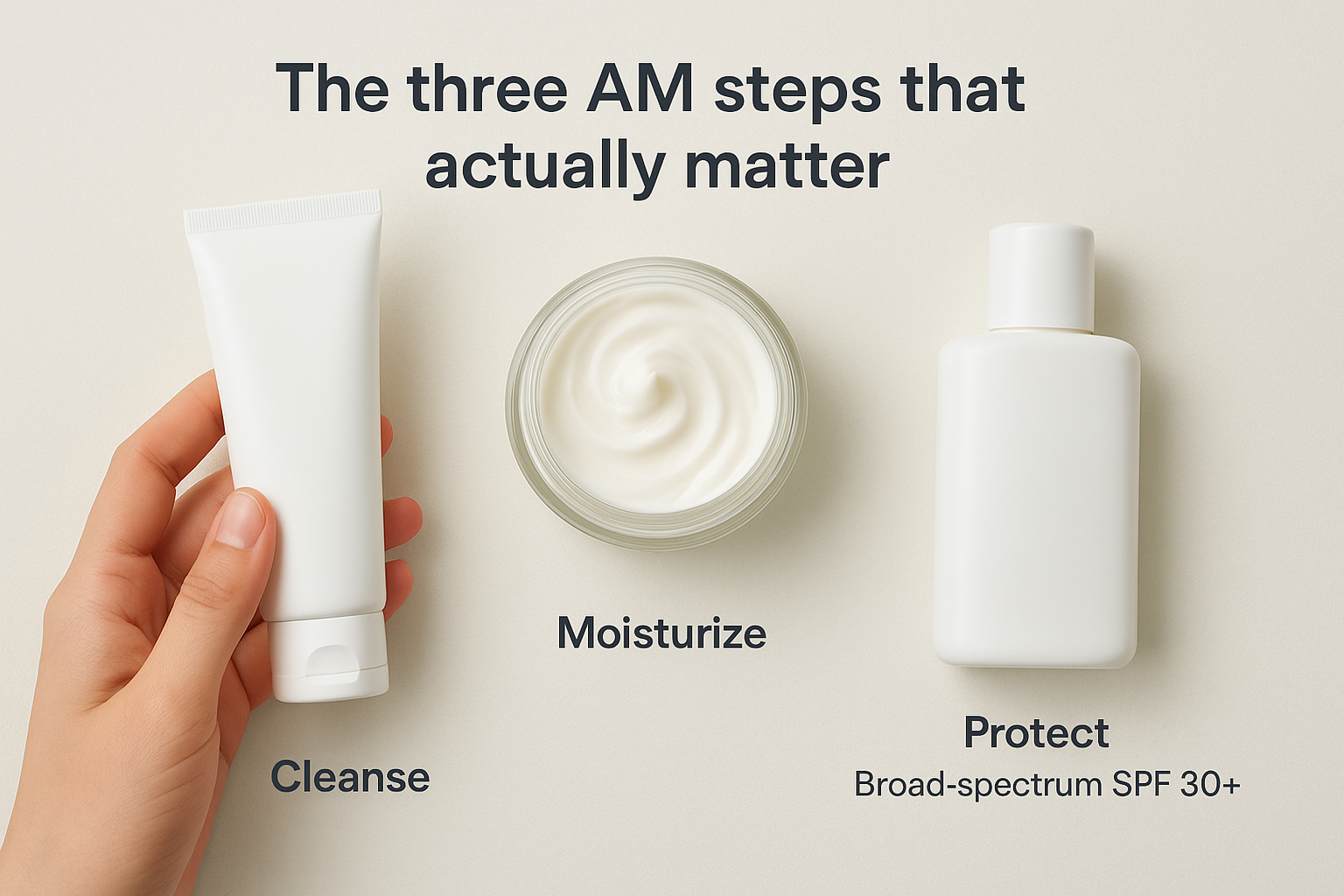
After cleansing, apply a lightweight moisturizer suited to your skin type. Look for ingredients like hyaluronic acid for hydration or niacinamide if you deal with redness and uneven tone.
| AM Step | Product Type | Key Ingredient to Look For |
|---|---|---|
| 1. Cleanse | Gentle cleanser | Glycerin, ceramides |
| 2. Moisturize | Lightweight moisturizer | Hyaluronic acid, niacinamide |
| 3. Protect | Broad-spectrum SPF 30+ | Zinc oxide, titanium dioxide |
Finish with broad-spectrum SPF 30 or higher every single morning, including cloudy days and days spent indoors near windows. This single step prevents more premature aging and sun damage than any serum you will find in an ITG feature.
Step 2. Build your simple PM routine
Your nighttime routine does the opposite job from your AM routine: instead of protecting, it repairs and replenishes. Every into the gloss skincare routine feature, whether it comes from an editor or a dermatologist, follows the same core logic at night. Cleanse thoroughly, treat if needed, and seal with moisture while your skin rebuilds overnight.
Your PM routine is where the real skin work happens. Give it the attention it deserves.
The three PM steps that actually matter
Start with a thorough cleanse to remove SPF, makeup, and the day's buildup. If you wore sunscreen or makeup, a double cleanse works well: use a cleansing balm or oil first, then follow with your regular gentle cleanser. This leaves your skin clean without stripping it.
| PM Step | Product Type | Key Ingredient to Look For |
|---|---|---|
| 1. Cleanse | Balm or oil cleanser + gentle cleanser | Jojoba oil, glycerin |
| 2. Treat | Serum or targeted treatment | Retinol, peptides, niacinamide |
| 3. Moisturize | Rich night moisturizer | Ceramides, squalane, shea butter |
Lock in moisture before you sleep
After any treatment serum, apply a richer moisturizer than you would in the morning. Night creams with ceramides or squalane support your skin barrier while you sleep, so you wake up with skin that feels noticeably softer and more balanced.
Step 3. Add actives without wrecking your barrier
Actives are the ingredients that actually change your skin: retinol for cell turnover, AHAs for exfoliation, vitamin C for brightening, and niacinamide for tone. Every into the gloss skincare routine feature eventually mentions at least one of them. The mistake most beginners make is introducing several at once, which overwhelms the skin barrier and makes it impossible to tell what is helping and what is causing a reaction.
Add one active at a time, wait two weeks, and pay attention to how your skin responds before layering anything new.
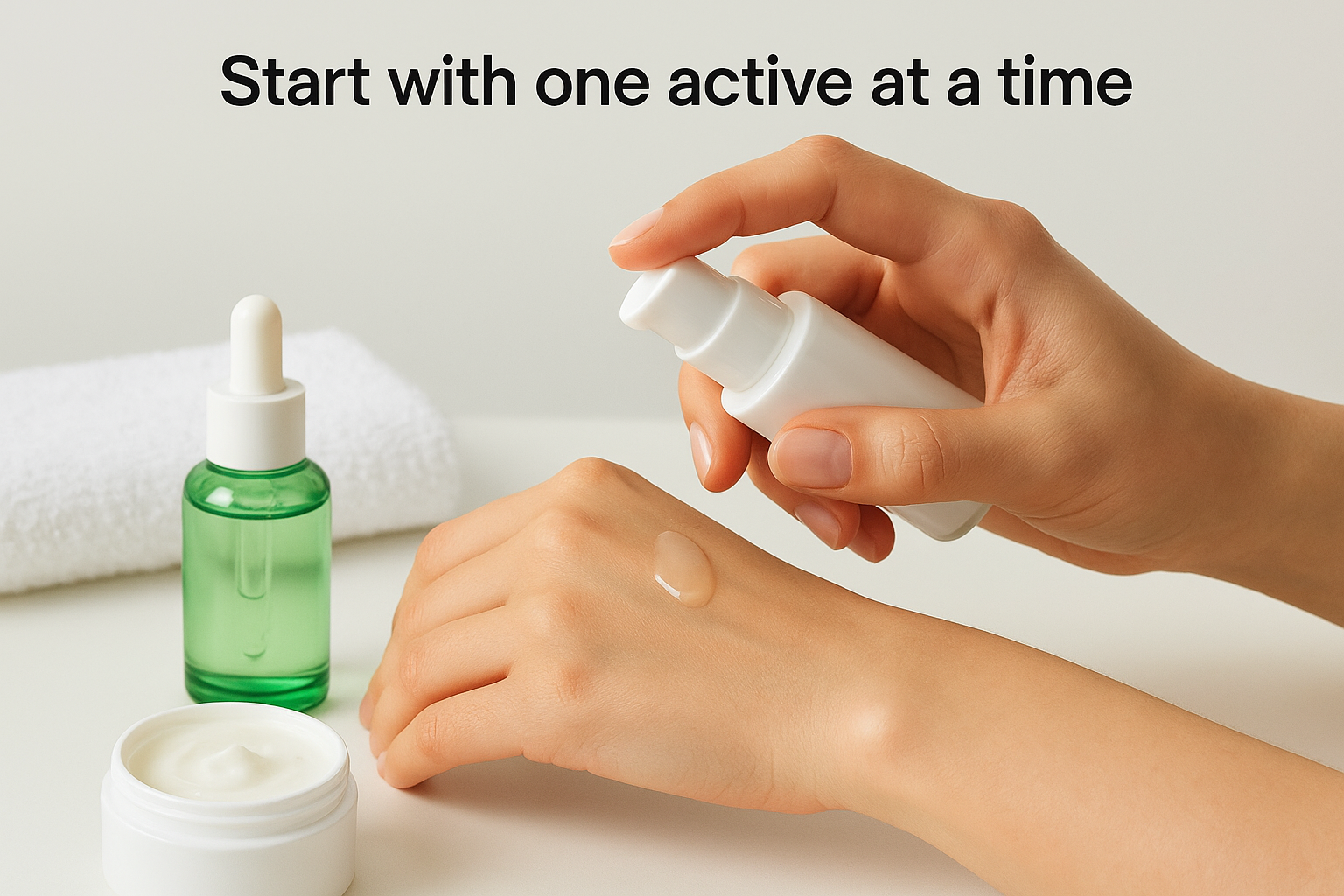
Start with one active at a time
Pick one active based on your primary skin concern and introduce it slowly, two to three nights per week at first. Your skin needs time to adjust without being pushed into sensitivity or peeling.
| Concern | Active to Start With | Starting Frequency |
|---|---|---|
| Dullness | Vitamin C (AM) | Every morning |
| Texture/exfoliation | Lactic acid (PM) | 2x per week |
| Fine lines | Retinol (PM) | 2x per week |
| Redness/uneven tone | Niacinamide (AM or PM) | Daily |
Protect your barrier while using actives
Always apply a barrier-supporting moisturizer after any active treatment. Look for ceramides and squalane in your night moisturizer, as these rebuild the skin's protective layer while the active does its work underneath. Skip actives entirely on nights when your skin feels tight, irritated, or compromised.
Step 4. Troubleshoot by skin type and concern
Even a well-built into the gloss skincare routine breaks down when the products you choose do not match your specific skin type. The structure from the previous steps stays the same across skin types. What changes are the formulas, textures, and active ingredients you reach for at each step.
Matching your products to your skin type is what separates a routine that works from one that just sits on your shelf.
Oily and acne-prone skin
Your priority is controlling excess sebum without stripping your skin, which triggers even more oil production as a rebound response. Use a gel or foaming cleanser with salicylic acid, and reach for a lightweight, oil-free moisturizer with niacinamide to calm redness and minimize pores. Skip heavy creams and occlusive balms at night until your skin stabilizes.
| Step | Best Format | Ingredients to Prioritize |
|---|---|---|
| Cleanser | Gel or foaming | Salicylic acid, tea tree |
| Moisturizer | Oil-free gel | Niacinamide, hyaluronic acid |
Dry and sensitive skin
Dry skin needs barrier-first thinking at every step. Choose a cream or balm cleanser that does not foam, and layer a hydrating serum with hyaluronic acid under a ceramide-rich moisturizer morning and night. Avoid fragrance, alcohol-based toners, and any active stronger than a low-concentration lactic acid until your barrier feels consistently comfortable.
Keep it simple and stay consistent
Every into the gloss skincare routine you admire online started as something basic. The editors and contributors you read about did not begin with ten steps. They built over time, learned their skin, and made deliberate adjustments. You can do exactly the same thing. Start with the three AM steps and three PM steps from this guide, commit to them daily for at least four weeks, and resist the urge to add more before your skin has had time to respond.
Consistency outperforms complexity every single time. A simple routine you follow every day will produce better results than an elaborate one you skip half the time. When your skin feels stable and your barrier feels healthy, then add one new product or active. That is how real progress happens. If you are ready to find products that match your routine and your skin type, browse our skincare collection to get started.
✨ Shop the Look at Beautifully Within
Loved this guide? Discover our hand-picked picks that pair perfectly with your routine:
- 👉 Fresh Start Hydrating Cleanser & Toner Duo — Skincare Set
- 👉 Rice Brightening Skincare Collection — 6-Piece Ritual — Skincare Set
- 👉 Ayurvedic Facial Cleansing & Mask Ritual Kit — Skincare Set
- 👉 Blueberry Radiance Skincare Collection — 4-Piece Set — Skincare Set
New customer? Get 15% off orders $50+ with code WITHIN15 — plus free shipping over $75.
0 comments