

If your skin stings, flushes, or breaks out every time you try something new, you're not alone. Sensitive skin affects nearly half of the population, and finding products that actually calm rather than aggravate it often feels like guesswork. The good news? The answer usually comes down to natural ingredients for sensitive skin, gentle, plant-derived compounds that work with your skin's biology instead of against it. At Beautifully Within, we believe caring for sensitive skin is a form of self-care, not a chore, and choosing the right ingredients is the first step toward skin that feels as good as it looks.
This guide breaks down six of the best natural ingredients to look for on product labels, from aloe vera to colloidal oats, and explains exactly why they work. You'll also find a clear list of ingredients to avoid, so you can stop the cycle of buying products that irritate your skin and wasting money in the process. Whether you're building a new routine or simplifying an existing one, this list gives you the knowledge to shop with confidence and treat your skin the way it deserves.
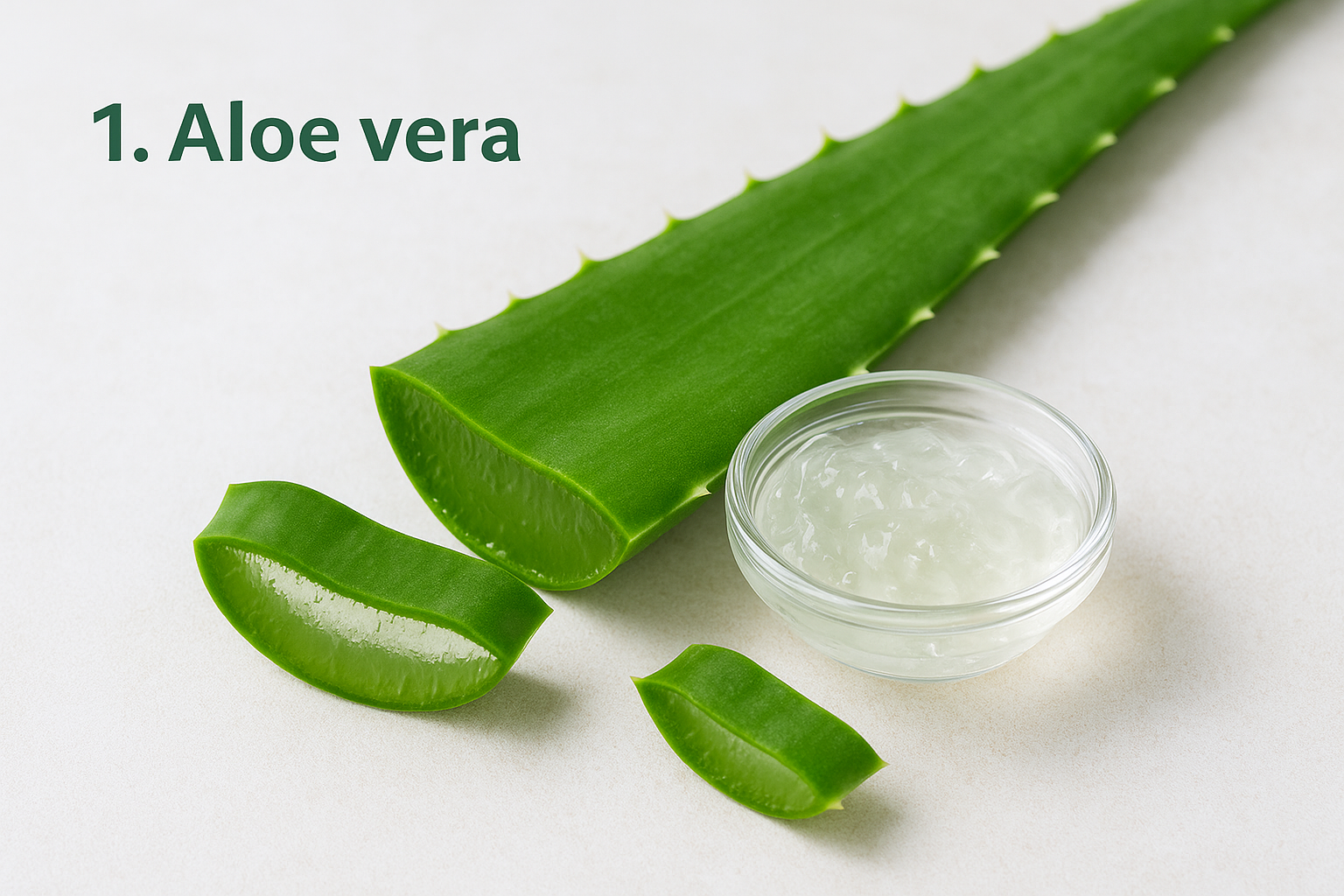
1. Aloe vera
Aloe vera is one of the most well-researched natural ingredients for sensitive skin, and it earned that reputation over decades of use in both clinical and cosmetic settings. The gel inside the aloe leaf contains over 75 active compounds, including vitamins, enzymes, and polysaccharides that directly support skin health. Its water content sits around 99%, which makes it uniquely effective at soothing reactive skin without overloading it.
Why it helps sensitive skin
Aloe vera works on sensitive skin because it contains anti-inflammatory compounds called anthraquinones and gibberellins, which reduce redness and swelling quickly. It also hydrates without adding oil, making it ideal if your skin reacts to heavy creams or rich occlusives. Its natural pH level sits close to that of healthy skin, so it reinforces rather than disrupts your moisture barrier instead of stripping it down.
Aloe vera's ability to calm inflammation while delivering hydration makes it one of the safest single-ingredient options for reactive skin.
Best ways to use it in a routine
You get the most benefit from aloe vera when you apply it to clean, slightly damp skin before heavier moisturizers. Use it as a lightweight layer in the morning under sunscreen, or as a calming step after cleansing at night. If your skin feels hot or irritated after sun exposure, a thin layer of pure aloe gel absorbs quickly and reduces discomfort without clogging pores.
What to look for on labels
When reading ingredient labels, look for "Aloe barbadensis leaf juice" or "Aloe barbadensis gel," which are the INCI terms for aloe vera. For meaningful results, aloe should appear in the top half of the ingredient list, indicating a higher concentration rather than a trace amount added only for marketing appeal.
Avoid list and label red flags
Not every aloe product delivers on its promise. Avoid formulas where aloe appears near the bottom of the ingredient list, often after preservatives, since that signals a negligible concentration. Also skip products that combine aloe with artificial fragrances or alcohol denat., both of which can dry out and inflame sensitive skin, canceling out any benefit aloe might provide.
2. Colloidal oatmeal
Colloidal oatmeal is one of the most clinically validated natural ingredients for sensitive skin, with the FDA officially recognizing it as a skin protectant since 2003. Made by finely milling whole oats and suspending them in liquid, it delivers a dense mix of beta-glucans, lipids, and avenanthramides that calm reactive skin effectively.
Why it helps sensitive skin
This ingredient strengthens your skin barrier by filling in gaps between skin cells with lipids and proteins. Its beta-glucan content creates a protective film on the surface, locking in moisture and shielding your skin from environmental triggers. Avenanthramides, unique compounds found only in oats, reduce histamine-driven itching and redness at a cellular level, which is why dermatologists frequently recommend it for eczema-prone skin.
Beta-glucans in colloidal oatmeal can hold up to 10 times their weight in water, making it one of the most effective hydrators for dry, reactive skin.
Best ways to use it in a routine
Look for colloidal oatmeal in gentle leave-on moisturizers and body creams you apply after cleansing. It works best in products that stay on your skin rather than rinse off, giving the beta-glucans time to build a protective film across your barrier.
What to look for on labels
The INCI term is "Avena sativa kernel flour" or simply "colloidal oatmeal." Always confirm it appears in the top third of the ingredient list for a meaningful concentration.
Avoid list and label red flags
Skip colloidal oatmeal products that also list added fragrances or synthetic dyes, since those ingredients often irritate the very skin this compound is meant to calm. Also avoid formulas with alcohol denat. high on the list, which dries out your barrier and counteracts the oat's protective properties.
3. Chamomile
Chamomile has been used in skin remedies for centuries, and modern research backs up its reputation as one of the most reliable natural ingredients for sensitive skin. Its active compounds, particularly bisabolol and apigenin, deliver measurable anti-inflammatory and calming effects that make it a strong fit for reactive complexions.
Why it helps sensitive skin
Its bisabolol content reduces inflammation by blocking the enzymes that trigger skin irritation, while apigenin targets redness at a cellular level. Together, these compounds help calm flushing and discomfort without disrupting your skin's moisture barrier, which is why chamomile works well even on skin prone to rosacea or eczema.
Bisabolol, chamomile's primary active compound, has been shown in clinical studies to reduce irritation faster than many synthetic anti-inflammatory agents.
Best ways to use it in a routine
Apply chamomile-based products as a calming toner or serum right after cleansing, when your skin is most receptive to active compounds. They also work well in overnight moisturizers, giving the ingredient time to reduce inflammation while you sleep.
What to look for on labels
Look for "Anthemis nobilis flower extract" (Roman chamomile) or "Matricaria chamomilla extract" (German chamomile) on the ingredient list. German chamomile tends to carry a higher bisabolol concentration, making it slightly more effective for very reactive skin.
Avoid list and label red flags
Skip products that combine chamomile with synthetic fragrances or high concentrations of essential oils, since those additions often cancel out chamomile's calming effect. Also avoid formulas that list chamomile extract alongside alcohol denat. near the top of the label, as that pairing dries out your barrier rather than protecting it.
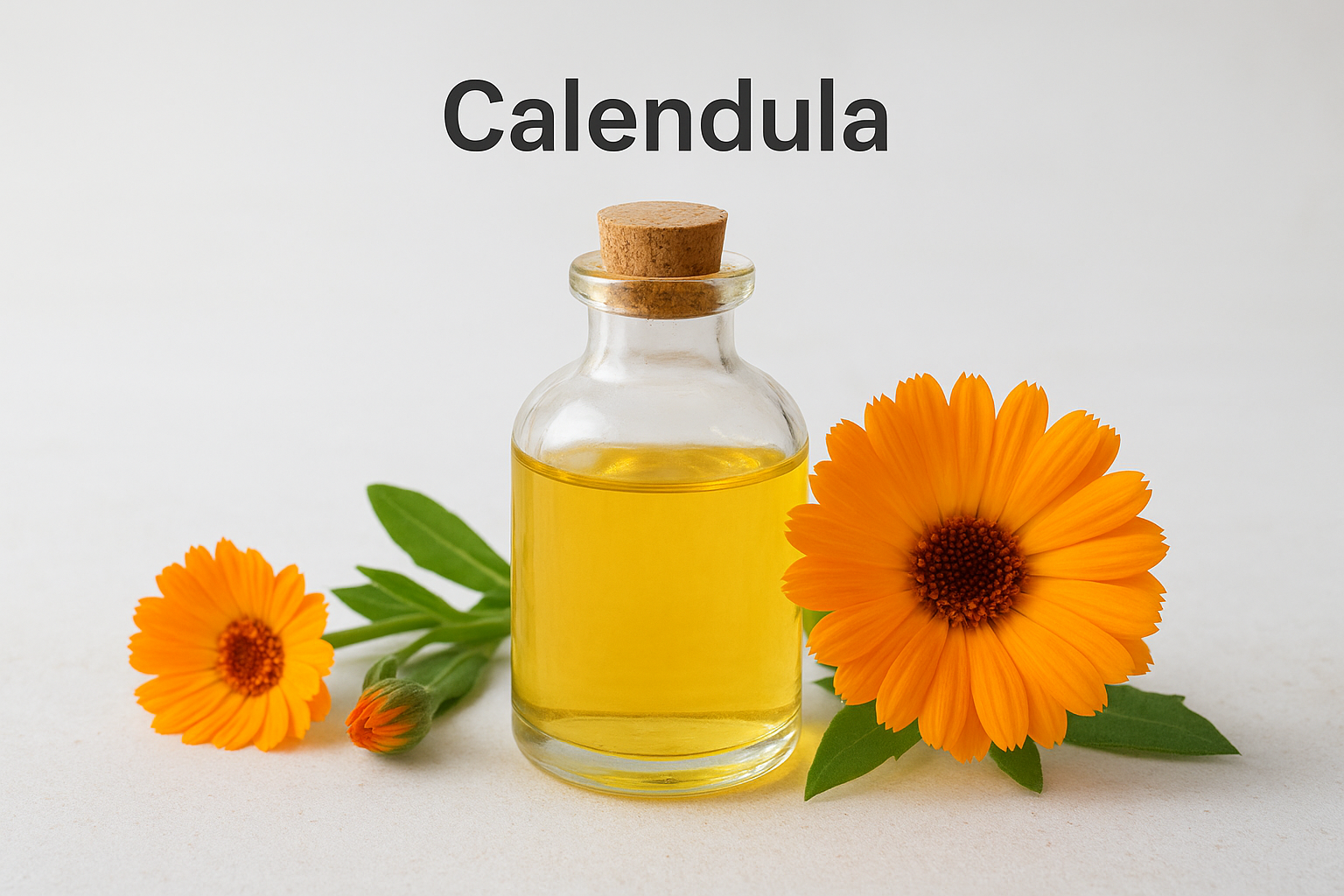
4. Calendula
Calendula, derived from pot marigold flowers, earns its place among the best natural ingredients for sensitive skin thanks to its dense concentration of flavonoids and triterpenoids that actively calm irritated, fragile complexions. Unlike some botanical extracts that deliver subtle effects, calendula produces measurable results even on skin that reacts to most products.
Why it helps sensitive skin
Calendula's flavonoid content reduces inflammation by inhibiting the enzymes that trigger redness and swelling, while its triterpenoids promote tissue repair and help your skin barrier recover faster after exposure to irritants. It also carries natural antimicrobial properties, making it a strong option if your sensitive skin also tends toward minor breakouts.
Calendula's triterpenoids have been shown in research to accelerate wound healing, making it particularly effective for skin that takes longer to recover from irritation.
Best ways to use it in a routine
You get the most from calendula in leave-on products that keep the active compounds in contact with your skin over time. Good formats to look for include:
- Balms and thick moisturizers for very dry, reactive skin
- Gentle cleansers formulated for reactive or eczema-prone skin
What to look for on labels
Look for "Calendula officinalis flower extract" on the ingredient list. Confirm it sits in the top half of the list for a meaningful concentration rather than a trace amount.
Avoid list and label red flags
Skip any calendula product that also contains synthetic fragrance or essential oils, since those additions frequently trigger the very reactions calendula aims to prevent. Also avoid formulas with denatured alcohol listed near the top, which undermines the barrier recovery this ingredient works to support.
5. Jojoba oil
Jojoba oil stands out among natural ingredients for sensitive skin because it is technically a liquid wax rather than a true oil. Its molecular structure closely mimics human sebum, the natural oil your skin produces on its own, which means your skin accepts it with minimal resistance or reactivity.
Why it helps sensitive skin
Jojoba oil's wax ester composition makes it non-comedogenic and far more stable than typical plant oils that oxidize quickly and trigger breakouts. Its anti-inflammatory properties reduce redness and help regulate sebum production, keeping reactive skin balanced rather than swinging between too dry and too oily.
Because jojoba mirrors your skin's own sebum, it absorbs without feeling greasy and rarely provokes the reactions common with heavier plant oils.
Best ways to use it in a routine
Apply jojoba oil as a lightweight moisturizing layer after your serum and before sunscreen in the morning, or as a standalone nourishing step at night. A few drops cover your full face without heaviness. Strong product formats to look for include:
- Facial oils and oil blends for sensitive or reactive skin
- Lightweight moisturizers that list jojoba as a primary carrier ingredient
What to look for on labels
Look for "Simmondsia chinensis seed oil" on ingredient labels, which is the INCI name for jojoba. Confirm it sits in the top half of the ingredient list for a meaningful concentration rather than a trace amount.
Avoid list and label red flags
Skip products that pair jojoba with synthetic fragrances or essential oils high on the label, since those additions frequently undo its calming benefits. Also avoid formulas where alcohol denat. appears near the top, which strips your barrier rather than supporting it.
6. Centella asiatica
Centella asiatica has moved from traditional Asian medicine into mainstream skincare as one of the most effective natural ingredients for sensitive skin. Its active compounds, particularly madecassoside and asiaticoside, work directly on your skin's repair and inflammation pathways, making it a reliable choice for skin that reacts easily.
Why it helps sensitive skin
Centella asiatica reduces inflammation by regulating cytokine activity, the signaling process that triggers redness and swelling in reactive skin. Its triterpene compounds also stimulate collagen synthesis, which means it calms irritation while helping your barrier rebuild after damage from irritants or environmental stress.
Madecassoside, one of centella's key active compounds, has been shown in clinical research to reduce inflammation while simultaneously supporting skin barrier recovery.
Best ways to use it in a routine
Apply centella-based products as a targeted serum or calming essence after cleansing, particularly on days when your skin feels tight or reactive. It also performs well in overnight repair moisturizers, where extended contact maximizes its barrier-rebuilding effects.
What to look for on labels
Look for "Centella asiatica extract" or the isolated compounds "madecassoside" or "asiaticoside" on the ingredient list. Confirm that any of these appear in the top half of the label for a concentration that delivers real results.
Avoid list and label red flags
Skip centella products that contain synthetic fragrance or essential oils near the top of the ingredient list, since those additions frequently trigger the reactions centella works to prevent. Also avoid formulas where alcohol denat. appears early in the list, as that pairing strips your barrier and cancels out its repair benefits.
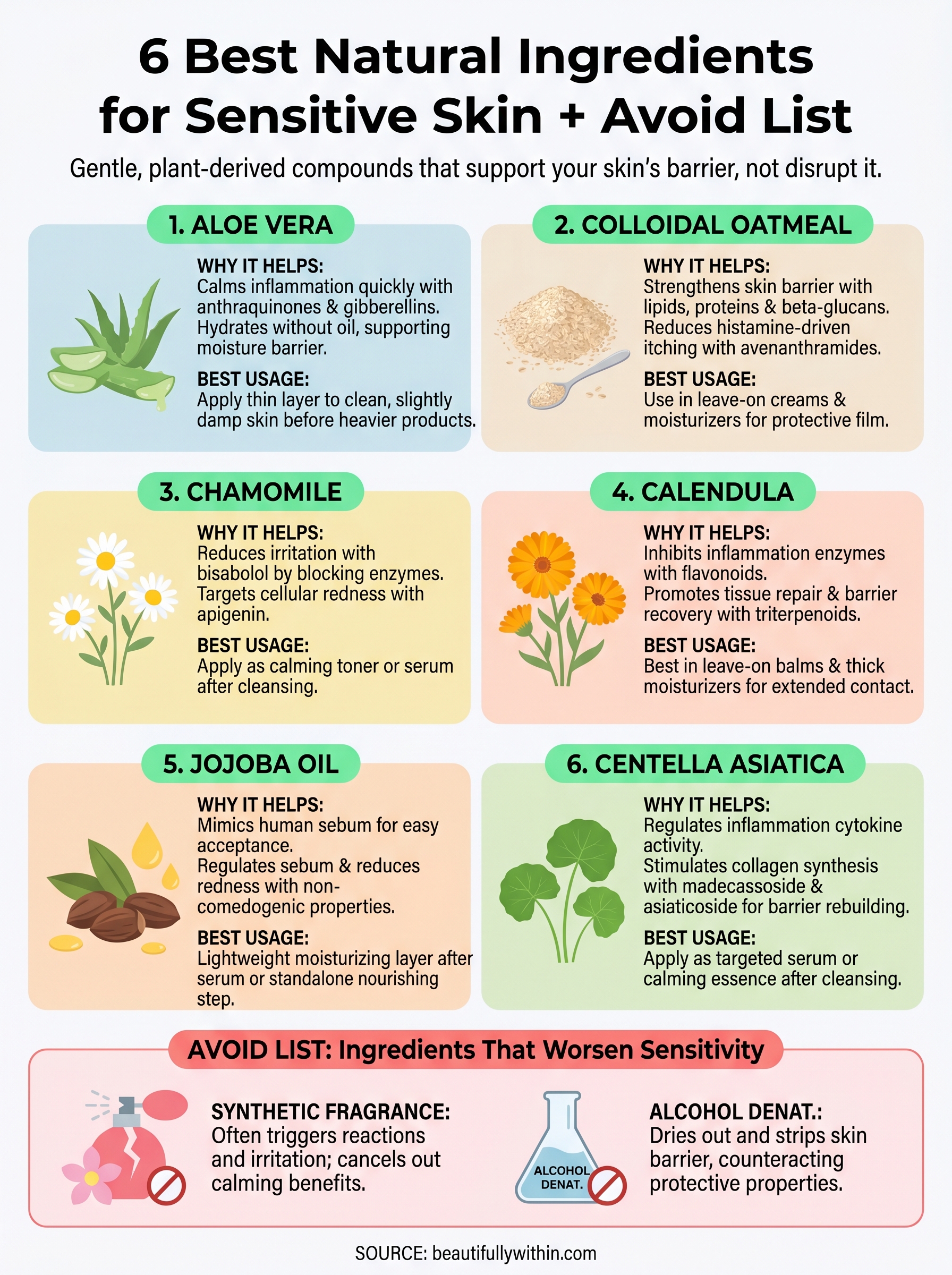
Quick takeaways for calmer skin
Sensitive skin does not require an elaborate routine, it requires the right ingredients chosen with intention. The six natural ingredients for sensitive skin covered in this guide, aloe vera, colloidal oatmeal, chamomile, calendula, jojoba oil, and centella asiatica, all share a common trait: they calm and support your barrier without overwhelming it. Knowing the INCI names for each one gives you real power at the shelf, because you can confirm concentration and spot marketing fluff before you spend a dollar.
Your avoid list matters just as much as your ingredient picks. Synthetic fragrance and alcohol denat. are the two most common culprits behind sensitive skin flare-ups, and they show up in products marketed as gentle more often than you would expect. Read every label, check ingredient placement, and keep your routine simple.
Ready to shop with confidence? Browse our skincare collection for sensitive skin and find products built around ingredients that actually work.
✨ Shop the Look at Beautifully Within
Loved this guide? Discover our hand-picked picks that pair perfectly with your routine:
- 👉 Bakuchiol Gentle Retinol Alternative Serum — Serum
- 👉 Fresh Start Hydrating Cleanser & Toner Duo — Skincare Set
New customer? Get 15% off orders $50+ with code WITHIN15 — plus free shipping over $75.
0 comments