

Your skin stings after applying a new moisturizer. A fragrance triggers redness out of nowhere. You've tried product after product, and nothing seems to agree with your face. If this sounds familiar, you've probably asked yourself what is sensitive skin, and whether you actually have it. You're not alone. Roughly half of people report some degree of skin sensitivity, and yet the term itself is widely misunderstood.
Sensitive skin isn't a single diagnosis. It's a broad description that covers a range of reactions, triggers, and underlying causes, and getting clear on what's really going on makes all the difference in how you treat it. Without that clarity, you end up wasting money on products that irritate rather than help. That's something we care about deeply at Beautifully Within, where finding the right products for reactive skin is central to what we do.
This article breaks down the signs of sensitive skin, the most common triggers behind flare-ups, and practical ways to care for skin that doesn't tolerate much. Whether you're dealing with occasional irritation or chronic reactivity, you'll walk away with a clearer picture of your skin and the confidence to build a routine that actually works for it.
What sensitive skin is and why it happens
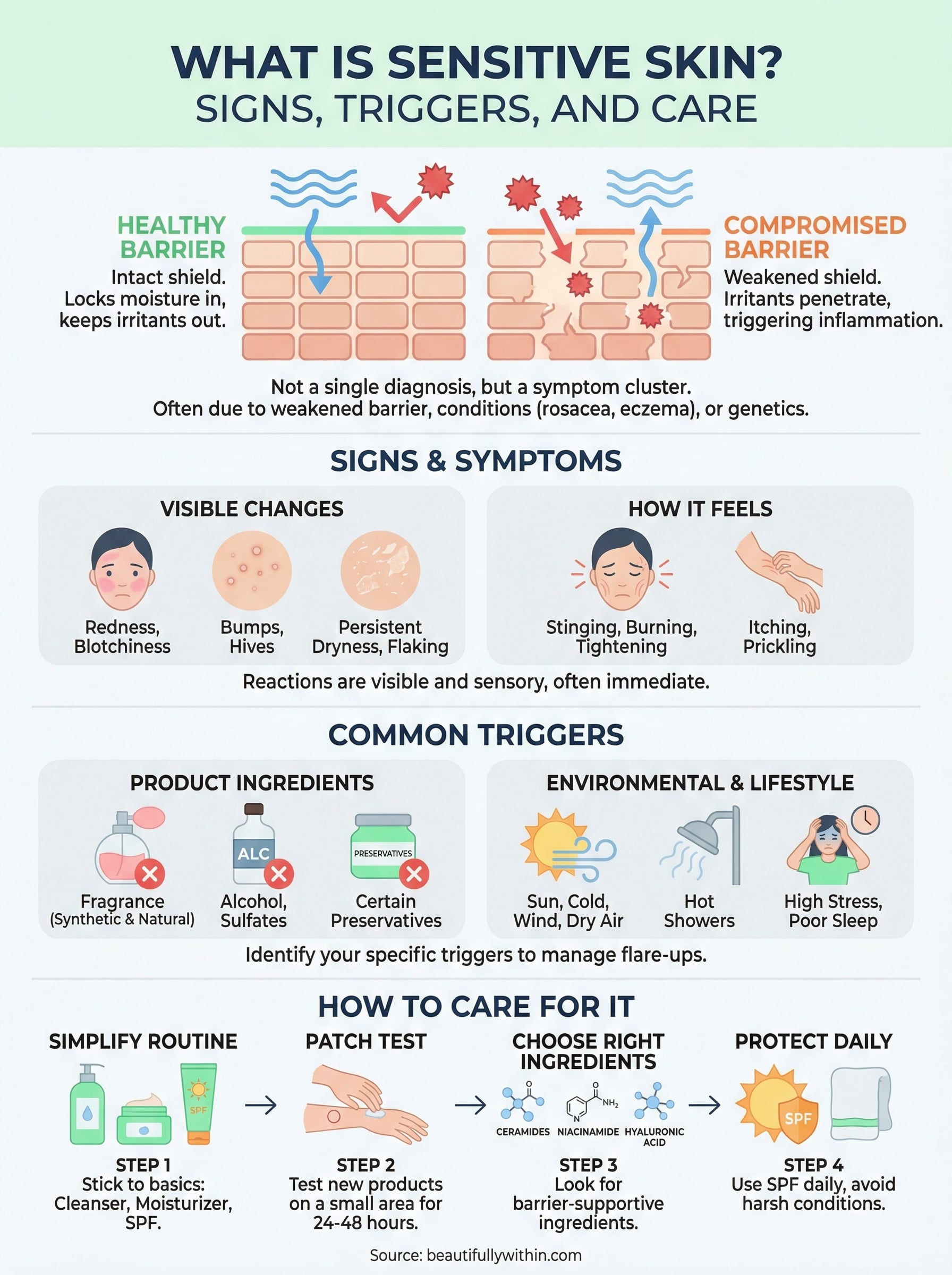
When people ask what is sensitive skin, they're usually describing a consistent pattern: their skin reacts visibly or uncomfortably to products, environmental conditions, or physical contact that most people tolerate without issue. Dermatologists don't classify sensitive skin as a standalone medical condition. Instead, it's a symptom cluster that can result from several different underlying causes, including compromised skin barrier function, skin conditions like rosacea or eczema, or simply genetic predisposition.
The skin barrier and what it does
Your skin's outermost layer, the stratum corneum, works as a physical shield. It keeps moisture locked in and irritants, bacteria, and allergens out. When this barrier is intact and healthy, your skin handles exposure to many substances without reacting. When it's weakened or damaged, those outside substances penetrate more easily and trigger inflammation, redness, or stinging.
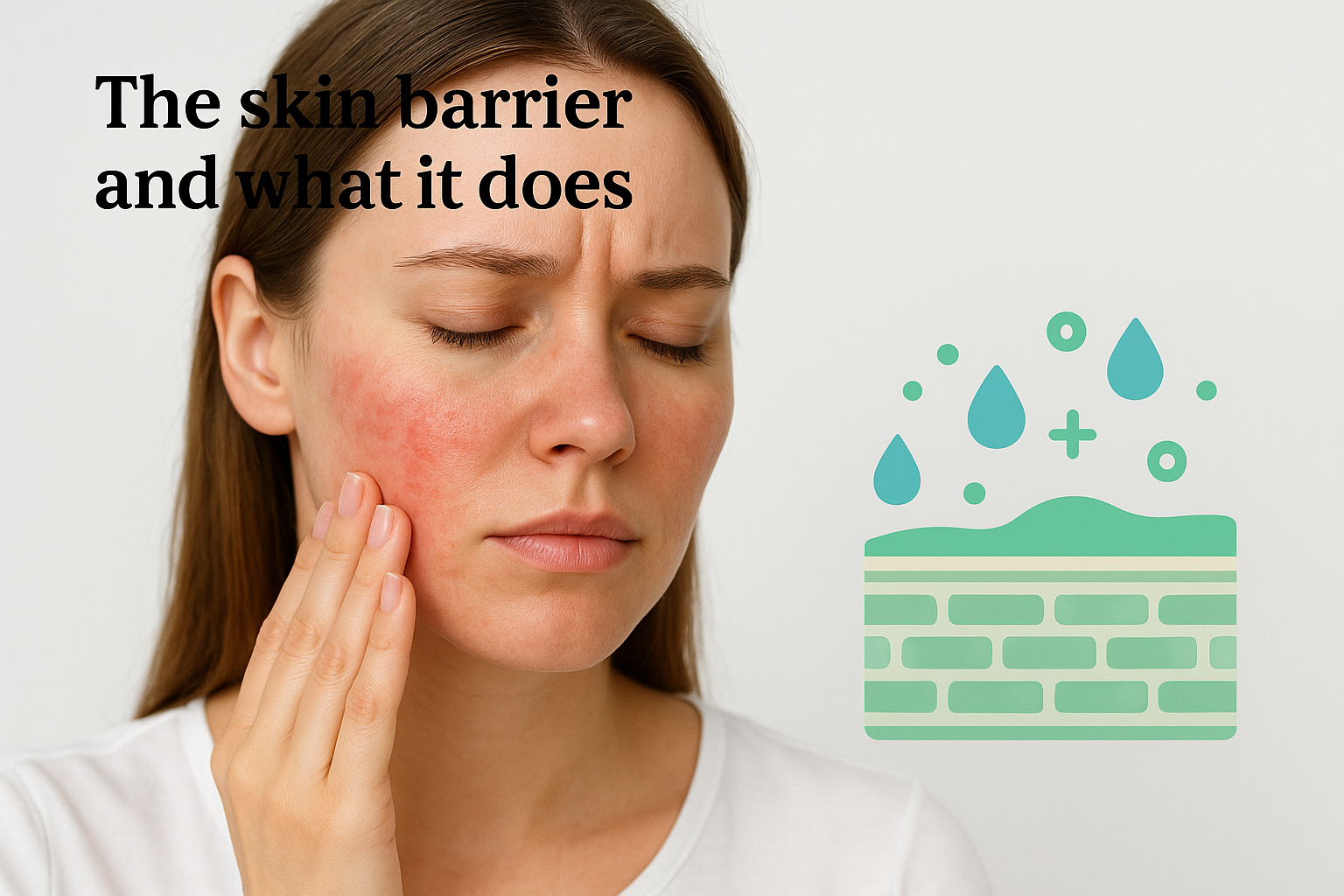
A compromised skin barrier is one of the most common reasons skin becomes reactive, and rebuilding it is often the first step toward reducing sensitivity.
The barrier can weaken for many reasons: over-exfoliation, harsh cleansers, environmental dryness, or simply a thinner stratum corneum that some people are born with. That last point explains why sensitivity often runs in families. If your parent had reactive skin, there's a real chance you inherited a similar barrier structure and the same low threshold for irritation.
Why some people are more reactive than others
Sensitivity doesn't look the same for everyone. Some people have an underlying condition like rosacea, eczema, or contact dermatitis that makes their skin structurally more prone to reaction. Others have skin that appears completely healthy but still stings or flushes after using certain products. This second group often has an overactive nerve response, where skin nerve endings fire more easily than average even without visible barrier damage.
Your environment plays a role too. Living in a dry or polluted climate, spending significant time in heated or air-conditioned spaces, and repeated exposure to harsh product ingredients all wear the barrier down gradually. That means someone who had no skin sensitivity at 25 can develop it at 35, especially after years of using products that strip rather than support the skin's natural defenses.
Signs you have sensitive skin
Knowing what is sensitive skin on a conceptual level only helps you so far. What actually confirms it is recognizing the pattern of reactions your skin shows repeatedly over time. The signs fall into two categories: what you can see and what you can feel. Most people with reactive skin notice both, though the intensity varies a lot from person to person.
Visible changes you notice
Redness is the most common sign, whether it appears as a general flush, blotchy patches, or a lasting pink tone after product use or a temperature change. Small bumps, persistent dryness, or flaking in the same spots are also visual cues that your skin isn't tolerating something well.
Common visible signs include:
- Redness or blotchiness after applying a product
- Small bumps or hive-like reactions to new formulas
- Dry, flaky patches that don't clear with moisturizer
- Noticeable flushing from heat or exercise
If your skin flushes easily with heat or exercise, that same reactivity often extends to what you apply to your face.
How your skin feels
The sensations sensitive skin produces are just as telling as anything you can see. Stinging, burning, or tightening immediately after applying a cleanser, toner, or serum points directly to a reactive response. You might also feel itching or prickling with no visible change on the surface at all. That nerve-level discomfort is a legitimate sign that your skin has a lower tolerance threshold, and it's worth paying attention to even when nothing shows up in the mirror.
Common triggers that make sensitive skin flare
Understanding what is sensitive skin goes beyond knowing the definition. Knowing what sets it off is equally important. Triggers vary from person to person, but patterns show up consistently in people with reactive skin. Once you identify which ones affect you most, you can make targeted changes instead of overhauling your entire routine.
Product ingredients that cause reactions
Fragrance is the single most common culprit, both synthetic and natural, and it hides under dozens of ingredient names on product labels. Alcohol, sulfates, and certain preservatives like methylisothiazolinone also rank high on the list of ingredients that reactive skin struggles to tolerate.
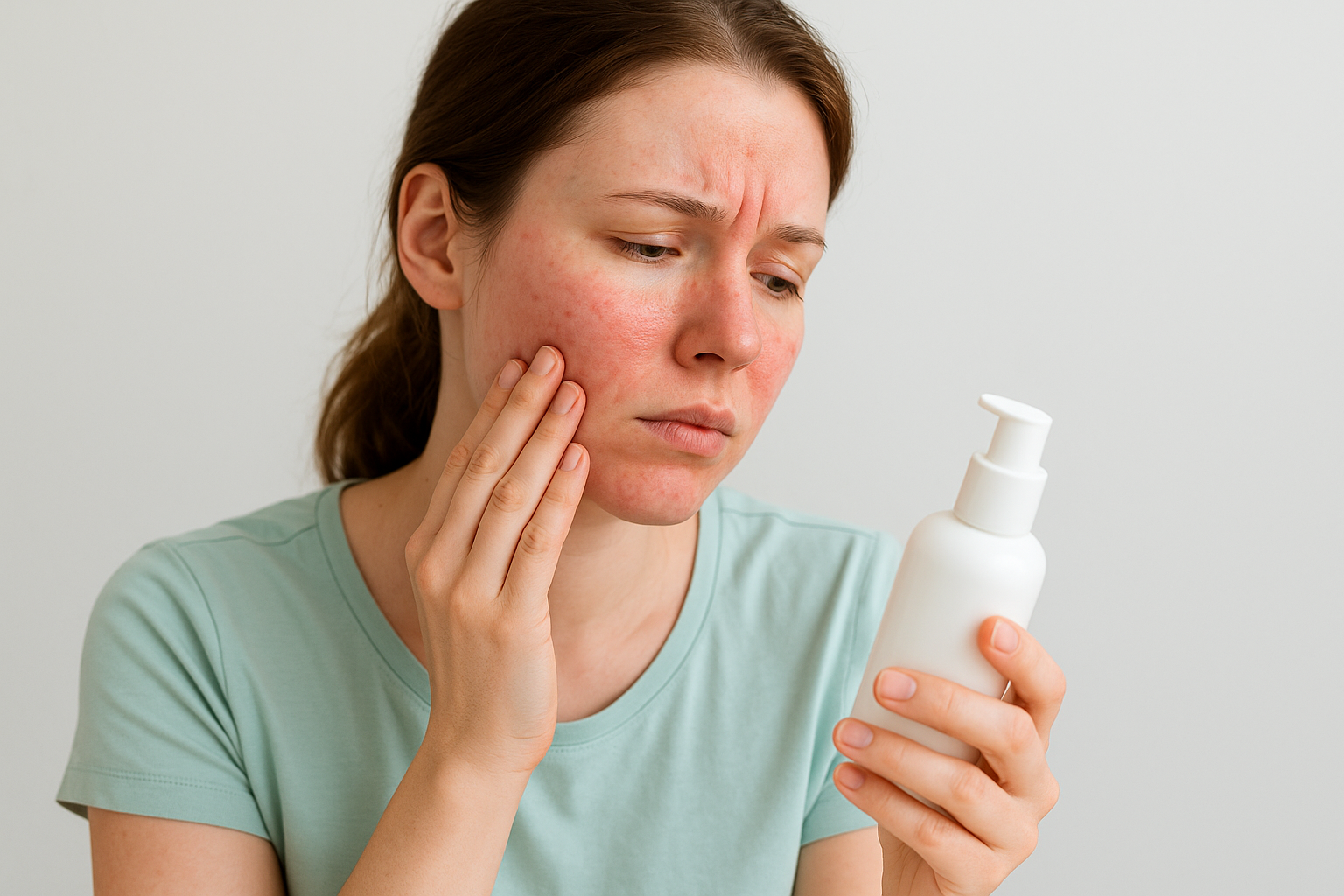
Fragrance is consistently identified as one of the leading causes of allergic and irritant contact dermatitis linked to cosmetic products.
Common ingredient triggers to watch for:
- Synthetic or natural fragrance (listed as "parfum" or "fragrance")
- Denatured alcohol
- Sulfates like sodium lauryl sulfate (SLS)
- Preservatives such as methylisothiazolinone
- High-concentration AHAs or BHAs
Environmental and lifestyle factors
Your environment puts daily stress on your skin barrier without you realizing it. Cold air, low humidity, wind, and air conditioning all pull moisture from the surface and leave skin less able to defend itself against irritation. Sun exposure compounds the problem, since UV radiation triggers inflammation in already-reactive skin.
Lifestyle habits also matter. Hot showers, high stress, and poor sleep all weaken the barrier over time. Stress in particular causes cortisol spikes that increase skin reactivity, which explains why flare-ups often hit hardest during the most demanding stretches of your life.
How to care for sensitive skin day to day
Once you understand what is sensitive skin and what sets yours off, the next step is building a routine that protects rather than provokes. The goal isn't to use the fewest products possible. It's to choose products that support your skin barrier while eliminating anything that consistently triggers a reaction.
Simplify and patch test
Start with a short, simple routine: a gentle cleanser, a fragrance-free moisturizer, and SPF. Adding too many active ingredients at once makes it impossible to identify what's causing a reaction. Before introducing anything new, patch test it on a small area like your inner wrist or behind your ear for 24 to 48 hours. If no reaction appears, it's safer to apply to your face.
Patch testing takes one extra day but saves weeks of dealing with a flare-up from a product that doesn't agree with your skin.
Choose the right ingredients
Look for formulas built around barrier-supportive ingredients like ceramides, niacinamide, and hyaluronic acid. These help retain moisture and reinforce the outer layer without provoking a reaction. Avoid high-concentration exfoliants until your skin has stabilized, and introduce any actives gradually, one at a time, with days in between.
Protect your skin from the outside
Your daily environment causes as much damage as the wrong product. Use a broad-spectrum SPF every morning, even on overcast days, and switch to a gentle, non-stripping cleanser when your skin feels tight or dry after washing. Small daily habits add up faster than any single product swap.
When to see a dermatologist
Home routines and product swaps solve a lot of problems for people with reactive skin, but they don't solve all of them. If you've removed fragrance and harsh actives, simplified your routine, and still see consistent redness, burning, or flaking, that's your signal to bring in a professional. Understanding what is sensitive skin versus an underlying condition that needs medical treatment is something a dermatologist can actually confirm for you.
Signs that point to something more serious
Some reactions go beyond what a careful routine can manage. Persistent redness that doesn't calm down, skin that cracks or bleeds around dry patches, or reactions that keep spreading are signs that a condition like rosacea, eczema, or contact dermatitis may be driving the sensitivity. These aren't just cosmetic concerns. They need proper diagnosis and sometimes prescription treatment to bring under control.
If your skin regularly bleeds, weeps, or causes significant pain, stop managing it at home and make an appointment with a dermatologist.
What a dermatologist can offer
A dermatologist can run patch tests to identify specific allergens that your skin reacts to, which is far more targeted than guessing based on ingredient lists alone. They can also prescribe barrier-repair treatments, topical anti-inflammatories, or condition-specific medications that aren't available over the counter. Going in with a record of your flare-up patterns, the products you've used, and any photos of reactions gives the appointment much more direction and helps you get answers faster.
Your next steps
Now you know what is sensitive skin, what causes it, and how to manage it day to day. The key is to stop guessing and start being deliberate. Strip your routine back to the basics, remove fragrance and harsh actives, patch test anything new, and pay attention to the patterns your skin shows you over time. That awareness does more for reactive skin than any single product.
Building a routine your skin actually responds well to takes a little patience, but it's entirely doable. Barrier-supportive ingredients like ceramides and niacinamide, combined with consistent sun protection and gentle cleansing, give reactive skin the foundation it needs to calm down and stay that way. If you're ready to find products formulated with sensitive skin in mind, browse our skincare collection to find options worth adding to your routine.
✨ Shop the Look at Beautifully Within
Loved this guide? Discover our hand-picked picks that pair perfectly with your routine:
- 👉 Fresh Start Hydrating Cleanser & Toner Duo — Skincare Set
- 👉 Daily Nourishing Hand & Body Moisturizer — Body Moisturizer
- 👉 Sun Shield — Lightweight Broad Spectrum UV Protection — Sunscreen
New customer? Get 15% off orders $50+ with code WITHIN15 — plus free shipping over $75.
0 comments