

If you've been searching for a gentler approach to anti-aging skincare, you've probably come across bakuchiol. So, what is bakuchiol in skincare, exactly? It's a plant-derived compound that's earned serious attention as a retinol alternative, one that delivers similar results without the redness, peeling, and irritation that retinol is known for.
Bakuchiol comes from the seeds and leaves of the Psoralea corylifolia plant, and research backs up what skincare enthusiasts have been saying for years: it works. It helps with fine lines, uneven skin tone, and loss of firmness, all while being gentle enough for sensitive skin. That's a big deal for anyone who's tried retinol and had to quit because their skin couldn't handle it. At Beautifully Within, we believe effective skincare shouldn't come at the cost of comfort, which is why ingredients like bakuchiol fit so well with our focus on skin-friendly, thoughtful beauty products.
This article breaks down bakuchiol's key benefits, how it compares to retinol, and exactly how to use it safely in your routine, whether you're a skincare beginner or someone looking to swap out harsher actives for something your skin will actually thank you for.
What bakuchiol is and where it comes from
Bakuchiol (pronounced buh-KOO-chee-ol) is a meroterpene phenol, a naturally occurring compound extracted from the seeds and leaves of Psoralea corylifolia, a flowering plant native to Eastern Asia and parts of India. Unlike many synthetic skincare actives developed purely in a lab, bakuchiol is entirely plant-based, which makes it a strong option for anyone who wants effective anti-aging results while keeping their routine cleaner and gentler.
The plant behind the ingredient
Psoralea corylifolia is commonly known as babchi in Ayurvedic practice, where it has been used for centuries to treat skin conditions including vitiligo and psoriasis. The seeds carry the highest concentration of bakuchiol and have a well-documented role in traditional Chinese and Indian medicine as well. Modern cosmetic science only began catching up in the early 2000s, when researchers started isolating bakuchiol from the plant and studying how it behaves when applied to skin cells.
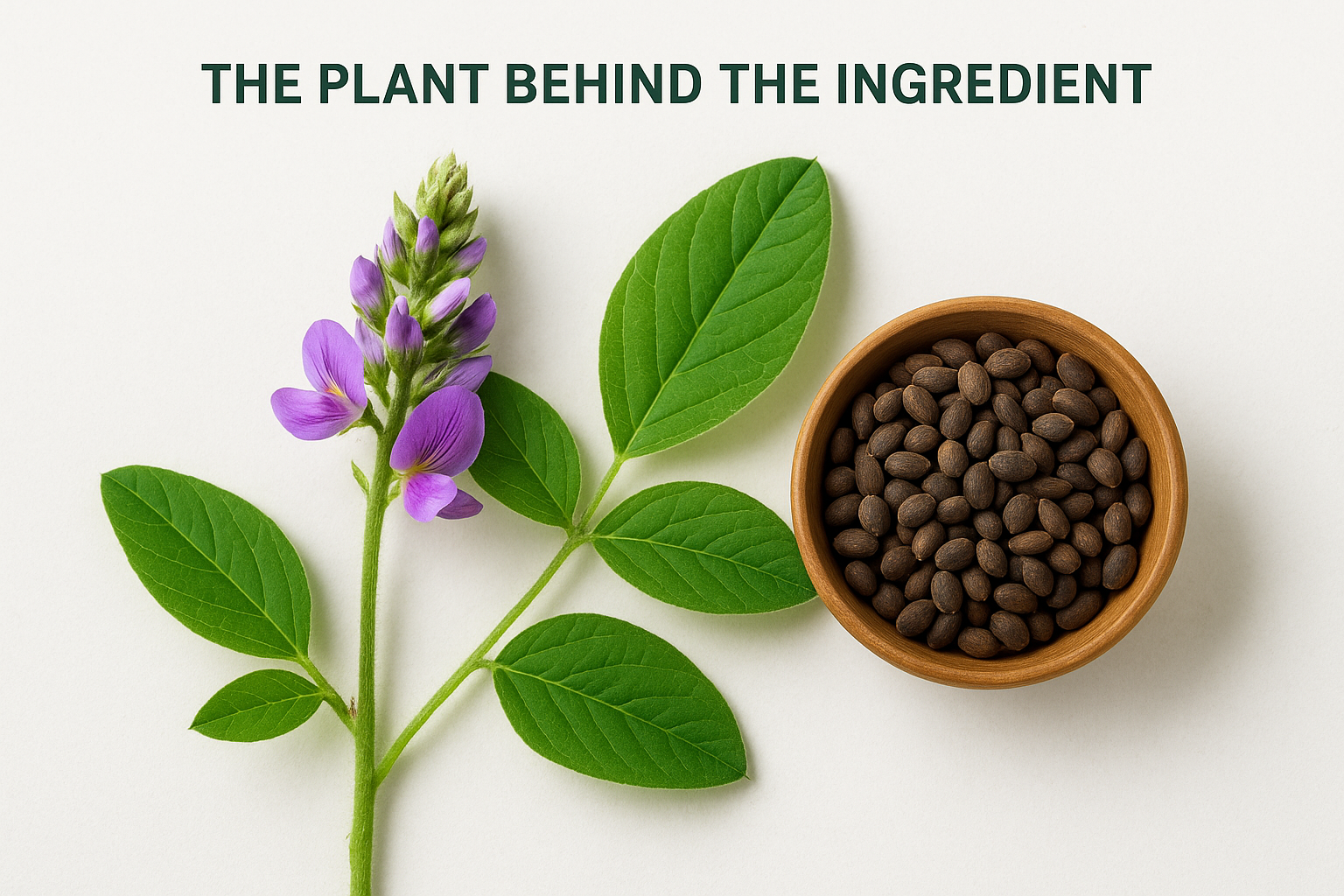
Bakuchiol has a centuries-long history in traditional medicine, but its role as a targeted anti-aging skincare ingredient is the result of recent, rigorous scientific investigation.
What the research says about how it works
When you explore what is bakuchiol in skincare at a functional level, it comes down to how the compound interacts with your skin biology. Bakuchiol activates retinoid receptors in the skin, triggering gene expressions that stimulate collagen production and speed up cell turnover, the same mechanisms that make retinol effective. A 2018 clinical study published in the British Journal of Dermatology confirmed that bakuchiol performed comparably to retinol for reducing wrinkles and hyperpigmentation, with far fewer side effects reported by participants.
Your skin builds more collagen gradually with continued use, which translates to improved firmness and more even skin tone over several weeks. Because bakuchiol does not cause the photosensitivity associated with retinol, you can use it in both your morning and evening routines without added sun-related risk.
Why bakuchiol gets compared to retinol
The bakuchiol-retinol comparison exists because both ingredients activate the same cellular pathways in skin, specifically those tied to collagen production and cell turnover. Researchers studying what is bakuchiol in skincare found that it functions at the receptor level much like retinol does, which is why the two belong in the same conversation about anti-aging actives.
The mechanism they share
Both ingredients instruct your skin cells to produce more collagen and turn over faster, reducing fine lines and evening out skin tone. Bakuchiol reaches those same retinoid receptors, but its molecular structure differs entirely from retinol, meaning it takes a completely different chemical route to the same destination.
Because bakuchiol hits the same biological targets as retinol without being a retinoid, it avoids the dryness and sensitivity retinol typically triggers.
Where bakuchiol pulls ahead
Retinol commonly causes redness, peeling, and photosensitivity, especially in the early weeks of use. That adjustment period stops many people before they ever see real results.
Bakuchiol skips that phase entirely. Your skin gets the same collagen-boosting, tone-evening benefits without the irritation, which makes it a practical choice for sensitive skin or anyone who wants results without the setbacks.
What bakuchiol can and cannot do
Knowing what bakuchiol can and cannot do helps you set realistic expectations before you invest in a product. It handles several common skin concerns well, but it is not a solution for every problem, and understanding that distinction saves you time and money.
What bakuchiol does well
When you look at what is bakuchiol in skincare, its proven strengths include reducing the appearance of fine lines, uneven pigmentation, and loss of firmness. With consistent daily use over eight to twelve weeks, most people notice a visible improvement in skin texture and overall tone.
Bakuchiol works best as a long-term daily ingredient rather than a quick fix, and it rewards consistency over time.
Where bakuchiol has limits
Bakuchiol will not clear active, inflammatory acne on its own, and it is not strong enough to address deep wrinkles or significant sun damage the way a prescription retinoid might. If your skin concerns fall into those more serious categories, you may need a dermatologist-recommended treatment alongside bakuchiol rather than relying on it alone.
Your best approach is to treat bakuchiol as a preventive and maintenance ingredient rather than a corrective one. It excels at keeping skin healthy, smooth, and supported over time rather than reversing significant existing damage quickly.
How to use bakuchiol safely
Using bakuchiol safely comes down to starting simple and giving your skin time to respond. Most people exploring what is bakuchiol in skincare don't realize that even gentle ingredients benefit from a gradual introduction, especially if you're new to active ingredients entirely.
Start with the right amount
Begin with a pea-sized amount applied to clean, dry skin once daily, either morning or evening. After two weeks with no reaction, you can use it twice daily if your skin tolerates it well. Bakuchiol is forgiving, but patience still pays off.
Consistent daily use over eight to twelve weeks gives bakuchiol the time it needs to deliver visible changes in texture and tone.
Layer it correctly in your routine
Apply bakuchiol after lighter serums and before your moisturizer. If you use other actives like vitamin C or niacinamide, bakuchiol pairs well with both and rarely causes conflict. Its compatibility with most ingredients is one of its biggest practical advantages over retinol.
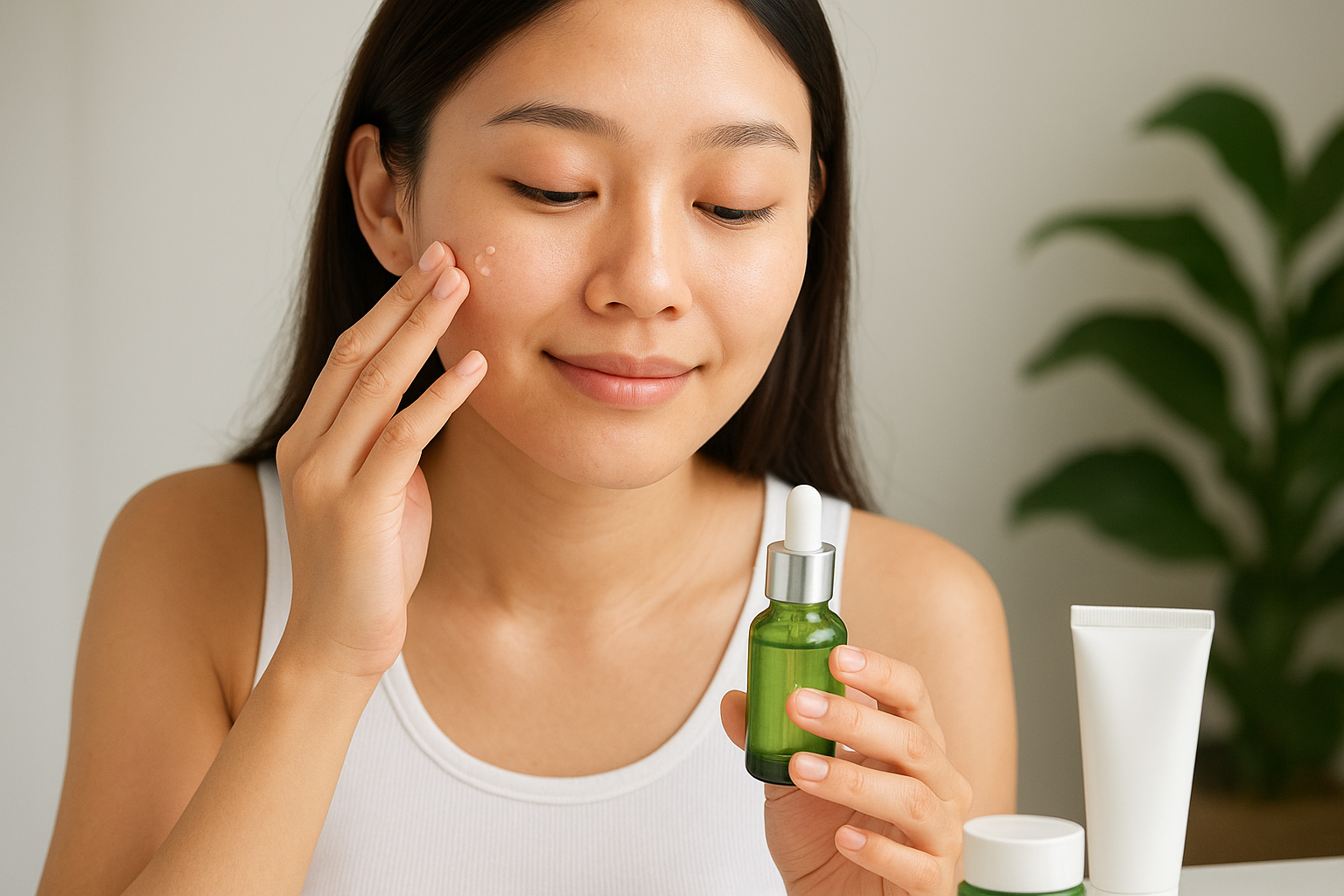
Your sunscreen routine stays the same since bakuchiol does not increase photosensitivity, but applying SPF 30 or higher every morning remains a non-negotiable step in any complete skincare routine.
Bakuchiol FAQs and common mistakes
When people first explore what is bakuchiol in skincare, the same questions and missteps come up repeatedly. Getting clear answers upfront keeps you from wasting product or setting expectations that don't match reality.
Common questions people ask
One of the most frequent questions is whether bakuchiol works immediately. It doesn't. Most people see noticeable results after eight to twelve weeks of consistent daily use. Another common question is whether bakuchiol is safe during pregnancy. Unlike retinol, which is typically avoided during pregnancy, bakuchiol's plant-based profile makes it a frequently recommended alternative, though you should always confirm with your doctor before making that call.
Bakuchiol is one of the few active anti-aging ingredients that most dermatologists consider compatible with pregnancy-safe routines.
Mistakes to avoid
The most common mistake people make is quitting too soon because they don't see fast results. Bakuchiol builds collagen gradually, so patience is the entire strategy. A second mistake is layering too many actives at once, which makes it impossible to identify what is actually working. Start with bakuchiol as your primary active, give it a full routine cycle of at least two months, then add other ingredients if needed.
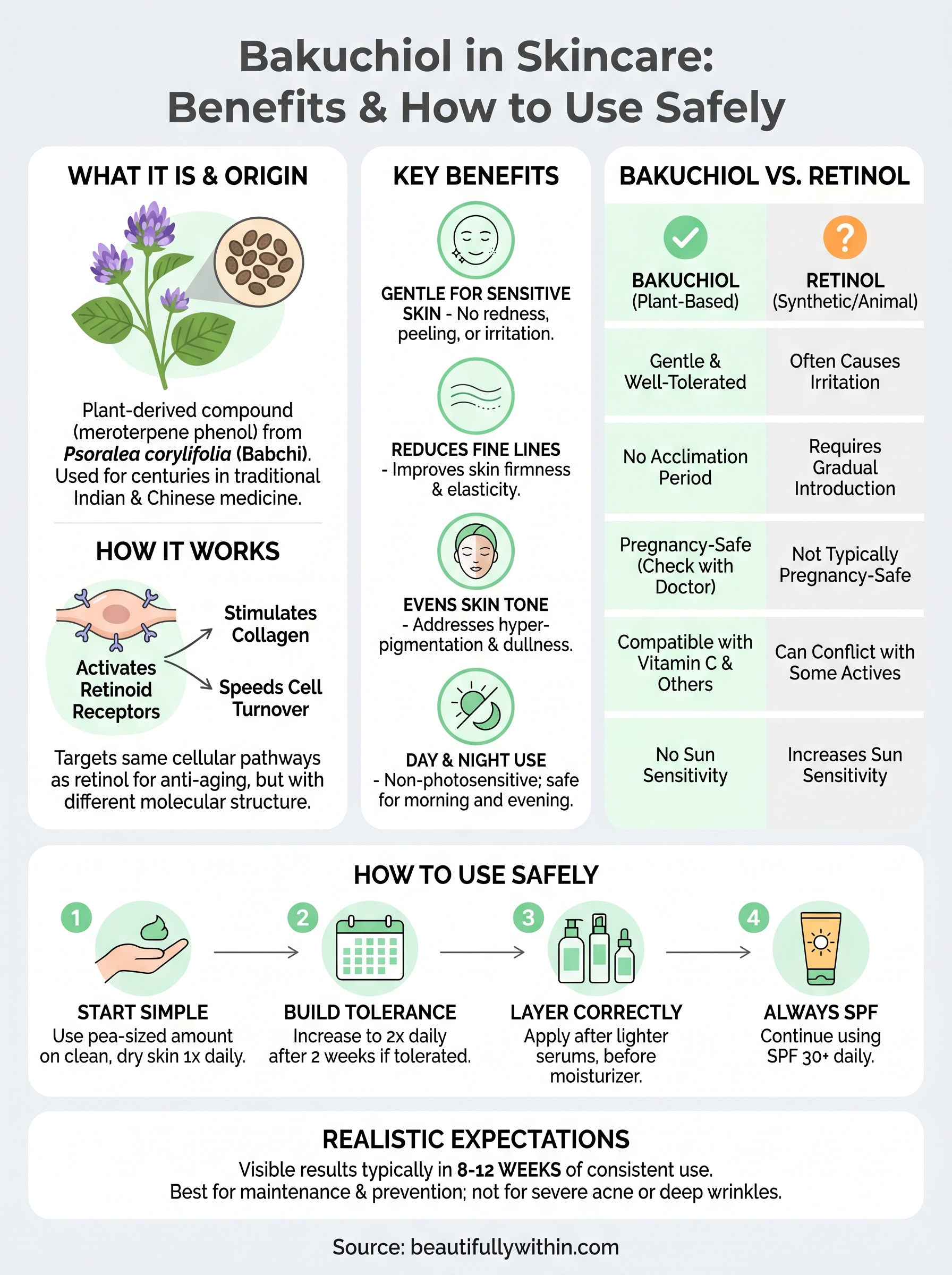
A simple way to decide if it's for you
Understanding what is bakuchiol in skincare makes the decision straightforward. If you have sensitive skin, struggle with retinol's side effects, or want a gentle daily active that builds collagen and evens skin tone over time, bakuchiol fits your needs well. It works quietly in the background, week after week, without demanding a dramatic adjustment period from your skin.
Your skin type and goals determine whether bakuchiol is the right next step. If you deal with fine lines, dullness, or uneven pigmentation and want something you can use consistently without disrupting your routine, this ingredient is worth adding. On the other hand, if you're managing severe acne or deep wrinkles, pair bakuchiol with targeted treatments rather than replacing them entirely.
If you're ready to build a routine around ingredients that actually deliver, browse our premium skincare collection and find products that support healthy, balanced skin every day.
✨ Shop the Look at Beautifully Within
Loved this guide? Discover our hand-picked picks that pair perfectly with your routine:
- 👉 Bakuchiol Gentle Retinol Alternative Serum — Serum
- 👉 Fresh Start Hydrating Cleanser & Toner Duo — Skincare Set
- 👉 Advanced Anti-Aging Daily Serum — Serum
- 👉 Advanced Anti-Aging Night Renewal Cream — Moisturizer
New customer? Get 15% off orders $50+ with code WITHIN15 — plus free shipping over $75.
0 comments