

Rosehip oil has earned a devoted following among skincare enthusiasts, and for good reason. This lightweight, fast-absorbing oil delivers a powerhouse of vitamins, essential fatty acids, and antioxidants directly to your skin. If you've been curious about the benefits of rosehip oil for face, you're about to discover why dermatologists and beauty lovers alike keep reaching for this natural ingredient.
Whether you're dealing with fine lines, acne scars, uneven skin tone, or simply want a hydration boost, rosehip oil addresses multiple concerns without clogging pores. It's particularly well-suited for sensitive skin types, something we prioritize at Beautifully Within when curating products that work from the inside out.
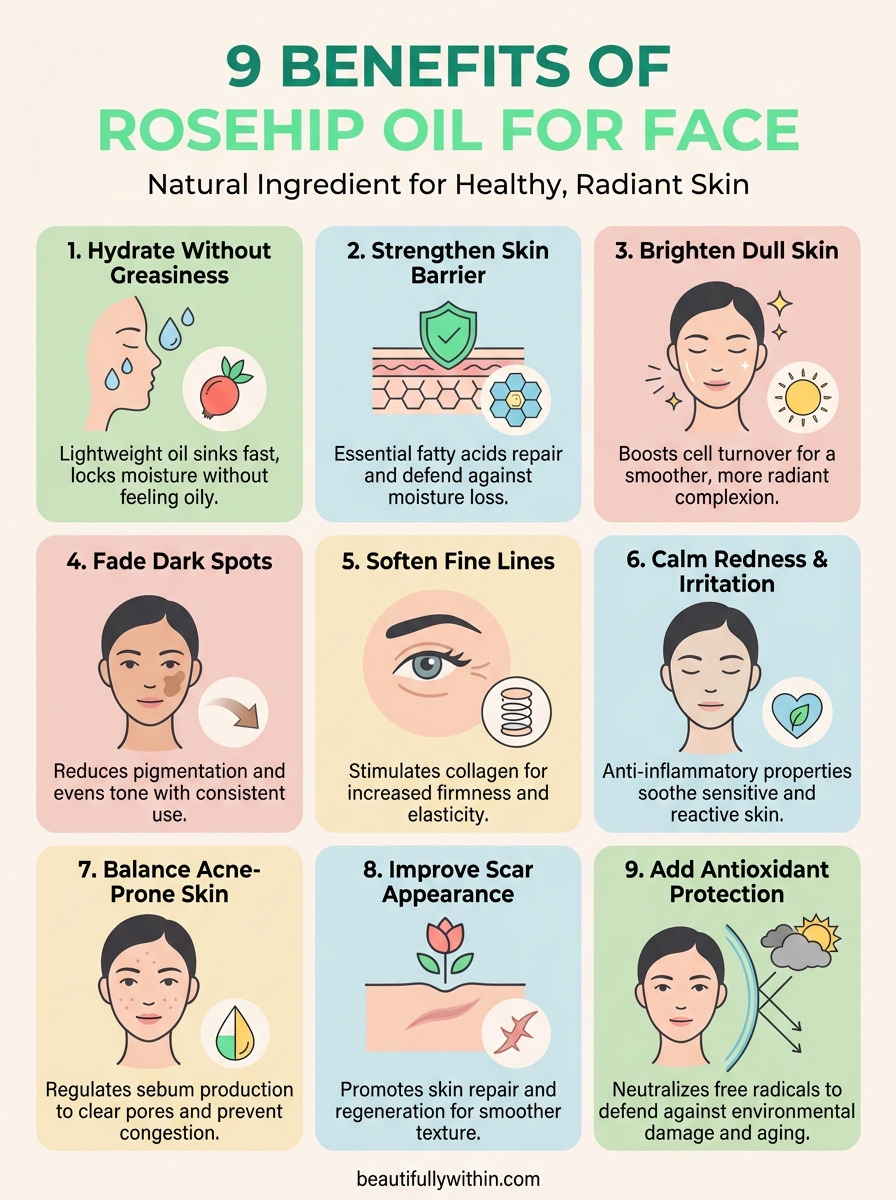
Below, you'll find nine science-backed benefits of using rosehip oil on your face, plus practical tips for incorporating it into your routine safely. Let's get into what makes this oil such a standout in any skincare collection.
1. Hydrate dry, tight skin without feeling greasy
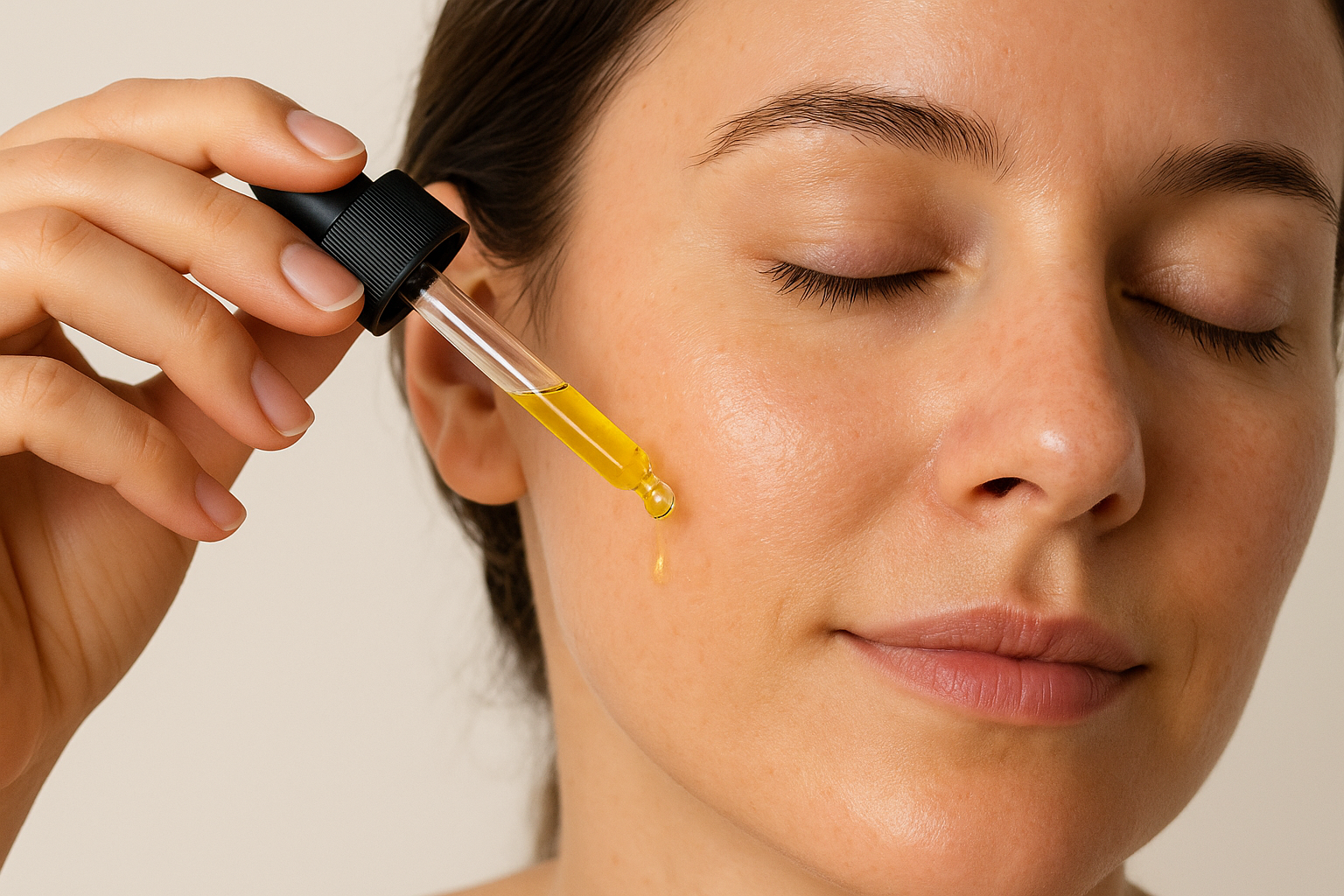
Your skin feels parched, maybe even flaky around your nose or tight after washing, but the thought of slathering on heavy creams makes you cringe. That's where rosehip oil shines. This lightweight botanical oil sinks into your skin quickly, delivering deep hydration without leaving behind that slick, suffocating film you'd get from petroleum-based products. Your face absorbs it fast, which means you can apply makeup or sunscreen within minutes.
What you may notice
Your skin feels softer to the touch almost immediately after applying rosehip oil. That uncomfortable tightness you experience after cleansing disappears, replaced by a smooth, supple texture that lasts throughout the day. You'll also notice your makeup sits better on your skin because it's properly hydrated at the surface level. Within a week of consistent use, those dry patches and rough spots start to diminish, and your complexion looks more plump and healthy.
Rosehip oil delivers hydration that penetrates rather than sits on top, which is why it works for both dry and combination skin types.
Why rosehip oil can help
Rosehip oil contains approximately 70 to 80 percent essential fatty acids, primarily linoleic acid and linolenic acid, which your skin recognizes and absorbs readily. These fatty acids strengthen your skin's natural lipid barrier, helping it retain moisture more effectively. The oil's molecular structure allows it to penetrate your skin layers quickly instead of creating a surface barrier. Your skin uses these fatty acids to repair and reinforce cell membranes, which directly improves hydration levels from within.
Best way to use it on your face
Apply two to three drops of rosehip oil to clean, slightly damp skin, ideally right after you tone or mist. Warm the oil between your palms, then press it gently into your face and neck using upward, outward motions. Your damp skin helps the oil spread more easily and lock in that surface moisture. You can use rosehip oil morning and night, though many people prefer evening application since it gives the oil maximum time to work overnight.
Watch-outs and who should skip
People with nut allergies should patch-test first, as some rosehip oils are processed in facilities that handle tree nuts. If you have extremely oily skin or are prone to severe cystic acne, start with every-other-day application to see how your skin responds. Rosehip oil is comedogenic rating 1 (very low), but individual reactions vary. Always store your bottle in a cool, dark place since the fatty acids oxidize quickly when exposed to heat or light, which reduces effectiveness.
2. Lock in moisture and support your skin barrier
Your skin barrier acts like a protective shield that keeps water in and irritants out. When this barrier becomes compromised from harsh cleansers, environmental stress, or over-exfoliation, you experience chronic dryness, sensitivity, and inflammation. Rosehip oil works on a cellular level to repair and fortify this critical defense system, making it one of the standout benefits of rosehip oil for face care.
What you may notice
Within two to three weeks of regular use, your skin stops feeling perpetually thirsty. Products you layer on top of rosehip oil absorb better and stay effective longer, since your barrier can actually hold onto those active ingredients. You'll experience fewer random breakouts and less redness in response to temperature changes or new products. That uncomfortable cycle of dryness, irritation, and tightness breaks, replaced by consistent comfort throughout the day.
Why rosehip oil can help
The linoleic acid in rosehip oil matches what your skin naturally produces to maintain its barrier structure. Your skin uses this fatty acid to build ceramides, the mortar between your skin cells that prevents water loss. This strengthening happens at the cellular membrane level, not just on the surface, which creates lasting improvement rather than temporary relief.
A fortified skin barrier holds moisture 60 percent more effectively than compromised skin, reducing the need for constant reapplication.
Best way to use it on your face
Apply rosehip oil as the final step in your nighttime routine, after your moisturizer. This creates a protective seal that locks everything underneath against your skin. Use three to four drops and press gently across your entire face, paying extra attention to areas that get especially dry or irritated.
Watch-outs and who should skip
Skip rosehip oil if you're using prescription retinoids until your dermatologist confirms compatibility. Wait at least 30 minutes after applying any acids before layering rosehip oil to prevent potential irritation.
3. Brighten dull skin and smooth rough texture
Your complexion looks flat and lackluster instead of glowing, and when you run your fingers across your cheeks, you feel bumpy patches where your skin should be smooth. This combination of dullness and texture issues makes your face look tired, even when you're well-rested. Rosehip oil addresses both concerns simultaneously through gentle exfoliation and cellular renewal, revealing the brighter, smoother skin underneath.
What you may notice
Your skin reflects light more evenly within three to four weeks of consistent use. That dull, ashy appearance fades as dead skin cells shed more efficiently, replaced by fresher cells that give your face a natural radiance. The rough patches around your forehead, chin, or cheeks become noticeably smoother to touch. Your makeup applies more evenly because you're working with a refined canvas instead of bumpy terrain.
Why rosehip oil can help
The vitamin A compounds in rosehip oil speed up your skin's natural cell turnover process, which slows down as you age. These compounds encourage your skin to shed old, damaged cells that create dullness and replace them with healthier ones. Your skin also uses the essential fatty acids to repair texture irregularities at the cellular level, smoothing out rough areas from within.
Consistent cell turnover creates visible brightness by removing the buildup of dead cells that scatter light instead of reflecting it evenly.
Best way to use it on your face
Apply four to five drops of rosehip oil at night after cleansing. Massage it gently into your skin using circular motions, which helps the oil penetrate while providing mild physical exfoliation. Focus extra attention on areas with noticeable texture or dullness.
Watch-outs and who should skip
Avoid combining rosehip oil with strong chemical exfoliants like glycolic acid on the same night, as this can over-exfoliate your skin. Start with three nights per week if you have sensitive skin.
4. Fade the look of dark spots and uneven tone
Dark spots from old breakouts, sun exposure, or hormonal changes create an uneven, patchy complexion that makeup can only partially hide. These hyperpigmented areas make your skin look older and less uniform, even when the rest of your skincare routine is on point. Among the many benefits of rosehip oil for face, its ability to gradually lighten these stubborn marks stands out as particularly valuable for anyone dealing with post-inflammatory hyperpigmentation or melasma.
What you may notice
Your darker spots become visibly lighter after six to eight weeks of nightly application. The contrast between these areas and your regular skin tone softens, creating a more uniform complexion overall. Small freckles or sun spots that bothered you start blending into your natural tone instead of standing out. The overall effect makes your skin look clearer and more consistent from forehead to jawline.
Why rosehip oil can help
The vitamin A compounds and vitamin C in rosehip oil work together to inhibit excess melanin production in areas where your skin has overproduced pigment. These vitamins also encourage faster cell turnover, which helps fade existing dark spots by bringing fresh, evenly pigmented cells to the surface more quickly.
Vitamin A increases cell turnover by up to 30 percent, which accelerates the natural fading process of hyperpigmentation.
Best way to use it on your face
Apply three to four drops at night, pressing the oil directly onto dark spots before spreading it across your entire face. Consistency matters more than quantity, so commit to daily application for at least two months.
Watch-outs and who should skip
Always wear broad-spectrum SPF 30 or higher during the day when using rosehip oil for dark spots, as vitamin A compounds increase sun sensitivity.
5. Soften the look of fine lines and boost bounce
Fine lines around your eyes, forehead, and mouth become more visible as your skin loses its natural plumpness and elasticity. Your face feels less firm when you touch it, and your complexion looks somewhat deflated instead of full and youthful. Rosehip oil addresses these aging concerns by delivering nutrients your skin needs to rebuild its support structure and maintain a bouncy, resilient texture.
What you may notice
Your skin feels firmer and more supple after four to six weeks of consistent application. Those shallow lines around your eyes and mouth become less pronounced as your skin regains some of its lost volume. When you press your finger against your cheek, your skin springs back faster instead of holding the indentation. The overall effect makes your face look more youthful and rested, with improved definition along your jawline and cheekbones.
Why rosehip oil can help
The vitamin C and essential fatty acids in rosehip oil stimulate collagen production in your dermis, the layer responsible for skin firmness. Your skin uses these nutrients to repair damaged collagen fibers and build new ones, which directly improves structural support from within. The oil's antioxidants also protect existing collagen from breakdown caused by free radicals and environmental stress.
Increased collagen density improves skin elasticity by up to 25 percent, reducing the depth and visibility of fine lines.
Best way to use it on your face
Apply four to five drops each night after your serum but before your moisturizer. Gently press the oil into areas with visible lines using your ring finger, which applies the least pressure.
Watch-outs and who should skip
Results take six to eight weeks to become visible, so maintain consistent application. Pair rosehip oil with daily sunscreen to protect your collagen-building efforts.
6. Calm redness and reduce visible irritation
Your cheeks look blotchy and inflamed, and certain areas of your face feel warm to the touch even when you haven't been in the sun. This persistent redness makes your skin look angry and reactive, whether it stems from rosacea, sensitivity, or environmental triggers like wind and cold. The anti-inflammatory properties of rosehip oil make it particularly effective at soothing this type of visible irritation, marking it as one of the gentler benefits of rosehip oil for face care.
What you may notice
Your skin looks visibly calmer within one to two weeks of regular application. That constant flush across your cheeks fades to a more neutral, even tone, and you stop experiencing random flare-ups from minor triggers like temperature changes or stress. Touch your face and you'll notice the heat and sensitivity have diminished considerably. Your skin tolerates other products better because the baseline inflammation has decreased.
Why rosehip oil can help
The polyphenols and anthocyanins in rosehip oil actively reduce inflammatory responses in your skin tissue. These compounds work by blocking inflammatory pathways at the cellular level, which stops redness before it fully develops. Your skin also benefits from the oil's omega fatty acids, which strengthen cell membranes and make your skin less reactive to external irritants.
Anti-inflammatory compounds in rosehip oil can reduce visible redness by up to 40 percent when used consistently over four weeks.
Best way to use it on your face
Apply two to three drops twice daily to clean skin, focusing on areas prone to redness. Pat the oil gently rather than rubbing, which can aggravate sensitive skin.
Watch-outs and who should skip
Stop use if you experience increased burning or stinging. Store rosehip oil properly to maintain its anti-inflammatory potency.
7. Balance acne-prone skin and support clearer pores
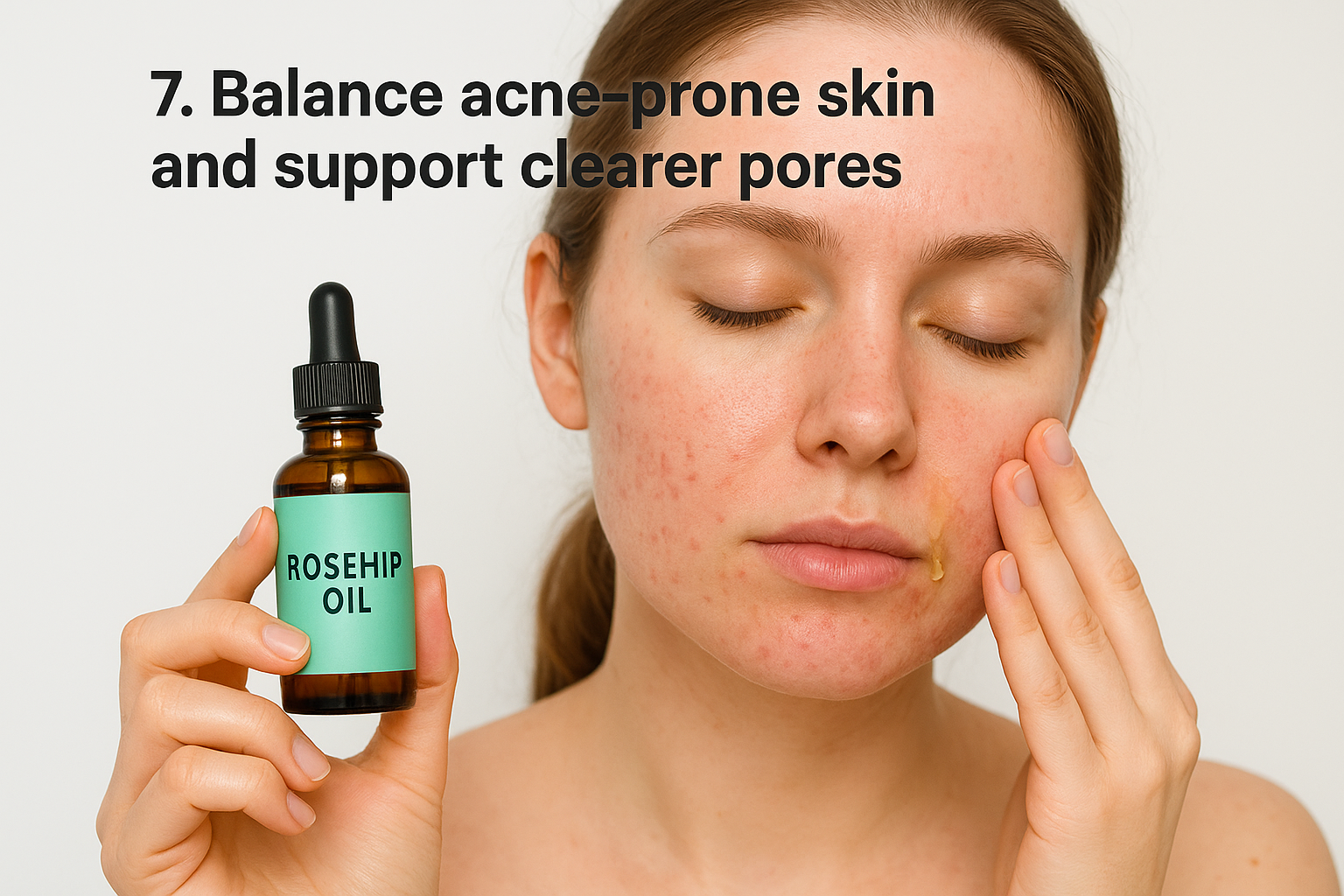
Acne-prone skin creates a frustrating paradox where your face produces excess oil yet still needs hydration to function properly. Your pores look enlarged and congested, and you break out regularly despite avoiding heavy moisturizers. Many people assume oils worsen acne, but rosehip oil's unique composition makes it one of the surprising benefits of rosehip oil for face care for those dealing with blemish-prone complexions and clogged pores.
What you may notice
Your skin produces less excess sebum within three to four weeks of consistent use. Pores appear visibly smaller as they clear out and tighten, particularly around your nose and chin where congestion tends to concentrate. You experience fewer breakouts overall, and the pimples that do appear heal faster without leaving behind dark marks. Your skin maintains better hydration balance throughout the day, eliminating that cycle where dryness triggers oil overproduction.
Why rosehip oil can help
The high linoleic acid content in rosehip oil regulates sebum production by correcting the fatty acid imbalance that triggers excess oil. Acne-prone skin typically lacks linoleic acid, causing your pores to produce thick, sticky sebum that clogs easily. Your skin absorbs this missing fatty acid and uses it to normalize oil production and keep pores clear.
Linoleic acid reduces sebum thickness by up to 25 percent, preventing the sticky buildup that leads to clogged pores and breakouts.
Best way to use it on your face
Apply two drops to clean, damp skin each evening. Start with every other night for the first week to let your skin adjust, then increase to nightly use.
Watch-outs and who should skip
Monitor your skin during the first two weeks for any purging or increased breakouts. Choose cold-pressed, organic rosehip oil without added ingredients that might clog pores.
8. Improve the look of scars and post-acne marks
Old acne scars leave behind textured indentations and discolored patches that stick around long after your breakouts clear. These marks create an uneven surface that catches light differently, making your skin look rough and damaged even when you're no longer dealing with active pimples. The regenerative properties make this one of the most sought-after benefits of rosehip oil for face care, particularly for anyone frustrated by the lasting effects of past breakouts or minor injuries.
What you may notice
Your post-acne marks become less pigmented after eight to ten weeks of targeted application. The texture of indented scars improves gradually, becoming shallower and less noticeable as your skin rebuilds collagen in those damaged areas. Your overall complexion looks more uniform because the contrast between scarred and normal skin diminishes significantly.
Why rosehip oil can help
The vitamin A and essential fatty acids in rosehip oil stimulate your skin's natural repair mechanisms, encouraging faster cell regeneration in scarred tissue. Your skin uses these nutrients to produce new collagen fibers that fill in shallow depressions and even out texture irregularities. The oil's components also help fade discoloration by regulating melanin production in previously inflamed areas.
Consistent application of regenerative oils can improve scar appearance by up to 35 percent over three months through enhanced collagen remodeling.
Best way to use it on your face
Apply three to four drops directly to scarred areas twice daily, massaging gently in circular motions. Layer rosehip oil under your regular moisturizer for maximum absorption and protection.
Watch-outs and who should skip
Results require twelve weeks or longer for deeper scars. Avoid using on open wounds or active breakouts.
9. Add antioxidant support against everyday stressors
Your skin faces constant attack from pollution, UV exposure, and screen time that generate free radicals, unstable molecules that damage cells and accelerate aging. These invisible aggressors break down collagen, trigger inflammation, and create oxidative stress that leaves your face looking tired and prematurely aged. Rosehip oil delivers a concentrated dose of protective antioxidants that neutralize this damage, making it one of the most preventative benefits of rosehip oil for face care routines.
What you may notice
Your skin maintains a healthier, more vibrant appearance despite daily environmental exposure that would typically cause dullness and sensitivity. You experience fewer random irritation flare-ups from things like smog, air conditioning, or long hours in front of screens. Your face looks fresher at the end of the day instead of progressively duller, and seasonal changes don't wreak havoc on your complexion like they used to.
Why rosehip oil can help
The vitamin C, vitamin E, and beta-carotene in rosehip oil form a protective network that intercepts free radicals before they damage your skin cells. These antioxidants donate electrons to unstable molecules, neutralizing them without becoming harmful themselves. Your skin uses this antioxidant shield to prevent cellular damage rather than constantly repairing it after the fact.
Antioxidant protection reduces oxidative stress by up to 50 percent, preventing accelerated aging from environmental damage.
Best way to use it on your face
Apply three drops each morning after cleansing and before sunscreen. This gives your skin maximum antioxidant protection throughout the day when environmental exposure peaks.
Watch-outs and who should skip
Layer rosehip oil under sunscreen, not instead of it. Antioxidants complement but don't replace UV protection.
Final takeaways
The benefits of rosehip oil for face care span everything from deep hydration and barrier repair to brightening, anti-aging, and scar reduction. This versatile oil works across multiple skin concerns simultaneously, making it a practical addition to almost any routine. Your skin gets concentrated doses of essential fatty acids, vitamins, and antioxidants that address both immediate needs and long-term health.
Start with a patch test and small amounts to gauge how your skin responds, then build up to consistent daily use for maximum results. Most benefits become visible within four to eight weeks, though improvements continue with ongoing application. Store your bottle properly and pair it with broad-spectrum sunscreen during daytime hours to protect your investment in healthier skin.
Ready to upgrade your skincare routine? Explore our curated skincare collection for more products that work beautifully with rosehip oil to help you achieve your best skin yet.
✨ Shop the Look at Beautifully Within
Loved this guide? Discover our hand-picked picks that pair perfectly with your routine:
- 👉 Fresh Start Hydrating Cleanser & Toner Duo — Skincare Set
- 👉 Bakuchiol Gentle Retinol Alternative Serum — Serum
- 👉 Amethyst Crystal Gua Sha & Anti-Cellulite Roller — Spa Tool
- 👉 Professional Airbrush Foundation — 3 Shade Set — Makeup
New customer? Get 15% off orders $50+ with code WITHIN15 — plus free shipping over $75.
0 comments