

Your regular conditioner can only do so much. If your hair feels dry, damaged, or just... off, you might be missing a key step in your routine. Understanding hair mask benefits can be the difference between hair that simply gets by and hair that actually thrives.
At Beautifully Within, we've tested countless products searching for what actually delivers results, especially for those of us with thick, wavy, or frizzy hair that needs extra care. Hair masks offer deep conditioning and repair that standard products can't match, penetrating the hair shaft to restore moisture, strength, and shine from within.
This guide breaks down 10 compelling reasons to add a hair mask to your routine, plus practical tips on how to use them for maximum results. Whether you're dealing with heat damage, chemical processing, or everyday wear and tear, you'll discover exactly how these treatments can transform your hair.
What a hair mask is and why it works
A hair mask is a concentrated treatment designed to deliver intensive conditioning and repair to your hair. Unlike your daily conditioner that sits on the surface, hair masks contain higher concentrations of active ingredients like proteins, oils, and vitamins that penetrate deeper into your hair shaft. You typically leave them on for 10 to 30 minutes, giving the ingredients time to work their way into the hair's core structure.
How hair masks penetrate your hair
Your hair shaft has three layers: the cuticle (outer protective layer), cortex (middle layer containing proteins), and medulla (innermost core). Hair masks work because their molecular structure allows them to pass through the cuticle scales and reach the cortex where damage actually occurs. The extended application time lets these ingredients bond with damaged protein structures inside your hair, filling in gaps and restoring strength that washing and styling strips away.
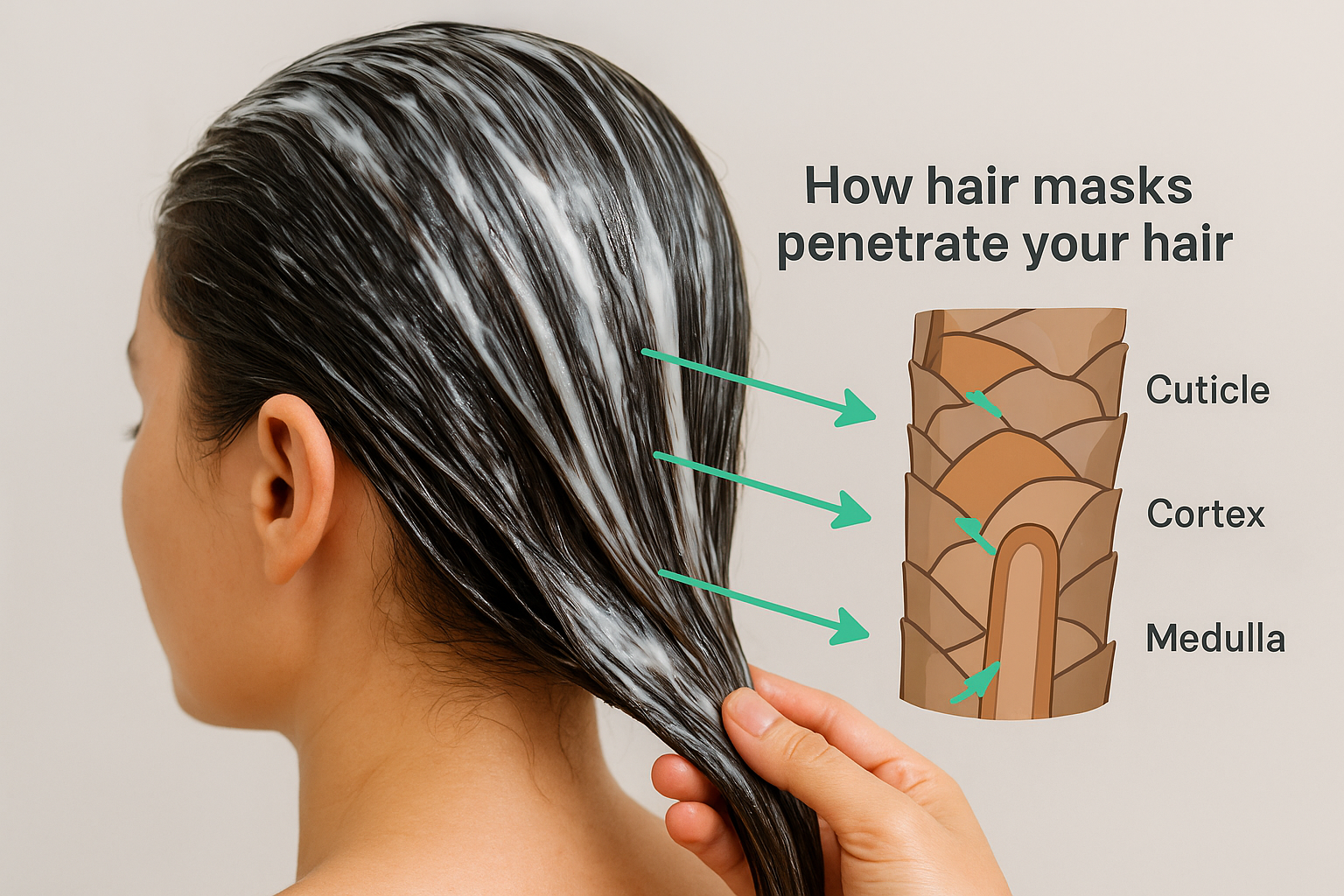
When you apply heat or use a processing cap, you open the cuticle scales even more, allowing deeper penetration of repair ingredients.
Products with smaller molecular weights, like certain oils and hydrolyzed proteins, can reach the cortex more effectively than larger molecules found in regular conditioners. This explains why understanding hair mask benefits matters for anyone serious about hair health.
Why they work better than regular conditioner
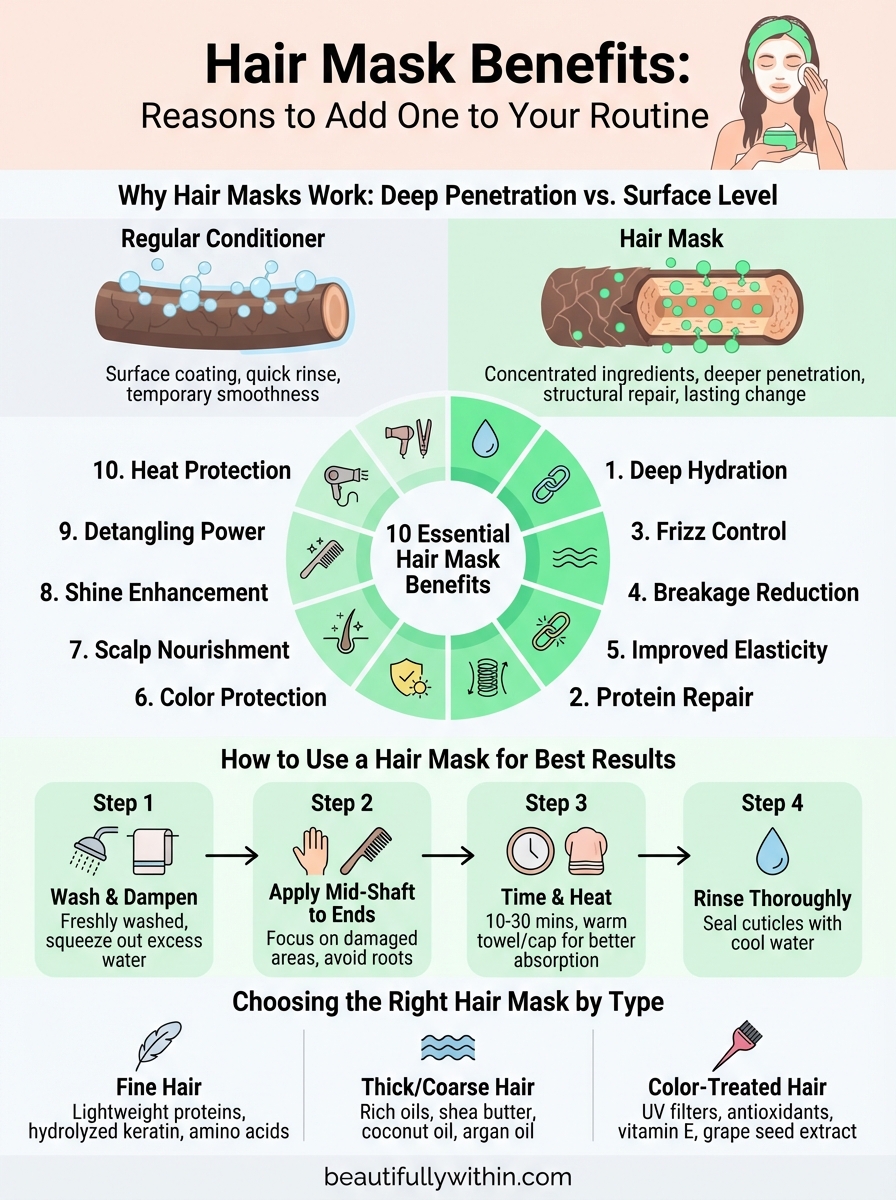
Regular conditioners coat your hair's surface to provide temporary smoothness and detangling, but they rinse away quickly without creating lasting change. Hair masks contain 3 to 10 times more conditioning agents and stay on your hair long enough to create structural improvements. Think of conditioner as a quick refresh and a hair mask as actual repair work. Your conditioner maintains, but your mask rebuilds damaged areas, restores moisture balance, and strengthens hair from within. This difference becomes obvious after just a few applications when you notice improved texture, reduced breakage, and better moisture retention between wash days.
10 hair mask benefits that matter most
Hair mask benefits go beyond basic conditioning to address specific hair concerns that your regular products can't fix. These intensive treatments deliver measurable improvements in hair health, texture, and appearance when used correctly. Understanding what they actually do helps you decide if adding one to your routine makes sense for your hair type and goals.
The complete list of benefits
- Deep hydration that lasts for days, not hours
- Protein repair for heat-damaged and chemically treated hair
- Frizz control through cuticle smoothing and moisture sealing
- Breakage reduction by strengthening weak points in your hair shaft
- Improved elasticity so your hair bends instead of snaps
- Color protection through antioxidants and UV filters
- Scalp nourishment that promotes healthier hair growth
- Shine enhancement from smoother, more reflective cuticles
- Detangling power that reduces mechanical damage during styling
- Heat protection preparation before blow-drying or styling
Regular use of hair masks creates cumulative benefits, with each application building on the previous one to create stronger, healthier hair over time.
Your specific hair mask benefits depend on which product you choose and how consistently you use it. Dry hair responds best to moisture-focused masks, while damaged hair needs protein-rich formulations that rebuild broken bonds.
How to use a hair mask for best results
Getting the most from your hair mask requires more than just slapping it on and hoping for the best. The application method, timing, and frequency all affect how well your hair absorbs the treatment and whether you actually experience the hair mask benefits you're looking for. Following a proven process ensures you get professional-level results at home without wasting product or time.
The basic application method
Start with freshly washed, damp hair that you've gently squeezed with a towel to remove excess water. Apply your hair mask from mid-shaft to ends, avoiding your roots unless the product specifically targets scalp issues. Use your fingers or a wide-tooth comb to distribute the product evenly through every section. For thick or long hair, work in sections to ensure complete coverage. The water in your damp hair helps the mask spread more easily and allows better penetration of the active ingredients.
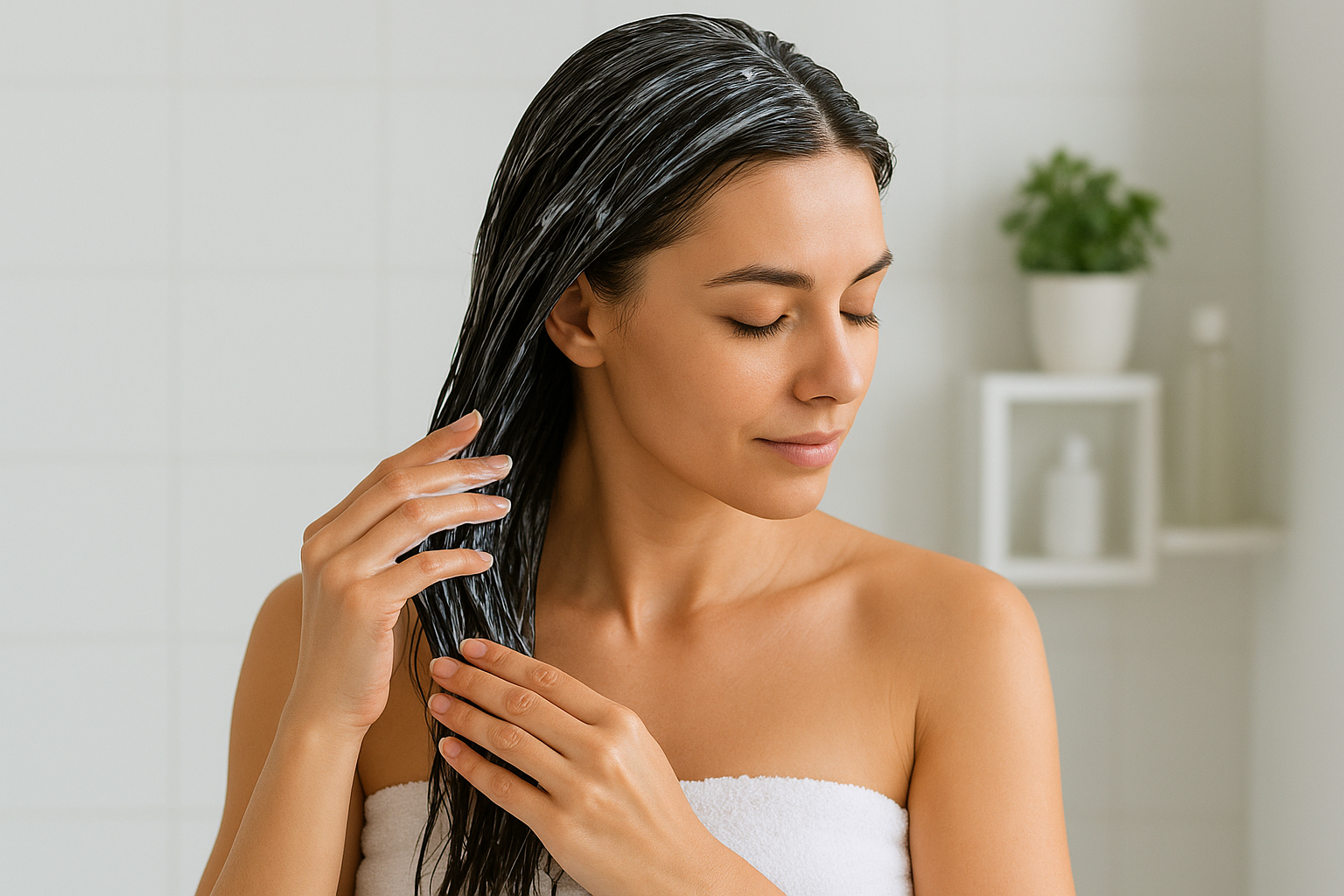
Wrapping your hair in a warm towel or using a shower cap traps heat, which opens your hair cuticles and increases how much treatment your hair absorbs.
Timing and frequency guidelines
Leave your mask on for 10 to 30 minutes depending on your hair's damage level and the product instructions. Severely damaged hair benefits from longer application times, while healthy hair needs less. Use a hair mask once or twice per week for maintenance, or three times weekly if you're repairing significant damage. Rinse thoroughly with cool water to seal your cuticles and lock in the treatment benefits.
How to choose the right hair mask for your hair
Picking the right hair mask means matching the formula to your specific hair type and damage level. Your thick, wavy hair has different needs than fine, straight hair, and using the wrong product wastes money while delivering zero results. The ingredient list tells you everything you need to know about whether a mask will actually help your hair or weigh it down.
Match the mask to your hair type
Fine hair needs lightweight, protein-based masks that strengthen without adding heaviness. Look for ingredients like hydrolyzed keratin, wheat protein, or silk amino acids that rebuild structure without coating your strands. Thick or coarse hair responds best to rich, oil-based formulas containing shea butter, coconut oil, or argan oil that provide deep moisture and smoothing. Curly and textured hair requires masks with both moisture and protein to maintain definition while preventing breakage.
Your hair porosity matters just as much as texture when selecting products that deliver real hair mask benefits.
Identify your primary hair concern
Color-treated hair needs UV filters and antioxidants like vitamin E or grape seed extract to prevent fading and oxidation. Heat-damaged hair requires bond-building ingredients such as amino acids or keratin that repair broken protein chains. Dry hair benefits most from humectants like glycerin or honey that attract and retain moisture. Check labels for these specific ingredients rather than relying on marketing claims about what the product promises to do.
Common hair mask mistakes and quick fixes
Even the best hair mask fails when you apply it wrong. Most people make simple errors that prevent them from experiencing the full hair mask benefits their product promises. Fixing these mistakes takes seconds but creates noticeable improvements in how your hair looks and feels after treatment.
Applying to wet instead of damp hair
Water-logged hair can't absorb treatment properly because moisture blocks the cuticle openings where ingredients need to enter. Your hair should feel damp to the touch, not dripping wet. After shampooing, squeeze out excess water with your hands, then use a towel to blot your hair until it stops dripping. This creates the ideal moisture level for maximum product penetration without diluting the formula's effectiveness.
Hair that's too wet dilutes your mask and prevents the concentrated ingredients from reaching the cortex where repair happens.
Using too much product or skipping sections
You waste product by over-applying to already saturated hair, but missing sections leaves gaps in your treatment coverage. Use about a tablespoon for short hair and up to three tablespoons for long, thick hair. Work in four-inch sections from mid-shaft to ends, combing through each area to ensure even distribution. Roots rarely need mask application unless you're treating scalp dryness specifically, as the natural oils from your scalp provide enough moisture to that area.
Final thoughts
Understanding hair mask benefits gives you the knowledge to make smarter choices about your hair care routine. These intensive treatments deliver deep repair and hydration that your regular conditioner simply can't match, addressing everything from breakage to frizz to heat damage with concentrated ingredients that actually penetrate your hair shaft. Your hair responds to consistent care with visible improvements in texture, strength, and shine that build over time.
Starting with one or two applications per week lets you see how your hair responds before committing to a more intensive schedule. Choose formulas that match your specific hair type and concerns, apply them correctly using the techniques outlined above, and give the active ingredients enough time to work. The difference becomes obvious within just a few treatments when you notice less breakage and better moisture retention.
Ready to transform your hair health? Explore our curated hair care collection featuring professional-grade treatments designed for visible results.
✨ Shop the Look at Beautifully Within
Loved this guide? Discover our hand-picked picks that pair perfectly with your routine:
- 👉 Professional Blowout Brush — Hot Air Volumizing Styler — Hair Styling Tool
- 👉 32mm Ceramic Auto-Rotating Hair Curler — Hair Styling Tool
- 👉 5-in-1 Negative Ion Hot Air Styling Brush — Hair Styling Tool
- 👉 Ceramic Electric Hair Straightening Hot Comb — Hair Styling Tool
New customer? Get 15% off orders $50+ with code WITHIN15 — plus free shipping over $75.
0 comments