

You run your fingers through your hair and notice it, those frustrating little broken strands that seem to multiply no matter what you do. Learning how to reduce hair breakage isn't just about vanity; it's about restoring your hair's strength and keeping it healthy for the long haul. Whether your hair snaps from heat styling, chemical treatments, or simply brushing too hard, the damage is reversible when you know what steps to take.
At Beautifully Within, we believe healthy hair starts with understanding what your strands actually need. I've dealt with my own share of breakage battles, my thick, wavy hair has been through color treatments that left it dry and prone to snapping. Through trial and error, I discovered that the right habits matter just as much as the products you use.
This guide breaks down 13 proven strategies you can start using at home today. From adjusting your washing routine to choosing protective styles, these tips come from dermatologist recommendations and real-world results. By the end, you'll have a clear action plan to strengthen your hair and finally stop finding those broken pieces everywhere.
1. Build a breakage routine with Beautifully Within
Your hair doesn't break overnight, and fixing it won't happen with a single product either. Building a consistent breakage routine gives your strands the daily support they need to rebuild strength from the inside out. At Beautifully Within, we focus on routines that address the root causes of damage, not just the symptoms. When you commit to a structured approach that combines cleansing, conditioning, and protection, you create an environment where your hair can actually heal instead of continuing to snap.
Why it reduces breakage
Consistency matters because hair damage accumulates over time, and repair needs repeated action. When you follow a structured routine, you're not just treating your hair once in a while; you're giving it ongoing moisture, protein, and protection that prevent new damage from forming. Your hair cuticle lifts and closes throughout the day based on what you expose it to, and a proper routine keeps that cuticle sealed and smooth.
Regular care creates a protective buffer against environmental stressors and styling damage that would otherwise weaken your strands.
How to do it at home
Start by establishing three core steps you'll never skip: gentle cleansing, deep conditioning, and protective styling. Wash your hair with a sulfate-free shampoo that cleanses without stripping natural oils, follow with a moisturizing conditioner every single time, and apply a leave-in treatment before air-drying or styling. Schedule a weekly deep conditioning session where you apply a rich mask for 15-20 minutes, focusing on your mid-lengths and ends where breakage typically shows up first.
Common mistakes to avoid
You might think washing more often will help, but over-washing strips protective oils and leaves your hair vulnerable. Another common error is skipping conditioner when you're in a rush, your hair needs that slip to detangle without breaking. Don't fall into the trap of using every new product you see; stick with a routine for at least 4-6 weeks before switching, because your hair needs time to respond to new ingredients.
What to buy or use
Browse our skincare and haircare collection to find products designed specifically for strengthening damaged strands. Look for moisturizing conditioners with ingredients like ceramides and fatty acids, which seal the cuticle and prevent water loss. Pair these with a protein-rich treatment you can use bi-weekly to rebuild structural damage. For daily protection, grab a leave-in conditioner that offers heat protection if you style with tools.
2. Confirm it's breakage, not shedding
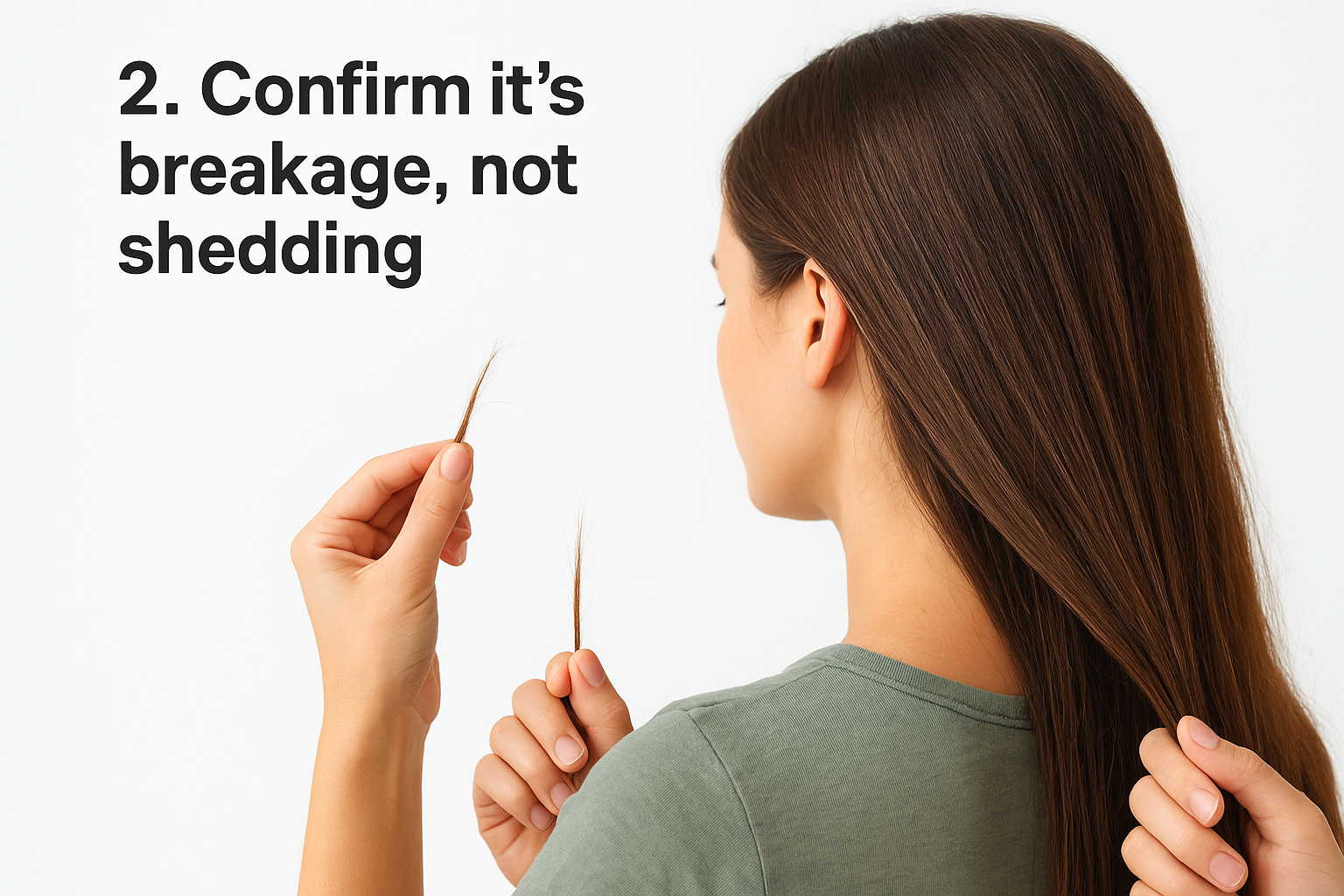
Before you can effectively learn how to reduce hair breakage, you need to know what you're actually dealing with. Many people confuse breakage with normal shedding, and treating the wrong problem wastes time and money on products that won't help. Breakage creates short, uneven pieces scattered throughout your hair, while shedding involves full-length strands that fall out from the root. Understanding the difference shapes your entire approach to hair care.
Why it reduces breakage
You can't fix a problem you haven't properly identified. When you mistake shedding for breakage, you might overload your hair with protein treatments it doesn't need, which can actually cause more snapping. Correctly diagnosing breakage lets you target the specific weakness in your hair shaft, whether that's moisture loss, protein deficiency, or damage from styling tools.
How to do it at home
Pull out a few strands from your brush or pillow and examine them closely. Broken hairs show rough, uneven ends and measure much shorter than your hair length, while shed hairs have a small white bulb at one end and stretch the full length of your hair. Perform a simple test: gently tug a small section of dry hair. If multiple short pieces snap off, you're dealing with breakage that needs immediate attention.
Identifying the root cause of your hair loss determines which treatments will actually work.
Common mistakes to avoid
Don't assume all hair loss means breakage. Losing 50-100 full strands daily is completely normal and doesn't require intervention. Avoid self-diagnosing based on photos alone; you need to physically examine your strands to see the difference.
What to buy or use
You don't need special tools to diagnose breakage. Use your bathroom mirror and natural lighting to inspect your hair closely after brushing or washing.
3. Wash your scalp, not your lengths
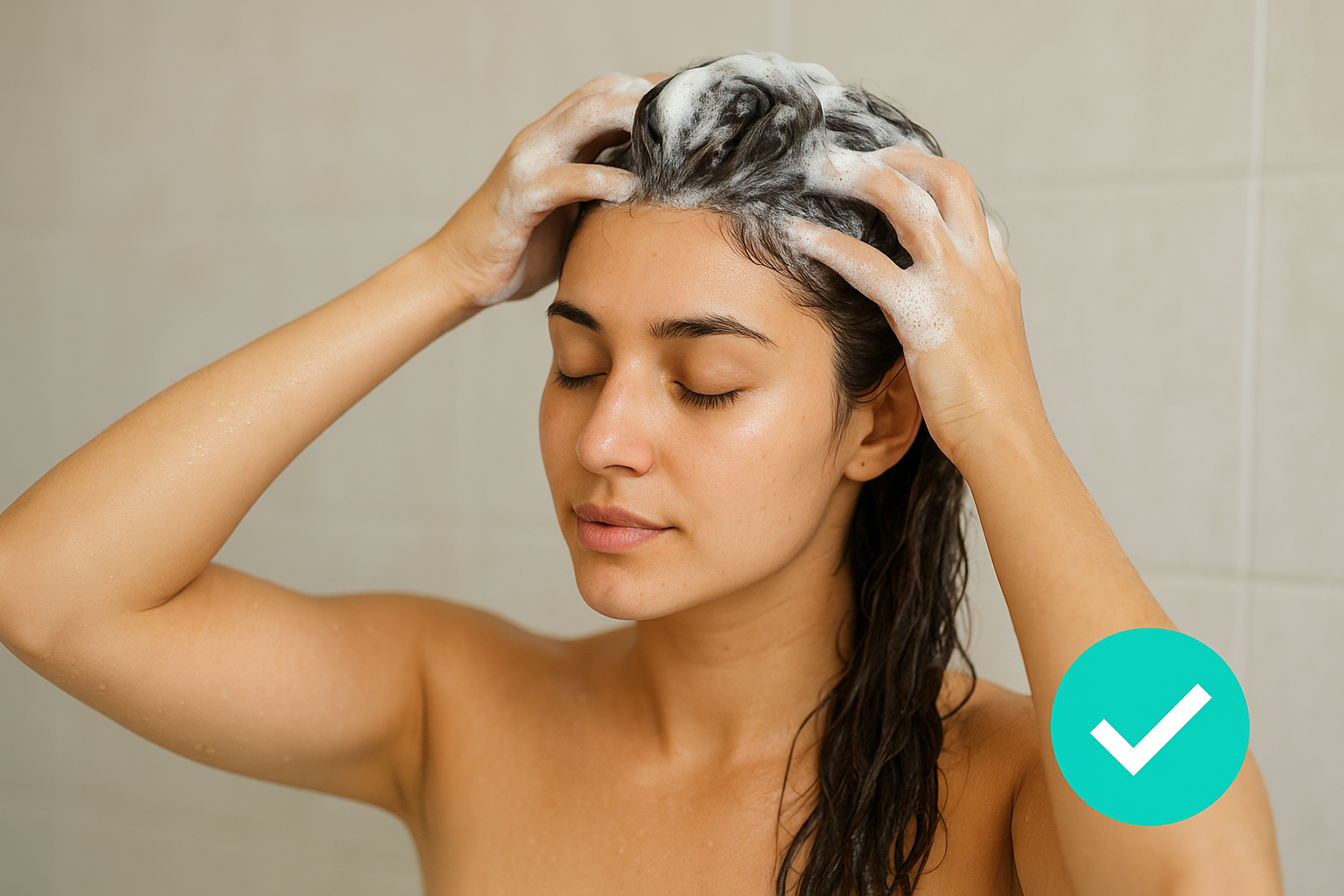
Most people wash their hair completely wrong, scrubbing shampoo from roots to ends and wondering why their strands feel dry and brittle afterward. Your scalp produces oil and collects product buildup, which means that's where your cleansing should focus. The lengths of your hair, especially the ends, are older and more fragile, and they don't need the harsh detergents found in shampoo stripping away what little moisture they have left.
Why it reduces breakage
When you concentrate shampoo on your scalp, you clean where dirt actually accumulates while preserving the natural oils your lengths desperately need for protection. Dragging shampoo down your hair shaft creates unnecessary friction that lifts the cuticle and weakens the strand. Your ends already face constant damage from brushing, styling, and environmental exposure, so keeping them away from harsh cleansers helps maintain their structural integrity.
Focusing cleansing on your scalp preserves the moisture balance your hair needs to stay flexible and strong.
How to do it at home
Apply shampoo directly to your scalp and massage it in with your fingertips, not your nails. Work the product through your roots in circular motions for at least 30 seconds, letting the lather naturally rinse through your lengths as you rinse. This passive cleansing removes surface dirt without aggressive scrubbing that causes breakage.
Common mistakes to avoid
Never pile your hair on top of your head while shampooing, this creates tangles and friction. Resist the urge to apply shampoo twice unless your scalp is genuinely greasy.
What to buy or use
Choose a gentle, sulfate-free shampoo that cleanses without stripping. Browse our collection at Beautifully Within for options designed to protect damaged hair.
4. Never skip conditioner and detangle with slip
Skipping conditioner might seem like a time-saver, but it's one of the fastest ways to guarantee breakage. Your hair cuticle lifts during washing, leaving strands rough and vulnerable to snapping when you try to detangle. Conditioner doesn't just make your hair feel smooth; it creates the essential slip that lets your comb glide through knots without ripping out chunks of hair. When you understand how to reduce hair breakage, you realize that conditioner isn't optional, it's the protective layer standing between healthy strands and constant damage.
Why it reduces breakage
Conditioner seals your hair cuticle and creates a slippery surface that prevents friction between tangled strands. Without this lubrication, your hair catches on itself and on your brush or fingers, causing the shaft to snap under tension. The fatty acids and silicones in conditioner coat each strand, reducing the pulling force needed to separate knots.
Proper slip transforms detangling from a damaging process into a protective one.
How to do it at home
Apply conditioner from your mid-lengths to your ends, avoiding your scalp unless you have extremely dry hair. Let it sit for at least two minutes while you gently finger-detangle, starting from the bottom and working up.
Common mistakes to avoid
Don't rinse out all your conditioner; leave a thin coating for ongoing protection. Never detangle dry hair without a leave-in product.
What to buy or use
Choose a moisturizing conditioner with ingredients like behentrimonium methosulfate or cetyl alcohol that provide real slip. Check Beautifully Within for conditioners formulated specifically for damaged, breakage-prone hair.
5. Stop rough towel drying and reduce friction fast
Your bathroom towel might be sabotaging your hair repair efforts without you even realizing it. When you vigorously rub wet hair with a cotton terry cloth towel, you create intense friction that lifts and damages the cuticle at its most vulnerable moment. Wet hair stretches up to 30% more than dry hair, making those rough rubbing motions particularly destructive to strands already weakened by previous damage. Switching to gentler drying methods is one of the simplest changes you can make when figuring out how to reduce hair breakage at home.
Why it reduces breakage
Wet hair becomes elastic and fragile because water disrupts the hydrogen bonds that give your strands their shape and strength. Traditional towels have rough fibers that catch on lifted cuticles, pulling and tearing at the hair shaft. Reducing this friction lets your cuticle lay flat as it dries, maintaining the structural integrity that prevents snapping.
Gentle drying preserves your hair's elasticity and prevents the mechanical damage that causes immediate breakage.
How to do it at home
After washing, squeeze out excess water with your hands instead of wringing or twisting your hair. Wrap your hair in a microfiber towel or soft t-shirt, pressing gently to absorb moisture rather than rubbing. Let it sit for 5-10 minutes, then remove and air-dry or use low heat if you need to style.
Common mistakes to avoid
Never flip your head upside down and aggressively rub your towel back and forth. Avoid leaving your hair wrapped too long, which can over-stretch wet strands.
What to buy or use
Grab a microfiber hair towel or use a clean cotton t-shirt for immediate improvement. Find protective hair care products at Beautifully Within that complement your gentler drying routine.
6. Detangle the right way for your hair type
Not all hair tangles the same way, and forcing a one-size-fits-all approach through your strands guarantees breakage. Your hair's texture, density, and curl pattern determine how and when you should detangle to minimize damage. Fine, straight hair needs a different tool and technique than thick, coily hair, and understanding these differences is crucial when learning how to reduce hair breakage. Detangling becomes protective rather than destructive when you match your method to your hair's specific needs.
Why it reduces breakage
Different hair types face unique challenges that require targeted approaches. Curly and coily hair tangles more easily because the curves create natural catch points, while fine hair snaps under too much tension. When you detangle according to your texture, you reduce the pulling force and prevent unnecessary stress on already weakened areas.
Matching your detangling method to your hair type removes knots without the mechanical damage that causes immediate breakage.
How to do it at home
For thick or curly hair, detangle when wet with conditioner providing slip, starting from the ends and working up in small sections. Use your fingers first, then a wide-tooth comb for stubborn knots. If you have fine or straight hair, detangle when damp (not soaking wet) with a leave-in spray, using a soft-bristle brush that won't pull.
Common mistakes to avoid
Never detangle dry curly hair without product. Avoid starting at your roots and ripping through to the ends.
What to buy or use
Choose a wide-tooth comb for textured hair or a wet brush for finer textures. Browse Beautifully Within for detangling sprays formulated for your specific hair type.
7. Deep condition weekly to restore moisture
Your hair loses moisture constantly through washing, styling, and environmental exposure, and regular conditioner alone can't always replace what gets stripped away. Deep conditioning treatments contain concentrated moisturizers and oils that penetrate deeper into your hair shaft, providing the intensive hydration your strands need to stay flexible instead of brittle. When you commit to weekly deep conditioning, you actively reverse the dryness that makes hair snap under minimal tension. This step transforms how to reduce hair breakage from theory into measurable results you can see and feel.
Why it reduces breakage
Dry hair becomes rigid and loses its ability to bend without breaking. Deep conditioners deliver humectants like glycerin and emollients like shea butter that restore your hair's moisture balance, making strands elastic enough to withstand daily manipulation. These treatments also smooth the cuticle layer, reducing the rough texture that causes strands to catch and tear on each other.
Weekly moisture infusion keeps your hair flexible enough to handle stress without snapping.
How to do it at home
Apply your deep conditioner to clean, damp hair after shampooing, focusing on your mid-lengths and ends. Cover your hair with a plastic cap and let it sit for 15-30 minutes, using body heat or a hooded dryer to help ingredients penetrate.
Common mistakes to avoid
Don't apply deep conditioner to your roots unless you have extremely dry hair. Never skip the waiting time; your hair needs those minutes to absorb the treatment.
What to buy or use
Choose a moisture-rich deep conditioner with ingredients like coconut oil, argan oil, or shea butter. Find intensive treatments at Beautifully Within designed specifically for restoring moisture to breakage-prone hair.
8. Use protein and bond repair strategically
Your hair's structure relies on protein chains and chemical bonds that break down from heat, chemicals, and mechanical damage. Simply moisturizing won't fix hair that's lost its structural integrity, you need targeted treatments that rebuild broken bonds and reinforce weakened protein structures. Protein and bond repair treatments work differently than regular conditioners by actually repairing damage at the molecular level, making them essential for figuring out how to reduce hair breakage in chemically treated or heat-damaged hair. The key lies in using these powerful treatments strategically rather than constantly, because too much protein creates its own set of problems.
Why it reduces breakage
Protein treatments temporarily fill in gaps along your hair shaft where the cortex has been damaged, creating a stronger, more resilient strand. Bond repair products go deeper by reconnecting broken disulfide bonds that hold your hair's internal structure together. These treatments work best on hair that's been chemically processed or regularly heat-styled because that type of damage specifically breaks down protein and bonds.
Strategic protein use rebuilds your hair's structural foundation, preventing the weakness that leads to snapping.
How to do it at home
Use protein treatments every 2-4 weeks depending on your damage level, applying them to clean, damp hair for 5-20 minutes. Look for products with hydrolyzed proteins (keratin, wheat, silk) that can penetrate your hair shaft. Follow immediately with a moisturizing deep conditioner to balance protein with hydration, because protein alone can make hair stiff.
Common mistakes to avoid
Never use protein treatments weekly unless you have extremely damaged hair. Avoid layering multiple protein products in one session. Skip protein if your hair feels straw-like or stiff; you've overloaded it.
What to buy or use
Choose treatments with varying protein sizes for surface and deep repair. Find bond repair and protein treatments at Beautifully Within designed to strengthen damaged strands without overload.
9. Limit heat and use heat protectant every time
Heat styling breaks down the protein structure in your hair faster than almost any other damage source, causing strands to snap with alarming frequency. Your flat iron, blow dryer, and curling wand create temperatures up to 450°F that literally boil the water inside your hair shaft, leaving behind a brittle, weakened structure. Understanding how to reduce hair breakage means accepting that heat damage accumulates over time, and each unprotected styling session compounds the problem. Heat protectant isn't optional if you want to keep your hair intact while still using hot tools occasionally.
Why it reduces breakage
High temperatures denature the keratin proteins that give your hair its strength, similar to how cooking changes an egg's structure permanently. Heat protectant products create a thermal barrier between your hair and the hot tool, distributing heat more evenly and preventing direct contact that causes immediate damage. These products contain silicones and polymers that reduce the temperature your hair actually experiences by several degrees.
Protecting your hair from direct heat exposure preserves the protein bonds that keep strands flexible and intact.
How to do it at home
Apply heat protectant to damp hair before blow-drying or to dry hair before using hot tools, making sure every section gets covered. Set your tools to the lowest temperature that still achieves your desired style, usually 300-350°F for fine hair and up to 400°F for thick or coarse hair. Limit heat styling to 2-3 times per week maximum, letting your hair air-dry on other days.
Common mistakes to avoid
Never apply heat protectant to soaking wet hair and immediately use high heat; you'll steam-cook your strands. Don't assume your product works at any temperature; most protect up to 450°F but lose effectiveness beyond that.
What to buy or use
Choose a heat protectant spray or cream with ingredients like dimethicone or cyclomethicone that create real thermal protection. Browse Beautifully Within for heat defense products formulated to shield hair from styling damage.
10. Avoid tight styles and protect your hairline
Pulling your hair back into sleek ponytails, tight braids, or buns might look polished, but it creates constant tension on your strands that leads to a specific type of breakage called traction alopecia. Your hairline and edges are especially vulnerable because the hair there grows finer and has less anchoring than the rest of your scalp. When you repeatedly stress these delicate areas with tight styling, you're not just risking temporary breakage but potentially permanent follicle damage. Learning how to reduce hair breakage requires honest assessment of your styling habits and willingness to choose looser alternatives that still look put-together.
Why it reduces breakage
Tight hairstyles pull your hair follicles at an unnatural angle, creating sustained mechanical stress that weakens the strand right at the root. This tension prevents normal blood flow to your scalp, depriving follicles of the nutrients they need for healthy growth. Your hairline experiences the most pulling force because those styles anchor at that point, making those strands snap first.
Releasing tension on your hairline prevents the progressive weakening that leads to visible thinning and breakage.
How to do it at home
Switch to loose ponytails positioned at different heights throughout the week to vary the stress points. Use fabric scrunchies instead of elastic bands that grip and pull excessively. Give your hairline regular breaks by wearing your hair completely down or in protective styles that don't pull at all.
Common mistakes to avoid
Don't assume slicked-back styles are fine just because they look smooth. Avoid wearing the same tight style daily, which concentrates damage in one area.
What to buy or use
Choose spiral hair ties or silk scrunchies that hold without tension. Find protective styling products at Beautifully Within designed to keep your hair secure without damage.
11. Protect hair overnight with silk and loose styles
You spend eight hours every night creating the perfect conditions for breakage without realizing it. Your cotton pillowcase creates constant friction as you toss and turn, roughing up your cuticle and pulling at strands that are already vulnerable from the day's styling. Tight sleeping styles like high buns or braids maintain tension on your hairline for hours, continuing the mechanical stress that causes breakage long after you've finished getting ready. Switching to protective overnight practices is one of the easiest ways to master how to reduce hair breakage because you're literally doing it while you sleep.

Why it reduces breakage
Cotton pillowcases have a rough, absorbent texture that drags against your hair cuticle with every movement, creating micro-tears that accumulate into visible damage. Silk and satin provide a smooth, slippery surface that lets your hair glide instead of catching, preserving the moisture and structure your strands need to stay intact. Loose overnight styles reduce the pulling force that causes tension-based breakage along your hairline and crown.
Eliminating nighttime friction and tension gives your hair uninterrupted recovery time that prevents cumulative damage.
How to do it at home
Switch to a silk or satin pillowcase that stays in place throughout the night. If you prefer to tie your hair up, use a very loose, low ponytail secured with a silk scrunchie or braid your hair gently without pulling tight.
Common mistakes to avoid
Don't sleep with your hair in a tight topknot thinking it protects your ends. Avoid satin bonnets that fit too tight around your hairline.
What to buy or use
Choose 100% mulberry silk pillowcases or satin alternatives that provide real slip. Find overnight hair protection products at Beautifully Within designed to minimize breakage while you sleep.
12. Trim split ends before they travel up the strand
Split ends don't just sit there looking frayed, they actively spread damage up your hair shaft like a run in stockings. Once your hair splits at the end, the break continues traveling upward because nothing stops the weakened structure from separating further. You might think trimming means losing length you worked hard to grow, but keeping split ends actually guarantees you'll lose more hair to breakage than you'd ever sacrifice with regular trims. Understanding how to reduce hair breakage means accepting that strategic trimming prevents greater loss down the line.
Why it reduces breakage
Split ends create a structural weakness that progresses up the strand with every brush stroke, washing, and styling session. The split acts like a fault line that gets longer each time your hair experiences mechanical stress. Removing these damaged ends stops the break from traveling further and eliminates the rough texture that causes surrounding strands to tangle and snap.
Trimming damaged ends prevents progressive splitting that would otherwise destroy healthy hair above it.
How to do it at home
Trim your hair every 8-12 weeks or whenever you notice multiple split ends appearing. Cut 1/4 to 1/2 inch above where you see the split to ensure you remove all the damaged portion. Use sharp hair scissors, not household scissors that create blunt cuts.
Common mistakes to avoid
Don't wait until you see splits everywhere before trimming. Avoid cutting your own hair without proper lighting and sharp tools.
What to buy or use
Invest in professional hair scissors designed specifically for cutting hair. Find strengthening treatments at Beautifully Within that help maintain healthy ends between trims.
Next steps for stronger hair
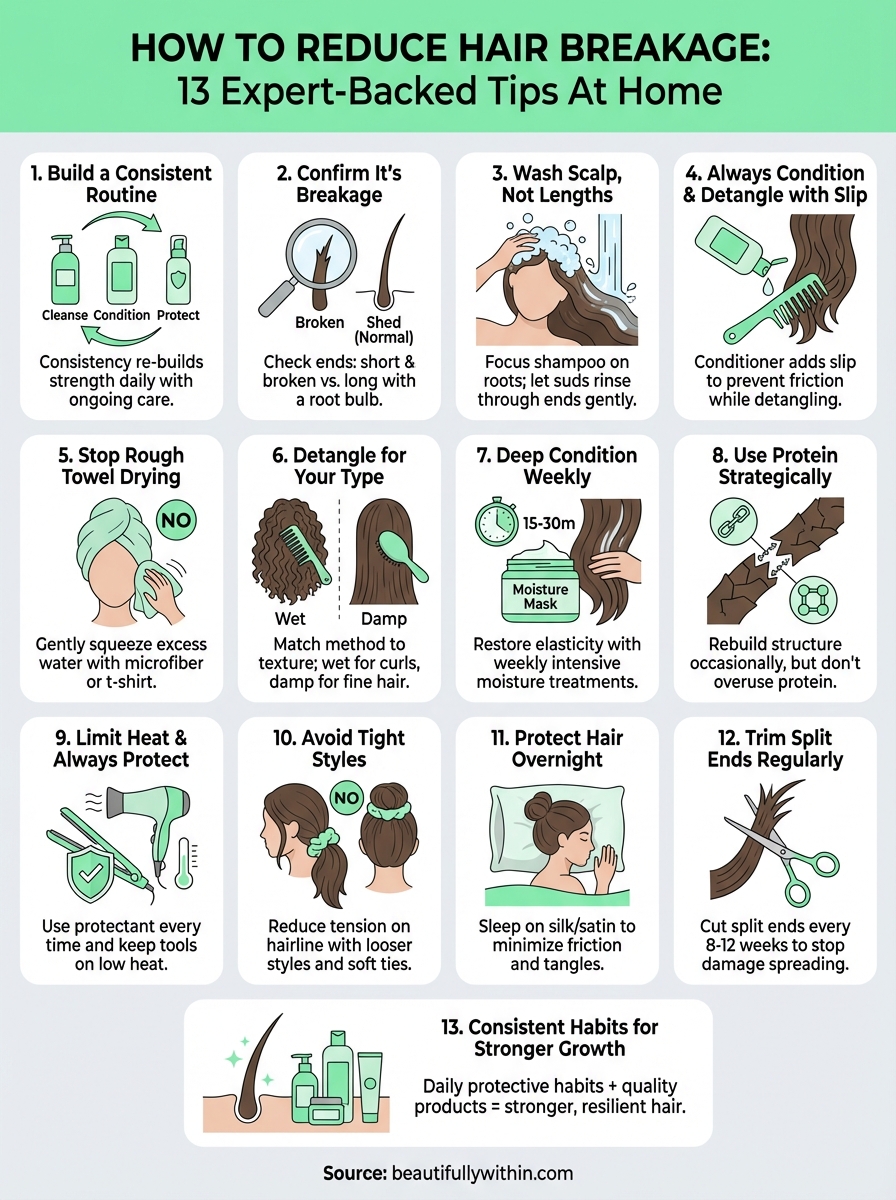
You now have a complete roadmap for how to reduce hair breakage using techniques that actually work. The difference between damaged hair and healthy strands comes down to consistent daily habits that protect your hair from friction, heat, and tension while delivering the moisture and protein it needs to stay flexible. Pick three strategies from this list that address your biggest damage sources and commit to them for the next month, you'll notice fewer broken pieces and stronger growth within weeks.
Your hair responds to what you give it, and investing in the right products accelerates your results. Browse our professional-grade hair care collection to find treatments specifically formulated to strengthen damaged strands and prevent future breakage. When you pair expert techniques with quality products, you create the foundation for hair that finally grows without constantly breaking off.
✨ Shop the Look at Beautifully Within
Loved this guide? Discover our hand-picked picks that pair perfectly with your routine:
- 👉 32mm Ceramic Auto-Rotating Hair Curler — Hair Styling Tool
- 👉 5-in-1 Negative Ion Hot Air Styling Brush — Hair Styling Tool
- 👉 Ceramic Electric Hair Straightening Hot Comb — Hair Styling Tool
- 👉 Infrared Ionic Professional Hair Dryer — Hair Styling Tool
New customer? Get 15% off orders $50+ with code WITHIN15 — plus free shipping over $75.
0 comments