

Ever wonder why some products leave your hair feeling soft and hydrated while others seem to do absolutely nothing? The answer likely comes down to what is hair porosity, your hair's ability to absorb and retain moisture. Understanding this single characteristic can completely change how you approach your hair care routine and which products actually work for you.
Hair porosity affects everything from how your hair responds to treatments to why certain oils make your strands greasy while others absorb beautifully. At Beautifully Within, we believe that looking and feeling your best starts with understanding what your hair truly needs, not just guessing based on trends or marketing claims. When I finally learned my own hair's porosity level, I stopped wasting money on products that weren't designed for my thick, wavy hair.
This guide breaks down the three porosity levels (low, medium, and high), shows you simple at-home tests to determine yours, and explains how to build a hair care routine that actually delivers results. By the end, you'll have the knowledge to choose products with confidence and give your hair exactly what it's been missing.
What hair porosity means and how it works
Hair porosity describes how easily your hair absorbs and holds onto moisture, water, and products. Your hair strand has an outer layer called the cuticle, made up of overlapping scales that protect the inner cortex. When these scales lie flat and tight, you have low porosity hair. When they're raised or damaged, you have high porosity. The space between these scales determines how well liquids and treatments can penetrate your hair shaft and whether that moisture stays locked in or escapes quickly.
The science behind your hair cuticle
Your hair cuticle works like overlapping roof shingles that either stay sealed tight or lift up. Each strand contains multiple layers of these protective scales, and their position directly affects what is hair porosity for your specific hair type. Genetics plays a major role in determining your natural porosity level, but heat styling, chemical treatments, and environmental damage can alter it over time.
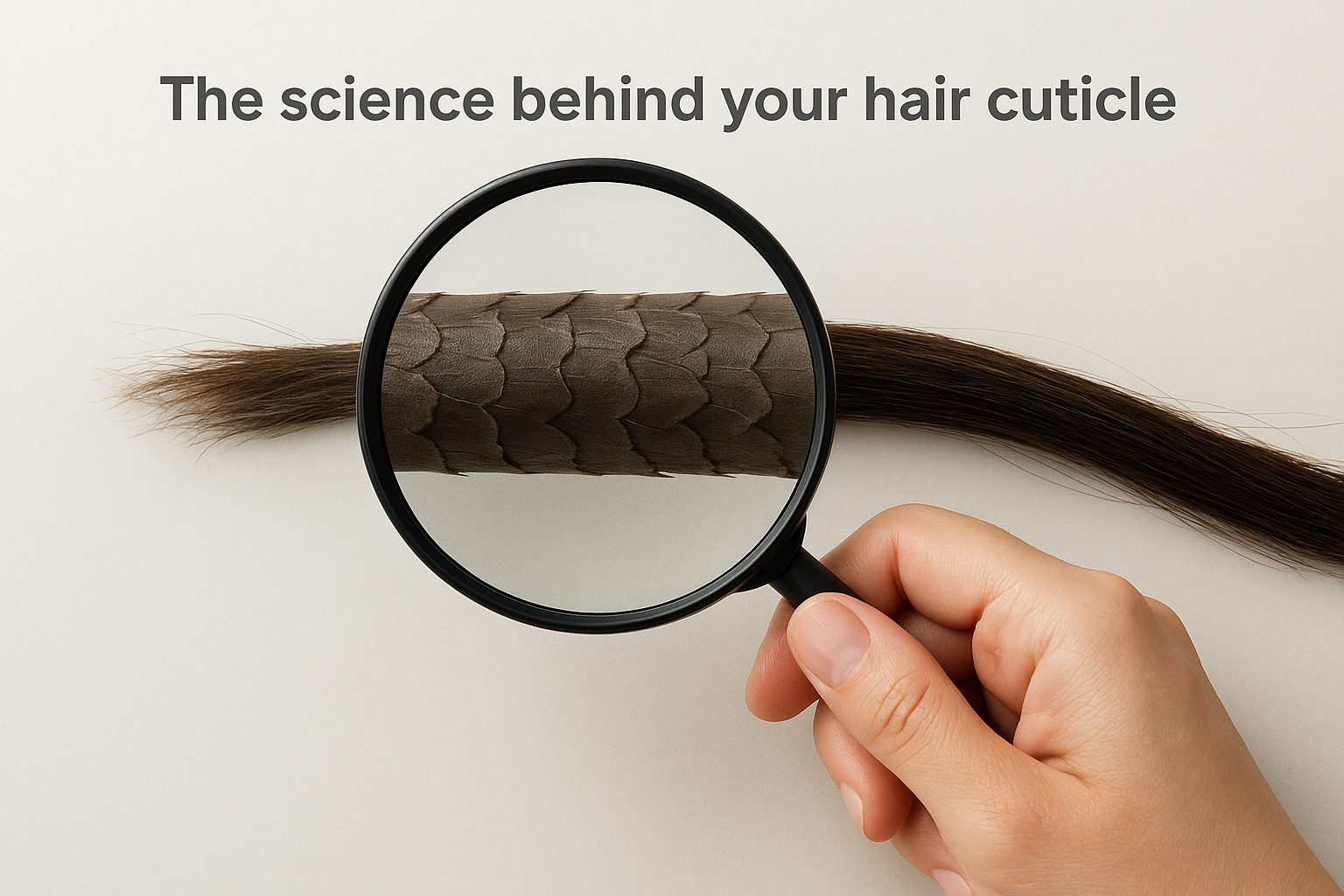
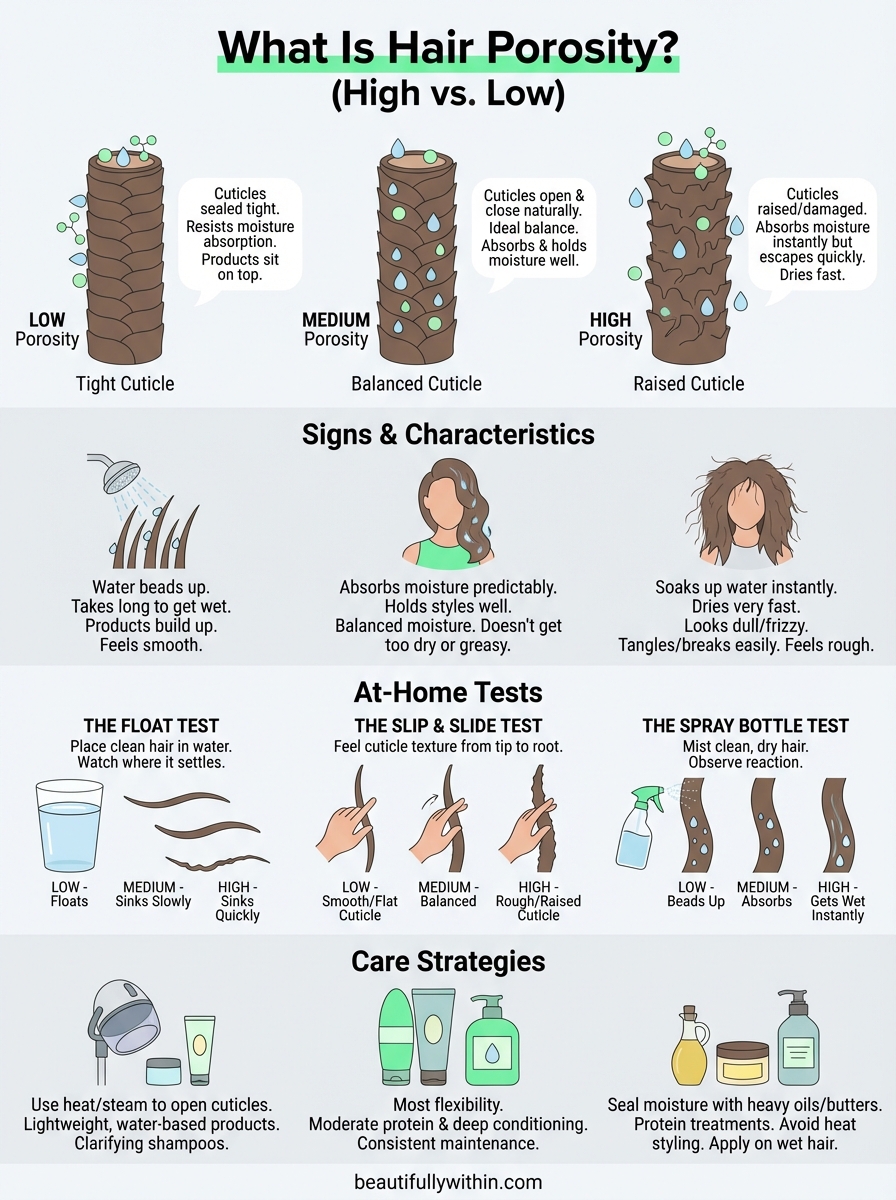
Low porosity hair has tightly closed cuticles that resist letting moisture in, which means products often sit on top of your strands rather than absorbing. Medium porosity features cuticles that open and close as needed, creating the ideal balance for most treatments and moisture. High porosity hair has raised or damaged cuticles with gaps that allow moisture to enter easily but also escape just as fast.
The condition of your hair cuticle determines whether products penetrate deeply or just coat the surface.
How moisture moves through your hair
Water and product molecules need to pass through the cuticle layer to reach the cortex where true hydration happens. Your hair's porosity level controls this entire absorption process. When you apply a treatment, the molecules either slip through easily, struggle to get in, or enter freely but leak out before providing lasting benefits.
Low porosity hair requires heat or steam to lift those tight cuticles enough for moisture to penetrate. Products with smaller molecular structures work better because they can squeeze through the minimal openings available. High porosity hair accepts everything quickly but struggles to retain it, which is why these strands often feel dry shortly after moisturizing. The cortex absorbs moisture through the open gaps in damaged cuticles, but those same gaps let hydration escape.
Temperature affects how your cuticles respond too. Warm water opens the cuticle scales, making it easier for treatments to penetrate, while cold water seals them closed to lock in moisture. This is why understanding your porosity level changes which techniques you should use during your wash routine and which products will actually deliver the results you want.
Why hair porosity matters for your routine
Understanding what is hair porosity transforms your approach to product selection and application techniques. Your hair's porosity level determines which ingredients actually penetrate your strands versus which ones sit on the surface doing nothing. When you match products to your porosity type, you get better absorption, longer-lasting results, and healthier-looking hair without the frustration of wasting money on treatments that don't work for your specific needs.
How porosity affects product absorption
Your hair's ability to accept moisture directly impacts which formulations deliver results. Low porosity hair needs lightweight products with penetrating ingredients that won't build up on the outside of your strands. High porosity hair requires heavier butters and oils to fill in the gaps in damaged cuticles and seal moisture inside. When I used thick oils on my thick, wavy hair without knowing my porosity level, they just sat on top and made everything greasy instead of hydrated.
Product thickness matters differently depending on your porosity. Light serums work best for low porosity because they can slip through tight cuticles, while high porosity hair benefits from rich creams that provide enough weight to stay put. Using the wrong product weight for your porosity type leads to buildup, greasiness, or persistent dryness no matter how often you apply treatments.
Matching product formulation to your porosity level eliminates the guesswork and delivers consistent hydration.
Why it saves time and money
Knowing your porosity prevents you from buying products that won't work before you spend the money. You stop purchasing heavy masks if you have low porosity hair that can't absorb them, and you avoid lightweight sprays if you have high porosity strands that need substantial moisture barriers. This knowledge cuts your routine down to products that actually deliver visible improvements rather than a cabinet full of expensive bottles that do nothing for your specific hair structure.
How to test hair porosity at home
You can determine your hair's porosity level using simple tests that require items you already have in your house. These methods give you immediate insight into how your hair absorbs moisture without needing expensive products or professional analysis. Testing helps you understand what is hair porosity for your specific strands so you can build a routine that actually delivers the hydration and care your hair needs.
The float test
This popular method requires a clean strand of hair and a glass of room-temperature water. Pull a single strand from your brush or comb (make sure it's free of products), and drop it into the water. Watch where it settles over the next few minutes.
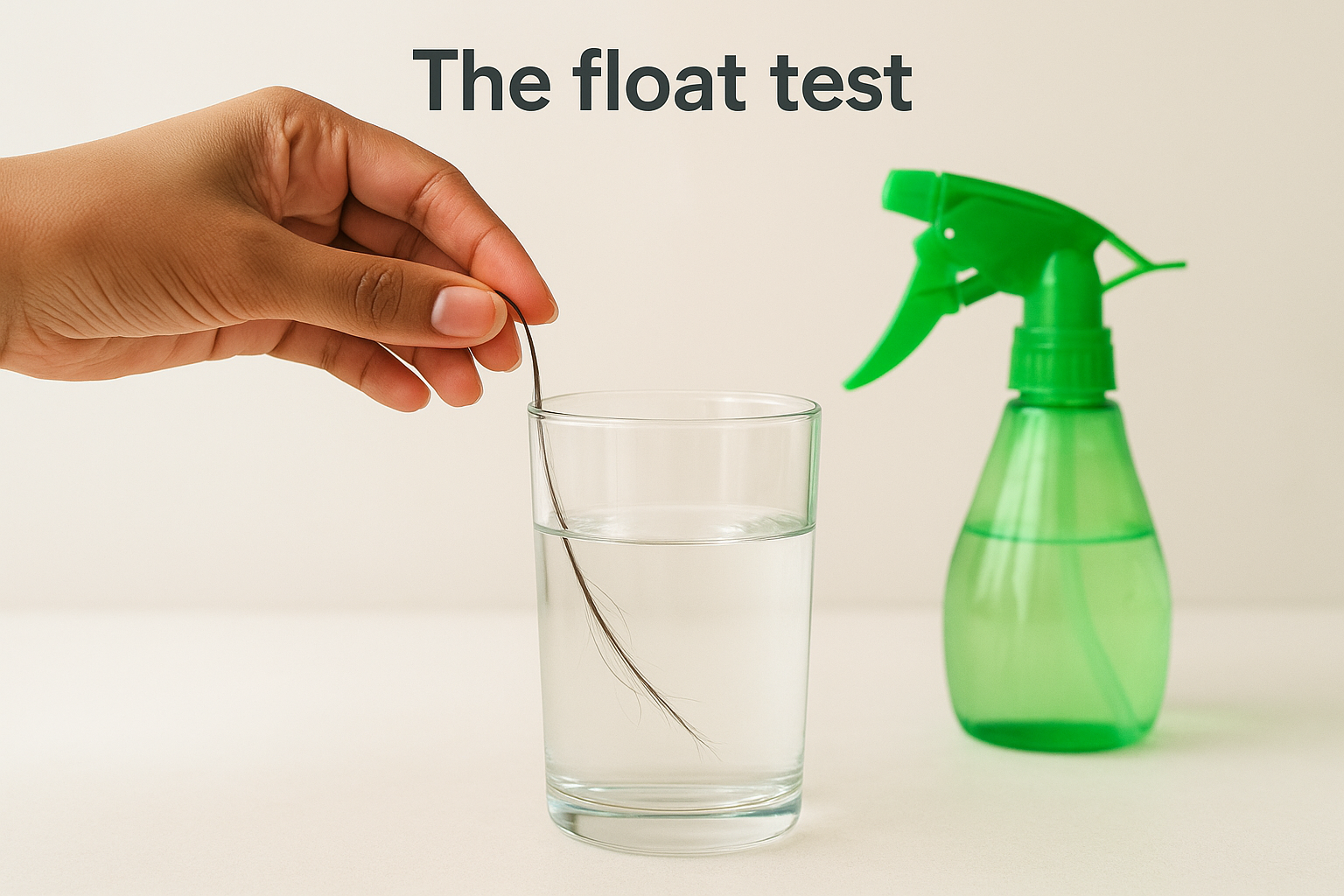
If your strand sinks quickly to the bottom, you have high porosity hair with open cuticles that absorb water fast. Hair that floats on the surface indicates low porosity with tight cuticles that resist moisture. Strands that sink slowly and settle in the middle show medium porosity with balanced absorption.
The float test reveals how readily your hair accepts moisture based on cuticle structure.
The slip and slide test
Run your fingers along a single strand from tip to root to feel the texture of your cuticle layer. Low porosity hair feels smooth because the cuticles lie flat, while high porosity strands feel rough or bumpy from raised or damaged scales. This tactile test gives you instant feedback about your hair's surface condition.
The spray bottle test
Mist a small section of clean, dry hair with water and observe how it reacts. High porosity hair absorbs the moisture immediately and looks wet within seconds. Low porosity hair beads up on the surface, with water droplets sitting on top rather than penetrating. Medium porosity hair absorbs water at a moderate, steady pace without extreme beading or instant saturation.
Low, medium, and high porosity signs
Recognizing the visual and tactile signs of your porosity level helps you confirm test results and understand your hair's behavior patterns. Each porosity type shows distinct characteristics in how it looks, feels, and responds to moisture throughout your daily routine. These observable signs give you immediate feedback about what is hair porosity doing to your strands and whether your current products match your hair's actual needs.
Low porosity characteristics
Your hair resists moisture and takes forever to get fully wet in the shower. Water beads up on the surface when you spray or rinse your strands, and you notice products sitting on top rather than absorbing quickly. Low porosity hair stays dry for hours after washing because those tight cuticles prevent water penetration, and styling products often create buildup that makes your hair feel coated or heavy.
Strands feel smooth when you run your fingers along them, and your hair typically looks shiny and healthy from the outside. You struggle with protein treatments because they make your hair stiff, and deep conditioners seem to do nothing unless you apply heat. This hair type takes longer to process color or chemical treatments because the cuticles resist letting anything penetrate the shaft.
Medium porosity characteristics
Your hair absorbs moisture at a steady, predictable rate without extreme beading or instant saturation. Strands hold styles well and respond positively to most treatments without requiring special techniques or excessive product. Medium porosity hair maintains its moisture balance between washes and doesn't feel constantly dry or overly saturated.
Medium porosity hair gives you the most flexibility in product selection and styling techniques.
High porosity characteristics
Your hair soaks up water immediately but also dries incredibly fast, often feeling parched shortly after moisturizing. Strands look dull or frizzy because the raised cuticles scatter light instead of reflecting it smoothly. You notice your hair tangles easily, breaks more frequently, and loses color quickly after dyeing because those open cuticles can't hold onto treatments or pigment effectively.
How to care for each porosity level
Your porosity level determines which products and techniques deliver the best hydration and health for your specific hair structure. Matching your routine to your hair's absorption capacity prevents wasted product, eliminates frustration, and gives you consistent results every wash day. Understanding what is hair porosity means for your strands allows you to customize every step from cleansing to styling based on how your cuticles actually function.
Low porosity care strategies
You need heat to open those tight cuticles and allow moisture to penetrate during deep conditioning sessions. Apply treatments under a hooded dryer or use a heated cap to lift the cuticle scales enough for products to reach your hair's cortex. Choose lightweight, water-based products that won't build up on your strands, and avoid heavy oils or butters that sit on the surface creating greasy residue.
Clarifying shampoos become essential for removing product buildup that low porosity hair accumulates quickly. Steam treatments work exceptionally well because the moisture combined with heat forces cuticles to open temporarily. Focus on humectants like glycerin and aloe vera that attract moisture without weighing your hair down.
Medium porosity care strategies
Your balanced cuticles give you the most flexibility in product selection and techniques. Maintain this ideal state by using moderate protein treatments monthly and moisturizing conditioners weekly. You can experiment with different product weights without extreme consequences, though avoiding heat damage keeps your cuticles from transitioning to high porosity.
Medium porosity hair thrives with consistent maintenance that prevents damage rather than correcting it.
High porosity care strategies
Seal moisture into your hair using heavier oils and butter-based products that fill the gaps in raised cuticles. Layer a leave-in conditioner followed by an oil or cream to create a protective barrier that prevents hydration from escaping. Protein treatments become crucial for temporarily patching damaged cuticle areas and strengthening weakened strands.
Apply products to soaking wet hair so they absorb with the water instead of on dry strands where they evaporate quickly. Cold water rinses seal cuticles after conditioning, and you should avoid heat styling that creates additional damage to already compromised hair structure.
A quick recap and what to do next
Understanding what is hair porosity gives you the foundation to build a routine that actually works for your specific hair structure. You've learned how to test your porosity level at home, identify the signs of low, medium, or high porosity, and match products to your hair's absorption capacity. This knowledge eliminates the guesswork that keeps you buying products that don't deliver results.
Your next step involves evaluating your current routine and swapping out products that don't match your porosity type. Start with one category at a time, whether that's your leave-in conditioner, styling cream, or deep treatment. Browse our curated hair care collection to find professional-grade treatments designed for different porosity levels and hair concerns. When you match products to your hair's actual needs instead of trends or marketing claims, you finally get the hydration, strength, and shine you've been chasing.
✨ Shop the Look at Beautifully Within
Loved this guide? Discover our hand-picked picks that pair perfectly with your routine:
- 👉 32mm Ceramic Auto-Rotating Hair Curler — Hair Styling Tool
- 👉 5-in-1 Negative Ion Hot Air Styling Brush — Hair Styling Tool
- 👉 Ceramic Electric Hair Straightening Hot Comb — Hair Styling Tool
- 👉 Infrared Ionic Professional Hair Dryer — Hair Styling Tool
New customer? Get 15% off orders $50+ with code WITHIN15 — plus free shipping over $75.
0 comments