

How to Use Hair Oil: Wet Vs Dry, Scalp Vs Ends, How Much
You bought a hair oil that promises shine, smoothness, and frizz control. But when you pump it into your palm, the questions start. How much do you actually need? Should your hair be wet or dry? Do you apply it to your scalp or just the ends? Use too much and your hair looks greasy. Use too little in the wrong place and you see zero results.
The good news is that using hair oil correctly is simpler than you think. Once you understand a few basic techniques, you can tailor your application to match your hair type and goals. No more guessing or wasting product on methods that leave you disappointed.
This guide walks you through each step of using hair oil properly. You'll learn how to choose the right amount, when to apply it for maximum benefit, where to focus the product on your strands, and how often to use it. Whether you want to tame frizz, add shine, or protect your hair from heat damage, you'll know exactly what to do.
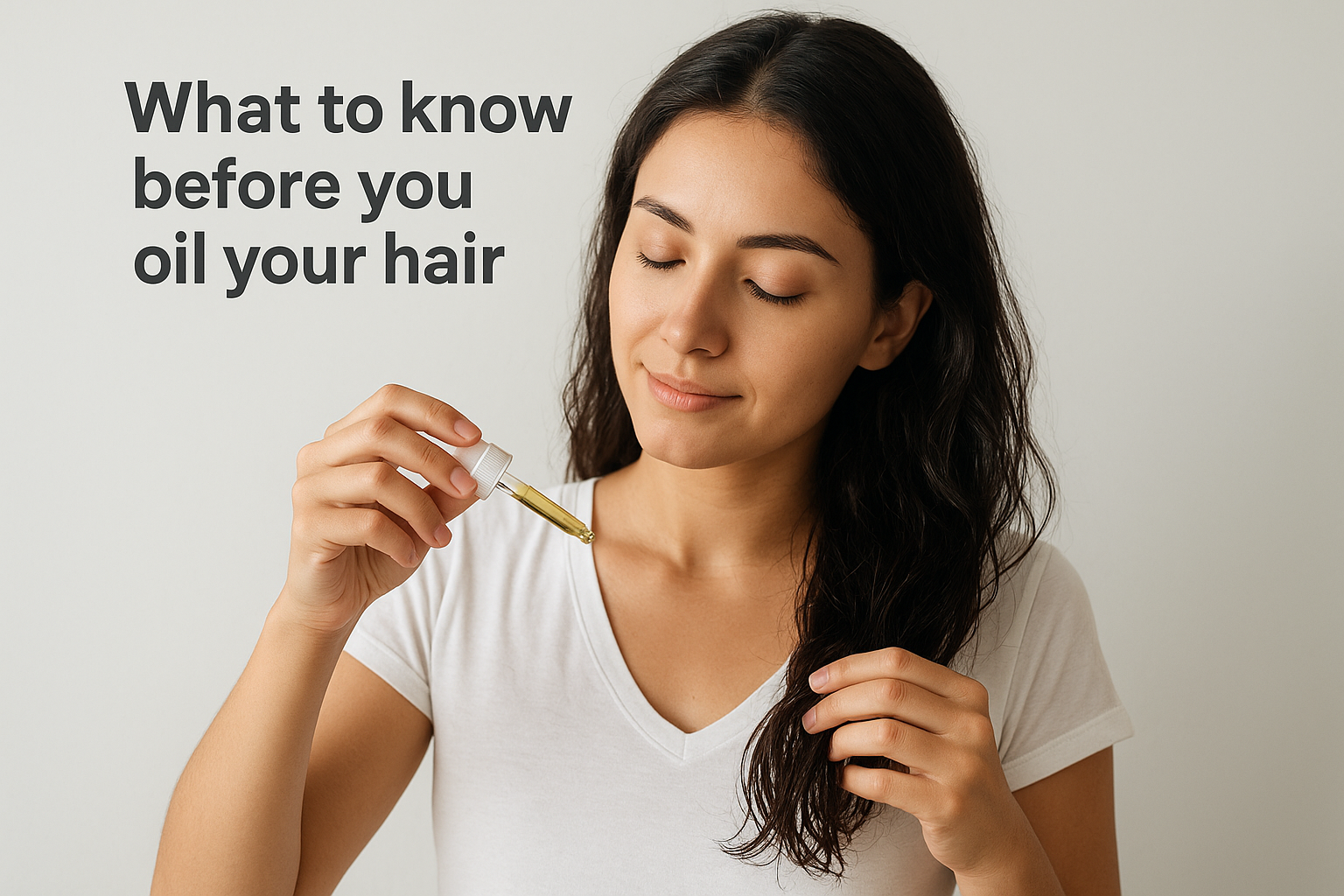
What to know before you oil your hair
Your hair oil routine depends on your hair type, texture, and what you're trying to achieve. Fine hair requires a lighter touch than thick, coarse strands. Curly hair needs more moisture than straight hair. Understanding these basics before you start prevents common mistakes like buildup or greasiness.
Match the oil to your hair goals
Different oils serve different purposes, and knowing what you want helps you apply them correctly. If you're targeting frizz control, you'll focus the oil on your mid-lengths and ends where frizz appears. For scalp health and growth, you'll massage oil directly into your roots. Heat protection calls for application before styling, while shine finishing works best on dry, styled hair.
Your hair goals determine not just which oil you choose, but exactly where and when you apply it.
Consider your current hair condition
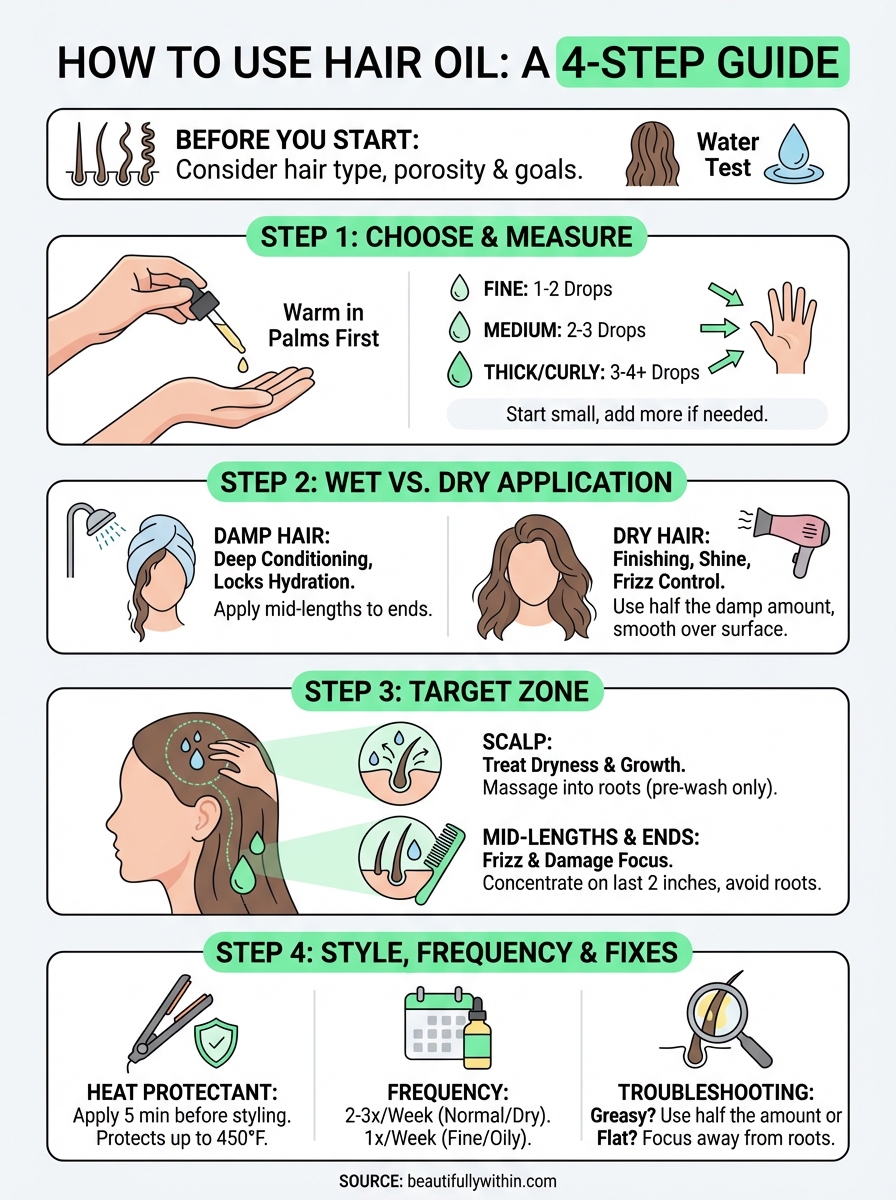
Your hair's starting point matters when learning how to use hair oil. Damaged or chemically treated hair absorbs more product and needs heavier application on the ends. Healthy hair requires less oil overall to avoid weighing it down. If your hair feels dry after washing, you can apply more product. Oily roots mean you should skip the scalp entirely and stick to lengths and ends only. Check your hair's porosity by dropping a strand in water. Hair that sinks quickly has high porosity and needs more oil, while floating hair has low porosity and needs lighter oils applied sparingly.
Step 1. Choose the right oil and amount
Learning how to use hair oil starts with selecting the right product and measuring the correct amount for your hair. Most people either use too much product or choose an oil that's too heavy for their hair type. Start by identifying your hair texture (fine, medium, or coarse) and hair length (short, medium, or long). Fine hair needs lightweight oils like argan or jojoba, while thick or coarse hair handles heavier oils like coconut or castor.
Start with your hair texture and length
Your hair texture determines which oil formula works best without causing greasiness or buildup. Fine or thin hair absorbs less product, so you need lightweight oils that won't weigh strands down. Medium-textured hair handles most oil types well, giving you flexibility in your choices. Coarse or thick hair benefits from richer, heavier oils that penetrate deeply into the hair shaft.
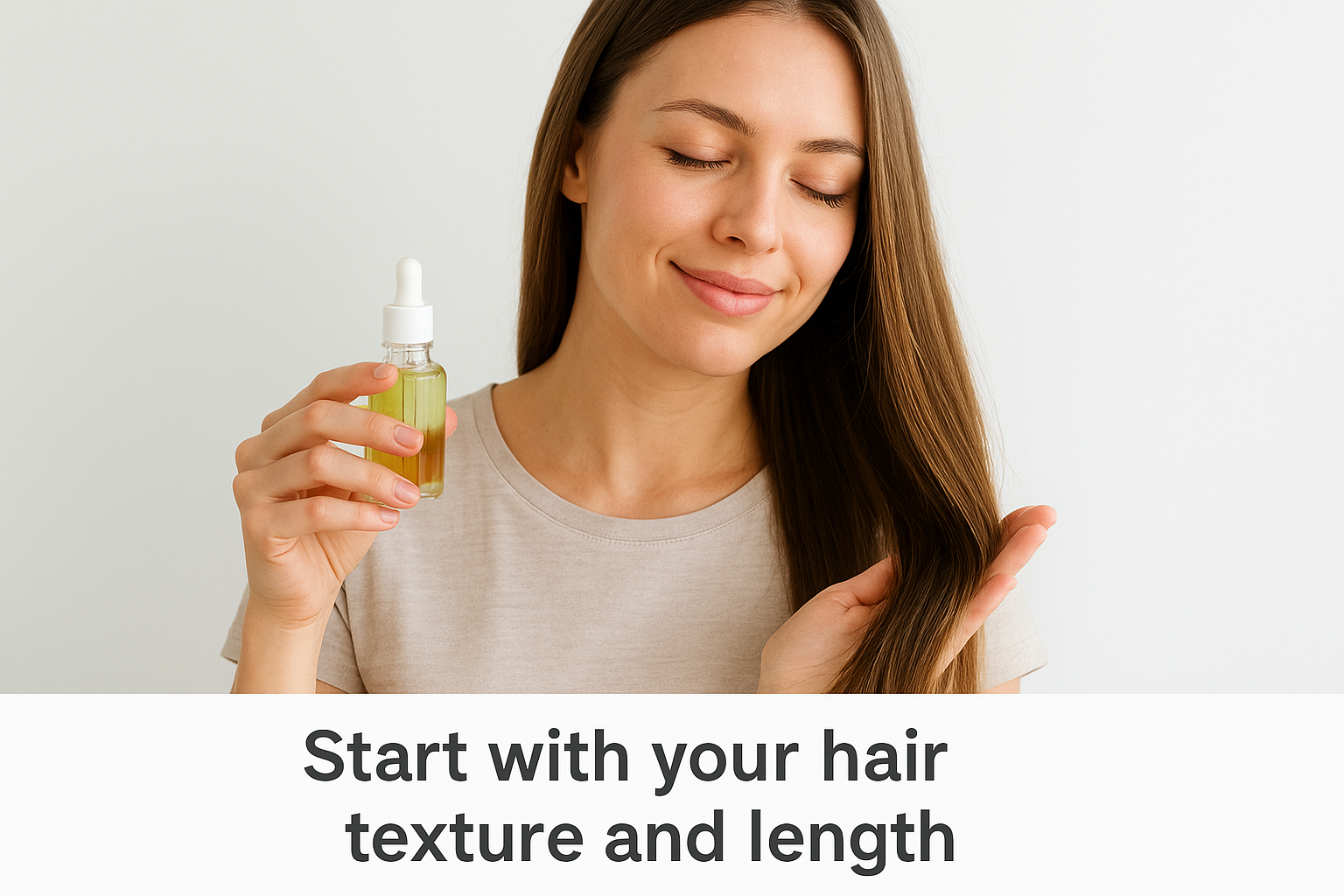
Hair length affects how much product you need for complete coverage. Short hair (chin length or above) requires 1 to 2 pumps or drops. Medium hair (shoulder length) needs 2 to 3 pumps. Long hair (past shoulders) takes 3 to 4 pumps. Always start with less product than you think you need because you can add more, but you can't remove excess oil without washing.
Start with half the amount you think you need, then add more gradually if your hair still feels dry or frizzy.
Measure the right amount for each use
Use these specific measurements as your starting point:
- Fine hair: 1 to 2 drops or pumps total
- Medium hair: 2 to 3 drops or pumps total
- Thick/coarse hair: 3 to 4 drops or pumps total
- Curly hair: Add 1 extra pump to these amounts
Dispense the oil into your palm first, then rub your hands together to warm and distribute it evenly across both palms and fingers. This prevents applying too much product to one section of your hair and creates an even coating when you apply it.
Step 2. Apply hair oil on wet or dry hair
The timing of when you apply hair oil dramatically changes what results you get. Wet hair application allows the oil to penetrate deeper into your hair shaft for conditioning and repair. Dry hair application seals your cuticle and controls frizz after styling. Both methods work, but they serve completely different purposes in how to use hair oil effectively.
Apply oil to damp hair for deep conditioning
Towel-dry your hair after washing until it stops dripping but still feels noticeably damp to the touch. This moisture level allows the oil to lock in hydration rather than sitting on top of completely dry strands. Pour your measured amount of oil into your palms and rub them together to warm it.
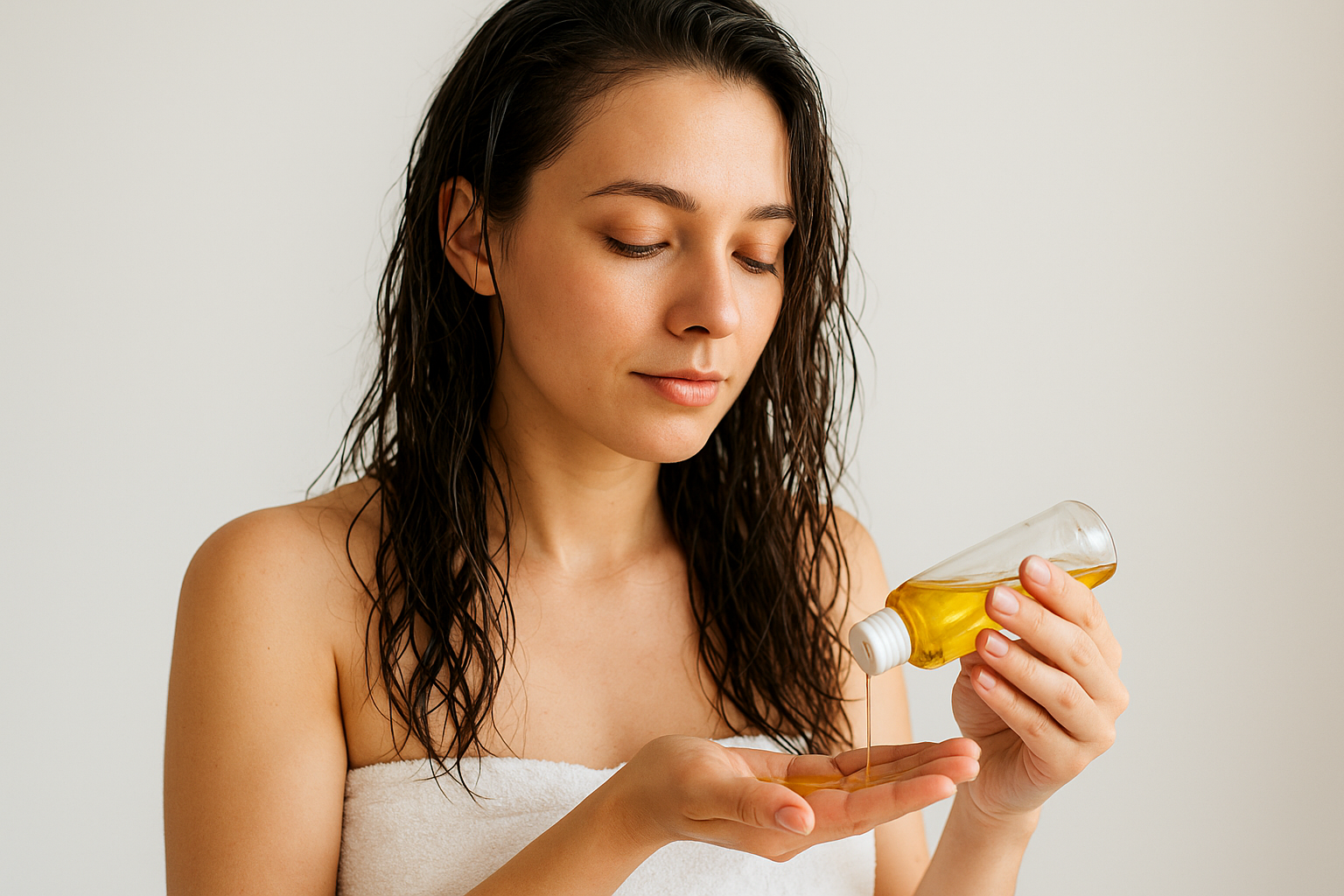
Start at your mid-lengths and work downward toward your ends, gently pressing the oil into your hair rather than rubbing vigorously. For damaged or dry hair, focus extra product on the bottom two inches where split ends form. Comb through with a wide-tooth comb to distribute the oil evenly and prevent clumping.
Damp hair accepts oil better than soaking wet hair, which has cuticles too swollen to absorb product efficiently.
Use oil on dry hair for finishing and frizz control
Apply oil to completely dry hair when you want to smooth flyaways, add shine, or protect your style from humidity. Use only half the amount you would apply to damp hair because dry strands need less product to avoid looking greasy.
Warm 1 to 2 drops between your palms until the oil feels thin and spreads easily. Lightly smooth your palms over the surface of your hair, focusing on areas where frizz appears most. For curly hair, scrunch the oil into your curls to define them and reduce halo frizz. Never apply dry-hair oil to your roots unless you're specifically treating a dry, flaky scalp.
Step 3. Target scalp vs mid lengths and ends
Where you apply hair oil matters just as much as when you apply it. Scalp application treats specific issues like dryness, flaking, or circulation for growth. Mid-length and end application addresses damage, frizz, and shine concerns. Most people need to focus on their lengths and ends rather than their scalp, but your specific hair concerns determine your application zones.
Apply oil to your scalp for targeted treatment
Massage oil into your scalp only when treating dryness, dandruff, or attempting to stimulate hair growth. Part your hair into sections using your fingers or a comb, creating lines about one inch apart across your entire head. Apply 2 to 3 drops of oil directly to each exposed section of scalp.
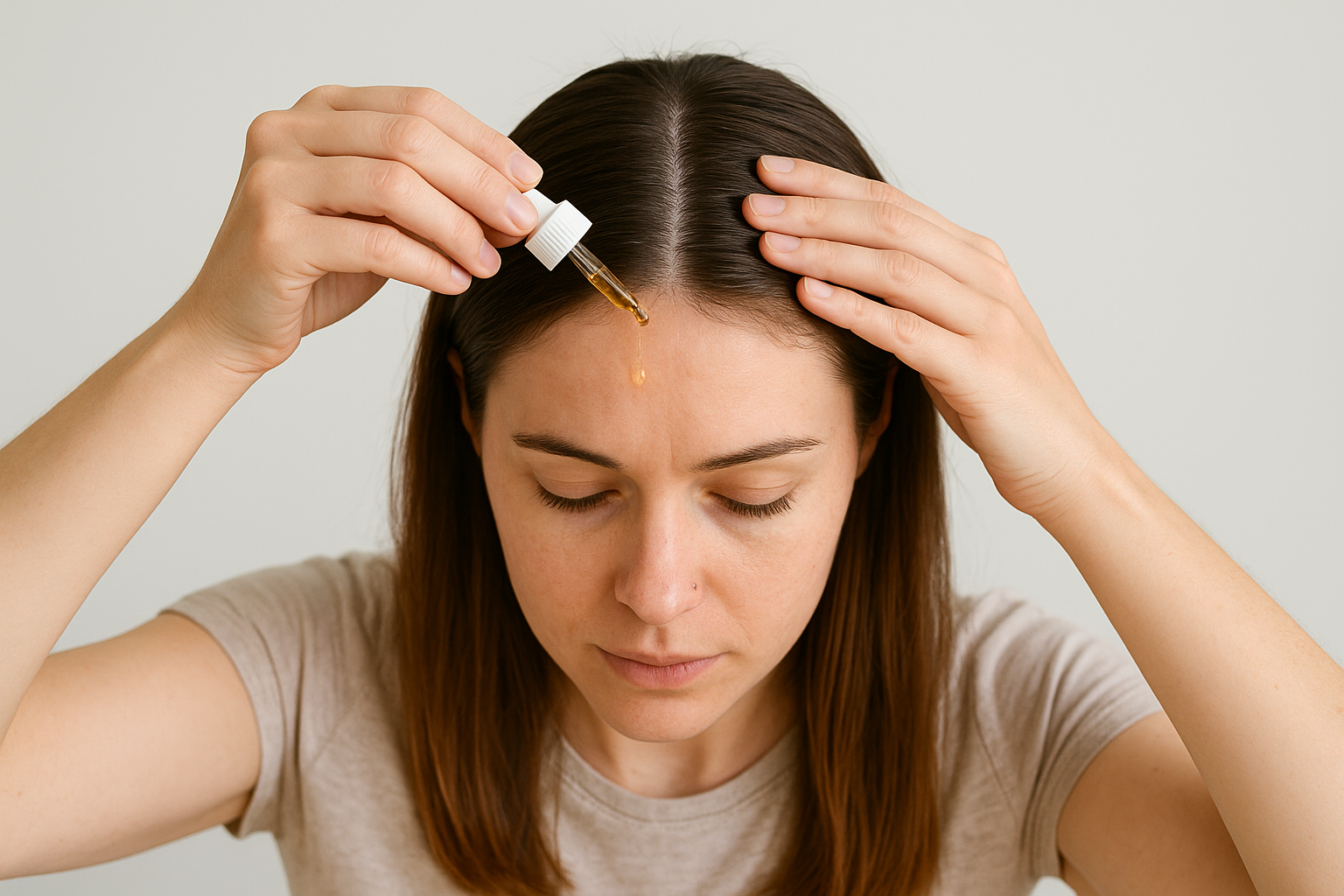
Use your fingertips in circular motions to massage the oil into your scalp for 3 to 5 minutes. This technique increases blood flow and helps the oil penetrate your follicles. Never apply scalp oil right before styling your hair because it makes your roots look greasy and flat. Instead, treat your scalp the night before washing or at least 2 hours before shampooing.
Skip scalp application entirely if you already have oily roots or fine hair that gets weighed down easily.
Focus on mid-lengths and ends for most hair types
Apply oil from your mid-lengths down to your ends for everyday conditioning, frizz control, and shine. Start at ear level and work downward, using your fingers to rake the oil through each section. Concentrate the heaviest amount of product on your last two inches where split ends and damage occur most.
Twist small sections of hair around your finger after applying oil to ensure complete coverage of each strand. For curly hair, scrunch the oil upward from your ends toward your mid-lengths to define curls while sealing moisture. This targeted placement keeps your roots light and voluminous while protecting your most vulnerable hair.
Step 4. Style, frequency, and troubleshooting
Hair oil works as both a styling aid and a protective treatment when you apply it correctly. Learning how to use hair oil during your styling routine and maintaining the right frequency prevents damage while maximizing shine and smoothness. Your specific hair needs determine how often you should apply oil and what adjustments to make if problems arise.
Use oil as a heat protectant before styling
Apply hair oil to damp hair at least 5 minutes before using heat tools to allow absorption into your hair shaft. The oil creates a protective barrier that reduces damage from blow dryers, flat irons, and curling wands reaching temperatures up to 450°F. Distribute 2 to 3 drops through your mid-lengths and ends, then let your hair air dry partially before applying heat.
Work in small sections when heat styling oiled hair to ensure even heat distribution and prevent hot spots that cause damage. The oil should feel absorbed rather than slick on your strands before you begin styling.
Follow the right frequency for your hair type
Apply hair oil 2 to 3 times per week for normal to dry hair that needs consistent moisture and protection. Fine or oily hair types benefit from once weekly application to avoid buildup and greasiness at the roots. Damaged, chemically treated, or very coarse hair can handle daily application focused exclusively on the ends.
Your hair tells you when it needs more oil through increased frizz, dryness, or dullness between applications.
Fix common hair oil problems quickly
Reduce your product amount by half if your hair looks greasy or feels heavy after application. Wash your hair immediately with a clarifying shampoo if you applied too much oil and can't style it properly. Switch to lighter oils like argan or grapeseed if heavier oils like coconut consistently make your hair look oily. Focus application further away from your roots and closer to your ends if you notice flatness or limpness at your crown.
Make hair oil work for you
You now know exactly how to use hair oil for your specific hair type and goals. Apply the right amount based on your hair's texture and length, choose wet application for deep conditioning or dry application for finishing touches, and target your mid-lengths and ends rather than your scalp unless treating specific concerns. Adjust your frequency based on how your hair responds, and troubleshoot problems by reducing product amount or switching to lighter oil formulas.
Your hair oil routine becomes second nature once you practice these techniques a few times. Start with less product than you think you need, observe how your hair looks and feels after each application, and make small adjustments until you achieve the shine and smoothness you want. Browse our curated selection of hair care products designed to help you look and feel your best from the inside out.
✨ Shop the Look at Beautifully Within
Loved this guide? Discover our hand-picked picks that pair perfectly with your routine:
- 👉 Ginger Root Nourishing Shampoo & Conditioner Set — Hair Care
- 👉 Vibration Scalp Massage Comb — Hair Growth Therapy — Hair Tool
- 👉 Fresh Start Hydrating Cleanser & Toner Duo — Skincare Set
New customer? Get 15% off orders $50+ with code WITHIN15 — plus free shipping over $75.
0 comments