

Before you add any vitamin or supplement to your routine, you need reliable information, not influencer hype or packaging claims. The Office of Dietary Supplements fact sheets, published by the National Institutes of Health, are one of the best free resources available for science-backed details on vitamins, minerals, and herbal ingredients. They cover everything from recommended dosages to potential drug interactions, and they're written for both consumers and health professionals.
At Beautifully Within, we believe looking your best starts with what you put into your body, not just what you put on it. Healthy skin, strong hair, and genuine confidence all connect back to nutrition and overall wellness. That's exactly why understanding your supplements matters, choosing the wrong ones wastes money, and ignoring safety information can cause real harm.
This article breaks down five essential ODS fact sheets worth reading before your next supplement purchase. Each one covers a nutrient or ingredient that plays a direct role in skin health, hair strength, or general well-being. Whether you're managing a specific concern or just trying to make smarter choices, these fact sheets give you the unbiased, research-based answers you actually need.
1. Dietary Supplement Fact Sheets A to Z
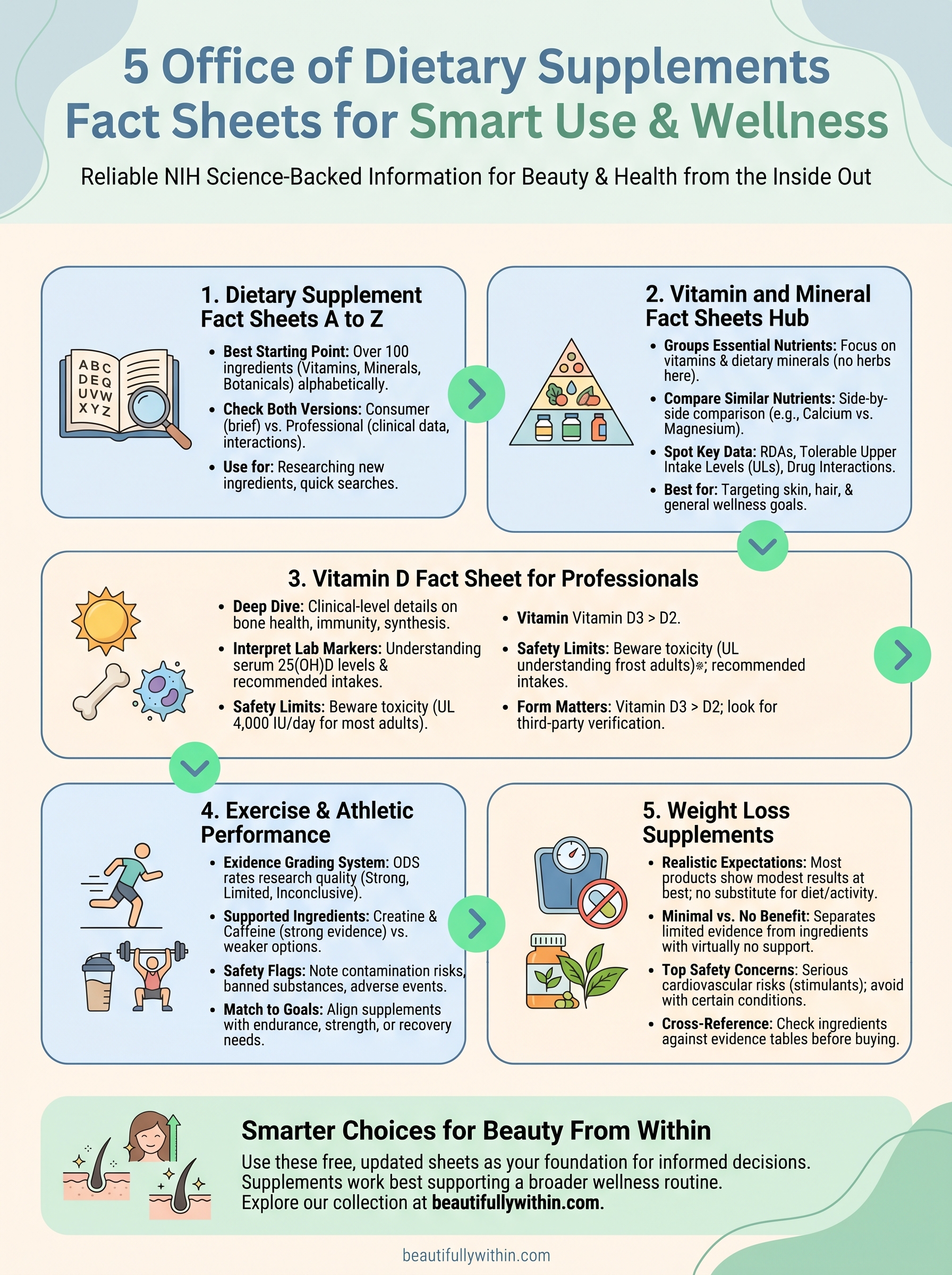
The A to Z index on the ODS website is the single best entry point when you're new to the office of dietary supplements fact sheets library. It lists every available fact sheet alphabetically, covering vitamins, minerals, botanicals, and specialty compounds in one place. If you don't know where to start, this index removes the guesswork immediately.
What this page covers
The A to Z index includes fact sheets for over 100 individual ingredients, from common vitamins like A, C, and D to lesser-known compounds such as ashwagandha, melatonin, and probiotics. Each entry links to both a consumer version and a health professional version, so you can choose the level of detail that fits your situation.
Always check both versions of a fact sheet. The professional version includes clinical data and drug interaction tables that the consumer version summarizes only briefly.
When to start here vs a single-ingredient page
Start with the A to Z index when you're researching an unfamiliar ingredient or comparing several options at once. Go directly to a single-ingredient page when you already know what you need and want specific data like tolerable upper intake levels or known contraindications without browsing around.
How to find the exact fact sheet you need fast
Use your browser's built-in search function (Ctrl+F or Cmd+F) to locate a specific ingredient by name without scrolling the entire list. The ODS also organizes fact sheets into category hubs for vitamins, minerals, and performance ingredients, which makes cross-referencing much faster.
What to look for on every ODS fact sheet
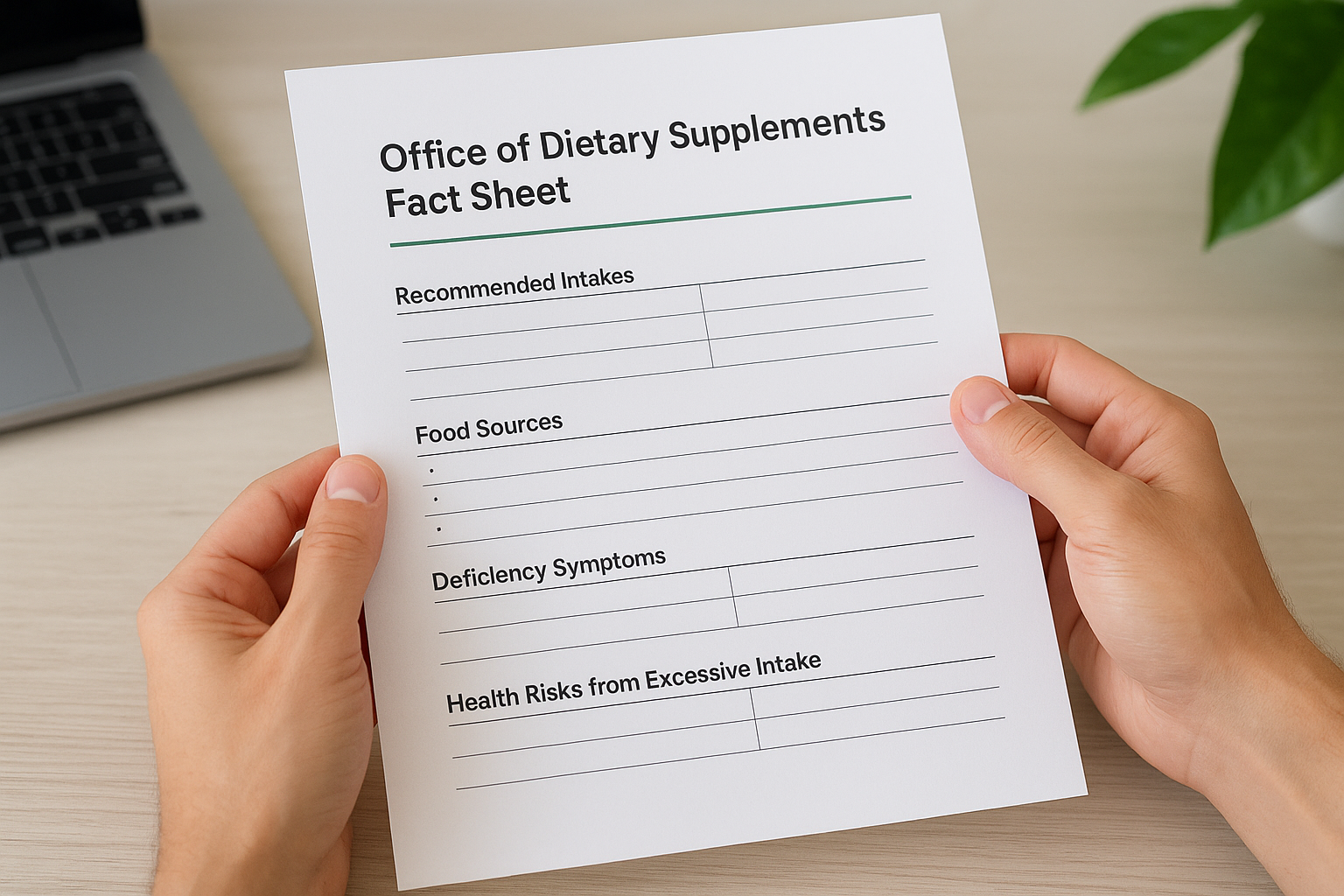
Every fact sheet follows a consistent structure that walks you through recommended intakes, food sources, deficiency symptoms, and health risks from excess use. Pay close attention to the "Health Risks from Excessive Intake" table, since most supplement labels downplay or omit that information entirely.
2. Vitamin and mineral fact sheets hub
The ODS maintains a dedicated vitamins and minerals hub that groups all nutrient-specific fact sheets in one place. This saves you real time when your research focuses on diet and supplement interactions rather than botanicals or specialty compounds.
What this hub includes and excludes
This hub covers essential vitamins and dietary minerals only, so you won't find herbal ingredients or performance compounds here. For those, you need the full A to Z index.
How to use it to compare similar nutrients
Reading the calcium and magnesium fact sheets side by side, for example, quickly shows you where their roles overlap and where they differ. That comparison helps you avoid redundant supplementation and identify gaps in your current routine.
Comparing similar nutrients in the office of dietary supplements fact sheets is one of the fastest ways to build a smarter supplement stack.
How to spot ULs, RDAs, and common interactions
Each fact sheet includes a clearly labeled intake table showing RDAs by age and sex, along with tolerable upper intake levels. Scanning the drug interaction section at the bottom of each sheet flags the most common conflicts with medications.
Best use cases for beauty and wellness goals
This hub is especially useful when you're researching nutrients that directly support skin and hair health, such as biotin, zinc, and vitamin C. Start here before purchasing any single-nutrient supplement targeted at appearance or wellness outcomes.
3. Vitamin D fact sheet for professionals
The Vitamin D fact sheet for health professionals is one of the most referenced pages in the office of dietary supplements fact sheets library. It goes deeper than the consumer version and gives you clinical-level detail on intake recommendations, biological functions, and known health risks.
What it covers in plain language
This fact sheet explains how vitamin D supports bone health, immune function, and cell growth, while also covering how your body synthesizes it from sunlight. You'll find detailed sections on dietary sources and fortified foods, which matters when you're trying to assess whether you actually need a supplement.
How to interpret lab markers and dose guidance
The fact sheet walks you through serum 25(OH)D levels and what different ranges indicate about your current status. Use the intake tables to match your age group and health status to the correct recommended daily amount before deciding on a dose.
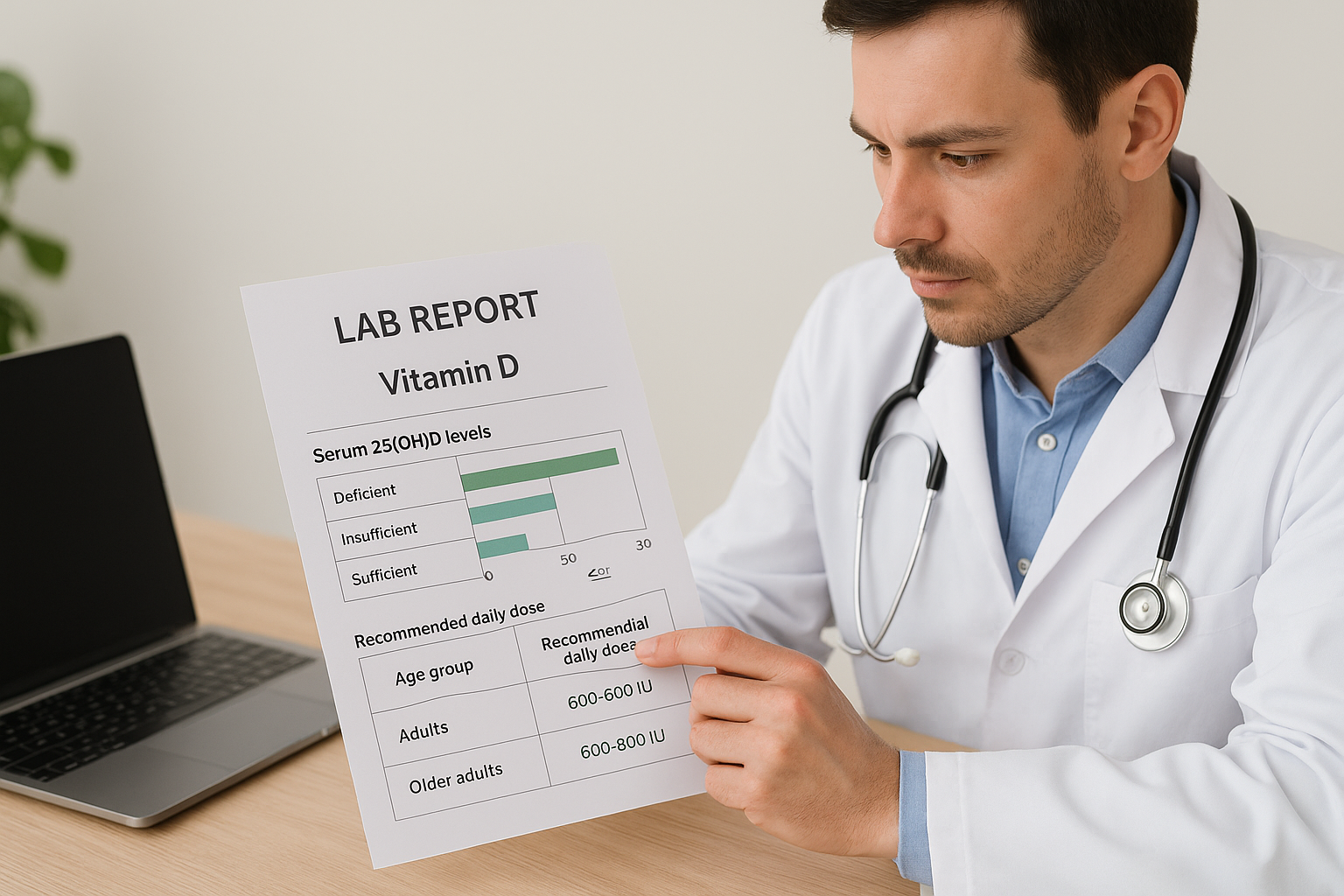
Getting lab work done before supplementing with vitamin D gives you a real baseline instead of guessing.
Safety limits and who needs extra caution
Toxicity from excess vitamin D is real, and this sheet details the tolerable upper intake level of 4,000 IU per day for most adults. People with certain medical conditions like hypercalcemia or kidney disease need to consult a doctor before supplementing.
Common supplement forms and quality notes
Vitamin D3 (cholecalciferol) raises blood levels more effectively than D2 (ergocalciferol), and the fact sheet confirms this distinction with research citations. Look for products tested by third-party verification programs to confirm label accuracy.
4. Exercise and athletic performance supplements
The ODS publishes a dedicated fact sheet on dietary supplements for exercise and athletic performance that covers dozens of common ingredients. This is one of the most practical office of dietary supplements fact sheets available if you train regularly or include physical activity as part of your wellness routine.
What it covers and how ODS grades evidence
This fact sheet reviews over 20 ingredients, including creatine, caffeine, and beta-alanine, and rates the research quality behind each one. The ODS uses a clear evidence-grading system that tells you whether study support is strong, limited, or inconclusive.
Ingredients with stronger vs weaker support
Creatine and caffeine carry the strongest research backing for performance outcomes, while ingredients like glutamine show much weaker results. These comparisons help you avoid spending money on poorly supported products.
The ODS performance supplement fact sheet is one of the few free sources that grades evidence quality directly on the page.
Safety flags, testing, and banned substance risk
Some performance supplements carry contamination risks or banned substance concerns, especially products marketed for bodybuilding. The fact sheet flags ingredients with known safety issues and notes which ones have generated adverse event reports with the FDA.
How to match supplements to your training goal
Start by identifying your primary goal, whether endurance, strength, or recovery, then use the fact sheet to find ingredients with matching evidence. This keeps you from building a routine around unsupported compounds.
5. Weight loss supplements fact sheet
The ODS weight loss supplements fact sheet is one of the most practically useful office of dietary supplements fact sheets for anyone considering products that claim to support fat loss or appetite control. It reviews the science behind a wide range of common ingredients and gives you honest assessments of what the research actually supports.
What it covers and realistic expectations
This fact sheet reviews popular weight loss ingredients such as caffeine, green tea extract, garcinia cambogia, and raspberry ketones. It sets realistic expectations immediately by noting that most products show modest results at best, and that no supplement replaces consistent diet and activity changes.
Reading this fact sheet before purchasing a weight loss supplement can save you real money and protect your health.
Ingredients that show minimal benefit vs no benefit
The fact sheet separates ingredients with limited evidence of modest benefit from those with virtually no human trial support. Caffeine shows small short-term effects, while many heavily marketed botanicals show no meaningful impact in controlled studies.
Top safety concerns and who should avoid them
Several ingredients carry serious safety warnings, including cardiovascular risks linked to stimulant compounds. People with heart conditions, high blood pressure, or thyroid disorders should avoid most of these products without direct medical guidance.
How to use the fact sheet before buying a product
Cross-reference every ingredient on a product label against this fact sheet's evidence tables before spending anything. That step alone helps you filter out products built around unsupported or risky compounds.
Where to go from here
The five office of dietary supplements fact sheets covered here give you a solid foundation for making smarter choices about what you take and why. Each one is free, regularly updated, and written with real research citations you can trace back to the source. Bookmark the A to Z index as your starting point, and return to the specific sheets whenever you're evaluating a new product or ingredient.
Supplements work best when they support a broader wellness routine, not replace one. Your skin, hair, and overall health respond to what you take internally, and pairing informed supplement choices with quality topical products makes a genuine difference. If you're ready to take that next step, explore our wellness supplements collection to find high-performance options designed to support your beauty from the inside out.
0 comments