

You pick up a bottle of collagen or vitamin D at the store and wonder if it actually contains what the label promises. Third party tested supplements are products that independent labs have analyzed to verify their ingredients match the label claims and that they're free from harmful contaminants. No manufacturer bias. No shortcuts. Just an unbiased organization checking the facts.
This matters because the FDA doesn't approve dietary supplements before they hit shelves. Manufacturers police themselves, and that can lead to mislabeled products, missing ingredients, or unwanted additions. Understanding third party testing helps you make smarter choices about what you put in your body.
This guide breaks down what third party testing means for your supplement routine. You'll learn how to spot certified products, which seals actually mean something, and what labs test for when they evaluate supplements. By the end, you'll know how to choose supplements that support your beauty and wellness goals without guessing if they're legit.
Why third party testing matters
The FDA requires prescription drugs to pass rigorous testing before they reach consumers, but dietary supplements follow different rules. Manufacturers can sell supplements without proving they're safe or effective first. They're responsible for their own quality control, and that system creates gaps where problems slip through. The FDA steps in only after consumers report issues or harmful products surface.
The real risks of untested supplements
Untested supplements can contain substances not listed on the label or dangerous levels of contaminants like heavy metals, pesticides, or microorganisms. Some products include ingredients that are banned in dietary supplements altogether. You might buy a vitamin thinking you're supporting your health, but you could be taking something that causes liver damage, interacts badly with your medications, or contains stimulants that spike your blood pressure. Research shows that mislabeled and adulterated products appear on store shelves regularly, and many stay there until someone gets hurt.
Without independent verification, you're trusting manufacturers to police themselves, which doesn't always work in your favor.
Athletes face additional risks because untested supplements may contain banned substances that trigger positive drug tests, even when those ingredients aren't disclosed on the label. Your career or reputation could take a hit because a supplement company cut corners.
How independent testing protects you
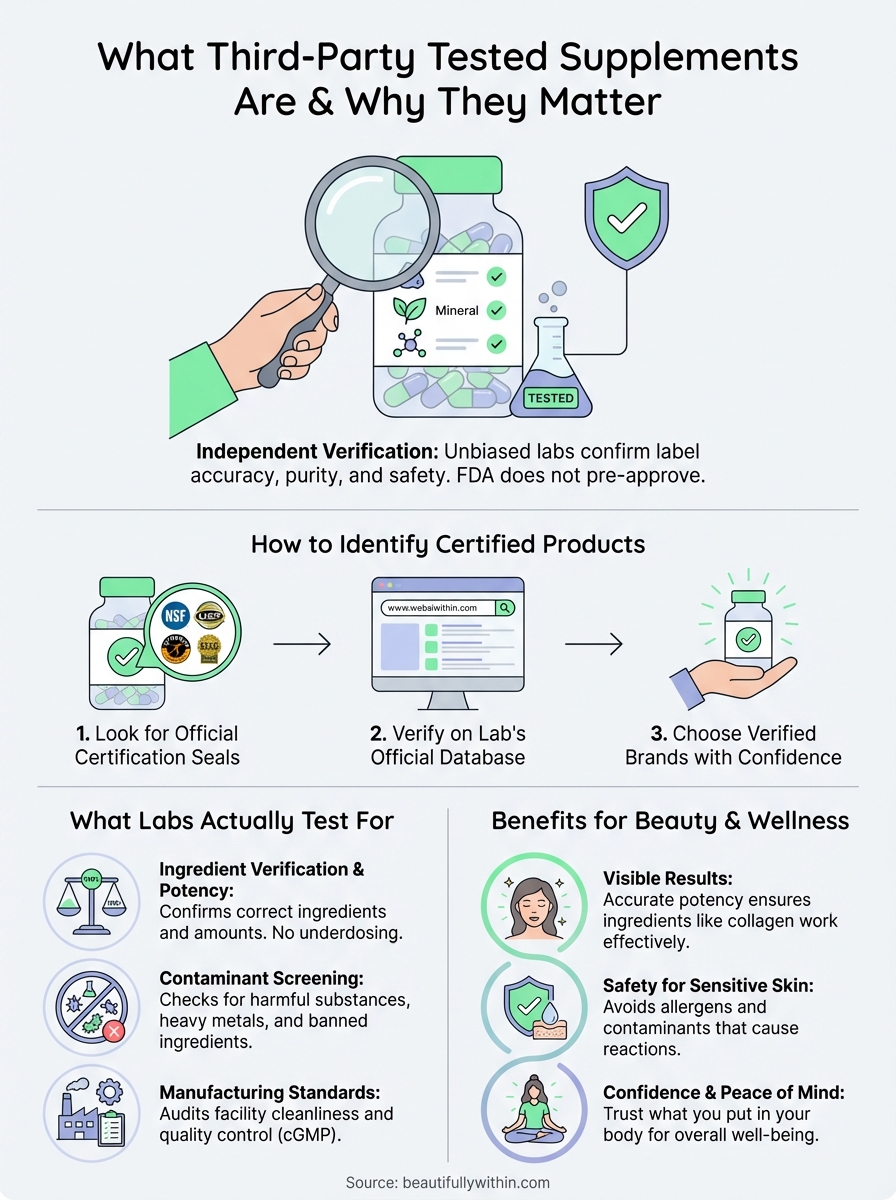
Third party tested supplements go through independent laboratory analysis that verifies what's in the bottle matches what's on the label. These labs have no financial ties to manufacturers, so they have no reason to overlook problems or fudge results. They test for harmful contaminants, check ingredient amounts, and screen for substances that shouldn't be there. The testing happens at the product level, not just once during development, so you get ongoing quality assurance.
This verification catches issues before you buy. Labs might discover that a supplement contains only 60% of the vitamin it claims, or that it includes unlisted ingredients your body doesn't need. When you choose certified products, you're choosing supplements that an objective expert has confirmed are clean, accurately labeled, and manufactured properly.
How to identify third party tested supplements
Finding third party tested supplements takes more than grabbing the first bottle you see. You need to know what to look for, where to look, and how to verify claims. Manufacturers can make bold statements about quality, but certification seals from independent labs provide the proof. These visual markers tell you that someone with no financial stake in the product has checked it thoroughly. The process becomes easier once you know which seals matter and where to find verification.
Look for certification seals on packaging
Check the front and back labels for certification logos from recognized testing organizations. NSF International, USP (United States Pharmacopeia), Informed Sport, and BSCG (Banned Substances Control Group) all place their marks on products that pass their standards. These seals appear as small circular or rectangular logos, usually near the supplement facts panel or on the front of the bottle. Products without these marks haven't undergone independent verification, which means you're taking the manufacturer's word alone.
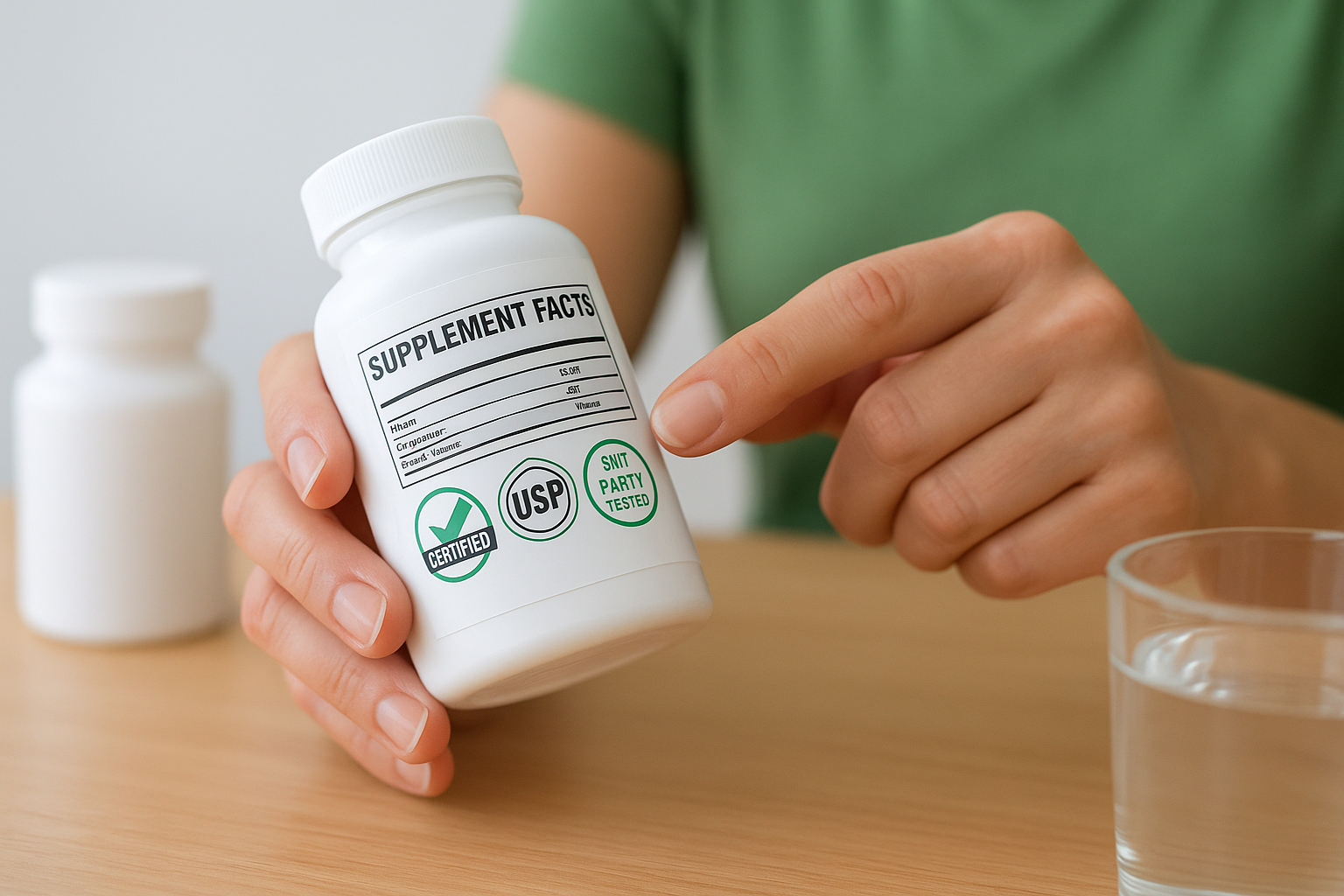
The presence of a legitimate certification seal is your first indicator that a supplement has been independently verified for quality and accuracy.
Check manufacturer websites and product pages
Visit the brand's official website when you're researching supplements. Reputable companies highlight their third party testing on product pages, in FAQ sections, or through dedicated quality assurance pages. You'll find statements like "NSF Certified for Sport" or "USP Verified" along with details about what the testing covers. Amazon product listings also display certification information in the product description or bullet points when sellers choose to include it. Brands that invest in third party testing want you to know about it because it sets them apart from competitors who skip this step.
Verify certifications through official databases
Don't stop at seeing a seal on a package. Certification databases let you confirm that a product's certification is current and legitimate. NSF International maintains a searchable database at nsf.org where you can look up certified dietary supplements by brand or product name. USP offers a similar tool at quality-supplements.org for their verified products. These databases update regularly, so you can check if a product's certification has expired or been revoked. Counterfeit seals exist, and some manufacturers put logos on packaging without actually completing certification, making database verification a necessary final step in identifying authentic third party tested supplements.
What third party labs actually test for
Third party labs run multiple tests to verify that supplements meet quality standards and contain what manufacturers claim. These tests go beyond basic ingredient checks to screen for contaminants, verify accurate dosing, and ensure manufacturing practices meet industry standards. Labs use chemistry equipment like mass spectrometers and chromatography systems to analyze product samples down to the molecular level. The testing process typically takes weeks and covers three main areas that directly impact your safety and the supplement's effectiveness.
Ingredient verification and potency
Labs first confirm that the ingredients listed on the label actually appear in the product and in the correct amounts. They test to see if your calcium supplement contains 1,000mg of calcium like it claims, or if it only delivers 600mg. This verification catches manufacturers who cut corners by using less expensive ingredients or reducing amounts to save money. Testing also identifies unlisted ingredients that shouldn't be there, whether they're fillers, banned substances, or contamination from shared manufacturing equipment. For example, a protein powder might test positive for milk when the label says it's dairy free, creating problems for people with allergies or dietary restrictions.
Independent labs verify not just what ingredients are present, but also whether those ingredients match the exact amounts promised on product labels.
Contaminant screening
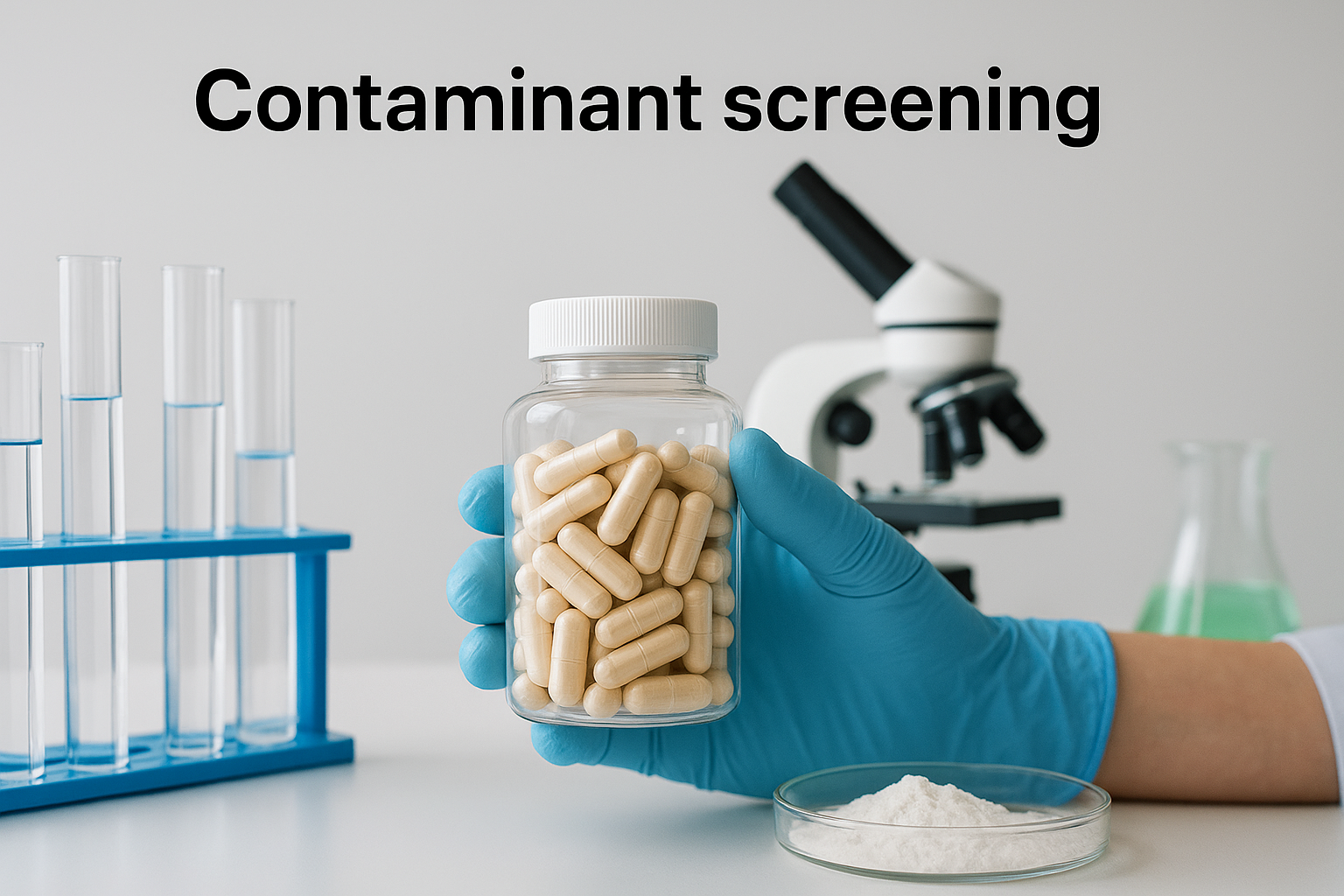
Contaminant testing looks for substances that pose health risks. Labs screen third party tested supplements for heavy metals like lead, mercury, arsenic, and cadmium that can accumulate in your body over time and damage organs. They also check for pesticide residues from plant-based ingredients, microorganisms like bacteria and mold, and residual solvents from manufacturing. Some labs test for over 280 banned substances when certifying sports supplements, including anabolic steroids, stimulants, narcotics, beta-2 agonists, diuretics, and SARMs (selective androgen receptor modulators). Athletes need this level of screening because a positive drug test can end careers, even when banned substances appear in trace amounts or aren't disclosed on labels.
Manufacturing standards and purity
Testing extends to how supplements are made. Labs conduct facility audits to verify manufacturers follow Current Good Manufacturing Practices (cGMP), which are FDA guidelines for producing dietary supplements safely and consistently. Inspectors check equipment cleanliness, ingredient storage conditions, quality control procedures, and record keeping. They also test for product purity by looking at ingredient quality, checking for synthetic additives, and verifying that active compounds remain stable throughout the product's shelf life. This ongoing oversight catches problems early, before contaminated batches reach store shelves.
Key certification seals to know
Not all third party tested supplements carry the same certification, and each seal tells you something different about what the product has been tested for. You'll encounter several major certification programs when shopping for supplements, each with its own testing standards and focus areas. Understanding these seals helps you match the right certification to your specific needs, whether you're an athlete avoiding banned substances, someone with health concerns requiring extra safety assurance, or simply looking for basic quality verification.
NSF certifications
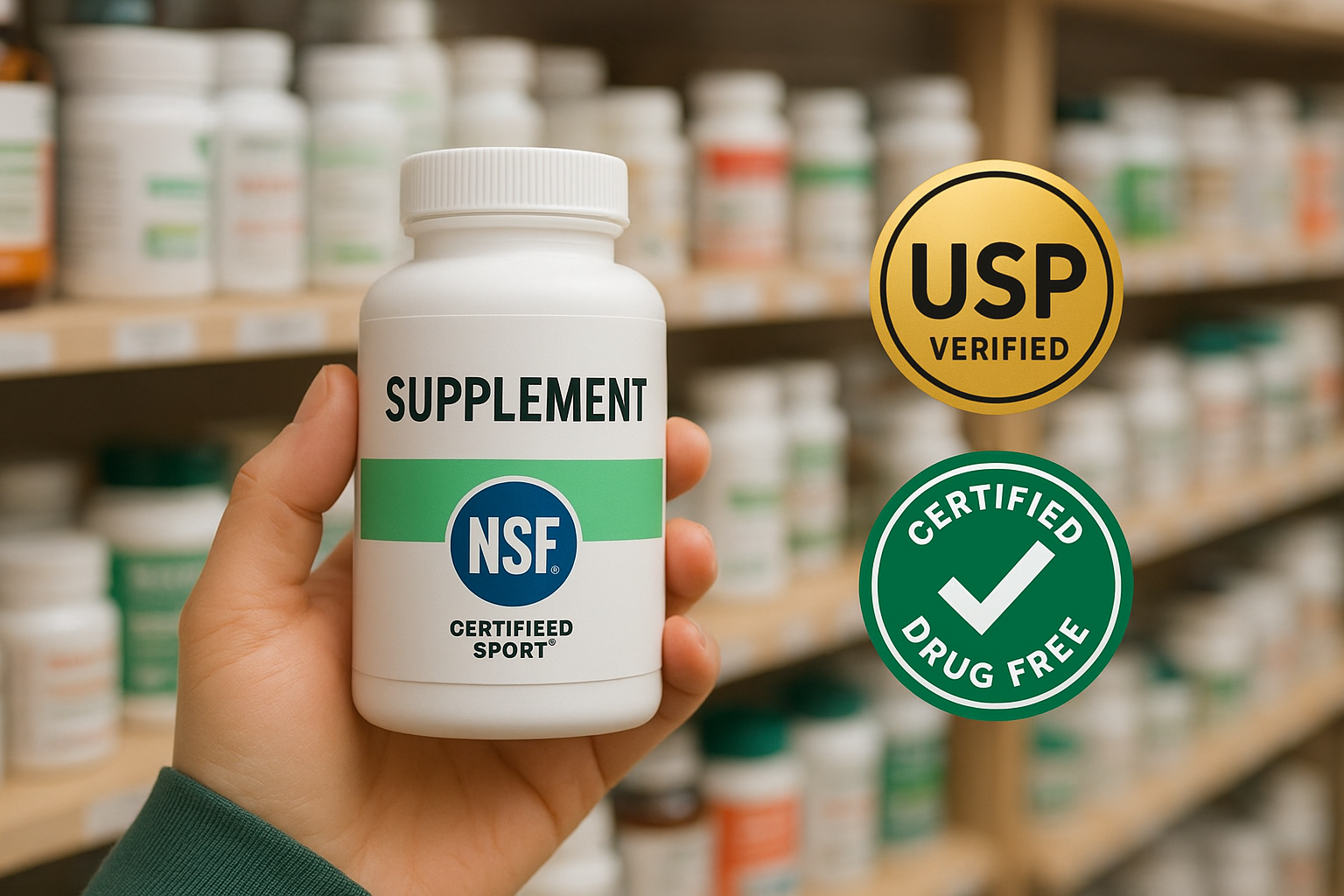
NSF International offers two main certification programs for supplements. NSF/ANSI 173 is the only American National Standard for dietary supplements and verifies that products contain the ingredients listed on the label in the correct amounts, screens for contaminants like heavy metals and pesticides, and confirms manufacturers follow good manufacturing practices. Products bearing this seal have passed tests for harmful contaminants and unwanted ingredients. NSF Certified for Sport goes further by testing for over 280 substances banned by major athletic organizations including the NFL, MLB, PGA, and LPGA. Athletes should look for this specific seal because it protects against positive drug tests from undeclared stimulants, narcotics, steroids, and other prohibited substances.
NSF Certified for Sport is the only third party certification program recognized by the United States Anti-Doping Agency.
USP Verified
The United States Pharmacopeia (USP) runs a verification program that tests supplements for ingredient identity and potency, checks for harmful contaminants, and audits manufacturing facilities for quality standards. USP Verified products must dissolve properly so your body can absorb them, which matters more than you might think since some supplements pass through your system without breaking down. This seal doesn't test for banned athletic substances, making it ideal for general consumers focused on quality and purity rather than sports compliance.
Sports-specific certifications
Informed Sport and BSCG Certified Drug Free both target athletes who need assurance their supplements won't cause failed drug tests. Informed Sport tests every product batch for banned substances and maintains a searchable database of certified products at sport.wetestyoutrust.com. BSCG provides similar testing with different screening methods and maintains its list at bscg.org. Both programs test finished products rather than just raw ingredients, which catches contamination that happens during manufacturing when equipment processes multiple product lines.
How tested supplements support beauty and wellness
Third party tested supplements give you confidence that what you're taking to support your beauty routine actually works. When your collagen peptides contain the full dose promised on the label, your skin responds with improved elasticity and hydration. When your biotin supplement is free from contaminants, your hair grows stronger without the risk of breakouts or allergic reactions. Quality verification matters because beauty supplements work from the inside out, and you need ingredients that your body can actually use.
Quality ingredients for visible results
Your body can't transform low-quality or mislabeled supplements into glowing skin and healthy hair. Verified potency ensures that your vitamin C serum's companion oral supplement delivers the full 1,000mg needed for collagen synthesis, not just 600mg that won't move the needle on fine lines or skin firmness. Third party tested supplements eliminate guesswork from your beauty routine. You know that your omega-3 capsules contain the EPA and DHA your scalp needs for reducing inflammation and supporting hair growth, rather than fillers that do nothing.
When your supplements contain verified amounts of active ingredients, you see consistent results that justify the investment in your beauty and wellness routine.
Safety for sensitive skin
People with sensitive skin face extra risks from contaminated or adulterated supplements. Heavy metals like lead and mercury can trigger inflammatory responses that show up as redness, irritation, or acne flares. Unlisted ingredients might include allergens that cause reactions you can't trace back to the source. Third party tested supplements screen for these contaminants before they reach your medicine cabinet, protecting your skin while you work on improving it from within. Certified products give you peace of mind that your beauty supplements won't undermine the careful skincare routine you've built.
Final thoughts
Third party tested supplements give you control over what goes into your body. You now know which certification seals matter, how to verify them through official databases, and what independent labs actually test for when they evaluate supplements. The NSF, USP, Informed Sport, and BSCG marks represent real testing, not marketing claims, and they protect you from mislabeled products and hidden contaminants.
Your beauty and wellness routine deserves ingredients you can trust. When you choose verified supplements, you're choosing products that deliver what they promise without guesswork or risk. Check labels for certification marks, verify them through official databases, and buy from brands that prioritize transparency over shortcuts.
Beautifully Within offers carefully selected products that support your skin, hair, and overall wellness goals. Start building a supplement routine you can rely on with products chosen for quality and effectiveness.
0 comments