

Walk into any store or scroll through any website selling supplements and you'll find thousands of products making bold claims. Fat burners, collagen boosters, hair growth formulas, stress relievers, the list never ends. The real question is: which ones actually work? That's exactly why so many people examine supplements through evidence-based resources before spending their money. And honestly, it's one of the smartest things you can do for your health and your wallet.
At Beautifully Within, we believe looking and feeling your best starts from the inside out. That means the supplements you put in your body matter just as much as the serums and moisturizers you put on it. We've seen firsthand, through our own product research and personal trial and error, how easy it is to waste money on things that don't deliver. Whether it's a hair supplement that promised thickness or a wellness capsule that claimed to clear skin, not everything lives up to the label. Evidence-based research cuts through that noise.
This article breaks down how Examine.com rates supplements, what their safety and efficacy data actually tells you, and how to use that information to make smarter choices. We'll cover how their grading system works, who it's most useful for, and where it fits into a broader approach to beauty and wellness. If you've ever stared at a supplement shelf feeling overwhelmed, this guide is for you.
What "Examine supplements" means and who it helps
When people say they want to examine supplements, they're usually talking about using Examine.com, a research database that compiles and summarizes clinical studies on vitamins, minerals, herbs, and other dietary supplements. The site doesn't sell anything and doesn't run ads for supplement brands. Instead, it grades research quality and tells you what the science actually shows, ranging from strong evidence to weak or conflicting results.
Examine.com has reviewed thousands of studies so you don't have to dig through medical journals yourself.
Who the resource is built for
Examine.com works for a wide range of people, but it's especially useful if you fall into one of these groups:
- Curious consumers who want to know if a supplement is worth buying before spending money on it
- People with specific health goals like better skin, stronger hair, improved sleep, or reduced inflammation
- Anyone who has tried a supplement and wants to understand why it did or didn't work
- Health-conscious shoppers who want plain-language summaries of scientific research without a medical degree
What you actually get from it
The platform was built with everyday users in mind, not just researchers or doctors. You don't need to understand p-values or clinical trial design to get value from it. Each summary breaks down the key findings in straightforward language, so you can make informed decisions without spending hours reading studies.
If you're trying to figure out whether a collagen supplement will actually help your skin, or whether a biotin product will strengthen your hair, Examine gives you a direct, research-backed answer. That's what makes it such a practical starting point when you're comparing products and want to know what the evidence actually supports before you buy.
Why evidence-based supplement research matters
The supplement industry is worth billions of dollars, and most products on shelves have little to no clinical backing. Companies are not required to prove a supplement works before selling it. The FDA only steps in after a product has already reached consumers and caused harm. That gap between what's marketed and what's proven is exactly why you need a reliable way to examine supplements before you buy them.
The burden of proof rarely falls on the supplement brand, it falls on you as the consumer to do the research.
What unverified claims actually cost you
When you skip the research, wasted money is the best-case outcome. At worst, you're taking something that interacts with a medication, aggravates a health condition, or simply does nothing while you delay finding something that actually works. A supplement marketed for hair growth might rely on a single small study with 30 participants. Evidence-based research shows you the difference between a promising ingredient and one with consistent, reproducible results across multiple trials.
Skin, hair, and wellness supplements can all deliver real results, but only when the underlying science supports the specific benefit being claimed. Knowing that before you buy saves you time, money, and frustration.
How to use Examine to research a supplement
Start by going to Examine.com and typing the supplement name into the search bar. You'll land on a summary page that organizes everything you need: health effects, dosing, safety, and study quality ratings. The layout is straightforward, so you don't need any background in science to navigate it.
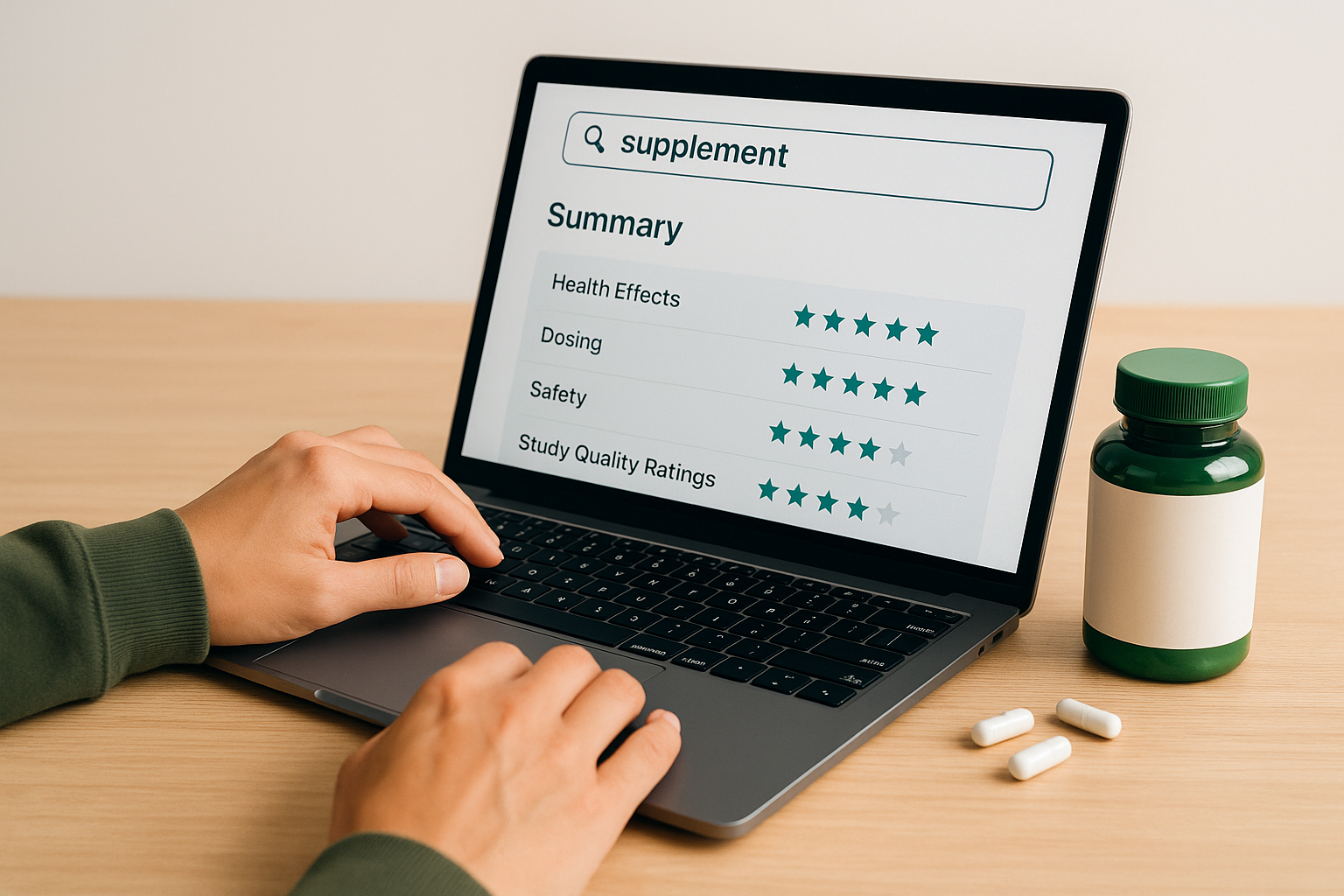
Bookmark the supplement's page so you can compare it directly against the label claims on the product you're considering buying.
What to look for first
When you examine supplements on the platform, focus on the evidence strength rating before reading anything else. This tells you immediately whether the research behind a specific benefit is strong, mixed, or weak. Then check the dosing section to see if the product you're considering actually matches what the studies used.
- Look at the number of human studies cited
- Note whether trials are large or small
- Check if results are consistent across multiple studies
The dosing details matter more than most people realize. A supplement can have solid research behind it but still underdeliver if the formula uses a dose far below what studies actually tested. Matching those numbers is how you separate effective products from underpowered ones.
How Examine evaluates benefits, safety, and dosing
Examine uses a grading system that rates the strength of evidence for each specific health outcome a supplement is linked to. Rather than giving a supplement a single overall score, it grades each claimed benefit separately, which is far more useful. A supplement might score high for one benefit and low for another, and knowing that difference changes how you shop.
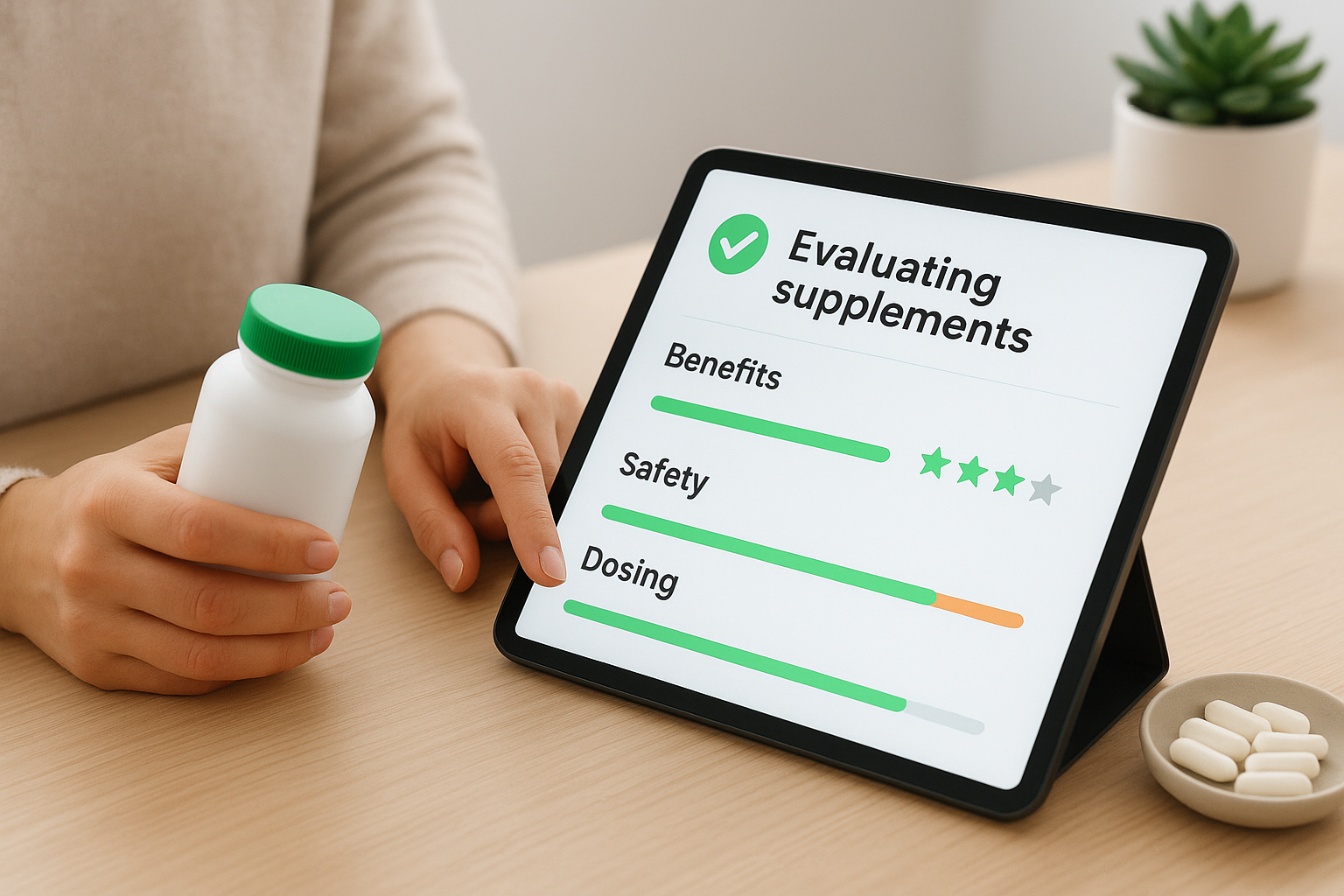
A high grade for one outcome does not mean the supplement works across the board.
Safety and interaction data
When you examine supplements on the platform, the safety section covers known side effects, drug interactions, and upper tolerable limits. This information pulls directly from peer-reviewed studies and flags anything that warrants caution before you add a product to your routine.
- Side effects documented in trials
- Known drug or supplement interactions
- Tolerable upper intake levels
Dosing ranges and what they tell you
Examine lists the dosing range used in human trials, not the marketing dose printed on a label. Comparing these two numbers gives you a fast read on whether a product is formulated to actually perform.
If a supplement uses 10% of the studied dose, that's a red flag worth catching before you buy. Many products exploit a credible ingredient at a fraction of the clinically effective amount to cut costs while still listing it on the label.
What Examine can't answer and how to decide anyway
Examine.com is built on population-level data, which means it tells you what worked for most people in a study, not what will work for your specific body, health history, or goals. When you examine supplements using the platform, you won't find personalized recommendations. Individual responses to supplements vary significantly based on genetics, diet, existing deficiencies, and medications, factors no database can account for on your behalf.
Research tells you what is possible; your own experience and a doctor's input tell you what is practical for you.
How to fill the gaps Examine leaves behind
Examine gives you a solid research foundation, but you still need to apply judgment. Start by cross-referencing what you learn with your doctor or a registered dietitian, especially if you take any medications. Your personal health context shapes how useful any supplement will actually be for you, regardless of how strong the evidence looks on paper.
- Track how you feel during the first four to six weeks on a new supplement
- Note any changes in energy, skin, hair, or sleep
- Stop and reassess if you notice anything unexpected
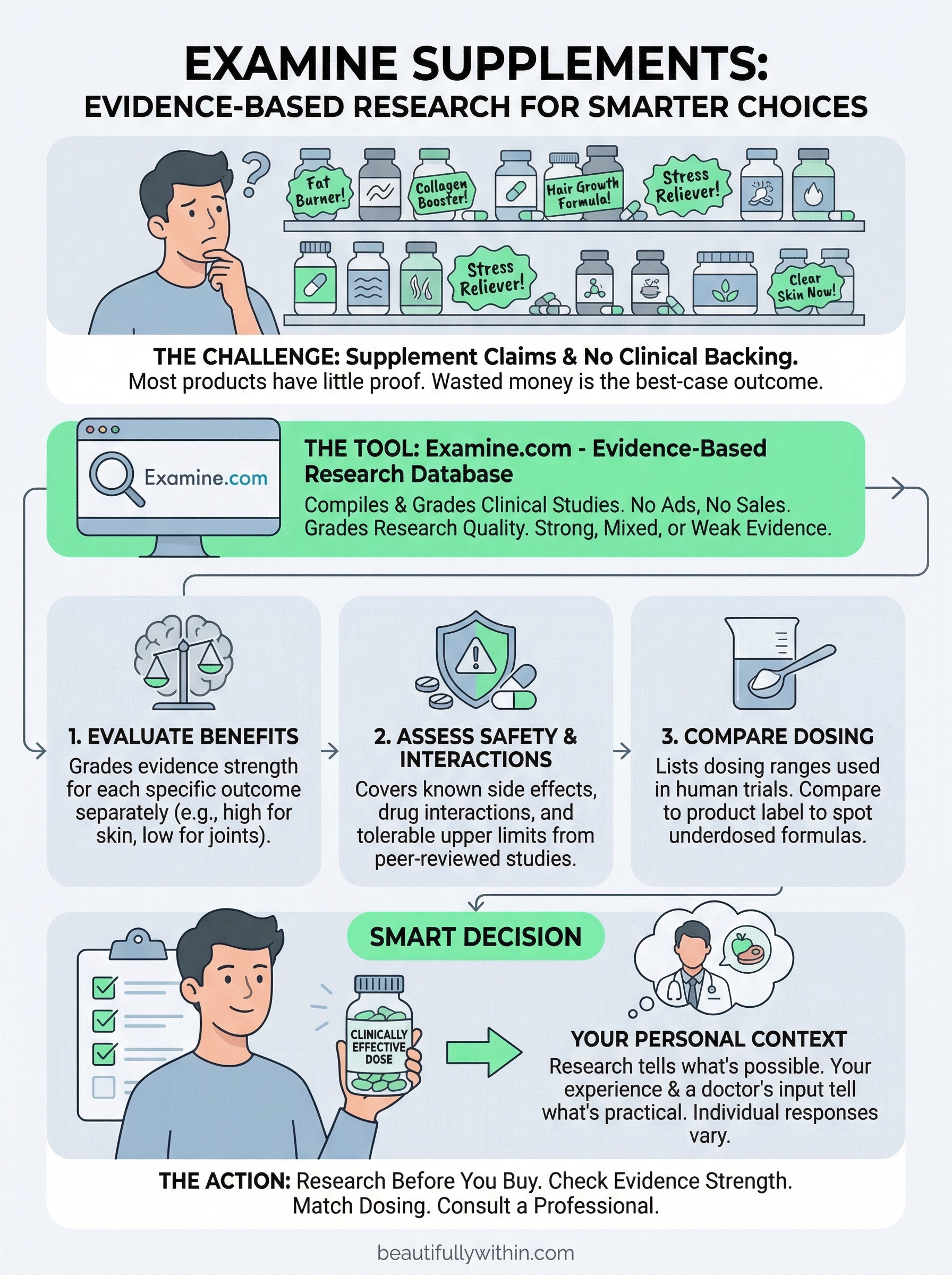
A simple way to apply what you learned
Now that you know how to examine supplements using evidence-based research, the practical step is straightforward: research before you buy, not after. Pull up the ingredient list on any supplement you're considering, run each key ingredient through Examine.com, and check whether the studied dose matches what's in the formula. If the evidence is weak or the dosing falls short, you've already saved yourself money and frustration before you even reach the checkout.
Your beauty and wellness routine works best when every layer supports the others. A well-chosen supplement can reinforce what you're already doing topically, from skincare to hair care, making your whole routine more effective over time. When you're ready to explore products built around science-backed ingredients and real results, browse our wellness supplements at Beautifully Within and find options designed to help you look and feel your best from the inside out.
0 comments