

If your hair feels like straw by mid-afternoon, rough, tangled, and impossible to manage, you're not imagining things. Dry hair is one of the most common frustrations out there, and it usually signals that something in your routine (or missing from it) needs to change. Building a hair care routine for dry hair that actually works starts with understanding what your hair needs at each step, from washing to styling. The good news: you don't need a dozen expensive products to get there.
I know this firsthand. When I dyed my hair blond a few years back, it completely wrecked my naturally thick, wavy strands. I tried product after product, some helped a little, most didn't. What finally made the difference wasn't one miracle bottle. It was learning the right routine for my specific hair type and sticking with it. That experience is a big part of why Beautifully Within exists: to help you skip the trial-and-error and find what genuinely works for your hair, skin, and overall well-being.
This guide breaks down a complete hydrate-and-repair routine step by step, covering everything from how often to wash dry hair to which ingredients to look for (and avoid). Whether your dryness comes from heat damage, chemical processing, or just genetics, you'll walk away with a clear plan you can start using today.
What causes dry hair and what to fix first
Dry hair happens when your strands don't retain enough moisture or produce enough natural oils to stay hydrated and flexible. Before you invest in a new set of products, it's worth pinpointing the actual source of the problem, because treating the symptom without addressing the cause means you'll keep fighting the same battle.
The most common causes of dry hair
Several factors strip moisture from your hair faster than it can replenish. Heat styling tools like flat irons, curling wands, and blow dryers used at high temperatures break down the hair's outer cuticle layer, leaving it rough and porous. Chemical processes such as bleaching, perming, or coloring are especially damaging because they lift the cuticle aggressively to alter the hair's structure. Environmental factors also matter: sun exposure, dry indoor air, hard water with high mineral content, and harsh weather all pull moisture from your strands throughout the day.
Knowing your specific cause is more valuable than any single product, because the right fix depends entirely on what's creating the problem in the first place.
Your hair type plays a role too. Naturally thick, wavy, or curly hair tends to be drier than straight fine hair because natural oils from your scalp have a harder time traveling down a curved shaft. If you also have color-treated or heat-damaged hair on top of a naturally dry type, the dryness compounds quickly. That's exactly what happened to my hair when I went blond: two sources of damage hitting at once.
What to fix before adding more products
Before you overhaul your entire hair care routine for dry hair, audit what's already happening. Start with these four specific habits and adjust them first, because no product works well in a routine that's actively working against your hair:
- Wash frequency: Daily shampooing strips scalp oils faster than your hair recovers. Most people with dry hair do better washing two to three times per week maximum.
- Heat temperature: Check your styling tool settings. Anything above 365°F (185°C) is high-risk for dry or damaged strands. Drop to 300-330°F for routine styling.
- Water temperature: Hot water opens the hair cuticle and lets moisture escape. Finish every wash with a lukewarm or cool rinse to seal the cuticle back down.
- Pillowcase material: Cotton creates friction and pulls moisture from your hair overnight. Switching to a satin or silk pillowcase reduces both issues with zero extra effort.
Fix these basics first, and you'll notice a real difference before you change a single product.
Step 1. Cleanse and condition without stripping
Your shampoo is the starting point of your hair care routine for dry hair, and choosing the wrong one makes every other step harder. Most conventional shampoos use sulfates, specifically sodium lauryl sulfate or sodium laureth sulfate, as their primary cleansing agents. These work well for oily hair but strip too much from dry strands, leaving them rough and brittle after every wash.
Choose a shampoo that cleans gently
Look for shampoos labeled sulfate-free or formulated with mild surfactants like sodium cocoyl isethionate or coco-glucoside. These clean effectively without disrupting your hair's natural moisture balance. Also scan the ingredient list for hydrating actives such as glycerin, aloe vera, panthenol (vitamin B5), or hydrolyzed proteins, because these replace moisture as you wash rather than removing it.
The ingredient list on your shampoo bottle tells you more than the marketing claims on the front ever will.
When you wash, apply shampoo only to your scalp and let it rinse through the lengths naturally. Scrubbing the mid-lengths and ends creates friction and accelerates dryness without adding any cleaning benefit.
Apply conditioner where your hair needs it most
Conditioner is non-negotiable for dry hair, but placement matters as much as product choice. Apply conditioner from the mid-shaft to the ends every wash, and avoid the scalp entirely. Skipping the roots prevents buildup while delivering slip and moisture to the areas that need it most.
Leave your conditioner on for at least two to three minutes before rinsing. Always finish with cool or lukewarm water to seal the cuticle and lock in the hydration you just added.
Step 2. Deep hydration and repair each week
Weekly treatments are the most impactful upgrade you can add to your hair care routine for dry hair. Daily products like shampoo and conditioner maintain your hair, but a deep conditioning mask or protein treatment penetrates the cortex and rebuilds moisture from the inside out. Skipping this step is the most common reason dry hair stays dry despite consistent product use.
Pick the right treatment for your hair's needs
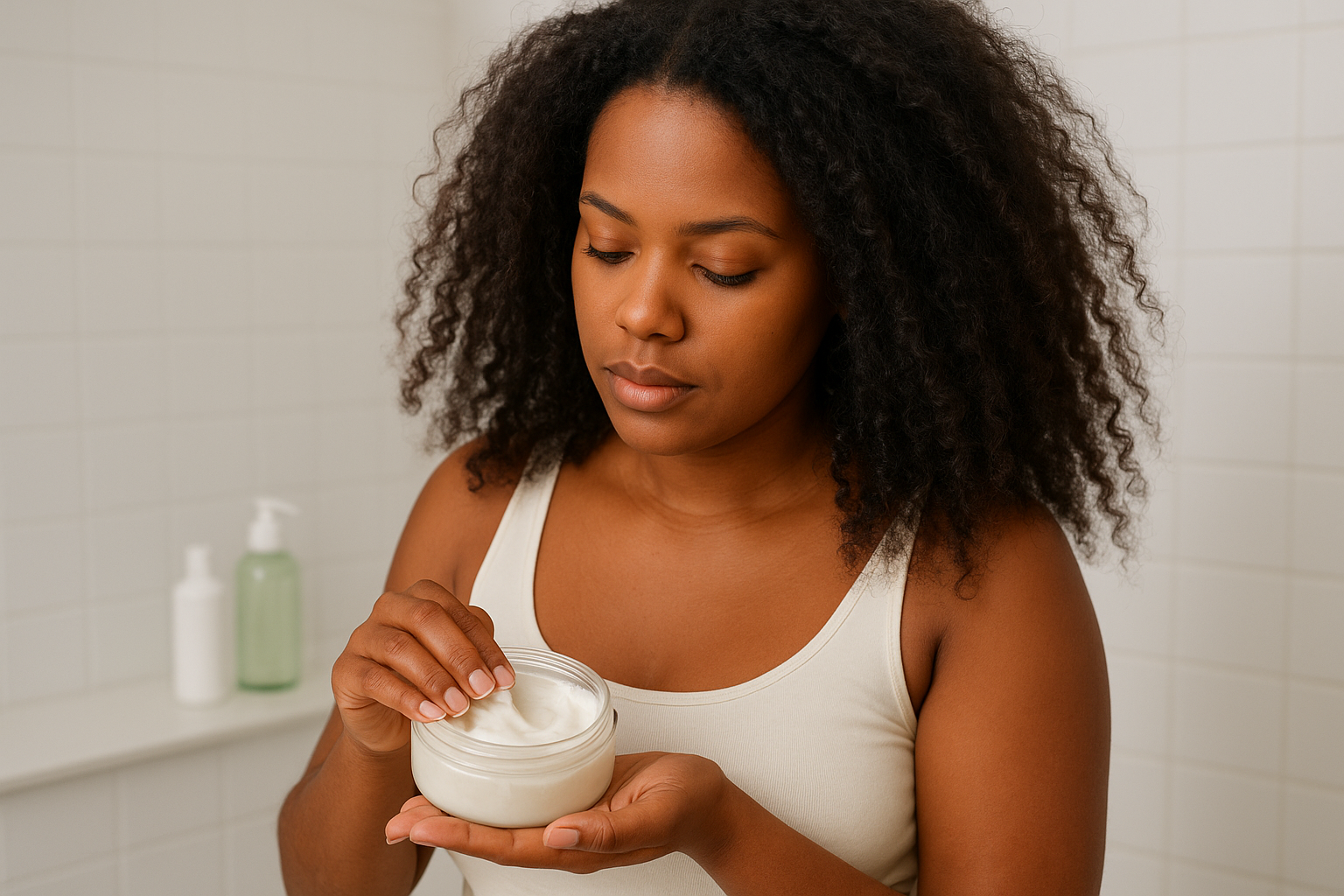
Not every treatment works the same way, so matching the right formula to your specific damage saves you both time and money. If your hair feels rough and hard to manage but still stretches without snapping, you need moisture-focused masks rich in ingredients like shea butter, argan oil, or hyaluronic acid. If your strands break easily or feel gummy when wet, you need a protein treatment containing hydrolyzed keratin or silk amino acids.
| Hair condition | Treatment type | Key ingredients to look for |
|---|---|---|
| Dry, rough, tangled | Moisturizing mask | Shea butter, argan oil, glycerin |
| Brittle, snapping strands | Protein treatment | Hydrolyzed keratin, silk amino acids |
| Both issues present | Balanced mask | Oat milk, panthenol, hydrolyzed proteins |
How to apply a deep treatment correctly
Apply your chosen treatment to freshly washed, towel-dried hair so the formula absorbs into the strand rather than sitting on top of residue. Work it in section by section from mid-shaft to ends, then cover your hair with a shower cap for 20 to 30 minutes. Heat from a hooded dryer or a warm towel wrapped around the cap helps the formula penetrate deeper.
One deep treatment per week is enough for most people. Overdoing protein treatments specifically can make dry hair stiffer and more brittle over time.
Rinse thoroughly with cool water and follow with your regular conditioner to seal everything in before you style.
Step 3. Dry-hair-safe styling and heat rules
Styling is where most people unknowingly undo all the hydration work they did in the shower. If your hair care routine for dry hair includes deep treatments and a good conditioner but you're still reaching for a flat iron at 450°F every day, the damage accumulates faster than any product can repair it. Styling smarter, not skipping it entirely, is what protects your progress.
Lower the heat and always use a protectant
Heat protectant spray is not optional for dry hair. Apply it to damp or towel-dried hair before you blow-dry and again before any direct tool contact. Look for formulas containing dimethicone or cyclomethicone, which coat the strand and slow down moisture loss during the styling process.

A heat protectant only works if you apply it before heat touches the hair, not after.
Use this temperature guide as your baseline when styling:
| Hair condition | Maximum safe tool temperature |
|---|---|
| Mildly dry | 350°F (175°C) |
| Damaged or color-treated | 300-330°F (150-165°C) |
| Severely dry or brittle | 280°F (138°C) or lower |
When blow-drying, keep the dryer at least six inches from your hair and use the cool shot button for the last 30 seconds to close the cuticle.
Choose low-manipulation styles on off-days
On days you skip heat tools, [protective styles like loose braids, buns, or twists](https://beautifullywithin.com/blogs/news/how-to-reduce-hair-breakage) reduce friction and prevent breakage without any additional drying. Avoid tight elastics with metal clasps that snag and break dry strands. Instead, use fabric-covered hair ties or spiral hair coils, which grip without creasing or pulling.
Step 4. Between-wash and overnight moisture habits
What happens to your hair between wash days matters just as much as what you do in the shower. Dry hair loses moisture to the environment continuously, and without a few simple between-wash habits, your strands will revert to rough and brittle before your next wash day arrives.
Add a leave-in or lightweight oil on dry days
On days you skip washing, your hair still benefits from a small amount of product to refresh its moisture levels. A leave-in conditioner or lightweight oil applied to the mid-lengths and ends prevents the cuticle from lifting and keeps strands flexible. Look for leave-ins with glycerin or aloe vera as key ingredients, since both attract and hold water in the strand without weighing your hair down.
Apply any between-wash product to dry hair sparingly. Too much product on unwashed hair builds up quickly and can clog the scalp over time.
For a simple refresh routine on day two or three hair, follow this approach:
- Lightly mist hair with water using a small spray bottle
- Apply three to five drops of argan or jojoba oil to your palms
- Smooth through the ends and any frizzy sections only
Protect your hair while you sleep
Your hair care routine for dry hair needs to extend into the night. Cotton pillowcases create friction against each strand as you move, leading to tangles, breakage, and moisture loss by morning. Switch to a satin or silk pillowcase, or wrap your hair loosely in a satin bonnet before bed. Both options cut friction significantly and help your strands hold onto the moisture your daytime products worked to deliver.
A simple plan to keep dry hair soft
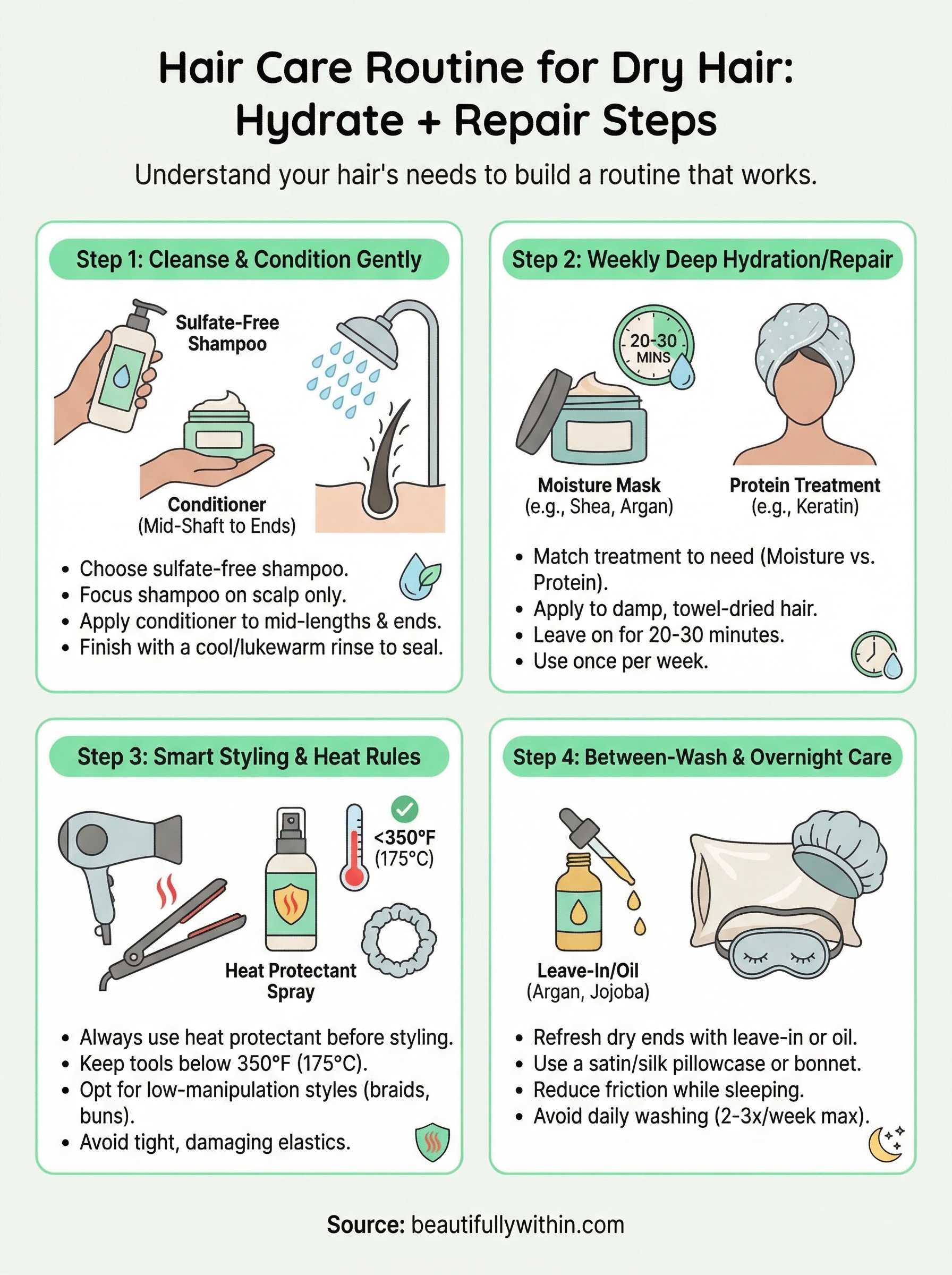
A complete hair care routine for dry hair doesn't have to be complicated. The steps in this guide work together: a gentle sulfate-free shampoo two to three times a week, a weekly deep treatment, heat protection every time you style, and a quick moisture refresh between washes. Those four habits, done consistently, make a bigger difference than any single product ever will.
Your hair shows real results when you stay consistent, not when you rotate through new products every month. Start with the basics from this guide, give them four to six weeks, and pay attention to what your hair tells you. Texture, manageability, and shine all improve when the routine supports your hair's needs instead of working against them. When you're ready to find the right products to support each step, browse the hair care collection at Beautifully Within for treatments built around real results.
✨ Shop the Look at Beautifully Within
Loved this guide? Discover our hand-picked picks that pair perfectly with your routine:
- 👉 Advanced Anti-Aging Night Renewal Cream — Moisturizer
- 👉 Hemp Oil & Aloe Vera Deep Moisture Body Lotion — Moisturizer
- 👉 Daily Nourishing Hand & Body Moisturizer — Body Moisturizer
New customer? Get 15% off orders $50+ with code WITHIN15 — plus free shipping over $75.
0 comments