

You've tried the chamomile tea, put down your phone an hour before bed, and maybe even invested in blackout curtains, yet you're still staring at the ceiling at 2 AM. If that sounds familiar, you're not alone. Roughly one in three adults struggles with sleep, and the supplement market has responded with an overwhelming number of options. That's exactly why we put together these sleep support supplement reviews, to help you cut through the noise and find something that actually delivers results.
At Beautifully Within, we believe looking and feeling your best starts from the inside out. And nothing sabotages your skin, your energy, or your confidence quite like poor sleep. It affects everything from how your complexion heals to how you carry yourself through the day. That's why health and wellness is a core part of what we do, because real beauty isn't just surface-level.
In this guide, we break down 10 sleep support supplements available right now in 2026, covering their ingredients, effectiveness, potential side effects, and what real users are saying about them. Whether you're dealing with occasional restlessness or chronic tossing and turning, this list is designed to help you make a confident, informed choice. We've compared formulas, read through hundreds of reviews, and evaluated the science behind each product so you don't have to start from scratch.
How we reviewed sleep supplements for 2026
These sleep support supplement reviews follow a consistent process so you can trust the comparisons you're reading. We didn't pick products randomly or base rankings on advertising budgets. Instead, we looked at each supplement through several lenses: the quality of available research, real user experiences, ingredient transparency, and overall value for the price you pay. Every product earned its place here by meeting a defined standard, not just by being popular.
What we evaluated
Every supplement on this list went through the same checklist before it made the cut. We started with the active ingredients and their dosages, comparing them against published clinical studies to see whether the amounts used fall within ranges that have actually shown results in trials. We also looked at third-party testing, because a label claiming "500 mg of magnesium glycinate" means very little if there's no independent verification behind it.
A supplement that skips third-party testing is asking you to take its word for everything, which is a significant risk when you're putting something into your body every night.
Here's what we checked for every product:
- Ingredient quality and dosage accuracy versus what peer-reviewed research supports
- Third-party certifications such as NSF International, USP, or Informed Sport
- Full ingredient list transparency, including fillers, binders, and flow agents
- Manufacturer reputation and responsiveness to customer concerns
How we gathered user feedback
We read through hundreds of verified reviews across multiple retail platforms to understand how real people respond to each supplement over weeks and months of use, not just after a single dose. We focused on patterns, specifically whether users consistently reported falling asleep faster, staying asleep longer, or waking up feeling genuinely rested rather than groggy. A handful of glowing reviews can be misleading; consistent trends across large review pools carry real weight.
Negative feedback received equal attention. If a meaningful share of users reported next-day drowsiness, digestive discomfort, or no noticeable change after four or more weeks of consistent use, that information is built directly into each assessment.
Our scoring criteria
Each supplement was scored across five core factors: evidence of effectiveness, safety profile, ingredient label transparency, price per serving, and fit for specific sleep problems. No single option scored perfectly in every category, which is exactly why this guide covers ten different supplements rather than naming one universal winner. What works well for stress-driven insomnia may do nothing for someone whose problem is early morning waking, so context matters throughout every review.
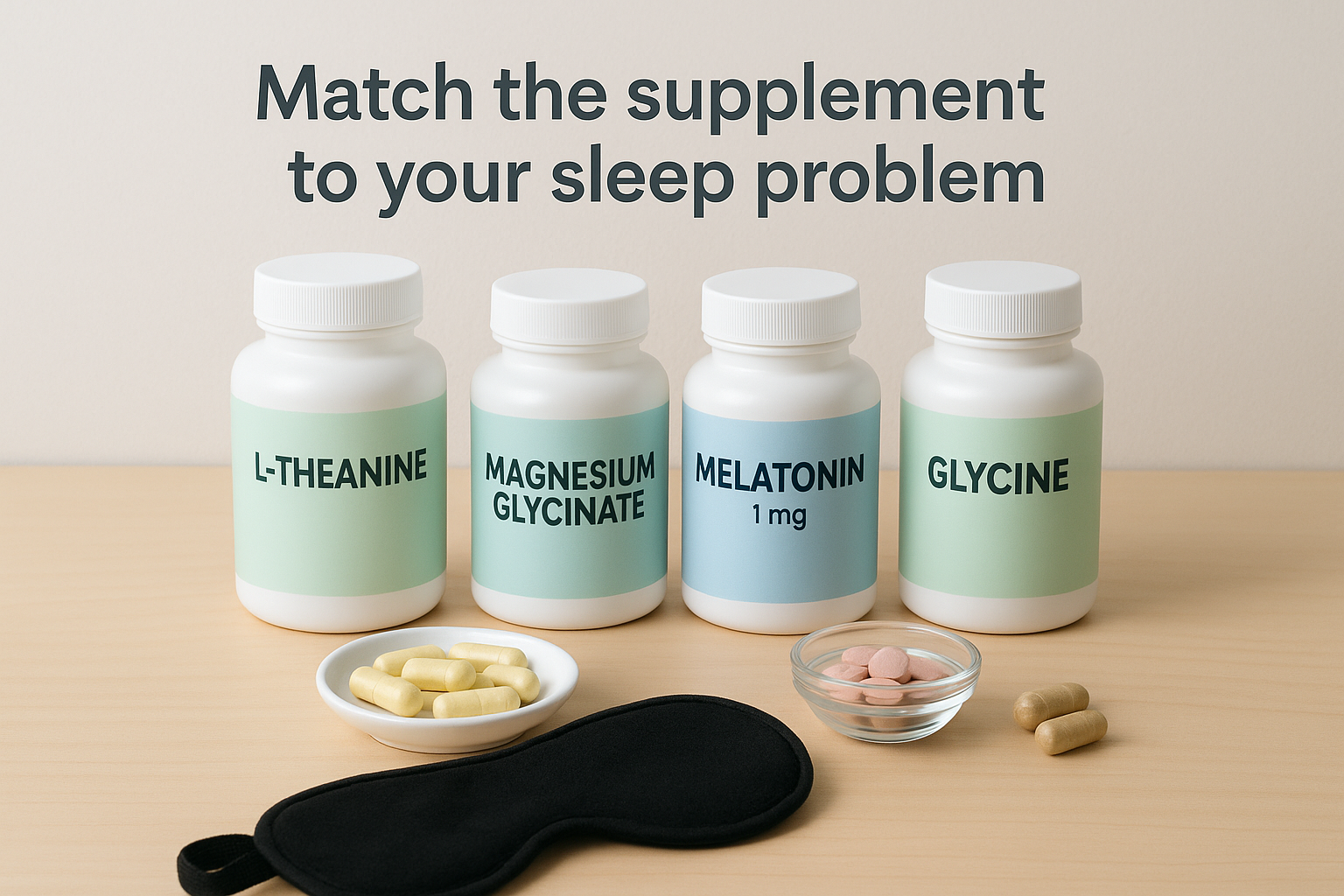
Match the supplement to your sleep problem
Not every sleep supplement works the same way, and the right choice depends heavily on what's actually disrupting your sleep. Before you pick a product based on a friend's recommendation or a trending review, it helps to get specific about your pattern. The sleep support supplement reviews in this guide are organized to help you do exactly that.
If you struggle to fall asleep
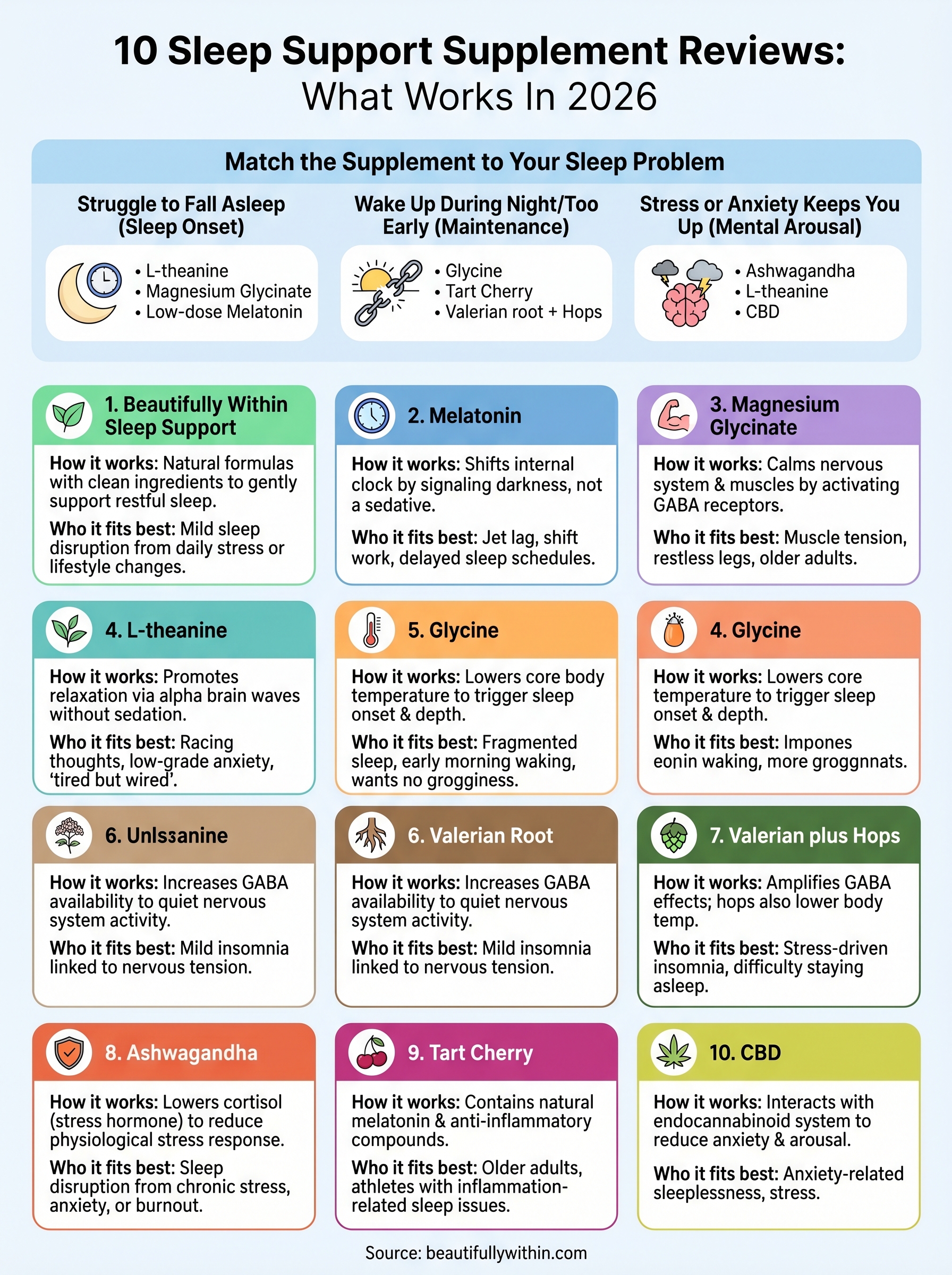
Your biggest issue is sleep onset, meaning your body or mind won't quiet down when you get into bed. This is where supplements that promote relaxation and lower mental arousal tend to shine. L-theanine, magnesium glycinate, and low-dose melatonin are consistently cited by users who take more than 30 minutes to drift off. Each one works through a different mechanism, so the best fit depends on whether your delay is physical tension, racing thoughts, or a misaligned internal clock.
Melatonin is not a sedative. It signals your brain that it's time to sleep, which makes it most effective for timing issues rather than anxiety-driven wakefulness.
If you wake up during the night or too early
Fragmented sleep and early morning waking point to problems with sleep maintenance rather than sleep onset. Glycine and tart cherry have shown the most promise here in clinical settings, partly because they support deeper sleep stages rather than simply helping you nod off. Valerian root combined with hops also appears in user feedback for this specific complaint more often than standalone valerian does.
If stress or anxiety keeps you up
When mental stress is the root cause, adaptogens like ashwagandha address the physiological stress response directly. Users dealing with work pressure or general anxiety tend to report better results with ashwagandha or L-theanine than with melatonin alone, since cortisol dysregulation is often the actual problem keeping them awake.
Safety rules before you try anything new
Before you dive into any of the sleep support supplement reviews below, take a few minutes to understand the basic safety framework. Supplements sit in a gray zone: they're not prescription drugs, but they're not harmless either. Many interact with common medications or affect people very differently depending on individual health factors, so treating them as automatically safe is a mistake worth avoiding.
Check for medication interactions first
The supplements in this guide are generally considered low-risk, but several carry real interaction risks with medications you might already be taking. Melatonin can amplify the effect of blood thinners and sedatives. Valerian root may intensify the impact of anti-anxiety medications and alcohol. Ashwagandha can affect thyroid hormone levels and interact with immunosuppressants. Before adding anything new, run it by your pharmacist or physician, particularly if you take any prescription medication regularly.
Your pharmacist is often the fastest and most accessible resource for checking supplement-drug interactions before you start.
Common categories to flag with your provider include:
- Blood thinners (warfarin, aspirin therapy)
- Antidepressants or anti-anxiety medications
- Thyroid medications
- Diabetes or blood pressure drugs
- Any sedative or sleep prescription
Start low and track your response
Even when a supplement is considered safe for most people, individual responses vary significantly. Starting at the lower end of a recommended dose range gives your body time to adjust and helps you identify any side effects before they become disruptive. Keeping a simple sleep log for the first two to three weeks lets you notice actual patterns rather than relying on memory.
Pregnant or breastfeeding individuals should avoid most supplements on this list unless a clinician has explicitly cleared specific products, as safety data for those populations is limited across nearly every ingredient covered here.
How to spot a high-quality supplement label
A supplement label tells you far more than just the product name if you know what to look for. Ingredient transparency and accurate dosing information are the two baseline signs that a manufacturer respects its customers enough to be honest. If a label hides behind a "proprietary blend" without listing individual ingredient amounts, that is a signal worth paying attention to before you buy.
Look for third-party certification seals
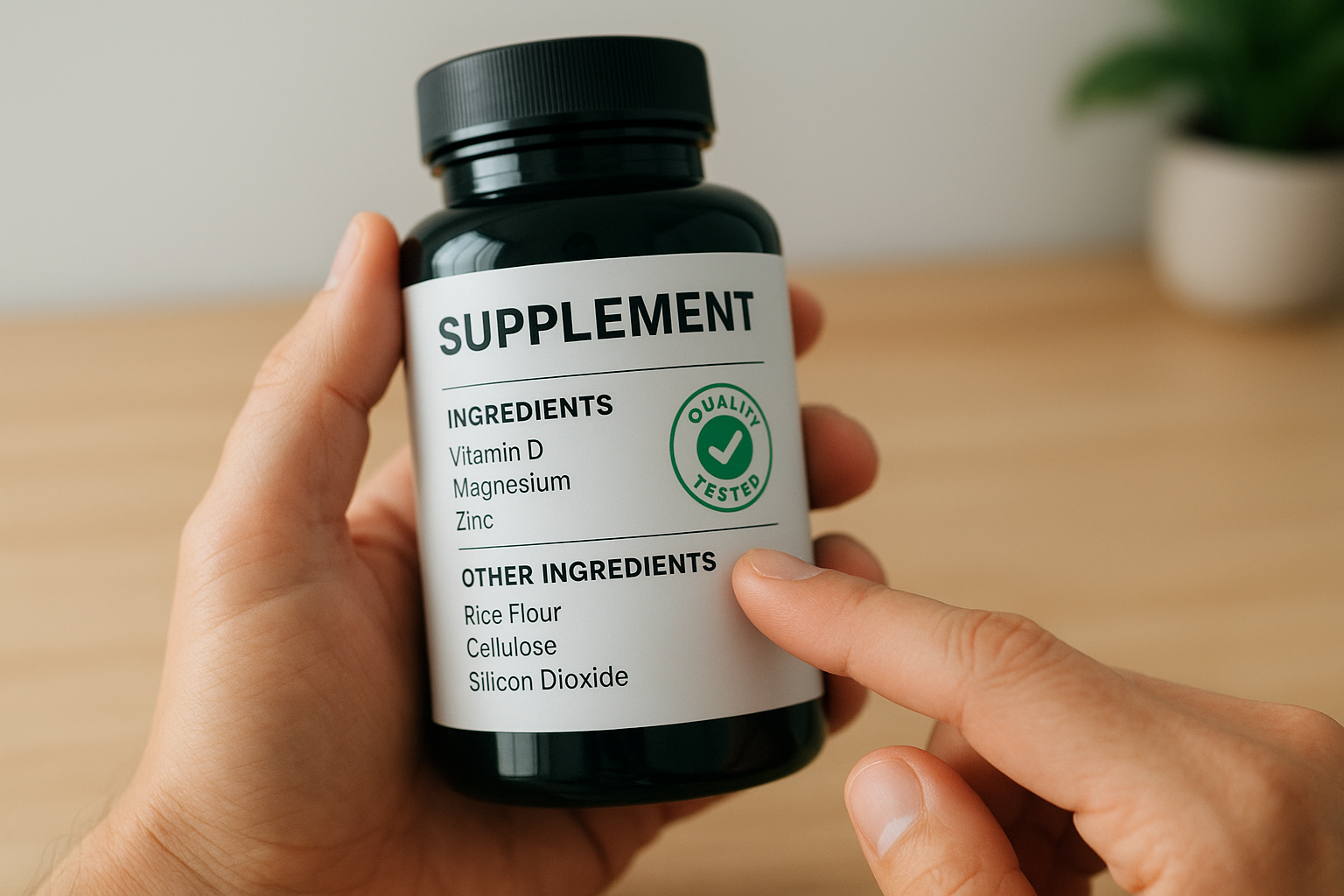
Third-party testing is the clearest indicator that a product contains what it claims and nothing that does not belong. NSF International, USP (United States Pharmacopeia), and Informed Sport are the three certifications most worth recognizing on a sleep supplement label. These organizations test independently, meaning the manufacturer does not control the outcome.
A certification seal on the front of a bottle means a lab outside the company verified the product's contents, which no marketing claim can replace.
Read the "other ingredients" list carefully
The active ingredients get most of the attention, but fillers, binders, and artificial additives sit in the "other ingredients" section and can affect tolerability, especially for people with sensitivities. Look for short, recognizable ingredient lists. Common acceptable fillers include rice flour or cellulose. Artificial dyes, titanium dioxide, and high quantities of silicon dioxide are ingredients that appear frequently in lower-quality products and offer no benefit to you.
A clean label does not guarantee effectiveness, but it does reduce your exposure to unnecessary compounds. Comparing a few competing products side by side often reveals significant differences in formulation quality that price alone will not show you. Taking ten minutes to read labels carefully before purchasing is one of the simplest ways to make better choices from these sleep support supplement reviews.
When to talk to a clinician instead
Supplements can genuinely help with mild to moderate sleep difficulties, but they are not appropriate for every situation. If your sleep problems have persisted for more than three months, affect your ability to function at work or in daily life, or come alongside other physical or mental health symptoms, a clinician should be your first call, not the supplement aisle.
Chronic insomnia lasting more than three months is a medical condition, and self-treating with supplements alone can delay care that actually resolves the root cause.
Signs your sleep problem needs professional attention
Several patterns suggest that no supplement will address the underlying issue on its own. A clinician can run the right tests when you recognize any of the following:

- Loud snoring or waking up gasping, which can indicate sleep apnea
- Extreme daytime fatigue or difficulty staying awake while driving
- Mood changes severe enough to affect your relationships or work performance
- Sleep problems that started alongside a new medication or health condition
Reading through sleep support supplement reviews is a useful first step, but these signs point to something supplements cannot fix on their own.
What a clinician can offer that supplements cannot
A primary care physician, sleep specialist, or psychiatrist can order a sleep study or blood panel to identify root causes such as thyroid disorders, iron deficiency, or anxiety disorders.
Cognitive behavioral therapy for insomnia, known as CBT-I, is currently the most evidence-backed treatment for chronic insomnia and outperforms supplements in long-term clinical studies. Getting that level of evaluation takes more effort than ordering a bottle online, but it delivers results that address the actual problem rather than masking it.
1. Beautifully Within sleep support supplements
Beautifully Within offers sleep support supplements curated with a focus on clean ingredients and overall wellness. These products sit within the broader health and wellness category on the site, selected to complement a holistic approach to beauty and self-care.
What it is
These are natural sleep formulas designed to support restful sleep without harsh chemicals or synthetic additives. Products on the site prioritize clean ingredient standards across their entire wellness catalog, consistent with the brand's sensitive-skin-first philosophy.
How it may help you sleep
These formulas typically combine relaxation-supporting compounds to ease you into sleep and reduce nighttime waking. The focus is on gentle, consistent support rather than strong sedative effects you'd find in prescription options.
What the research says in plain English
Ingredients commonly found in natural sleep support supplement reviews like those at Beautifully Within, including magnesium and botanical extracts, have clinical backing for reducing sleep onset time and improving overall sleep quality in mild to moderate disruption. Multi-ingredient formulas often address more than one sleep complaint at once.
Research consistently shows that combining complementary sleep-support ingredients can outperform single-ingredient products for people dealing with both racing thoughts and difficulty staying asleep.
Who it fits best
These supplements work best for adults managing mild sleep disruption from daily stress, lifestyle changes, or irregular schedules. Anyone wanting a non-prescription starting point before exploring stronger interventions will find them worth trying.
Safety, side effects, and interactions
Most natural sleep supplements carry low side-effect profiles, but you should still review every ingredient against your current medications before starting.
How to choose a product and dose
Look for products listing exact ingredient amounts rather than proprietary blends. Start at the lowest recommended dose and adjust over two to three weeks.
Price and value
Beautifully Within regularly offers discounts up to 60% off, making it a cost-effective entry point for trying sleep supplements without a significant upfront commitment.
2. Melatonin
Melatonin is one of the most recognized names in any sleep support supplement reviews list, and for good reason. Your body produces it naturally, but modern schedules, screens, and shift work can throw that production off significantly.
What it is
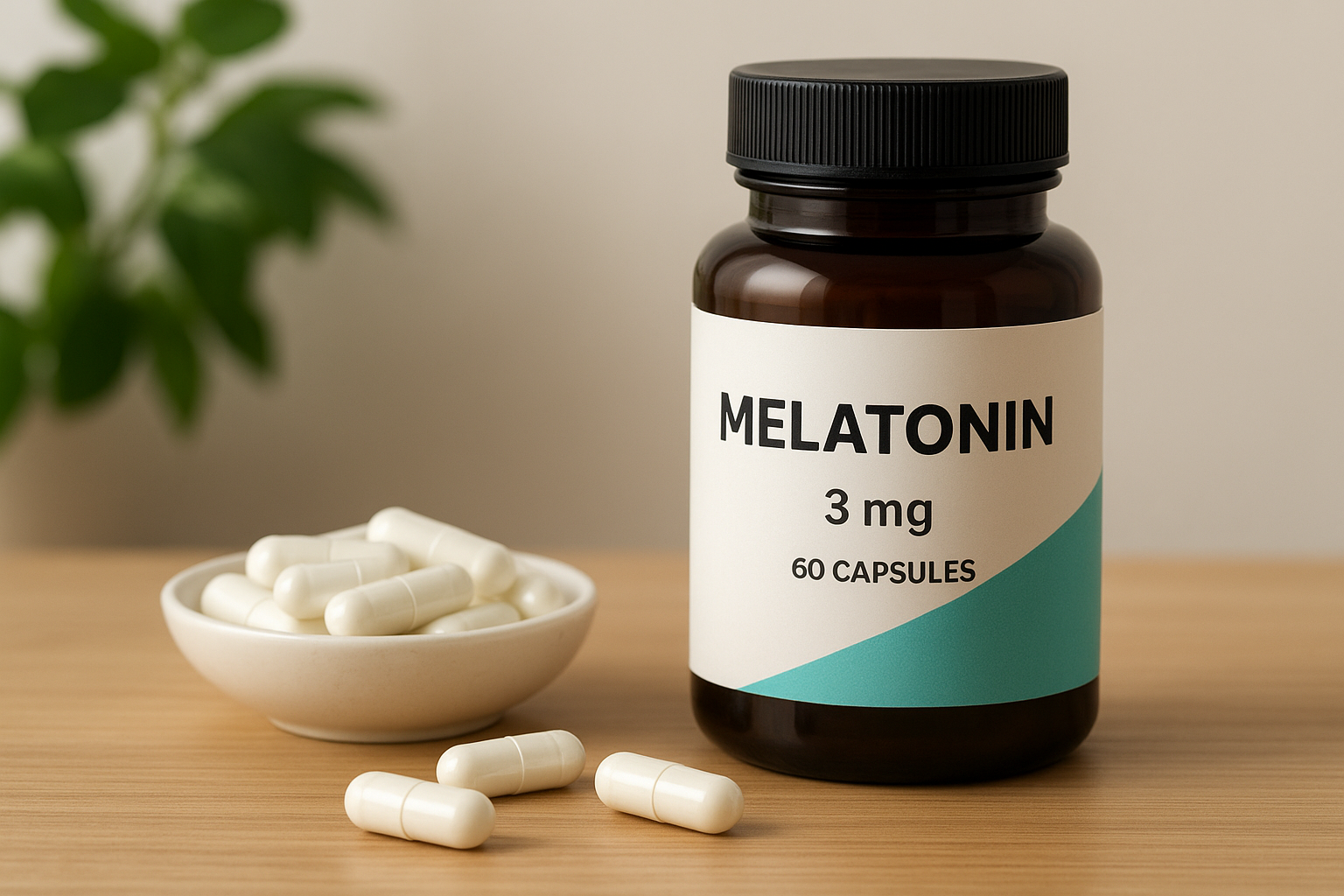
Your pineal gland produces melatonin as a hormone that signals your body when darkness arrives and sleep should follow. Supplement forms deliver synthetic or naturally derived melatonin in doses ranging from 0.5 mg to 10 mg per serving.
How it may help you sleep
Melatonin works by shifting your internal clock rather than sedating you. Taking it 30 to 60 minutes before your target bedtime nudges your body toward sleep at a time it might otherwise resist.
Melatonin is most effective for circadian rhythm disruptions like jet lag or shift work, not for general insomnia driven by stress or anxiety.
What the research says in plain English
Studies consistently show melatonin reduces sleep onset time by roughly 7 to 12 minutes and improves overall sleep quality in people with delayed sleep phase issues. Results are more modest for chronic insomnia unrelated to timing or schedule problems.
Who it fits best
Travelers managing jet lag, night-shift workers resetting their schedules, and people whose bedtime has gradually drifted later than they want benefit most from melatonin. It is a poor fit for stress-driven sleeplessness.
Safety, side effects, and interactions
The most common side effects include next-day grogginess and headaches, usually linked to taking too high a dose. It can also interact with blood thinners and sedative medications, so check with your pharmacist first.
How to choose a product and dose
Start with 0.5 mg to 1 mg rather than the common 5 mg to 10 mg products lining most store shelves. Lower doses often perform just as well with fewer reported side effects.
Price and value
Melatonin remains widely available and affordable, typically under $15 for a one to three month supply at most major retailers, making it a low-risk starting point.
3. Magnesium glycinate
Magnesium glycinate consistently earns strong marks across sleep support supplement reviews because it addresses both muscle tension and mental restlessness in one compound. It is one of the most well-tolerated forms of magnesium, which makes it a popular first choice for people new to supplementing.
What it is
Magnesium glycinate is magnesium bonded to glycine, an amino acid. This pairing improves absorption compared to cheaper forms like magnesium oxide, and it is far less likely to cause digestive upset than other magnesium compounds.
How it may help you sleep
Magnesium supports your nervous system by activating GABA receptors, which help quiet neural activity before sleep. Low magnesium levels are directly linked to lighter, more fragmented sleep, so correcting a deficiency can produce noticeable improvements.
Many adults fall short of their daily magnesium intake through diet alone, making supplementation a practical gap-filler rather than an optional add-on.
What the research says in plain English
Clinical studies show magnesium supplementation reduces the time it takes to fall asleep and increases sleep efficiency in older adults with deficiency. Evidence in younger, well-nourished populations is thinner, but user-reported outcomes remain consistently positive.
Who it fits best
People dealing with muscle tension, nighttime cramps, or stress-related restlessness tend to respond best. It is especially useful for adults over 50, whose magnesium absorption naturally declines with age.
Safety, side effects, and interactions
At standard doses, side effects are rare. Very high doses can cause loose stools. It may interact with certain antibiotics and medications for osteoporosis, so check with your pharmacist before combining.
How to choose a product and dose
Look for 200 mg to 400 mg of elemental magnesium per serving in glycinate form. Avoid products listing only total compound weight without specifying elemental magnesium content.
Price and value
Magnesium glycinate typically runs $15 to $30 for a two-month supply, offering solid value given its dual role in sleep and general muscle recovery.
4. L-theanine
L-theanine is an amino acid found naturally in green tea, and it has become one of the more popular entries in sleep support supplement reviews for people who want relaxation without sedation. Unlike many sleep aids, it tends to leave users feeling calm rather than groggy, which makes it appealing for those who need to function clearly the next morning.
What it is
L-theanine is a non-protein amino acid that crosses the blood-brain barrier and directly influences brain activity. You find it naturally in tea leaves, but supplement doses deliver far higher concentrations than a standard cup of tea provides, typically in the 100 mg to 400 mg range.
How it may help you sleep
L-theanine promotes relaxation by increasing alpha brain wave activity, the same pattern associated with a calm, focused mental state. It also boosts levels of GABA, serotonin, and dopamine, which together reduce mental noise and make it easier to unwind before bed.
L-theanine does not force sleep; it removes the mental tension that prevents your body from settling into it naturally.
What the research says in plain English
Studies show L-theanine improves sleep quality and reduces anxiety without causing next-day sedation. Research published in peer-reviewed sleep journals found that participants taking 200 mg nightly reported better sleep efficiency and fewer nighttime disturbances compared to placebo groups.
Who it fits best
It works best for people whose sleep problems stem from racing thoughts or low-grade anxiety rather than a misaligned sleep schedule. It pairs well with magnesium glycinate for a complementary, non-sedating nighttime stack.
Safety, side effects, and interactions
L-theanine has a strong safety record at standard doses, with few reported side effects. It may enhance the effect of blood pressure medications, so flag that with your clinician if relevant.
How to choose a product and dose
Start with 100 mg to 200 mg about 30 to 60 minutes before bed. Look for products listing Suntheanine, a patented, clinically studied form of L-theanine with verified purity.
Price and value
L-theanine typically costs $15 to $25 for a two to three month supply, placing it among the more affordable options on this list relative to the consistency of results users report.
5. Glycine
Glycine is one of the quieter entries in sleep support supplement reviews, but it earns its place through solid clinical evidence and a unique mechanism that most people have never considered. Unlike other options on this list, it targets core body temperature to trigger sleep rather than sedating you directly.
What it is
This amino acid is a non-essential compound your body produces naturally and also absorbs from protein-rich foods like meat, fish, and dairy. Supplement forms deliver concentrated doses, typically 3 grams per serving, that dietary intake alone rarely matches.
How it may help you sleep
Glycine works by lowering your core body temperature, a physiological shift your body normally initiates at sleep onset. It also calms neural activity in the brain, which supports deeper, less fragmented sleep throughout the night.
Lowering core body temperature is one of the most reliable biological signals that sleep is approaching, and glycine accelerates that shift directly.
What the research says in plain English
Japanese clinical studies found that participants taking 3 grams of glycine before bed fell asleep faster, spent more time in slow-wave sleep, and reported significantly less next-day fatigue compared to those taking a placebo.
Who it fits best
People dealing with fragmented sleep or early morning waking tend to respond best, since glycine targets sleep depth rather than sleep onset alone. It also works well for anyone who wants no residual drowsiness the following morning.
Safety, side effects, and interactions
At the studied dose, glycine has an excellent safety record. Few users report side effects, and no significant drug interactions appear in current research literature.
How to choose a product and dose
Take 3 grams around 30 to 60 minutes before bed. Prioritize pure glycine powder with minimal fillers over capsule products, which often require multiple pills to hit the effective dose.
Price and value
Glycine powder typically costs $15 to $20 for a two to three month supply, making it one of the strongest value options across this entire guide.
6. Valerian root
Valerian root is one of the oldest herbal sleep remedies in recorded history, and it still appears regularly in sleep support supplement reviews today because it delivers real, measurable results for a specific type of sleeper.
What it is
This herb comes from a flowering plant native to Europe and Asia whose root has been used medicinally for centuries. Supplements typically arrive in capsule, tablet, or liquid extract form, with standardized extracts measuring valerenic acid content as a quality marker.
How it may help you sleep
Valerian appears to work by increasing GABA availability in the brain, similar to how some anti-anxiety medications function. Higher GABA levels reduce the nervous system activity that keeps you alert and restless when you should be winding down.
Research suggests valerian works best after two weeks of consistent use rather than as a one-night fix.
What the research says in plain English
Studies show valerian reduces sleep onset time and improves sleep quality, particularly in people dealing with mild insomnia. Results tend to be modest but consistent across trials, with most participants reporting better subjective sleep quality rather than dramatic objective changes.
Who it fits best
Adults managing mild insomnia linked to stress or nervous tension get the most consistent benefit here. People whose sleep disruption stems from timing issues or physical causes tend to see less reliable results from valerian alone.
Safety, side effects, and interactions
Common side effects include vivid dreams and mild headaches, especially during the first week of use. It can amplify sedative medications, so check with your pharmacist if you take any anti-anxiety prescriptions.
How to choose a product and dose
Take 300 mg to 600 mg of standardized extract about 30 to 60 minutes before bed. Prioritize products that list valerenic acid content as a percentage, since that compound drives most of the measurable effects.
Price and value
Most valerian supplements cost $10 to $20 for a one to two month supply, placing it among the most budget-friendly herbal options on this list.
7. Valerian plus hops
Valerian root is effective on its own, but pairing it with hops produces noticeably stronger results. Many sleep support supplement reviews flag this duo as the more reliable option for people who found standalone valerian underwhelming.
What it is
This formula combines valerian root extract with hops strobiles, the female flower clusters of the hop plant used in brewing. Both botanicals target the nervous system through complementary pathways, which is why manufacturers frequently combine them into a single capsule or tablet.
How it may help you sleep
Together, valerian and hops amplify each other's GABA-enhancing effects, producing stronger relaxation signals than either ingredient achieves alone. Hops also appear to lower core body temperature, adding a second mechanism that supports sleep onset.
Research suggests combining valerian with hops produces more consistent sleep improvements than valerian taken on its own.
What the research says in plain English
Clinical trials comparing valerian-plus-hops formulas against placebo found statistically significant improvements in sleep quality, particularly for mild to moderate insomnia. The combined formula outperformed standalone valerian in head-to-head comparisons across several European studies.
Who it fits best
This combination works best for adults dealing with stress-driven insomnia and difficulty staying asleep through the night. It is a strong next step if standalone valerian gave you partial results but not complete relief.
Safety, side effects, and interactions
Sedative medications and alcohol interact with this combination more strongly than with valerian alone. Hops can also affect hormone-sensitive conditions, so consult your clinician if that applies to you.
How to choose a product and dose
Look for 300 mg to 500 mg of valerian extract paired with at least 60 mg of hops strobiles. Take it 30 to 45 minutes before bed for best results.
Price and value
Most valerian-plus-hops products run $15 to $25 for a one to two month supply. That modest price increase over standalone valerian makes it a low-cost upgrade worth testing before moving to stronger options.
8. Ashwagandha
Ashwagandha appears in many sleep support supplement reviews as the adaptogen that targets what most other supplements skip entirely: chronically elevated stress hormones that keep your body in a state of high alert long after the workday ends.
What it is
The plant behind this supplement is Withania somnifera, a root used in Ayurvedic medicine for thousands of years. Most modern supplements deliver it as a standardized extract, either KSM-66 or Sensoril, both of which concentrate the active withanolide compounds responsible for measurable effects.
How it may help you sleep
This adaptogen works by lowering cortisol, the stress hormone that keeps your nervous system activated when you should be winding down. Reduced cortisol signals your body that the pressure has passed, making it easier for you to fall and stay asleep.
When stress hormones stay elevated into the evening, no sleep aid that ignores cortisol will fully solve the problem.
What the research says in plain English
Clinical studies show ashwagandha significantly reduces sleep onset time and improves sleep quality, particularly in adults reporting high stress. A 2019 randomized controlled trial found that participants taking 300 mg twice daily reported measurable gains in both sleep efficiency and next-day alertness.
Who it fits best
It works best for people whose sleep disruption links directly to stress, anxiety, or burnout. If a wired, restless feeling at bedtime describes your nights, ashwagandha targets that pattern more directly than melatonin or valerian would.
Safety, side effects, and interactions
Most people tolerate it well, but thyroid conditions and autoimmune disorders require clinician clearance first. It can also interact with immunosuppressant and thyroid medications.
How to choose a product and dose
Look for 300 mg to 600 mg of KSM-66 or Sensoril per serving. Both forms carry verified withanolide content and direct clinical support.
Price and value
Ashwagandha typically runs $20 to $35 for a two-month supply, reflecting the cost of standardized, clinically tested extract over generic root powder.
9. Tart cherry
Tart cherry is one of the most underrated options across all sleep support supplement reviews, yet it delivers measurable results through a mechanism that surprises most people: natural melatonin content combined with anti-inflammatory compounds that address both the timing and quality of your sleep.
What it is
The Montmorency variety of tart cherry contains naturally occurring melatonin and anthocyanins. Your supplement options include concentrated juice, capsules, or powder standardized to deliver consistent amounts of both active compounds per serving.
How it may help you sleep
Tart cherry raises circulating melatonin levels and reduces inflammatory markers, which together support longer, less interrupted sleep. Its anti-inflammatory effect also reduces the physical discomfort that fragments rest, making it useful beyond just timing your sleep cycle.
Research suggests tart cherry increases total sleep time by an average of 84 minutes in older adults with insomnia.
What the research says in plain English
Published trials show that tart cherry juice increases total sleep time and lowers insomnia severity meaningfully in older adults. The improvement appears to stem from its dual action on melatonin and inflammation rather than either pathway working in isolation.
Who it fits best
This supplement works best for older adults and athletes dealing with fragmented sleep tied to inflammation or physical recovery. If your disrupted sleep follows intense exercise or chronic physical stress, tart cherry addresses those specific patterns well.
Safety, side effects, and interactions
Most people tolerate it without significant side effects. Your main consideration with juice forms is sugar content, which matters if you monitor carbohydrate intake or manage diabetes.
How to choose a product and dose
Look for Montmorency tart cherry extract standardized to a specific anthocyanin percentage. A 480 ml daily serving of juice concentrate or the capsule equivalent matches the amounts used in clinical trials.
Price and value
Tart cherry supplements typically cost $20 to $35 per month, with juice concentrates running slightly higher than capsule forms for the same effective dose.
10. CBD
CBD rounds out these sleep support supplement reviews as the most complex option on the list. The science is still developing, but enough real-world data exists to give you a clear picture of who it helps and where it falls short.
What it is
CBD, or cannabidiol, is a non-intoxicating compound derived from the hemp plant. It contains no THC, the psychoactive component associated with marijuana, making it federally legal in the United States when sourced from compliant hemp.
How it may help you sleep
CBD appears to reduce anxiety and lower physiological arousal before bed by interacting with your endocannabinoid system. Rather than inducing sedation, it removes the tension that keeps you alert when you should be winding down.
What the research says in plain English
Research is promising but still early. Studies show CBD reduces anxiety and improves sleep scores in adults dealing with anxiety-driven insomnia. Evidence for other sleep complaints remains thin, and larger randomized trials are still needed.
Current research supports CBD most strongly for anxiety-related sleep disruption rather than general insomnia.
Who it fits best
CBD works best for adults whose sleeplessness links directly to anxiety or stress, similar to ashwagandha but through a different pathway. It is a poor fit if your issue is a misaligned sleep schedule or physical discomfort.
Safety, side effects, and interactions
CBD can interact with blood thinners and certain antiepileptic medications by affecting liver enzyme activity. Common side effects include mild drowsiness and changes in appetite.
How to choose a product and dose
Select products with a certificate of analysis from a third-party lab confirming CBD content and THC levels. Start with 15 mg to 25 mg nightly and adjust from there.
Price and value
Quality CBD products typically run $30 to $60 per month, making it one of the pricier options on this list. Third-party tested products justify the cost by guaranteeing accurate dosing.
Next steps for better sleep
These sleep support supplement reviews give you a solid foundation for narrowing down your options, but the next step is straightforward: pick one supplement that matches your specific sleep pattern and test it consistently for three to four weeks before drawing any conclusions. Jumping between products too quickly prevents you from knowing what actually works for your body. Start at the lowest effective dose, track your sleep honestly, and adjust only after giving a product a fair run.
Your sleep quality connects directly to how your skin repairs, how your body recovers, and how confidently you move through your day. That connection between inner wellness and outer results is exactly what drives everything at Beautifully Within. If you're ready to take a broader look at what supports your health from the inside out, browse the wellness supplements collection and find products built to help you look, feel, and function at your best.
0 comments