

You found a foundation you love, applied it with care, and within an hour your skin is red, itchy, and angry. If that sounds familiar, you're not alone. Roughly half of people self-report having sensitive skin, and for them, makeup tips for sensitive skin aren't optional, they're essential. The wrong product or technique can turn a simple beauty routine into a full-blown flare-up.
The good news? Wearing makeup with sensitive skin isn't an all-or-nothing situation. With the right prep, the right formulas, and a few smart habits, you can build a routine that looks great and keeps irritation off the table. It comes down to knowing what to reach for, and what to avoid. At Beautifully Within, we focus on helping people find products that are genuinely good for their skin, because looking your best shouldn't come at the cost of comfort.
Below, you'll find eight practical tips covering everything from skin preparation and ingredient awareness to hygiene practices and product types worth trying. Each one is designed to help you enjoy makeup without the redness, stinging, or breakouts that sensitive skin often brings along for the ride.
1. Start with a Sensitive-Skin Kit at Beautifully Within
Building your kit around sensitive skin from the start saves you money and spares you the frustration of products that cause flare-ups. At Beautifully Within, the product range is curated with skin health in mind, so you can shop with fewer second-guesses and more confidence.
What "Sensitive-Skin Friendly" Makeup Actually Means
"Sensitive-skin friendly" isn't just marketing copy. It refers to products formulated with fewer potential irritants, shorter ingredient lists, and no synthetic fragrances or harsh preservatives. A product earns that description when it skips the ingredients that most commonly trigger redness, stinging, or breakouts in reactive skin types.
Not all products labeled this way are equal, though. Some brands use the term loosely, while others back it with dermatologist testing or clinical data. Reading the actual ingredient list, rather than relying on the front-of-label claim, gives you a much clearer picture of what you're putting on your skin.
How to Filter Products by Formula and Finish for Your Needs
Your skin's specific reaction pattern shapes which formulas work best. If your skin runs dry and reactive, cream or serum-based formulas with hydrating ingredients like hyaluronic acid or ceramides are your best starting point. If your skin is oily but still sensitive, a lightweight, water-based formula in a matte or satin finish keeps you comfortable without clogging pores.
A Starter Kit Checklist for Face, Eyes, and Lips
A focused starter kit keeps your routine simple and limits the number of new ingredients hitting your skin at once. Here is what to prioritize:
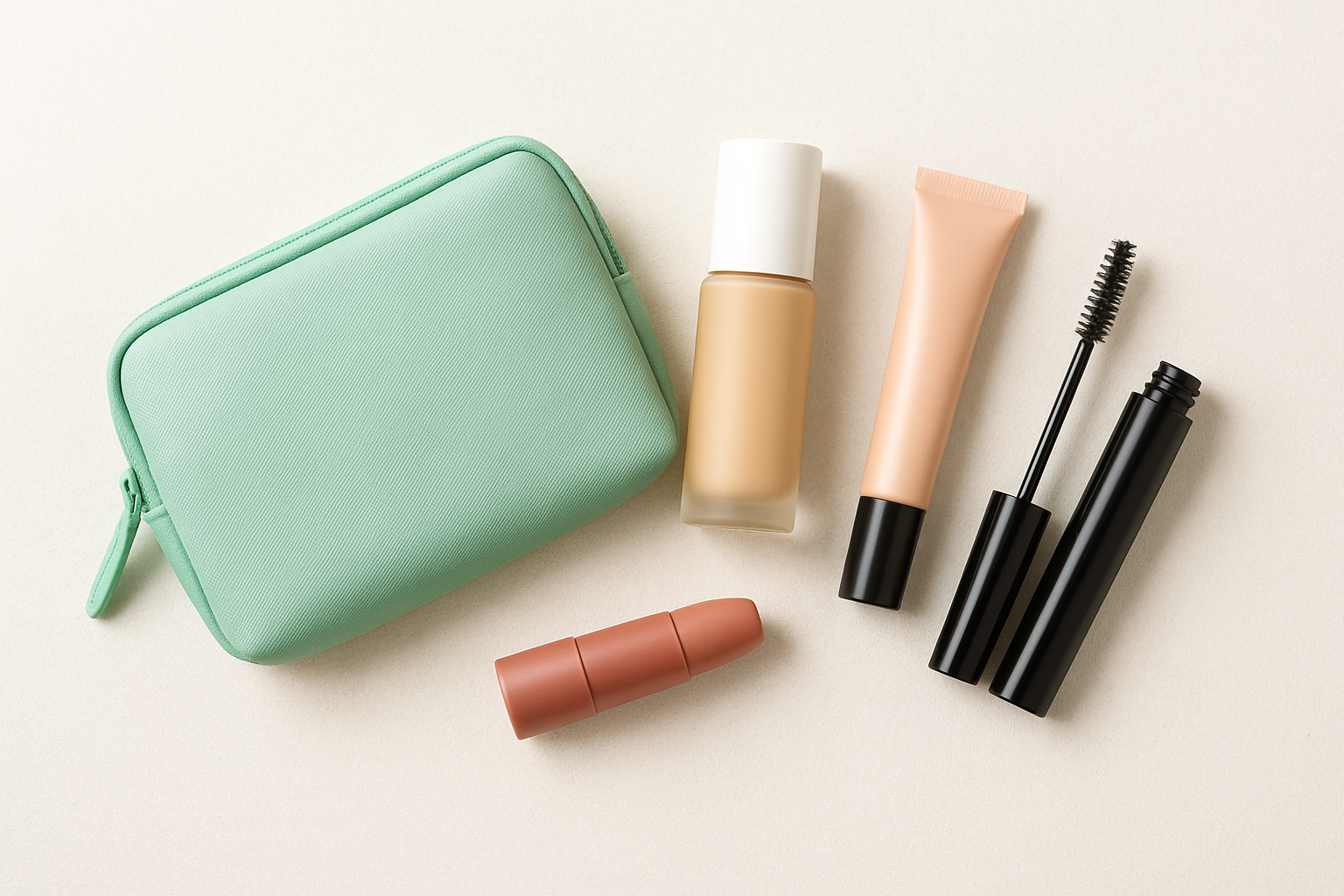
- Face: A gentle tinted moisturizer or mineral foundation, plus a fragrance-free concealer
- Eyes: An ophthalmologist-tested mascara and a cream eyeshadow in a neutral shade
- Lips: A hydrating lip tint or balm with minimal added fragrance
Starting with fewer products and adding one at a time is one of the most practical makeup tips for sensitive skin you can follow.
When to Switch to Fragrance-Free and Mineral-First Options
If your skin flares after introducing a new product, moving to fragrance-free and mineral-based formulas is the clearest next step. Minerals like zinc oxide and titanium dioxide sit on top of the skin rather than absorbing into it, making them far less likely to trigger a reaction for most sensitive skin types.
2. Prep Skin with a Barrier-First Routine
What you put on your skin before makeup matters just as much as the makeup itself. A well-prepped skin barrier holds moisture in, keeps irritants out, and gives your products a stable surface to sit on.
Cleanse without Stripping or Leaving Residue
Start with a gentle, low-pH cleanser that removes overnight buildup without leaving your skin tight or dry. Foaming cleansers with sulfates often strip too much, so a cream or gel cleanser with mild surfactants is a safer choice for reactive skin.
Hydrate and Moisturize so Makeup Glides on
Apply a fragrance-free moisturizer while your skin is still slightly damp to lock in hydration. Look for ceramides or hyaluronic acid in the formula. These ingredients reinforce the skin barrier and create a smooth, comfortable base that helps foundation apply evenly rather than clinging to dry patches.
Hydrated skin is one of the most overlooked makeup tips for sensitive skin, but it directly affects how your products perform and how your skin reacts.
Sunscreen That Won't Sting or Pill under Makeup
Choose a mineral sunscreen with zinc oxide as the active ingredient. These sit on the skin's surface rather than absorbing into it, which significantly reduces the chance of stinging. Let it fully dry before applying makeup to prevent pilling.
When to Skip Exfoliation and Actives before Makeup
Avoid retinoids, AHAs, and physical scrubs on any day you plan to wear makeup. These ingredients temporarily weaken the skin barrier, which makes it far more likely that makeup ingredients will penetrate and irritate your skin.
3. Patch Test and Introduce Products One at a Time
Introducing too many new products at once makes it impossible to track what triggered a reaction. Patch testing and a one-at-a-time rollout are among the most reliable makeup tips for sensitive skin, giving your skin a fair chance to respond before you commit to a full routine.
How to Patch Test Makeup and Skincare the Right Way
Apply a small amount of product to the inside of your wrist or behind your ear and leave it unwashed for 24 hours. These areas are reactive enough to give you a useful signal before you apply anything to your face.
How Long to Wait and What Reactions to Watch for
Wait at least 24 to 48 hours before putting a new product on your face. Look for redness, itching, or small bumps. Mild tingling or warmth are also worth treating as early warning signs rather than brushing off.
How to Isolate the Culprit When Irritation Happens
If irritation appears, stop all new products immediately and return to your known-safe routine. Bring each item back one at a time, leaving 48 hours between each, so you can identify exactly which formula caused the issue.
Isolating one variable at a time is the clearest path to understanding your skin's triggers.
What to Do If You React During Wear
Rinse the product off immediately with cool water and follow with a gentle cleanser. Apply a fragrance-free moisturizer to support your barrier and avoid adding anything else until your skin has fully settled.
4. Learn Ingredient Red Flags and Label Tricks
Reading labels is one of the most practical makeup tips for sensitive skin you can develop. Understanding which ingredients cause reactions puts real control back in your hands before irritation even starts.
Common Irritants That Show Up in Makeup
Makeup formulas often contain parabens, synthetic dyes, and bismuth oxychloride that cause itching or redness in sensitive skin. Check labels for these common offenders:
- Bismuth oxychloride (filler in mineral makeup)
- FD&C or D&C dyes (synthetic colorants)
- Methylparaben or propylparaben (preservatives)
Fragrance Naming Loopholes and Hidden Sensitizers
"Fragrance" or "parfum" is a single word that covers dozens of undisclosed chemicals, many of them known sensitizers. Treat any product listing it as a potential trigger for your skin.
Some brands list individual components like linalool or limonene separately, which looks more transparent but carries the same irritation risk.
A fragrance-free label offers more protection than "unscented," which may still contain masking agents.
Alcohol, Essential Oils, and "Tingly" Ingredients to Avoid
Denatured alcohol, listed as alcohol denat. or SD alcohol, evaporates fast and strips your skin barrier. Essential oils like peppermint and lavender are natural but still highly reactive for sensitive skin.
Anything that produces a cooling or tingling feeling likely contains menthol, camphor, or citrus extracts, all of which drive inflammation in reactive skin.
When "Clean" and "Hypoallergenic" Labels Mislead
Neither "clean" nor "hypoallergenic" is a regulated term in the US, so brands apply them freely. Read every ingredient rather than trusting the front label. Watch for these misleading claims:
- "Dermatologist-tested" (not the same as dermatologist-approved)
- "Natural" (does not mean non-irritating)
5. Pick the Right Base Formulas for Your Skin Type
Choosing the wrong base is one of the fastest ways to set off reactive skin. The texture, finish, and ingredient profile of your foundation and primer all interact directly with your barrier, so matching formula to skin type is one of the most practical makeup tips for sensitive skin in your toolkit.
Primer or No Primer and When Each Helps
Primer adds an extra layer between your skin and foundation, which can protect your barrier or overwhelm it with unnecessary ingredients. If your skin reacts easily, skipping primer entirely and relying on a well-moisturized base often works best.
When you do reach for a primer, choose a silicone-free, fragrance-free formula with a short ingredient list and no alcohol near the top.
Foundation Textures That Behave on Dry, Flaky Skin
Dry, sensitive skin grips onto powder and matte foundations, making them look patchy and cling to flaky areas. A lightweight serum foundation or tinted moisturizer blends more smoothly and adds hydration rather than pulling moisture away.
Options That Work for Oily but Reactive Skin
Oily reactive skin needs oil control without harsh drying agents. A water-based formula in a satin or natural finish gives you coverage without the tight, stripped feeling that heavy matte products often leave behind.
Buildable, sheer coverage is easier on reactive skin than one heavy layer applied all at once.
Concealer Placement That Won't Crease or Sting
Apply concealer with your fingertip using light tapping motions instead of dragging the product across your skin. Concentrate coverage only where you need it, because over-applying irritates sensitive areas and increases the chance of stinging or creasing throughout the day.
6. Make Eye Makeup Safer for Sensitive Eyes
The eye area has some of the thinnest, most reactive skin on your face. Getting your eye makeup right is one of the most overlooked makeup tips for sensitive skin, but it makes a real difference in how comfortable you feel by midday.
Mascara and Liner Choices for Watery or Itchy Eyes
Look for ophthalmologist-tested mascaras free from synthetic fragrances and preservatives like benzalkonium chloride. For liner, a pencil or felt-tip formula causes less irritation than liquid liners that sit directly at the lash line.
Eyeshadow Finishes That Reduce Fallout and Irritation
Pressed matte or satin shadows shed far less fallout than loose pigments or glitter, which can drift into your eyes and cause stinging. Cream eyeshadows are another solid option since they apply cleanly and tend to stay put throughout the day.
Fallout from eyeshadow is a common but easy-to-miss cause of eye irritation for sensitive skin types.
How to Avoid Migration into the Lash Line
Apply liner outside the waterline rather than inside it to limit direct contact with your eye. Staying a few millimeters from the lash base also helps the product hold its position longer without irritating the lid rim.
Removal Tactics That Protect Lashes and Lids
Use a micellar water or oil-based remover on a cotton pad, hold it over your eye for ten seconds, then wipe gently. This approach dissolves makeup without rubbing, protecting both your lashes and the delicate skin on your lids.
7. Keep Tools Clean and Use Low-Friction Technique
Dirty brushes and heavy-handed application are two of the most common hidden triggers for reactive skin. Both are easy to fix once you know what to look for.
Brush and Sponge Hygiene That Prevents Flare-ups
Bacteria and old product build up in brushes quickly, and applying them to your face transfers that buildup directly onto your skin. Clean your brushes weekly with a gentle, fragrance-free brush cleanser and let them dry fully before the next use.
Application Pressure and Blending Methods That Reduce Redness
Heavy rubbing breaks down your barrier and pushes product into pores. Use light, stippling motions with a damp sponge or a soft, fluffy brush to blend without friction, which keeps redness from spiking mid-application.
Light pressure is one of the simplest makeup tips for sensitive skin that pays off immediately.
How to Avoid Over-Layering and Product Overload
Each layer you add increases the ingredient load on your skin. Apply thin, buildable layers and wait a moment between each to let the product settle before deciding whether you need more coverage in specific areas.
Expiration Dates and When to Toss Old Makeup
Expired makeup grows bacteria and breaks down preservatives, making it far more likely to cause a reaction. Check the period-after-opening symbol on each product and replace anything that has changed in smell, texture, or color before its listed timeframe runs out.
8. Remove Makeup Completely without Rubbing
Removal is where many people with reactive skin unknowingly cause the most damage. Rubbing and tugging to get makeup off strips your barrier and leaves skin raw before it even starts to recover overnight. Treating removal as carefully as you treat application is one of the most underrated makeup tips for sensitive skin.
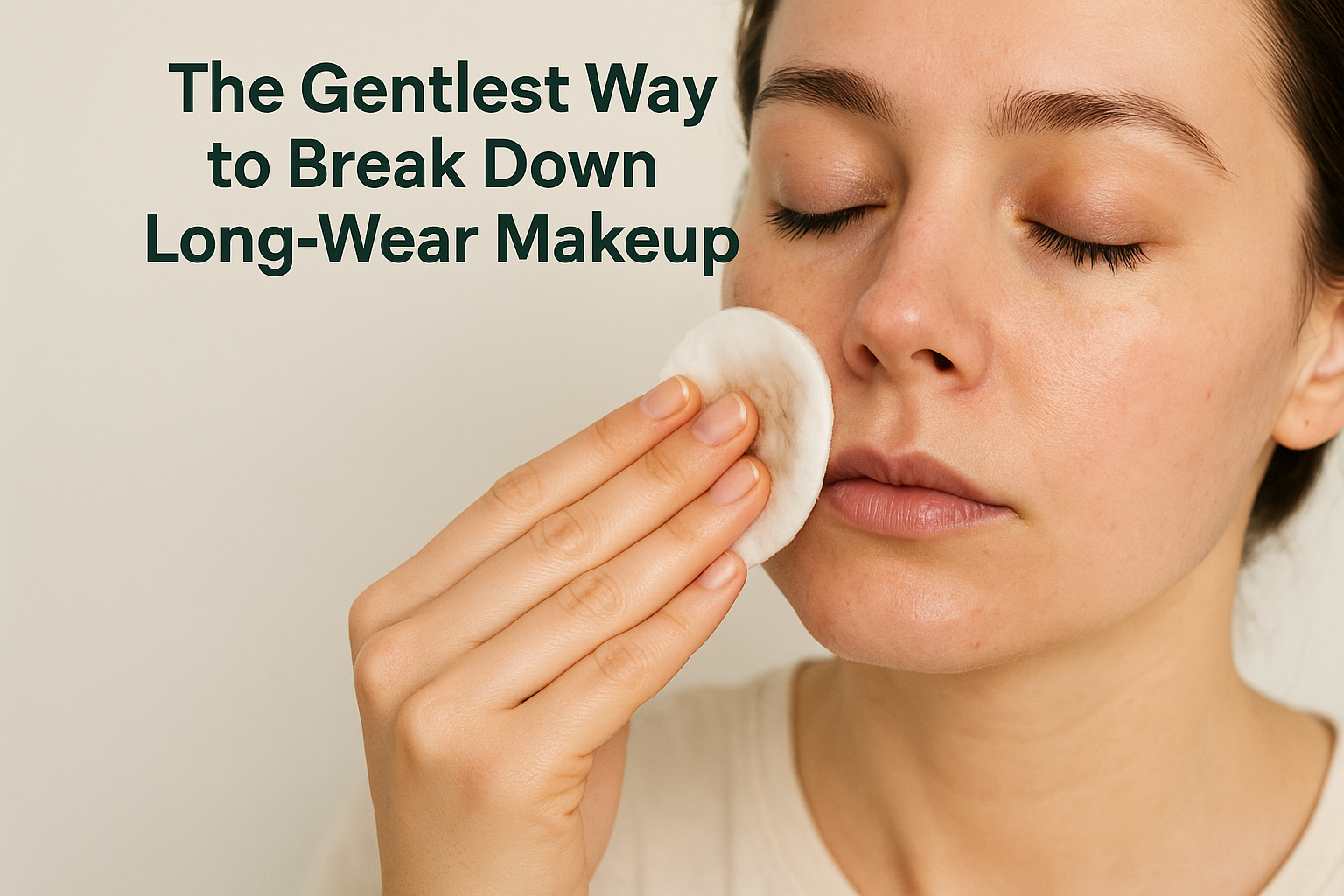
The Gentlest Way to Break Down Long-Wear Makeup
Press a cotton pad soaked in micellar water or a fragrance-free cleansing oil against your skin for ten seconds before wiping. This dissolves product without you needing to drag the pad across your face. Long-wear and waterproof formulas need oil-based removal specifically because water-based removers are not strong enough to fully break them down.
Double Cleansing without Stripping the Barrier
Follow your oil or micellar step with a gentle, low-pH gel or cream cleanser to clear any remaining residue. Keep water lukewarm rather than hot, since hot water activates redness in reactive skin. Rinse thoroughly and pat dry.
Incomplete removal leaves pigment and preservatives on your skin overnight, which increases the chance of a delayed reaction by morning.
What to Do If Your Remover Stings or Leaves Film
Switch to plain micellar water with no added fragrance or alcohol if your current remover stings. Rinse with water afterward to remove any residue.
Nighttime Recovery Steps after a Reactive Day
Apply a fragrance-free barrier cream with ceramides and let your skin rest without actives. Keep your routine to two or three products so your barrier can fully repair overnight.
Your Irritation-Free Makeup Game Plan
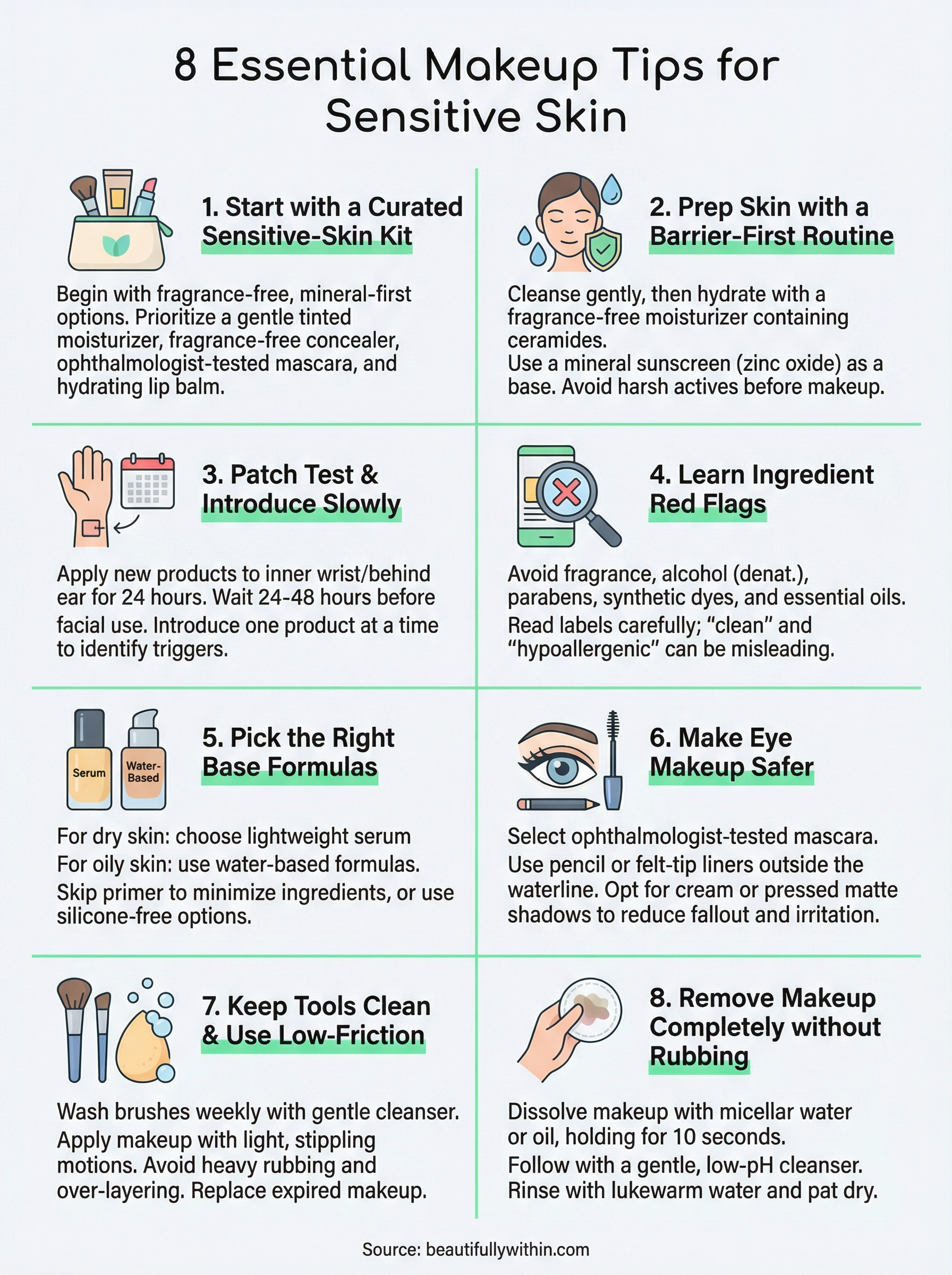
Sensitive skin responds well to consistency and simplicity. The eight makeup tips for sensitive skin in this article give you a clear framework: prep your barrier, choose low-irritant formulas, patch test every new product, read ingredient labels with care, keep your tools clean, and treat removal as part of the routine rather than an afterthought. Each step builds on the last, so skipping one creates a gap that your skin will notice first.
Putting it all together doesn't have to feel overwhelming. Start with two or three solid products you trust, then add items one at a time as your skin confirms what it handles well. Pay attention to how your skin looks the morning after a full face of makeup, since that tells you more than any label will. For a curated starting point, browse our skincare collection to find gentle, barrier-friendly options that pair well with a sensitive-skin makeup routine.
✨ Shop the Look at Beautifully Within
Loved this guide? Discover our hand-picked picks that pair perfectly with your routine:
- 👉 Professional Airbrush Foundation — 3 Shade Set — Makeup
- 👉 4-Style Waterproof Eyeliner Stamp Pen — Makeup
- 👉 Fresh Start Hydrating Cleanser & Toner Duo — Skincare Set
New customer? Get 15% off orders $50+ with code WITHIN15 — plus free shipping over $75.
0 comments