

If your skin turns red, bumpy, or irritated every time you pick up a razor, you're not alone. Millions of people struggle with shaving tips for sensitive skin that actually work, not just generic advice that ignores how reactive their skin really is. The sting of razor burn, the frustration of ingrown hairs, and the dread of another breakout can make shaving feel like a lose-lose situation. But it doesn't have to be that way. A few deliberate changes to your routine can make a real difference.
At Beautifully Within, we believe caring for your skin is one of the most personal forms of self-care, and that includes the way you shave. We've spent time testing and curating skincare products built for sensitivity, and we know firsthand that the right approach matters just as much as the right product. Your skin deserves more than a rushed routine and a dull blade.
This guide walks you through a complete step-by-step shaving routine designed to protect sensitive skin before, during, and after every shave. You'll learn how to prep your skin properly, which tools and products reduce irritation, and what post-shave habits keep redness and bumps at bay. Whether you shave your face, legs, or body, these tips apply across the board, and they work.
What triggers razor burn and bumps
Razor burn and ingrown hairs aren't random. Sensitive skin has a thinner, more reactive barrier than other skin types, which means it responds to friction, dryness, and harsh chemicals faster and more intensely. When you shave, you're dragging a blade across the surface of your skin repeatedly, and that mechanical action alone puts your barrier under stress. Understanding what specifically sets off the reaction gives you a real foundation for fixing it.
Your skin barrier and why it matters
Your skin barrier is the outermost layer that locks in moisture and keeps irritants out. When that barrier is already compromised, even a single pass with a dull or dry blade can trigger inflammation, redness, and swelling. Sensitive skin tends to have lower levels of natural moisturizing factors and is more prone to transepidermal water loss, which means it dries out faster and takes longer to recover after each shave. The result is a cycle of irritation that keeps repeating until you address the root cause rather than just treating the symptoms.
Keeping your skin barrier intact before, during, and after shaving is the single most effective way to prevent razor burn on sensitive skin.
The most common shaving mistakes that cause irritation
Most razor burn comes down to a handful of repeatable mistakes rather than your skin being impossible to work with. Identifying these habits early makes every other shaving tip for sensitive skin far more effective. Here are the most frequent triggers you should know:
- Dry shaving: No lubrication means maximum friction. A quick rinse is not enough to protect the surface.
- Shaving against the grain: Hair follicles sit at an angle, and going against it forces the blade to cut closer and deeper, which raises the chance of ingrown hairs.
- Using a dull blade: A blade past its useful life drags rather than cuts, tearing hair at the root instead of slicing it cleanly.
- Skipping pre-shave prep: Cold, dry skin does not allow the blade to glide, which multiplies the number of passes you need.
- Applying alcohol-heavy products after: Post-shave formulas with high alcohol content strip your barrier exactly when it needs to rebuild.
Recognizing these patterns is the first step toward breaking them. Every one of these triggers is preventable with the right routine and product choices, which is exactly what the rest of this guide covers.
Step 1. Prep your skin and soften hair
Preparation is the step most people skip, and it's the reason so many shaving tips for sensitive skin fall apart before the blade even touches the surface. Rushing into a dry shave sets you up for friction, tugging, and inflammation that takes hours to settle. Spending two to three minutes on proper prep changes the entire experience.
Time your shave with warm water exposure
The best time to shave is at the end of a warm shower, not before it or instead of it. Warm water softens the hair shaft so it cuts cleanly, and it reduces the resistance your blade meets with each pass. If you prefer shaving at a sink, hold a warm, damp cloth against the skin for at least 90 seconds before you start.
Softened hair requires less blade pressure to cut, which directly reduces the irritation your sensitive skin experiences with every stroke.
Avoid hot water here. Water that is too hot strips your skin's natural oils before you've even picked up a razor, which leaves the surface drier and more reactive than when you started.
Apply a pre-shave layer to protect the surface
After warming the skin, apply a thin layer of a gentle, fragrance-free shaving cream or gel before reaching for your razor. Do not substitute body wash or soap since both strip moisture instead of preserving it. Work the product in with your fingertips using small circular motions to lift the hair away from the skin, giving the blade a cleaner angle on the first pass. Look for formulas with these barrier-supporting ingredients:
- Aloe vera
- Glycerin
- Chamomile extract
- Colloidal oatmeal
Step 2. Choose the right razor and products
The tools you use matter as much as your technique. Sensitive skin reacts quickly to cheap, worn-out blades and irritating formulas, so making intentional choices here cuts your irritation risk before you even start shaving. This is one of the most overlooked shaving tips for sensitive skin, but it delivers immediate results once you apply it consistently.
Pick a razor built for sensitive skin
Not every razor works the same way on reactive skin. A razor with a single or double blade puts less mechanical stress on your surface compared to a five-blade cartridge, which can lift and cut the same hair multiple times in a single stroke. That repeated action is a direct cause of bumps and redness.
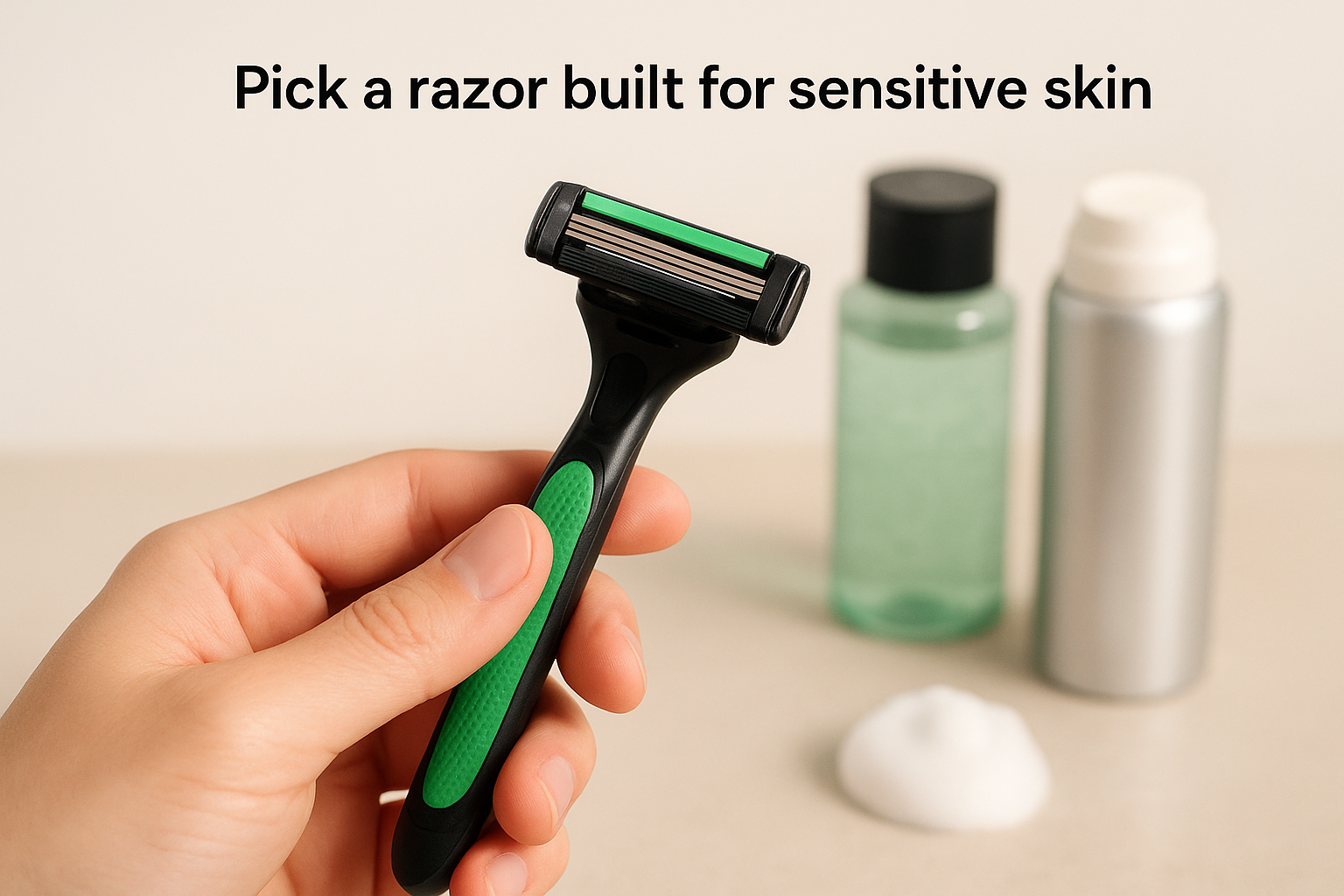
Fewer blades mean fewer passes over sensitive skin, which reduces friction and keeps your barrier intact.
Look for razors that include a moisture strip containing aloe or vitamin E since that strip adds a thin layer of lubrication right where the blade contacts your skin. Replace your blade every five to seven shaves. A dull blade drags across the surface instead of cutting cleanly, and dragging is a primary driver of irritation.
Match your shaving products to your skin type
Your shaving cream, gel, or foam does more than create slip. The right formula actively protects your skin barrier while the blade moves across the surface. Avoid anything with alcohol, synthetic fragrance, or menthol since these ingredients strip moisture and trigger inflammation on sensitive skin.
A fragrance-free, hydrating shaving gel with glycerin or aloe vera gives your blade the lubrication it needs without adding unnecessary irritants. Here is a quick comparison to guide your choice:
| Product Type | Best For | Avoid If |
|---|---|---|
| Shaving gel | Most skin types | You prefer a thick lather |
| Shaving cream | Dry, sensitive skin | Strong fragrance sensitivity |
| Shaving foam | Convenience | Skin reacts to propellants |
Step 3. Shave with a low-irritation technique
Even with the right razor and a well-prepped surface, your technique determines how much friction your skin actually absorbs during a shave. Applying the wrong angle, using too much pressure, or making unnecessary extra passes are all direct causes of redness and bumps. This is where shaving tips for sensitive skin move from theory into real, repeatable action.
Shave with the grain on the first pass
Hair grows in a specific direction, and shaving against that direction lifts each hair forcefully out of the follicle before cutting it. That aggressive angle is one of the fastest ways to trigger ingrown hairs and inflammation on reactive skin. Your first pass should always move in the same direction the hair grows.
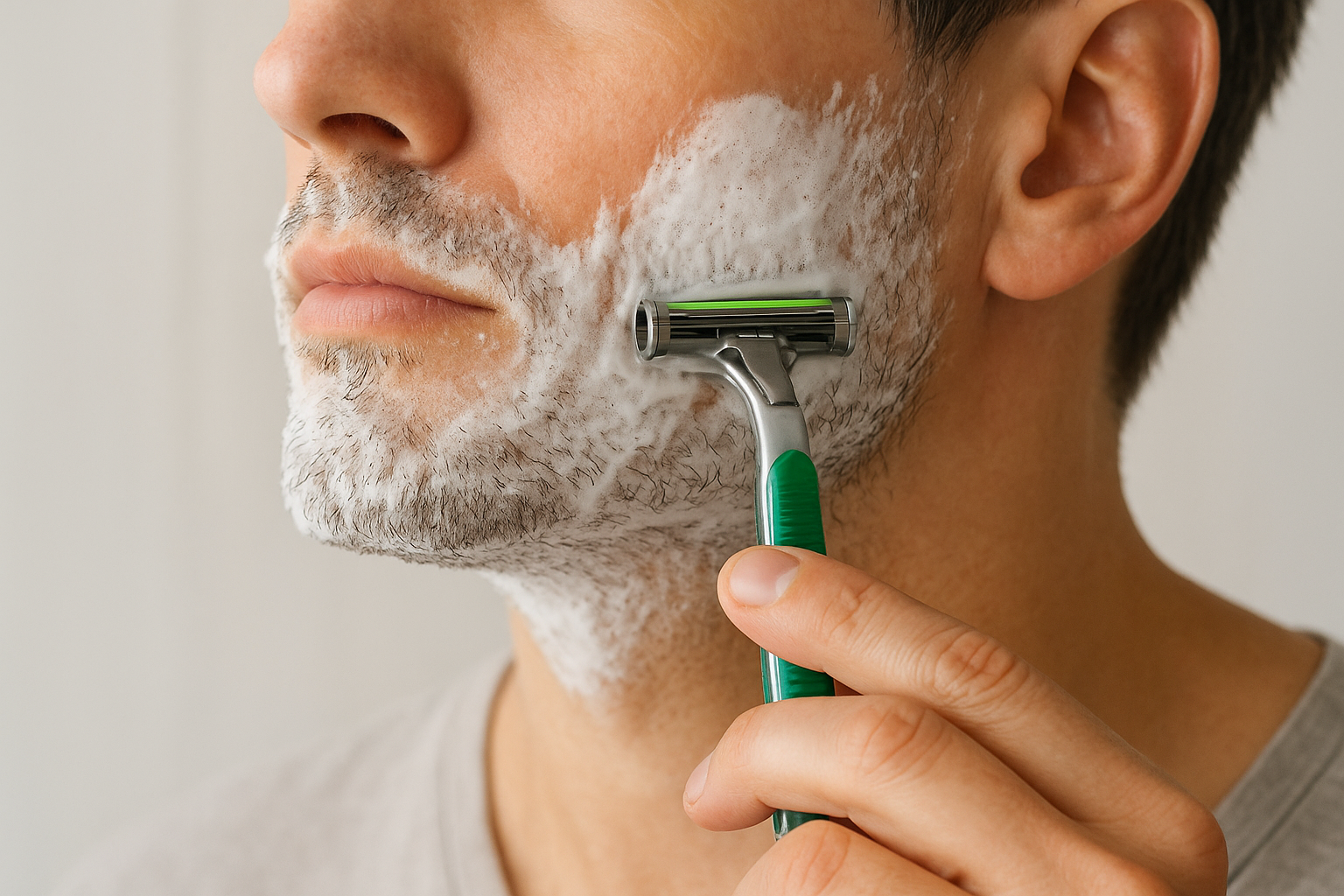
Shaving with the grain reduces blade friction at the follicle level, which is exactly where sensitive skin reacts first.
To identify your grain, run your fingertip across an unshaved area and notice which direction feels smooth and which direction feels rough. Smooth is with the grain. Move your razor in that direction consistently.
Control your pressure and limit your passes
Your razor should glide across the surface under its own weight rather than being pressed down. Applying force does not give you a closer shave; it increases the blade's contact depth with your skin, which causes more irritation per stroke.
Keep each pass short and rinse the blade after every two to three strokes to prevent product and hair buildup from dragging across the surface. Follow this pass sequence to stay within a low-irritation range:
- First pass: with the grain
- Second pass (if needed): across the grain, never against it
- Rinse blade between each pass
Step 4. Calm skin and prevent ingrowns after
What you do in the first few minutes after shaving determines how quickly your skin recovers and whether ingrown hairs form over the next 24 hours. This final step is one of the most practical shaving tips for sensitive skin you can apply, and it costs almost no extra time once you build it into your routine.
Cool and soothe the surface right away
Rinse the shaved area with cool water immediately after your final pass. Cool water causes the pores to contract slightly, which reduces the window for bacteria and debris to enter freshly shaved follicles. Pat the skin dry with a clean, soft towel instead of rubbing it, since rubbing adds friction to a surface that is already at its most reactive. Do not reach for a tight towel or a rough washcloth here.
The 60 seconds after you put the razor down are the most important for preventing redness from turning into lasting irritation.
Lock in moisture and block ingrown hairs
Apply a fragrance-free, alcohol-free moisturizer or aftershave balm while your skin is still slightly damp. That small amount of surface moisture helps the product absorb more effectively and seals in hydration before your barrier starts to dry out. Look for these ingredients when choosing your post-shave product:
- Aloe vera (calms active inflammation)
- Niacinamide (strengthens the barrier)
- Salicylic acid at low concentration (keeps follicles clear without over-drying)
- Ceramides (replenish what shaving strips away)
Avoid wearing tight clothing over freshly shaved skin for at least an hour since fabric friction against an open follicle is a direct cause of ingrown hairs, particularly on legs and the bikini area.
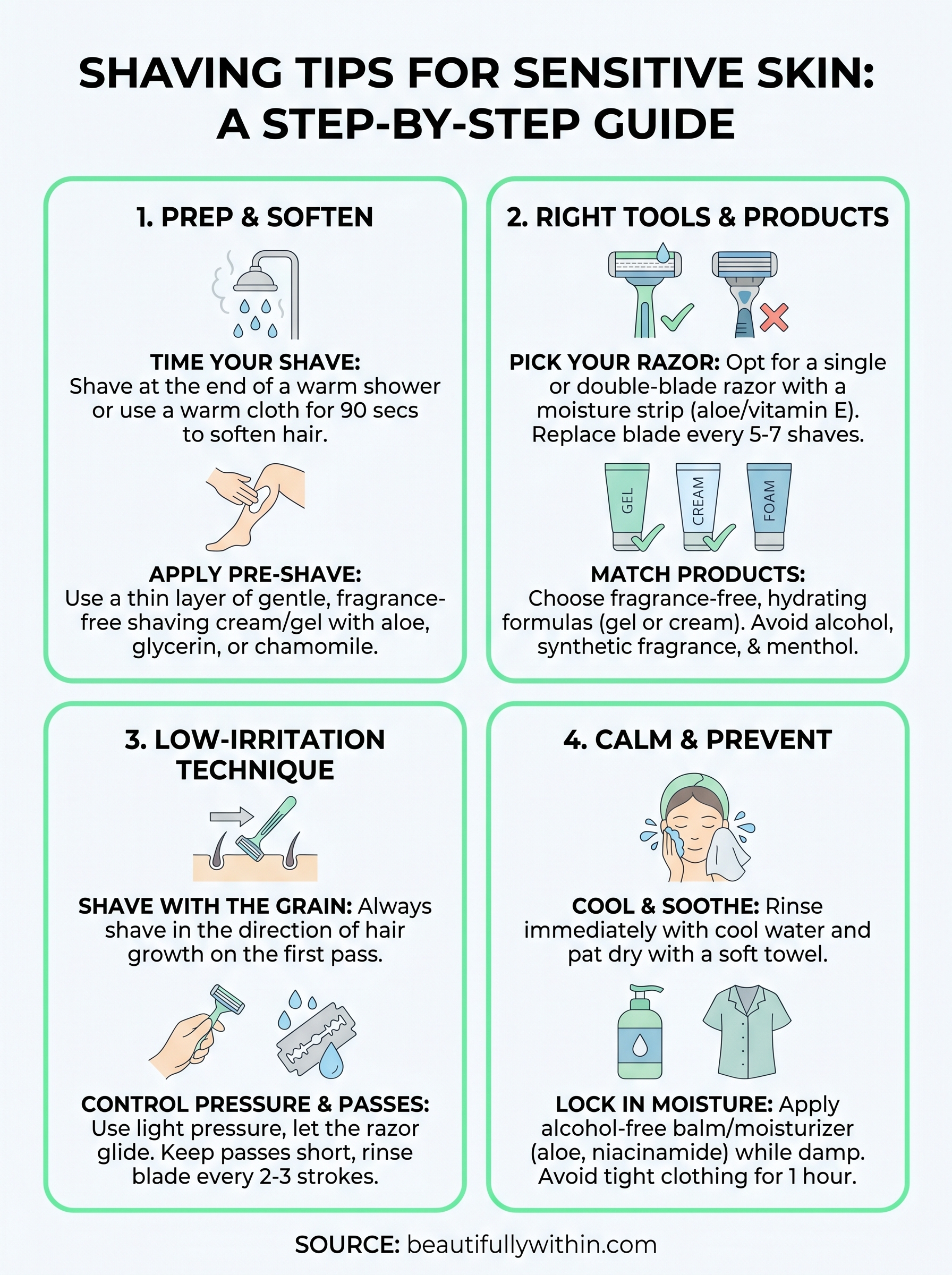
Smooth shaves, calmer skin
Sensitive skin responds to every decision you make before, during, and after a shave. The shaving tips for sensitive skin covered in this guide are not complicated, but they are specific, and that specificity is what separates a smooth result from a red, irritated one. Every step in this routine builds on the last: prep softens the hair and shields the barrier, the right razor and products reduce friction at the source, a controlled technique limits unnecessary passes over reactive skin, and a solid post-shave routine stops ingrown hairs before they form.
Putting these habits into practice consistently is what actually produces lasting results. Your skin will recover faster, stay calmer between shaves, and stop forcing you to choose between smooth skin and comfortable skin. Small, deliberate adjustments compound over time, and most people notice a real difference within the first two or three shaves. Browse our skincare collection to find fragrance-free, barrier-supporting products that complement the routine you just built.
✨ Shop the Look at Beautifully Within
Loved this guide? Discover our hand-picked picks that pair perfectly with your routine:
- 👉 Bakuchiol Gentle Retinol Alternative Serum — Serum
- 👉 Rose Quartz Ayurvedic Facial Massage Tool — Spa Tool
- 👉 Fresh Start Hydrating Cleanser & Toner Duo — Skincare Set
New customer? Get 15% off orders $50+ with code WITHIN15 — plus free shipping over $75.
0 comments