

Choosing the right supplements can feel overwhelming when every brand claims to have the answer. Before you spend money on products that may not deliver, it helps to consult a source that has no financial stake in what you buy. The NIH Office of Dietary Supplements (ODS) is exactly that, a federal resource dedicated to evidence-based information on vitamins, minerals, botanicals, and other supplement ingredients.
At Beautifully Within, we believe looking and feeling your best starts from the inside out. That's why we think it's important for our community to know where to find trustworthy, science-backed guidance on the supplements that support skin health, hair strength, and overall well-being. Making informed choices means fewer wasted dollars and better results for your body.
This guide breaks down what the ODS offers, how to use its fact sheets and research databases, and why this resource matters whether you're exploring supplements for the first time or reevaluating what you already take.
Why the NIH Office of Dietary Supplements matters
The supplement industry is large and largely self-regulated, which means marketing claims often outpace scientific evidence. Without a reliable filter, you can end up spending money on products that either don't work or, in some cases, interact with medications you already take. The NIH Office of Dietary Supplements exists specifically to close that gap by funding research and translating findings into plain-language resources for both consumers and health professionals.
The problem with unverified supplement claims
Supplement labels can say things like "supports immune health" or "promotes energy" without proving those claims through clinical trials. Thousands of products hit the market each year, and the FDA does not evaluate them for safety or effectiveness before they go on sale. That puts the burden of research on you, the consumer, making access to a trusted, independent source essential.
The U.S. supplement market generates over $50 billion annually, yet many products lack robust clinical evidence supporting their advertised benefits.
When you rely on brand-funded studies or influencer recommendations, you get information shaped by financial incentives. The ODS, as a federal agency under the National Institutes of Health, has no products to sell and no revenue tied to your purchasing decisions. That independence is what makes its findings worth trusting.
Why evidence-based guidance protects your health and wallet
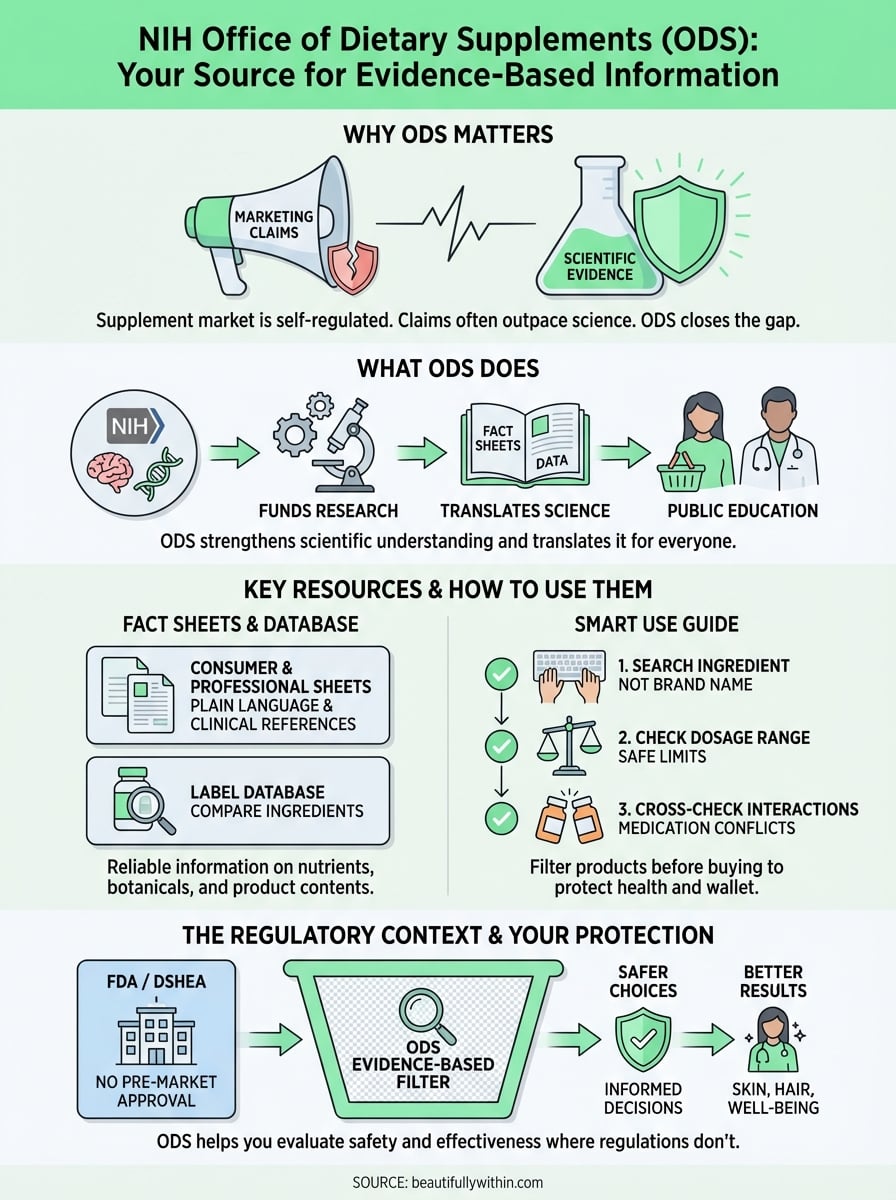
Choosing supplements without reliable data can lead to unnecessary spending, missed interactions, or even harm if a product conflicts with a prescription. The ODS publishes research summaries and fact sheets that help you evaluate supplements before you buy. That kind of informed decision-making protects both your body and your budget. Specifically, ODS resources help you determine:
- Whether a supplement has clinical evidence behind it
- Safe dosage ranges for your age and health status
- Known interactions with common medications
What the ODS does and how it fits within NIH
The NIH Office of Dietary Supplements operates as one of the specialized offices under the National Institutes of Health, the largest federal biomedical research agency in the United States. Its core mission is to strengthen the scientific understanding of dietary supplements through research funding, data collection, and public education.

Research funding and scientific coordination
ODS awards grants to universities and research institutions to study how specific nutrients affect health outcomes. These studies feed into the larger NIH research ecosystem, giving scientists the funding to run clinical trials that independent brands rarely pursue. The office also coordinates with other NIH institutes so that supplement research connects to broader work in cancer, heart disease, and bone health.
ODS-funded research directly informs the fact sheets and databases the office publishes for public use, meaning the resources you read reflect actual scientific study outcomes.
Translating science into usable information
Beyond funding, ODS takes complex research findings and turns them into practical resources anyone can read. You don't need a medical degree to understand its fact sheets. The office writes for both general consumers and health professionals, covering the same nutrients at two different levels of detail so everyone gets what they need.
Fact sheets and key resources on the ODS site
The NIH Office of Dietary Supplements publishes a range of free, regularly updated materials you can access directly at ods.od.nih.gov. These resources cover individual nutrients and botanical ingredients in enough depth to answer most questions you'd bring to a doctor or pharmacist.
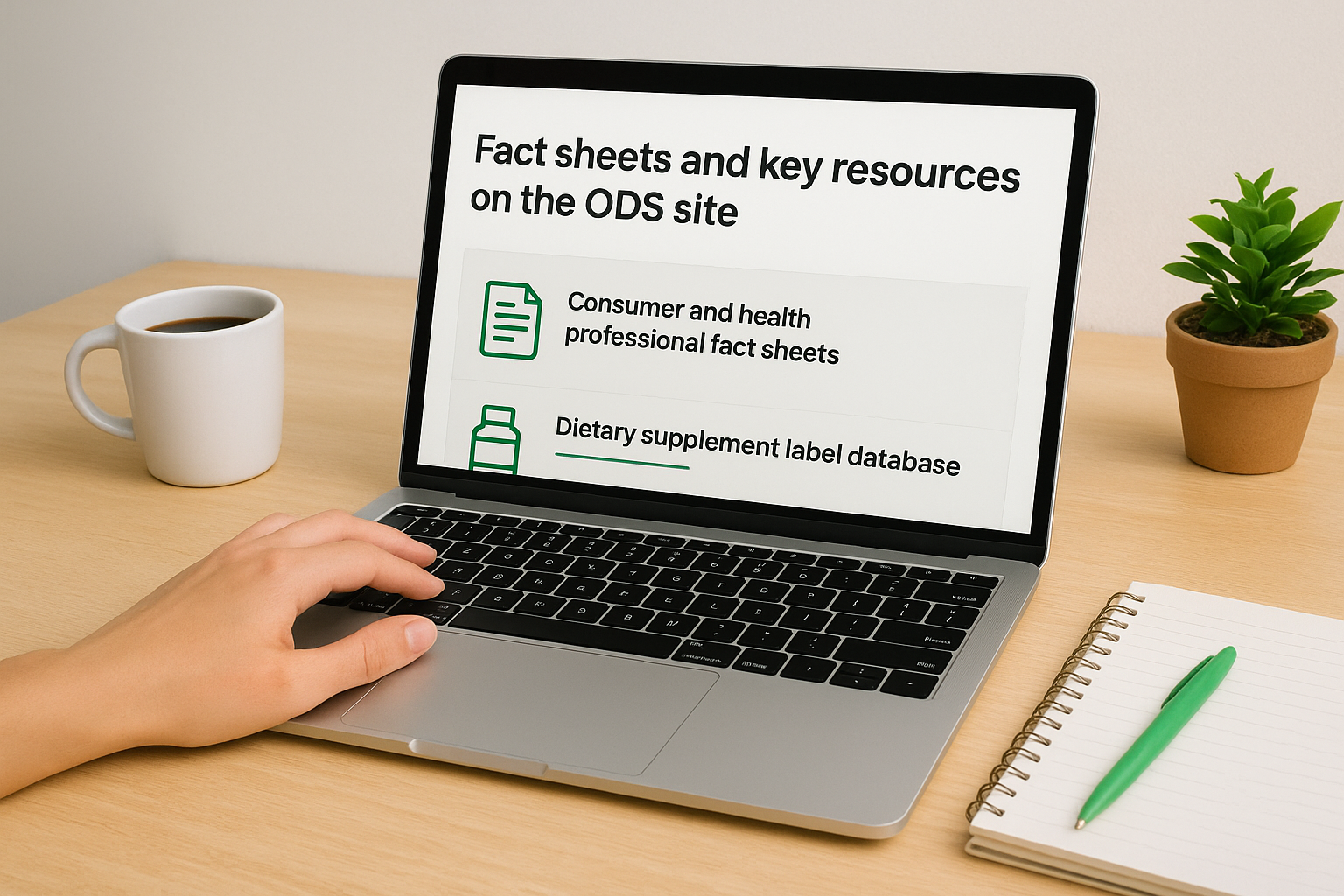
Consumer and health professional fact sheets
Every major nutrient on the ODS site has two versions of its fact sheet: one written for consumers in plain language, and one written for health professionals with clinical references. You can read the consumer version to get a solid overview of what a supplement does, how much you need, and what food sources provide it. The professional version goes deeper with study citations if you want the supporting evidence.
Reading the consumer fact sheet first, then checking the professional version for sources, gives you a complete picture without needing a medical background.
Dietary supplement label database
ODS also provides the Dietary Supplement Label Database, which lets you search ingredient information from thousands of products on the market. You can look up a specific brand or ingredient and see what each product actually contains versus what its label claims. That kind of direct comparison saves you time and helps you spot products that deserve a closer look before buying.
How to use ODS to research a supplement safely
The NIH Office of Dietary Supplements site works best when you treat it as your first stop, not a last resort after you've already made a purchase. The process is straightforward, and you don't need any scientific background to get useful results.
Start with the ingredient, not the brand
When you search on the ODS site, look up the active ingredient rather than the product name. Most supplements bundle multiple nutrients together, so researching each ingredient separately gives you a clearer picture of what you're actually putting into your body. Pull up the consumer fact sheet, read through the benefits section, and note the upper tolerable intake level listed for your age group.
Knowing the upper tolerable intake level for a nutrient helps you avoid accidentally doubling up if you already get that nutrient from food or a multivitamin.
Cross-check dosage and interactions
Once you know the safe dosage range, compare it against the amount listed on the supplement label you're considering. ODS fact sheets also flag known interactions with common medications like blood thinners or thyroid drugs. If you spot a potential conflict, bring that specific ODS reference to your doctor before you start taking anything new.
How dietary supplements are regulated in the US
Understanding the regulatory environment helps you see exactly why resources like the NIH Office of Dietary Supplements are so valuable. Unlike prescription drugs, dietary supplements do not go through pre-market approval by the FDA before they reach store shelves.
What the FDA does and doesn't do
The FDA regulates supplements under the Dietary Supplement Health and Education Act of 1994 (DSHEA), which classifies them as a distinct category between food and drugs. That means manufacturers are responsible for ensuring their products are safe and accurately labeled before selling them, but the FDA only steps in after a product is already on the market if problems arise.
Because the FDA does not test supplements before sale, safety issues may only surface after consumers have already purchased and used a product.
Why this puts the burden on you
This regulatory gap means you carry the research responsibility when choosing a supplement. A product can legally make broad health claims without clinical proof backing them up. Checking ingredients against evidence-based sources like the ODS fact sheets gives you a layer of protection that the current regulatory framework does not automatically provide. Use the ODS as a practical filter before buying:
- Check the ingredient's fact sheet for clinical evidence
- Confirm the dosage falls within safe limits for your age group
- Note any flagged interactions with medications you take
Next steps for smarter supplement choices
The NIH Office of Dietary Supplements gives you a solid foundation for making informed decisions, but the research only matters if you act on it. Before you add anything new to your routine, pull up the ODS fact sheet for each active ingredient, confirm the dosage matches safe ranges, and flag any interactions with medications you already take. That single habit can save you money and protect your health.
Once you know which nutrients support your specific health goals, whether that's stronger hair, clearer skin, or better energy, you can match that knowledge to products that actually deliver. At Beautifully Within, we've curated a range of science-aligned wellness supplements built to complement the kind of informed approach the ODS encourages.
Ready to put your research to work? Browse our wellness supplements collection and find products designed to support your beauty from within.