

You've tried the serums, the masks, the expensive salon treatments, and yet your hair still puffs up the moment humidity hits. Learning how to treat frizzy hair isn't about finding one miracle product. It's about understanding what your hair actually needs and building a routine that works.
As someone with thick, wavy hair that loves to frizz at the first sign of moisture, I've wasted plenty of money on products that promised smooth, shiny results but never delivered. That trial-and-error journey is exactly why Beautifully Within exists, to help you skip the guesswork and find what actually works for your hair type.
Whether you're dealing with everyday frizz or hair that's been damaged by heat styling and chemical treatments, these seven tips will help you achieve that smooth, shiny finish you're after. From simple routine tweaks to product recommendations that make a real difference, here's everything you need to tame the frizz for good.
1. Build a frizz-fighting routine with the right products
The first step in learning how to treat frizzy hair is understanding that not all anti-frizz products work the same way. Your hair's specific needs depend on what's causing the frizz in the first place, whether it's dryness, damage, humidity sensitivity, or a combination of factors. Building the right routine means choosing products that address your triggers, not just grabbing whatever bottle promises smooth results.
Connect your frizz triggers to the right product types
If dryness is your main issue, you need products loaded with humectants like glycerin and hyaluronic acid that pull moisture into your strands. Hair damaged from heat styling or color treatments requires protein-based formulas that rebuild the cuticle and fill in gaps. When humidity is the culprit, look for anti-humidity serums and silicone-based products that create a protective barrier against moisture in the air.
Choose a gentle cleanser and a conditioning baseline
Your shampoo should clean without stripping, which means sulfate-free formulas or gentle cleansers that won't leave your hair dry and prone to frizz. Pair this with a hydrating conditioner that you apply mid-length to ends every single wash. This conditioning baseline is non-negotiable if you want smooth hair, your strands need consistent moisture to stay soft and manageable.
Pick stylers that match your texture and density
Straight or fine hair needs lightweight leave-ins and serums that smooth without weighing it down. Wavy hair does best with mousses or light creams that define without crunch. Curly and thick hair requires heavier creams, butters, or gels that provide hold and moisture at the same time. Using products designed for a different texture than yours will either leave you greasy or still frizzy.
Avoid common ingredient and layering mistakes
Too many silicones without regular clarifying can cause buildup that makes hair dull and frizzy. Layering heavy oils on top of water-based products can repel moisture instead of sealing it in. Start with your lightest product first and build up, never the other way around.
The right product order matters just as much as the products themselves.
Quick routine templates for straight, wavy, and curly hair
Straight hair: sulfate-free shampoo, lightweight conditioner, leave-in spray, smoothing serum. Wavy hair: gentle cleanser, hydrating conditioner, curl cream or mousse, light oil to finish. Curly hair: moisturizing shampoo, deep conditioner, leave-in cream, curl-defining gel, oil or butter to seal.
2. Wash smarter with hydration-forward shampooing
Your washing routine can either set you up for smooth hair or create frizz before you even step out of the shower. Most people make the mistake of shampooing too aggressively, stripping their hair of natural oils that keep the cuticle smooth. When you learn how to treat frizzy hair through better washing habits, you stop creating the problem in the first place.
Use water temperature and technique to protect the cuticle
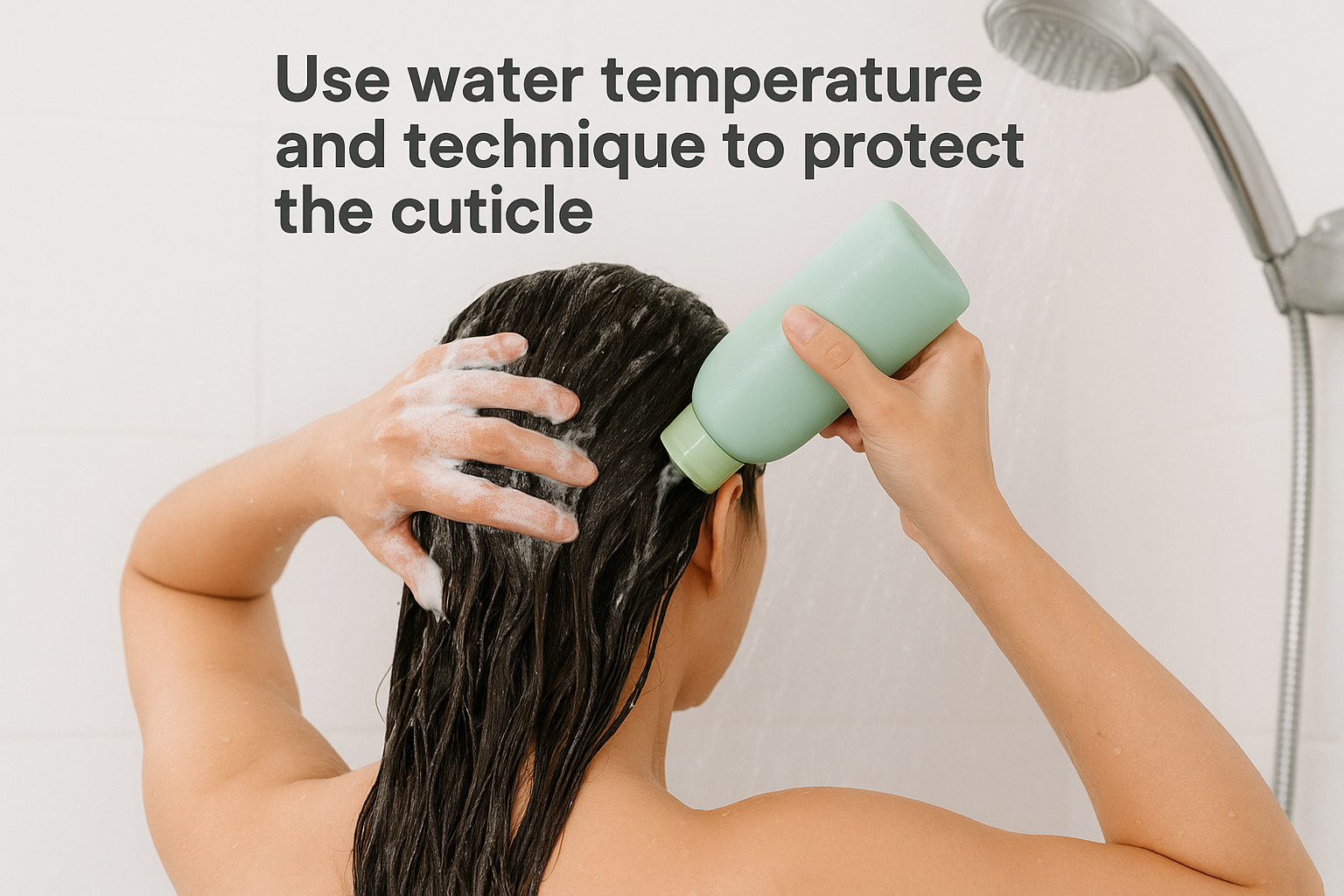
Hot water might feel relaxing, but it opens the cuticle and makes your hair more vulnerable to frizz. Wash with lukewarm water and finish with a cool rinse to seal the cuticle flat. This temperature switch alone can reduce surface roughness that catches light and looks frizzy.
Shampoo less aggressively and focus on the scalp
You only need to shampoo your scalp, not your lengths. Apply product to your roots, massage gently, and let the runoff clean the rest as you rinse. Aggressive scrubbing damages the cuticle and creates texture that holds onto frizz.
The gentler you cleanse, the smoother your results will be.
Condition like you mean it and rinse the right way
Apply conditioner from mid-length to ends, leave it on for at least two minutes, and rinse thoroughly. Leftover residue weighs hair down and can look like frizz. Your conditioner should feel slippery when you apply it and completely rinsed out when you're done.
Handle hard water and buildup that mimic frizz
Hard water deposits create a rough coating that looks and feels like frizz. Use a clarifying shampoo once a month to remove buildup from minerals, styling products, and oils that make hair dull and textured.
Adjust wash frequency without drying your hair out
Washing daily strips natural oils, but waiting too long allows oil and buildup to weigh hair down. Find your balance, most people with frizz-prone hair do best washing every two to three days with a gentle formula.
3. Deep condition weekly to restore softness and slip
Your regular conditioner keeps hair manageable day to day, but a deep conditioning mask is what actually repairs damage and brings back the softness and smoothness that makes frizz disappear. When you're learning how to treat frizzy hair, adding a weekly mask is one of the most effective changes you can make. These treatments penetrate deeper than rinse-out conditioners and deliver concentrated moisture and repair where your hair needs it most.
Know when you need a mask versus a daily conditioner
Use a deep conditioning mask when your hair feels rough, tangles easily, or frizzes despite your regular routine. Your daily conditioner maintains moisture, but masks rebuild damaged cuticles and restore slip that normal conditioning cannot provide.
Target damage from color, bleach, and heat
If you color, bleach, or heat style regularly, your hair needs protein-rich masks that fill in structural gaps caused by chemical processing. Look for ingredients like keratin, collagen, or amino acids that reconstruct damaged bonds and smooth the cuticle layer.
Combine hydration with strengthening when needed
Extremely dry and damaged hair benefits from masks that deliver both moisture and protein. Too much hydration without structure leaves hair limp, while too much protein without moisture creates brittle, stiff strands that break easily.
Apply and rinse masks for maximum smoothing
Apply your mask to clean, damp hair from mid-length to ends, leave it on for the time specified on the package, and rinse with cool water to seal the cuticle. Warm water opens the cuticle and reduces how much treatment actually stays in your hair.
The longer you leave a mask on, the more smoothing benefit you get.
Watch for signs of over-protein or product overload
Hair that feels stiff, straw-like, or breaks easily has too much protein. Switch to a purely hydrating mask until softness returns. Limp, greasy hair means you need to clarify before your next deep conditioning session.
4. Dry gently to stop frizz before it starts
The way you dry your hair creates or prevents frizz before you even pick up a styling product. Most damage happens in the first five minutes after washing, when your hair is at its most vulnerable. Understanding how to treat frizzy hair means treating wet hair like delicate fabric, not a towel you wring out after washing dishes. Every rough movement lifts the cuticle and creates the texture that catches humidity and looks frizzy all day.
Blot and squeeze instead of rubbing
Press a towel against your hair and squeeze gently to remove water. Never rub your hair with a towel or twist it into a tight turban. This friction roughens the cuticle and creates frizz instantly.
Use microfiber, cotton, and airflow to reduce friction
Microfiber towels and cotton t-shirts absorb water without the rough texture of standard terry cloth. Air-drying in a room with gentle airflow speeds drying without the damage of aggressive rubbing or high heat.
The gentler your drying method, the smoother your results will stay.
Detangle at the right time with the right tools
Detangle while conditioner is still in your hair or immediately after rinsing with a wide-tooth comb. Wet hair stretches and breaks easily, so work from ends to roots and never yank through knots.
Prevent frizz while air-drying and plopping
Plopping wraps your hair in a t-shirt or microfiber towel to dry without touching it. This method works especially well for wavy and curly textures that frizz when disturbed while drying.

Fix "mid-dry frizz" without restarting your routine
If frizz appears while your hair dries, apply a small amount of leave-in or serum to damp sections and smooth down with your palms. You don't need to rewet your entire head.
5. Style on damp hair with heat protection and control
Styling on soaking wet hair dilutes your products and makes them less effective, while styling on completely dry hair means you've already missed the window where products lock in moisture best. The sweet spot for learning how to treat frizzy hair through styling is on damp, towel-dried hair where your cuticle is still slightly open and ready to accept smoothing products and heat protection.
Lock in moisture with leave-ins and creams on damp hair
Apply leave-in conditioner or smoothing cream to hair that's 60-70% dry after towel blotting. Your hair should feel damp but not dripping. Products penetrate better at this stage and distribute more evenly through your strands without sliding off or pooling at the ends.
Use heat protectant correctly and set realistic temperatures
Spray or apply heat protectant to every section before you apply heat, not just once over your whole head. Keep your blow dryer or flat iron at 300-350°F for fine hair and 350-400°F for thick or coarse hair. Higher temperatures damage the cuticle and create long-term frizz.
Blow-dry and diffuse with direction that smooths the cuticle
Point your blow dryer down the hair shaft, never up or sideways, to seal the cuticle flat as you dry. Use a diffuser attachment for wavy and curly hair to reduce direct airflow that disrupts curl patterns and creates frizz.
Always dry in the direction your hair grows to keep the cuticle smooth.
Brush and comb choices that reduce snagging and static
Use brushes with natural or flexible bristles that glide through hair without pulling. Metal combs create static, while seamless plastic or wooden combs reduce friction and breakage during styling.
Set your style so humidity cannot undo it fast
Finish with a light hairspray that creates a flexible hold without stiffness. This protective layer keeps humidity from penetrating your finished style and reverting all your smoothing work.
6. Seal and finish with lightweight oils and anti-humidity help
The final step in learning how to treat frizzy hair is sealing everything in place with products that create a protective barrier against humidity and environmental stress. This finishing layer is what makes your smooth results last through the day instead of puffing up an hour after styling. Your sealing products work differently than your moisturizers, they trap moisture inside your hair while keeping excess humidity out.
Understand sealing versus moisturizing so hair stays smooth
Moisturizers add water to your hair, while sealants lock that moisture in and create a barrier against frizz triggers. Use water-based leave-ins and creams first to hydrate, then apply oils or silicone serums to seal the cuticle shut and prevent humidity from undoing your work.
Use oils, serums, and silicone-based finishes without greasiness
Argan oil, jojoba oil, and lightweight serums with dimethicone or cyclomethicone smooth the hair surface without heavy residue. Apply these products to your palms first, rub them together, then smooth over your hair focusing on mid-lengths and ends.
Your finishing products should feel invisible, not greasy or sticky.
Apply the right amount based on thickness and porosity
Fine hair needs one to two drops of serum or oil. Thick or curly hair can handle a nickel-sized amount spread evenly through sections. High porosity hair absorbs products faster and may need slightly more.
Fix frizz in 5 minutes on dry hair and flyaways
Warm a tiny amount of serum between your palms and smooth over frizzy areas without re-wetting. Use a small amount of hairspray on a clean toothbrush to tame flyaways along your hairline.
Refresh second-day hair without making it puffy
Lightly mist dry hair with water, apply a small amount of serum, and reshape sections with your hands. Skip heavy products that build up and create the texture that attracts more frizz.
7. Use trims and treatments to reduce frizz long-term
Short-term fixes smooth your hair for the day, but long-term strategies actually reduce how much frizz your hair creates in the first place. Understanding how to treat frizzy hair means addressing the root causes through regular trims, protective habits, and professional treatments that change your hair's structure. These investments pay off by making your daily routine easier and your results more consistent.
Trim strategy that prevents split-end frizz
Split ends create frizz by separating into multiple strands that catch light and stick out. Schedule trims every 8-12 weeks to remove damaged ends before they travel up the hair shaft. Regular trims keep your hair looking smooth even as it grows longer.
Sleep and daily habits that cut friction and breakage
Switch to a silk or satin pillowcase that reduces friction while you sleep. Tie your hair in a loose braid or bun to prevent tangles and breakage overnight. These small changes protect your cuticle from damage that accumulates over time.
At-home smoothing options that help without damage
Bond-building treatments strengthen hair from the inside and reduce porosity that causes frizz. Use these once a month following package directions to repair damage without adding chemicals that require professional supervision.
Salon treatments that can reduce frizz and who they suit
Keratin treatments and smoothing systems coat the hair shaft and reduce frizz for 3-6 months. These work best for thick, coarse hair that needs significant texture reduction. Fine hair can look flat and greasy with these treatments.
Professional smoothing changes your texture, not just your daily styling results.
Know when to see a pro for damage, shedding, or scalp issues
Excessive breakage, sudden hair loss, or scalp problems require professional diagnosis. A stylist or dermatologist can identify underlying issues that no product routine can fix on its own.
A simple plan for smoother hair
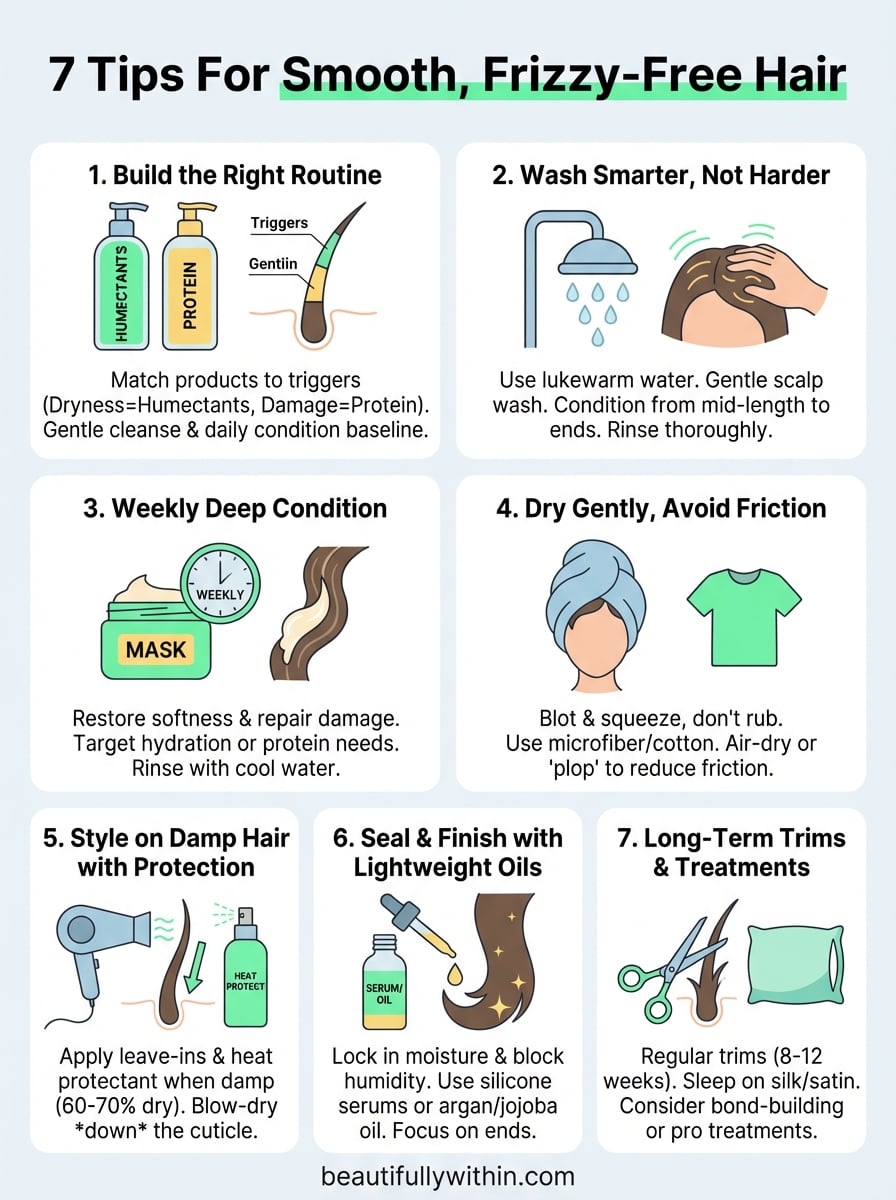
Learning how to treat frizzy hair comes down to consistency with the right products, gentle handling, and protecting your hair from damage before it starts. Your routine should include hydrating shampoos and conditioners, weekly deep conditioning masks, and proper drying techniques that respect your hair's cuticle. Finish with lightweight oils or serums that seal moisture in while keeping humidity out.
Remember that professional trims every few months prevent split ends from creating unnecessary texture, and small daily habits like sleeping on silk pillowcases make a measurable difference over time. You don't need to follow every tip perfectly, start with the changes that address your biggest frizz triggers and build from there.
Your hair care routine works best when it's part of a complete approach to beauty and wellness. For more expert advice on skincare, haircare, and products that help you look and feel your best, explore our beauty and wellness guides or reach out for personalized recommendations that match your specific needs.
✨ Shop the Look at Beautifully Within
Loved this guide? Discover our hand-picked picks that pair perfectly with your routine:
- 👉 Professional Blowout Brush — Hot Air Volumising Styler — Hair Styling Tool
- 👉 32mm Ceramic Auto-Rotating Hair Curler — Hair Styling Tool
- 👉 5-in-1 Negative Ion Hot Air Styling Brush — Hair Styling Tool
- 👉 Ceramic Electric Hair Straightening Hot Comb — Hair Styling Tool
New customer? Get 15% off orders $50+ with code WITHIN15 — plus free shipping over $75.
0 comments