

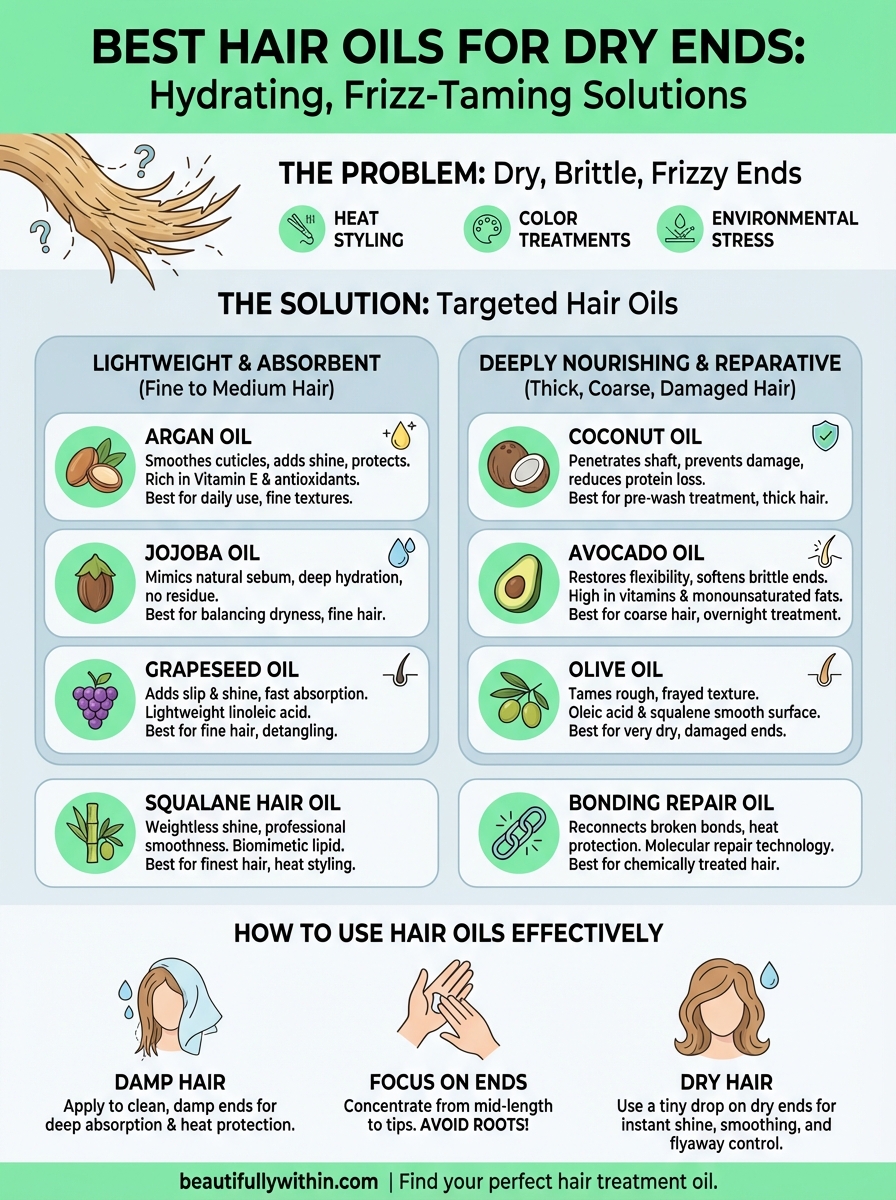
Dry, brittle ends can make even the healthiest hair look dull and unkempt. Whether it's heat styling, color treatments, or just everyday environmental stress, your ends take the most damage, and they're often the last to receive any real care. Finding the best hair oil for dry ends can transform your hair from straw-like and frizzy to soft, smooth, and hydrated.
I've dealt with this firsthand. My thick, wavy hair tends toward frizz, and after one particularly ambitious bleaching experiment, my ends were absolutely wrecked. I tried dozens of products before learning which oils actually work for different hair types and concerns. That trial-and-error process taught me that not all hair oils are created equal, some absorb quickly and nourish deeply, while others just sit on top and weigh your hair down.
At Beautifully Within, we believe looking and feeling your best starts with products that genuinely deliver results. That's why we've put together this guide featuring 12 proven hair oils that hydrate, repair, and protect damaged ends. From lightweight formulas perfect for fine hair to rich, intensive treatments for thick or coarse textures, you'll find options that fit your specific needs.
Below, we'll break down each oil's key benefits, ideal hair types, and what makes it worth trying, so you can stop wasting money on products that don't work and start giving your ends the care they deserve.
1. Beautifully Within hair oil picks for dry ends
At Beautifully Within, we've curated hair oil formulas specifically designed to target the most common problems with damaged ends. Our selections focus on lightweight absorption, long-lasting hydration, and ingredients that actually repair instead of just masking dryness. These aren't generic oils that work for everyone and no one. Each formula addresses specific hair concerns, from fine strands that need moisture without weight to thick, coarse textures that demand intensive nourishment.
Why these picks work for dry, brittle ends
Our hair oils contain concentrated plant-based lipids and fatty acids that penetrate the hair shaft rather than sitting on the surface. When your ends are brittle, the cuticle layer has been damaged or stripped away, leaving the inner cortex exposed and vulnerable. The molecular structure of our selected oils allows them to fill in those gaps, smoothing rough cuticles and reducing moisture loss throughout the day.
What sets these formulas apart is their blend of reparative and protective ingredients. You'll find combinations like argan oil paired with vitamin E for antioxidant defense, or lightweight squalane mixed with strengthening proteins. These oils don't just add temporary shine. They actually improve hair flexibility and reduce breakage at the ends, where your hair is oldest and most prone to splitting.
When you apply the right oil consistently, you're creating a protective barrier that prevents further damage while existing brittleness gradually improves.
Best for
These picks work exceptionally well if you have chemically treated hair that's been colored, bleached, or relaxed. The oils help restore lipids that processing strips away, giving your ends back some of their natural elasticity. You'll also see results if you use heat styling tools regularly, since the oils create a buffer between your hair and hot surfaces.
Fine to medium hair types benefit from our lighter oil formulations that absorb quickly without leaving residue. Thick, coarse, or curly hair responds well to richer blends that provide deeper conditioning. If you struggle with frizz along your ends or split ends that make your hair look scraggly, these oils smooth the cuticle layer and help ends look more polished.
How to use (without greasy lengths or roots)
Start with damp, towel-dried hair after washing. Dispense 2-3 drops of oil into your palm, rub your hands together, then apply only from mid-length to the very ends. Focus the product where your hair is driest and most damaged, avoiding the roots and scalp area entirely. This placement prevents greasiness while concentrating hydration where you need it most.
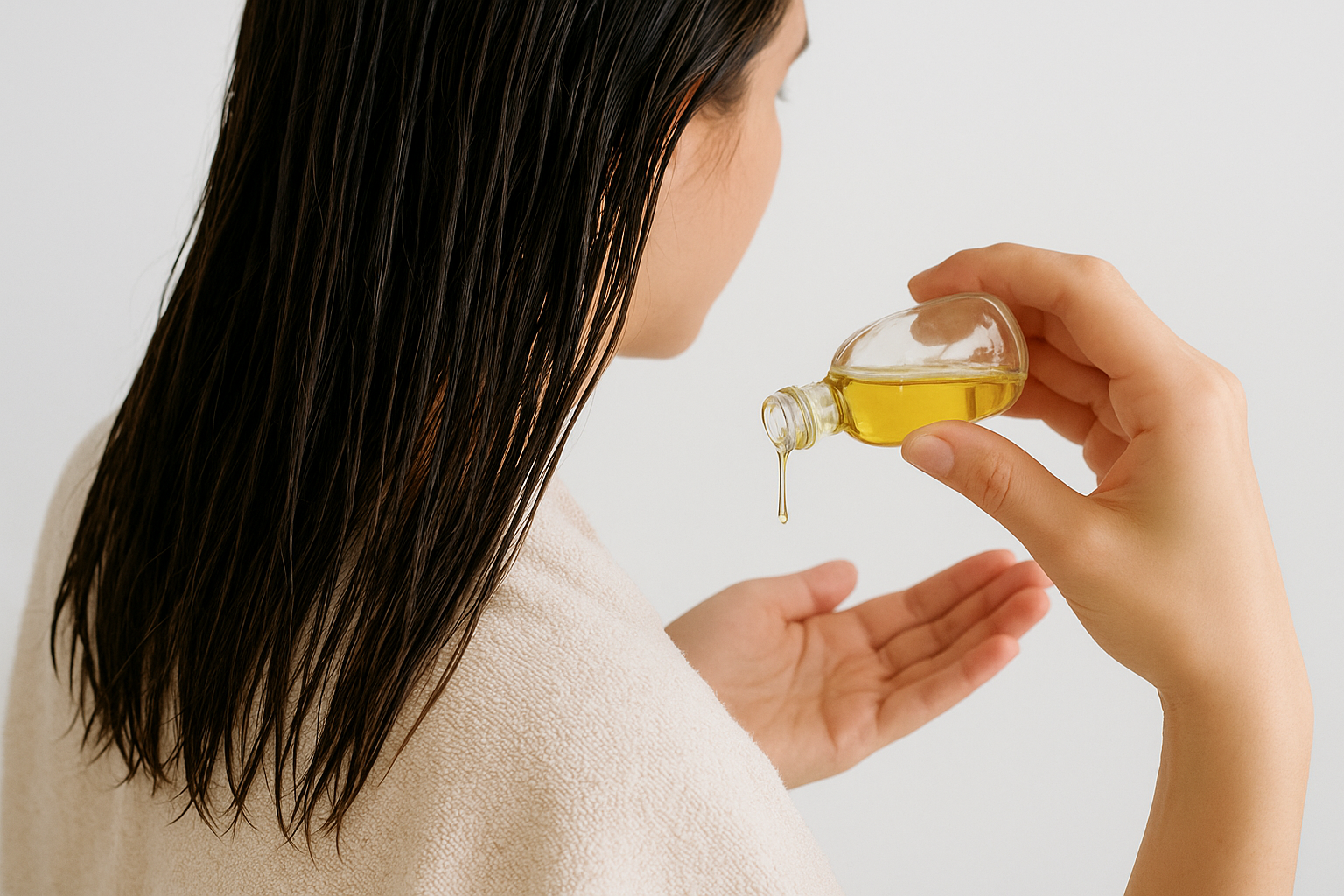
For styling, apply oil before blow-drying or heat styling as a protective layer. Use one drop on dry ends as a finishing touch to smooth flyaways and add shine. If your hair is very fine, apply oil only to the bottom two inches of your ends. Adjust the amount based on your hair's thickness rather than following a one-size-fits-all approach.
Price range and what you get
Beautifully Within's hair oil selections range from $18 to $45 depending on the formula complexity and bottle size. Entry-level options give you 30ml of pure, single-ingredient oils like argan or jojoba perfect for testing what works with your hair type. Mid-range products at $25-$35 offer blended formulas with multiple oils, vitamins, and heat protectants in 50-100ml bottles.
Premium options include advanced repair serums with bonding technology or rare oils like prickly pear seed oil that command higher prices due to extraction costs. You'll typically get 3-6 months of use from a single bottle when applying to ends only, making even higher-priced oils a reasonable investment compared to salon treatments.
2. Argan oil
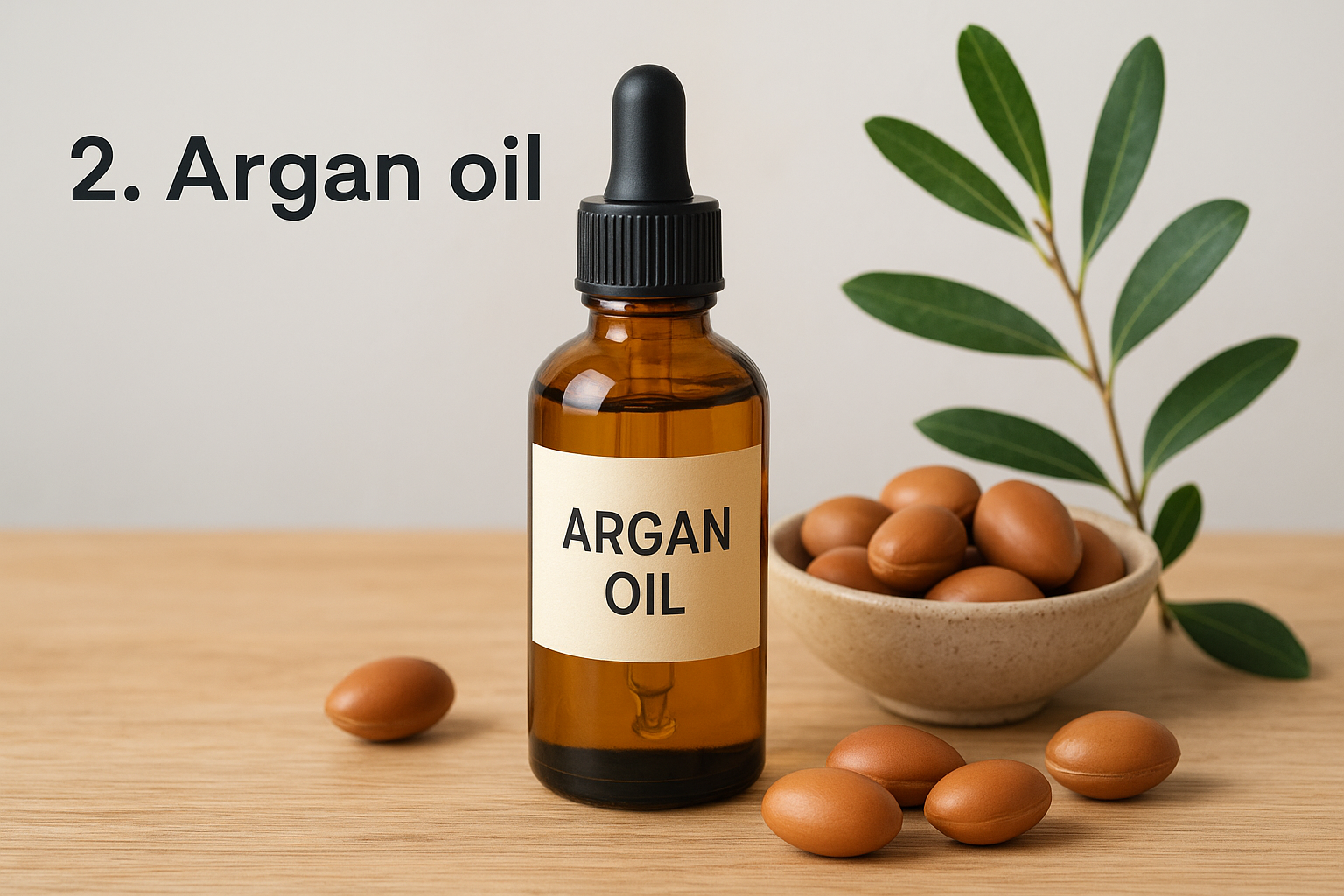
Argan oil ranks among the best hair oil for dry ends because it contains high concentrations of vitamin E, fatty acids, and antioxidants that specifically target damaged cuticles. This Moroccan oil absorbs quickly into your hair shaft without leaving a heavy coating, making it ideal when you need moisture that actually penetrates rather than just sitting on the surface. The lightweight texture means you can use it daily without buildup or that greasy feeling that heavier oils create.
Why it helps dry ends and frizz
Your hair's cuticle layer lifts and frays when it's dry, creating that rough, frizzy texture you see at the ends. Argan oil's oleic and linoleic acids smooth down those lifted cuticles, creating a sleeker surface that reflects light better and feels softer to the touch. The vitamin E acts as an antioxidant that protects against environmental damage from UV rays, pollution, and heat styling.
Regular argan oil application creates a protective seal around your ends that locks in moisture and prevents further water loss throughout the day.
Best for
Argan oil works particularly well if you have fine to medium hair textures that need hydration without weight. You'll see strong results with color-treated or highlighted hair, since the oil helps restore lipids that chemical processing removes. This oil also suits you if you struggle with frizz in humid weather or if your ends look dull and split even after regular trims.
How to use (daily seal vs pre-wash)
Apply 1-2 drops to your damp ends after showering as a daily leave-in treatment that seals moisture into your hair as it dries. For deeper conditioning, warm a tablespoon of argan oil between your palms and work it through your dry ends 30 minutes before washing. This pre-wash method allows the oil to penetrate more thoroughly before you shampoo out any excess.
Price range and what to look for on labels
Pure argan oil typically costs $15-$30 for a 2-ounce bottle, though luxury brands can charge up to $50. Check labels for 100% pure argan oil or "Argania Spinosa Kernel Oil" listed as the first or only ingredient. Avoid products that list argan oil third or fourth on the ingredient list, since you're mostly paying for filler oils and silicones rather than the real thing.
3. Jojoba oil
Jojoba oil stands out as one of the best hair oil for dry ends because its molecular structure closely mimics your scalp's natural sebum. This similarity allows jojoba to absorb deeply into your hair shaft without leaving that heavy, coated feeling that many other oils create. Your ends receive intense hydration and protection while your hair maintains its natural movement and body, making this oil particularly valuable if you've struggled with products that weigh your hair down.
Why it works well on ends without weight
Unlike heavier oils that sit on your hair's surface, jojoba oil's liquid wax esters penetrate the cuticle layer to deliver moisture where your ends need it most. This absorption pattern means you get the hydration benefits without the greasy residue that can make fine or thin hair look limp. The oil also contains vitamins B and E that strengthen your hair fiber from within, reducing the brittleness that leads to splitting and breakage at the ends.
Jojoba's lightweight consistency makes it the rare oil that hydrates damaged ends thoroughly while still allowing your hair to move naturally.
Best for
This oil works exceptionally well if you have fine to medium hair that needs moisture but can't handle heavy products. You'll see strong results with straight or wavy textures that tend to look flat when you use traditional conditioning treatments. Jojoba also suits you if your ends are dry but your scalp produces oil quickly, since you can target just the damaged areas without adding extra oil near your roots.
How to use (fine hair-friendly tips)
Start with just 1-2 drops on damp ends after washing, focusing on the bottom inch or two of your hair. Emulsify the oil between your palms first, then glide your hands over your ends rather than rubbing it in. This technique distributes the product evenly while preventing oversaturation. For styling on dry hair, use a single drop as a finisher to smooth flyaways without creating greasiness.
Price range and what to look for on labels
Pure jojoba oil costs $12-$25 for a 4-ounce bottle depending on whether you choose organic or conventional options. Look for "Simmondsia Chinensis Seed Oil" as the sole ingredient, or listed first if you're buying a blend. Cold-pressed and unrefined versions retain more nutrients than refined options, though both work effectively for end repair.
4. Coconut oil
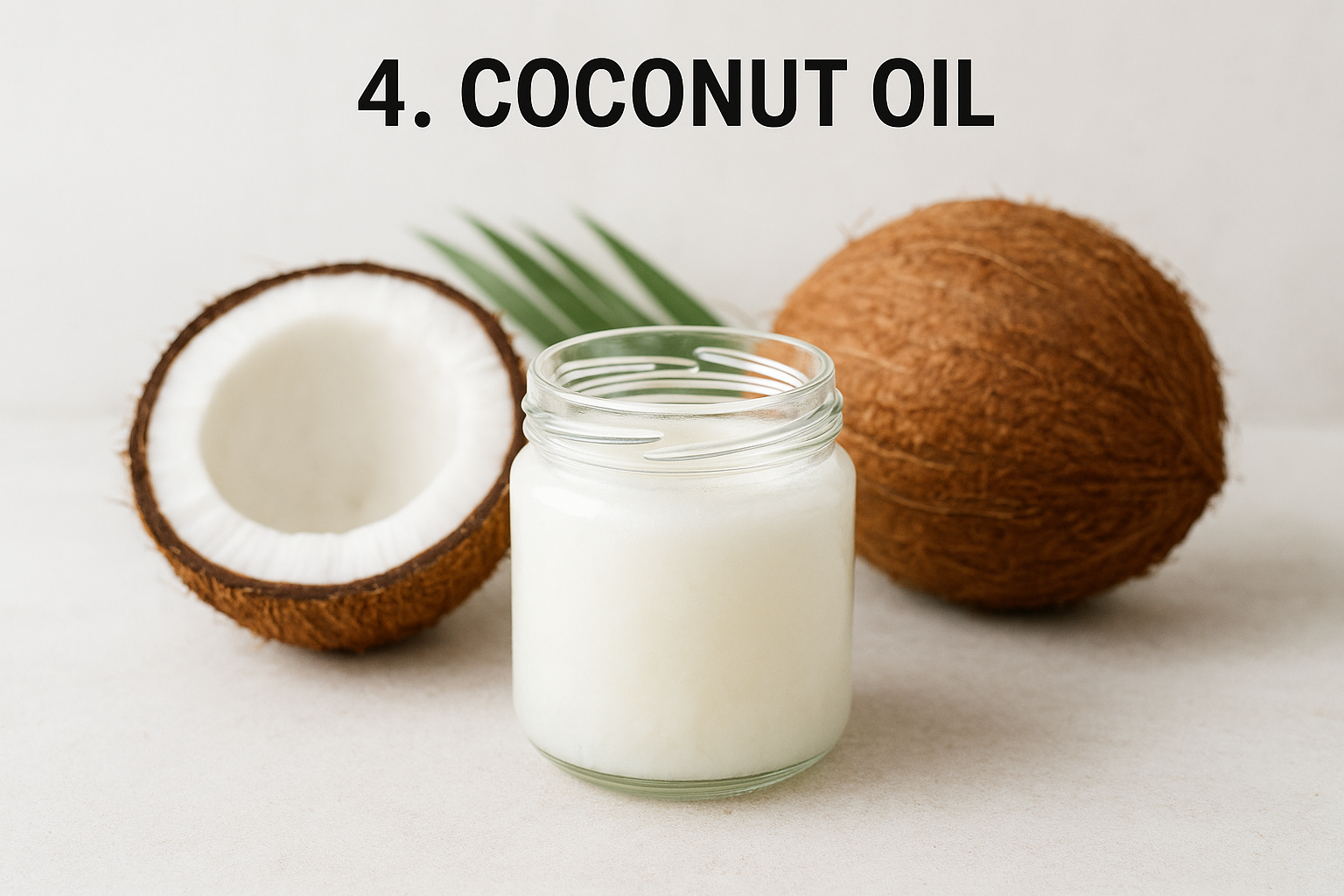
Coconut oil delivers deep penetration that few other oils can match, making it a strong contender for the best hair oil for dry ends when your damage runs more than surface-deep. The unique fatty acid profile, dominated by lauric acid, allows this oil to actually enter your hair shaft rather than just coating the outside. This penetration ability means coconut oil can address internal dryness and brittleness that leave-in conditioners and surface treatments miss entirely.
Why it can reduce damage and dryness
Your hair's protein structure deteriorates when exposed to heat, chemicals, and mechanical stress, creating weak spots that lead to splitting and breakage at the ends. Coconut oil's lauric acid molecules bond with hair proteins, filling in gaps and reinforcing damaged areas from within. This oil also creates a moisture-blocking barrier on your cuticle that prevents water loss during washing and styling, keeping your ends hydrated longer than they would stay on their own.
When applied before washing, coconut oil reduces the amount of water your hair absorbs during shampooing, which actually protects against the swelling damage that weakens your hair structure.
Best for
This oil works best if you have thick, coarse, or curly hair textures that can handle richer treatments without looking weighed down. You'll see strong results with severely damaged ends from bleaching, frequent heat styling, or chemical straightening. Coconut oil also suits you if your ends feel rough and straw-like rather than just slightly dry, since the deep penetration addresses more advanced deterioration.
How to use (and how to avoid heaviness)
Apply coconut oil to dry ends 20-60 minutes before shampooing for a pre-wash treatment that protects against damage while cleansing. Use about a teaspoon for long hair, warming it between your palms until it melts, then work it through just the bottom three inches. Avoid using coconut oil as a leave-in if you have fine hair, since the heavy molecular weight can make strands look greasy and flat instead of hydrated.
Price range and what to look for on labels
Coconut oil costs $8-$20 for an 8-16 ounce jar, making it one of the most affordable hair treatment options available. Choose virgin or unrefined coconut oil labeled as "Cocos Nucifera Oil" for maximum nutrient retention. Refined versions work but contain fewer beneficial compounds due to processing.
5. Avocado oil
Avocado oil ranks among the best hair oil for dry ends when your damage extends beyond surface-level dryness into actual brittleness and inflexibility. This oil contains high concentrations of monounsaturated fats and vitamins A, D, and E that work together to restore elasticity in hair that's become stiff and prone to snapping. Your ends absorb avocado oil readily because its molecular structure closely matches the lipids your hair naturally produces, allowing the nutrients to penetrate deeply rather than sitting on top like a coating.
Why it softens and improves flexibility
Hair becomes brittle when repeated damage strips away the lipid layer that keeps your hair shaft flexible and resistant to breaking. Avocado oil's fatty acid profile includes oleic acid, palmitic acid, and linoleic acid that rebuild this protective layer from within. The vitamin E content fights oxidative stress that makes your ends more fragile over time, while vitamin D supports the structural proteins that give your hair its tensile strength.
Regular avocado oil treatments restore the suppleness your ends need to bend and move without snapping, particularly valuable when damage has made your hair feel straw-like and rigid.
Best for
This oil delivers strong results if you have medium to thick hair that feels coarse and inflexible at the ends. You'll benefit most with chemically processed hair that's lost its natural bounce, or if your ends have become so dry they feel almost crispy to the touch. Avocado oil also works well when you have curly or coily textures that need deep moisture to maintain their pattern without frizz or breakage.
How to use (overnight vs quick mask)
Apply 1-2 tablespoons of avocado oil to your dry ends before bed, covering with a loose braid or silk cap for overnight penetration that transforms severely damaged hair. For quicker results, warm the oil slightly and work it through your ends, then leave it for 20-30 minutes before shampooing. This shorter treatment still delivers noticeable softening without requiring overnight commitment.
Price range and what to look for on labels
Avocado oil costs $10-$22 for an 8-ounce bottle depending on whether you choose food-grade or cosmetic-grade versions. Both work effectively for hair, though cosmetic formulations may include additional beneficial ingredients. Look for "Persea Gratissima Oil" as the primary ingredient, and choose cold-pressed or unrefined options that retain maximum nutrient content.
6. Olive oil
Olive oil works as one of the best hair oil for dry ends when you're dealing with rough, frayed texture that makes your hair look unkempt even after styling. This kitchen staple contains high levels of oleic acid and squalene that coat damaged cuticles, creating a smoothing effect that tames those scraggly ends immediately. The vitamin E and polyphenols in olive oil provide antioxidant protection that helps prevent further deterioration, making it both a treatment and a preventative measure against ongoing damage.
Why it helps with rough, frayed ends
Your hair's cuticle layer develops rough patches and lifted scales when repeated friction and dryness take their toll, creating that frayed, straw-like appearance at your ends. Olive oil's thick consistency fills in these irregular surfaces, smoothing down lifted cuticles and creating a more uniform texture. The oleic acid molecules bind to your hair's protein structure, providing a protective coating that reduces friction between strands and prevents the mechanical damage that worsens fraying over time.
Polyphenols in olive oil also combat the oxidative stress from heat styling and environmental exposure that breaks down your hair's structural integrity. These compounds work alongside vitamin E to strengthen your hair fiber, making your ends more resistant to the daily wear that causes splitting and fraying.
Regular olive oil application creates a protective barrier that prevents moisture loss while smoothing the rough texture that makes damaged ends so noticeable.
Best for
Olive oil delivers strong results if you have thick, coarse, or curly hair that develops rough, unruly ends despite regular conditioning. You'll benefit most when your ends feel scratchy or look visibly frayed, with pieces sticking out at odd angles. This oil also works well if you have color-treated or heat-damaged hair that's lost its smooth appearance and developed a rough, porous texture at the ends.
How to use (small-dose smoothing vs mask)
Apply 1-2 drops of olive oil to your dry ends as a finishing touch after styling, focusing on the last inch where fraying appears most obvious. This small-dose approach smooths rough texture and adds shine without creating greasiness. For intensive treatment, warm 2-3 tablespoons of olive oil and apply to your dry ends 30-45 minutes before washing, allowing deep penetration that softens severely rough, damaged hair.
Price range and what to look for on labels
Olive oil costs $8-$18 for an 8-16 ounce bottle, making it an affordable treatment option you probably already own. Choose extra virgin olive oil labeled "Olea Europaea Fruit Oil" for maximum nutrient retention and polyphenol content. Food-grade versions work perfectly for hair treatments, though cosmetic formulations may include additional conditioning agents.
7. Castor oil
Castor oil stands out as the best hair oil for dry ends when you need to create a protective seal that prevents splitting from worsening. This thick, viscous oil contains ricinoleic acid, a unique fatty acid that coats your damaged ends with a moisture-locking barrier stronger than most other plant oils provide. Your ends receive intensive protection against environmental stress, mechanical friction, and moisture loss that would otherwise accelerate splitting and breakage throughout the day.
Why it seals ends and reduces the look of splitting
Split ends occur when your hair's protective cuticle layer has worn away completely, allowing the inner cortex to separate into multiple strands. Castor oil's heavy molecular weight creates a physical barrier around these compromised areas, holding separated fibers together and preventing the split from traveling further up your hair shaft. The oil's thickness means it doesn't evaporate or wash away easily, providing long-lasting protection that lighter oils can't match.
Ricinoleic acid in castor oil also delivers anti-inflammatory benefits that calm irritated cuticles and reduce the rough, frayed appearance of damaged ends. This compound helps your hair retain moisture more effectively by filling in porous areas where water would normally escape, keeping your ends hydrated for extended periods.
The protective seal castor oil creates around your ends physically prevents splits from worsening while giving you time to trim away damage gradually.
Best for
This oil works best if you have thick, coarse, or textured hair that can handle heavy treatments without looking greasy. You'll see strong results when your ends show visible splitting that makes them look thin and scraggly. Castor oil also suits you if you're growing out damage and need to protect your ends between trims, or if you have severely porous hair that struggles to retain moisture.
How to use (dilution blends for easier spread)
Mix castor oil with lighter oils like jojoba or argan in a 1:3 ratio (one part castor to three parts lighter oil) to make application easier. Apply this blend to your dry ends 30 minutes before washing, focusing on visibly split areas. The dilution maintains castor oil's sealing benefits while allowing smoother distribution through your hair without excessive stickiness.
Price range and what to look for on labels
Castor oil costs $8-$18 for an 8-ounce bottle, making it an economical intensive treatment option. Choose cold-pressed or unrefined castor oil labeled as "Ricinus Communis Seed Oil" for maximum nutrient retention. Jamaican black castor oil offers similar benefits with added ash content that some users prefer for very damaged hair.
8. Grapeseed oil
Grapeseed oil delivers the slip and shine you need without the heavy residue that makes other oils impractical for daily use. This lightweight oil contains high concentrations of linoleic acid and vitamin E that smooth your ends effectively while absorbing so quickly you barely notice you've applied anything. Your hair receives the hydration and protection it needs to look polished and healthy without that greasy coating that weighs down finer textures or makes your hair look unwashed by midday.
Why it adds slip and shine with less residue
Your dry ends lack the natural oils that create smooth glide between strands, leading to tangles and that rough, dull appearance you see when you look closely. Grapeseed oil's lightweight fatty acid structure fills in gaps along your cuticle without leaving the heavy film that heavier oils deposit. The vitamin E and polyphenols create light-reflecting surfaces on your hair shaft, giving you noticeable shine that doesn't look artificial or greasy.
Linoleic acid in grapeseed oil penetrates partially into your hair's outer layers, providing internal moisture while maintaining surface smoothness. This dual action means your ends look shiny because they're actually healthier, not just coated with product.
Grapeseed oil's fast absorption makes it the rare treatment that gives you salon-quality shine and smoothness without making your hair feel or look oily.
Best for
This oil works exceptionally well if you have fine to medium hair that needs moisture but looks limp when you use richer treatments. You'll see strong results with straight or wavy textures that tangle easily at the ends. Grapeseed oil also suits you if your ends are mildly to moderately dry rather than severely damaged, since the lightweight formula addresses surface-level issues without the intensive repair that thicker oils provide.
How to use (post-wash smoothing and detangling)
Apply 2-3 drops to your damp ends immediately after towel-drying, working the oil through with your fingers or a wide-tooth comb. This timing allows the oil to seal moisture into your hair as it dries while providing slip that makes detangling easier. For dry hair touch-ups, use one drop to smooth flyaways or add shine before heading out.
Price range and what to look for on labels
Grapeseed oil costs $10-$18 for an 8-ounce bottle when you choose cosmetic-grade versions. Look for "Vitis Vinifera Seed Oil" listed as the primary ingredient, and choose cold-pressed options that retain maximum nutrient content. Food-grade grapeseed oil works effectively though cosmetic formulations may include additional conditioning agents.
9. Sweet almond oil
Sweet almond oil offers a middle-ground solution when you need more moisture than lightweight oils provide but can't handle the heaviness of coconut or castor oil. This oil contains vitamins A and E, omega fatty acids, and magnesium that soften your ends while taming the frizz that makes damaged hair look messy and unkempt. Your hair absorbs sweet almond oil at a moderate rate that delivers lasting hydration without the greasy residue or weight that makes styling difficult, positioning it as one of the best hair oil for dry ends across multiple hair types and textures.
Why it helps soften ends and calm frizz
Frizz develops when your damaged cuticle layer absorbs moisture from humid air unevenly, causing individual strands to swell and stand away from your hair shaft. Sweet almond oil's fatty acid content creates a smooth barrier that regulates moisture absorption, preventing the swelling that creates that fuzzy, undefined texture at your ends. The vitamin E and magnesium work together to strengthen your hair's protein bonds, reducing the structural weakness that makes your ends prone to roughness and frizzing in the first place.
Sweet almond oil's moderate absorption rate means you get sustained frizz control throughout the day without reapplication or product buildup.
Best for
This oil delivers strong results if you have wavy to curly hair that needs definition at the ends without crunch or stiffness. You'll benefit most when your ends look fluffy and undefined rather than severely damaged or split. Sweet almond oil also works well if you alternate between air-drying and heat styling, since it provides the flexibility to enhance natural texture or create smooth, polished finishes depending on your styling method.
How to use (curl definition and blowout finish)
Apply 2-3 drops to your damp ends after washing, scrunching upward into curls to enhance definition and reduce frizz as your hair dries naturally. For blowouts, work a small amount through your towel-dried ends before round-brushing, creating smooth, shiny results that don't look stiff or overly styled. The oil adds enough slip to prevent tangling during brushing while maintaining body and movement.
Price range and what to look for on labels
Sweet almond oil costs $10-$20 for an 8-ounce bottle depending on whether you choose organic or conventional versions. Look for "Prunus Amygdalus Dulcis Oil" as the first ingredient, and choose cold-pressed formulations that preserve the vitamin and mineral content. Cosmetic-grade options may include additional conditioning agents though pure oil works effectively.
10. Squalane hair oil
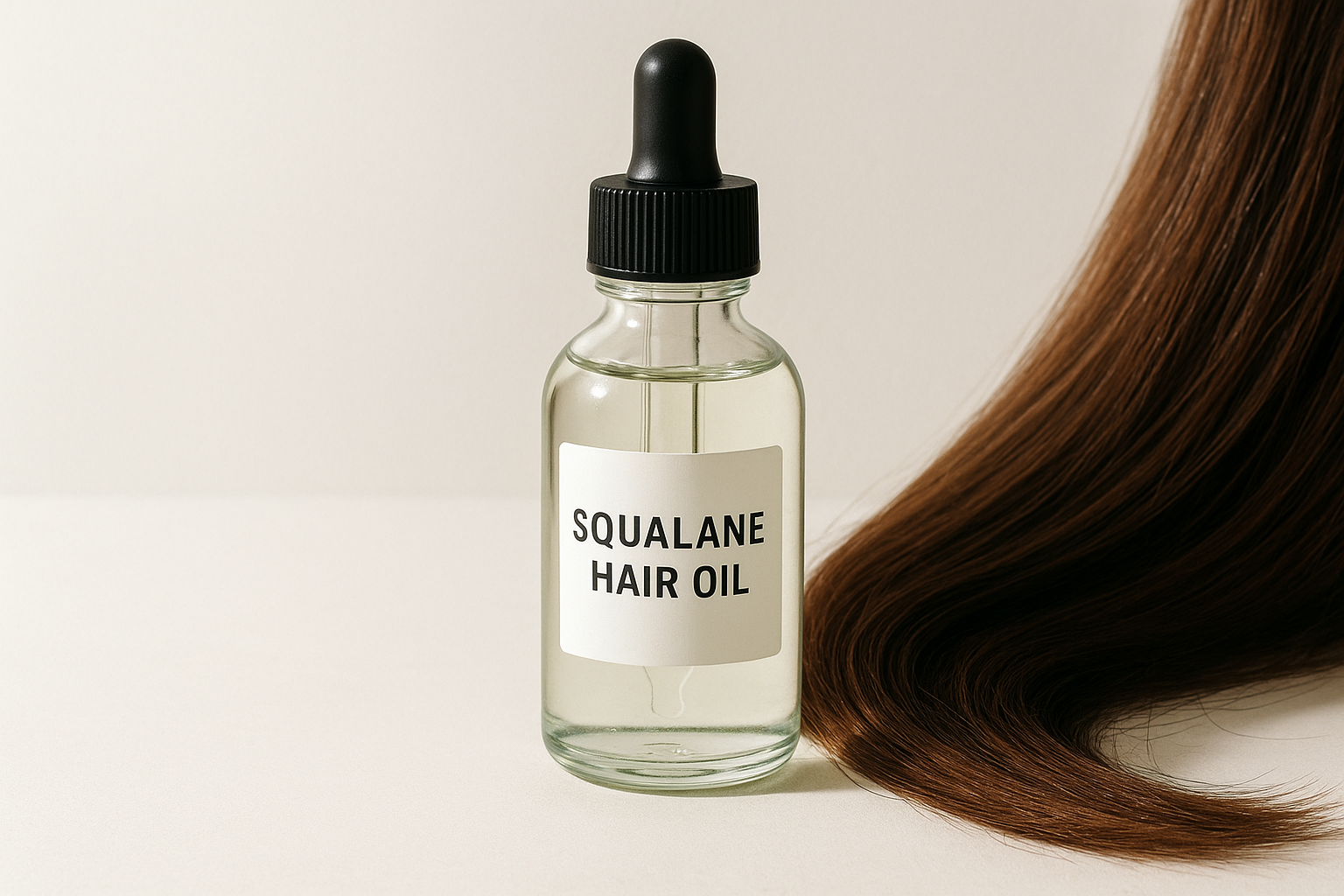
Squalane hair oil represents a modern alternative to traditional plant oils when you need the lightest possible moisture delivery for your dry ends. This biomimetic lipid closely matches your skin's natural squalene, though the hair care version is hydrogenated for stability and shelf life. Your ends receive intensive shine and smoothness without any of the weight, stickiness, or residue that even lightweight plant oils can leave behind, making squalane particularly valuable when you have very fine hair or oily roots that make traditional oils impractical.
Why it gives lightweight shine and smoothness
Traditional oils create shine by sitting on your hair's surface and reflecting light, but they inevitably add some weight or coating that you can feel when you run your fingers through your hair. Squalane's molecular structure allows it to spread incredibly thin across your cuticle layer, creating that glossy finish without depositing enough product to affect your hair's texture or movement. The fast absorption rate means your ends look conditioned within minutes rather than staying slick or greasy for hours.
This oil also provides a protective barrier that reduces friction between your hair and heat styling tools without creating buildup. The stability of squalane means it doesn't break down or oxidize when exposed to heat, maintaining its smoothing properties throughout your styling routine.
Squalane delivers professional-level shine and smoothness that makes your ends look freshly styled without adding the texture-altering weight that traditional oils create.
Best for
Squalane works exceptionally well if you have fine or thin hair that looks limp when you use heavier oils. You'll see strong results when your ends need smoothing but your hair type can't handle rich treatments. This oil also suits you if you have combination hair where your scalp produces oil quickly but your ends stay dry, since you can target just the damaged areas without affecting your roots.
How to use (heat styling and flyaways)
Apply 1-2 drops to your damp ends before blow-drying or flat ironing, working the oil through evenly for heat protection that doesn't interfere with your styling. For finished looks, use a single drop on your dry ends to smooth flyaways and add final polish without disrupting your style. The oil absorbs so quickly you can apply it immediately before heading out without waiting for it to dry down.
Price range and how to pick a formula
Squalane hair oil costs $15-$35 for a 1-ounce bottle, with plant-derived versions from sugarcane or olives typically priced higher than synthetic options. Both work effectively, though some users prefer plant-based squalane for sustainability reasons. Look for formulas that list squalane as the primary ingredient, or choose blends that combine it with vitamins or heat protectants for added benefits.
11. Silicone-based finishing serum with oils
Silicone-based finishing serums combine instant cosmetic smoothing with oil-based nourishment, creating a hybrid product that delivers visible results the moment you apply it. These formulas use dimethicone or cyclopentasiloxane as base ingredients that coat your dry ends with a light-reflecting film, while added oils like argan or jojoba provide actual moisture and conditioning benefits. Your ends look polished and smooth immediately, making these serums particularly valuable when you need quick fixes before events or when styling time is limited.
Why it makes ends look smoother fast
Silicone molecules create a uniform coating over your damaged cuticle that fills in rough spots and gaps instantly, unlike pure oils that need time to penetrate and condition. This surface treatment reflects light evenly, giving you the glossy, smooth appearance of healthy hair even when underlying damage still exists. The added oils in these formulas provide some conditioning benefits that pure silicone products lack, though the primary effect remains cosmetic rather than deeply reparative.
Silicone serums deliver the fastest visible improvement to rough, frizzy ends because they physically smooth your hair's surface rather than waiting for absorption.
Best for
These serums work best when you need immediate smoothness for styling or special occasions rather than long-term repair. You'll see strong results if you have frizzy, flyaway ends that resist other smoothing products. Silicone formulas also suit you when you need heat protection combined with finishing shine, or when pure oils make your fine hair look greasy.
How to use (damp vs dry hair and dosage)
Apply one pump to damp ends before blow-drying for heat protection and smoothing that lasts through styling. For finished looks, use half a pump on dry ends to add final polish and tame flyaways. Start with less product than you think you need, since silicone serums spread easily and using too much creates buildup that looks greasy.
Price range and ingredient callouts to check
Silicone finishing serums cost $12-$40 for 1-3 ounce bottles depending on brand positioning and added ingredients. Look for dimethicone or cyclopentasiloxane listed first, followed by conditioning oils like argan, jojoba, or coconut. Avoid formulas where silicone is the only ingredient, since the oil content provides actual conditioning benefits beyond just surface coating.
12. Bonding repair hair oil with heat protection
Bonding repair oils represent the most advanced category of treatments when chemical processing or heat damage has severely compromised your ends. These formulas contain specialized ingredients like bis-aminopropyl diglycol dimaleate or maleic acid that actually reconnect broken disulfide bonds within your hair's protein structure, addressing damage at a molecular level that regular oils can't reach. Your ends receive both immediate smoothness from the oil component and gradual structural repair from the bonding technology, making these products valuable when standard conditioning treatments no longer deliver noticeable improvement.
Why it helps when bleach, color, or heat dries ends out
Chemical treatments like bleach and permanent color break apart the sulfur bonds that hold your hair's protein structure together, creating permanent damage that weakens your ends and makes them prone to splitting and breakage. Bonding oils contain small molecules that penetrate deeply to form new connections between these severed bonds, partially restoring the structural integrity that processing destroyed. The added heat protectants, typically silicones or plant-derived polymers, create a barrier that prevents your flat iron or blow dryer from causing additional bond breakage while you style.
Bonding technology addresses the internal protein damage that makes chemically processed ends brittle, while the oil component smooths the rough surface texture that damage creates.
Best for
These oils work best if you have heavily bleached, highlighted, or chemically straightened hair where your ends feel weak and snap easily. You'll see strong results when heat styling has become necessary for your look but continues making your damage worse. Bonding oils also suit you if you've tried traditional oils without success because your damage extends beyond surface dryness into actual structural weakness that requires protein repair.
How to use (before styling and as a finisher)
Apply 2-3 drops to your damp ends before heat styling, working the product through evenly to activate both the bonding treatment and heat protection. This application timing allows the bonding molecules to penetrate while wet, then lock in place as your hair dries. After styling, use one drop as a finishing serum on dry ends to add shine and smooth any remaining frizz without disrupting your finished look.
Price range and what "bonding" can and can't do
Bonding repair oils cost $25-$50 for 1-3 ounce bottles due to the specialized ingredients and research required to develop effective formulas. These products strengthen damaged hair and prevent further breakage, but they cannot reverse splitting or restore dead ends to their original state. Trimming remains necessary for severely split ends, though bonding oils help you grow out damage with less frequent cuts.
What to do next
Finding the best hair oil for dry ends requires matching your specific hair type and damage level with the right formula. You've seen twelve proven options that range from lightweight grapeseed oil for fine hair to intensive bonding treatments for severely damaged ends. Each oil addresses different concerns, whether you need quick smoothing, deep repair, or protection against future damage.
Start by identifying your primary issue: Is your damage surface-level dryness that needs daily moisture, or structural weakness from chemical processing that requires bonding technology? Your answer determines which oil category delivers the fastest results. Remember that application method matters just as much as product choice. Focus oil only on your ends, start with minimal amounts, and adjust based on how your hair responds.
Ready to transform your dry, damaged ends? Browse our professional-grade hair care collection to find high-performance treatments designed to deliver visible results for every hair type and concern.
✨ Shop the Look at Beautifully Within
Loved this guide? Discover our hand-picked picks that pair perfectly with your routine:
- 👉 Advanced Anti-Aging Night Renewal Cream — Moisturizer
- 👉 Hemp Oil & Aloe Vera Deep Moisture Body Lotion — Moisturizer
- 👉 Daily Nourishing Hand & Body Moisturiser — Body Moisturizer
- 👉 Blueberry Radiance Skincare Collection — Moisturizer
New customer? Get 15% off orders $50+ with code WITHIN15 — plus free shipping over $75.
0 comments