

You're standing in front of two bottles, one labeled "Eau de Parfum," the other "Eau de Toilette." They might even be from the same fragrance line. So why is one nearly twice the price? The difference between perfume and eau de toilette comes down to a few key factors that directly affect how a scent performs on your skin and how much you'll spend to wear it.
Understanding these distinctions matters more than most people realize. A fragrance that fades within an hour isn't just disappointing, it's money wasted. On the flip side, a heavy concentration might overwhelm when something lighter would've been the better call. Choosing the right type starts with knowing what actually separates one from the other, beyond the label.
At Beautifully Within, fragrance is a core part of how we approach beauty and self-care. We believe the right scent can shift your entire mood, which is why we help our customers make informed choices rather than expensive guesses. In this article, you'll get a clear breakdown of fragrance oil concentrations, how long each type lasts, what drives the price difference, and how to pick the one that fits your lifestyle and budget.
Why the difference matters when buying fragrance
When you shop for fragrance, you're not just picking a scent. You're deciding how long it will stay with you, how much product you'll use each day, and how much you'll spend over time. The difference between perfume and eau de toilette affects all three of those things, which is why it's worth understanding before you hand over your money.
The real cost of getting it wrong
Buying a fragrance without understanding concentration is one of the most common ways people waste money on beauty products. If you grab an Eau de Toilette because it costs less upfront, but you're reapplying it three or four times a day just to maintain the scent, you'll burn through the bottle faster than expected. Over a few months, you may actually spend more than you would have on a higher-concentration option.
A lower price tag doesn't always mean a lower cost per wear.
How it shapes your daily routine
Your lifestyle and schedule play a bigger role in this choice than most people expect. If you're heading into a long workday or an evening event, you want a fragrance that holds up without constant touch-ups. A lighter concentration might work perfectly for a short outing or a casual daytime look, but it can fall short during a full day on your feet.
Knowing what you're buying also helps you apply fragrance correctly for your skin type. Drier skin tends to absorb fragrance faster, which means a lighter formula may disappear quickly on you. Understanding concentration levels lets you adjust how and where you apply it so you get the most out of every bottle, rather than spraying more product and still wondering why the scent fades within the hour.
What changes between perfume and eau de toilette
The difference between perfume and eau de toilette comes down to one core variable: fragrance oil concentration. Everything else, including price, longevity, and intensity, follows from that single factor. The higher the concentration of fragrance oil in the formula, the stronger and longer-lasting the scent.
Oil concentration is the core difference
Each fragrance type falls within a defined concentration range. Parfum (also called Extrait de Parfum) sits at the top, while Eau de Toilette lands in the middle tier. Here's a quick look at where each one falls:
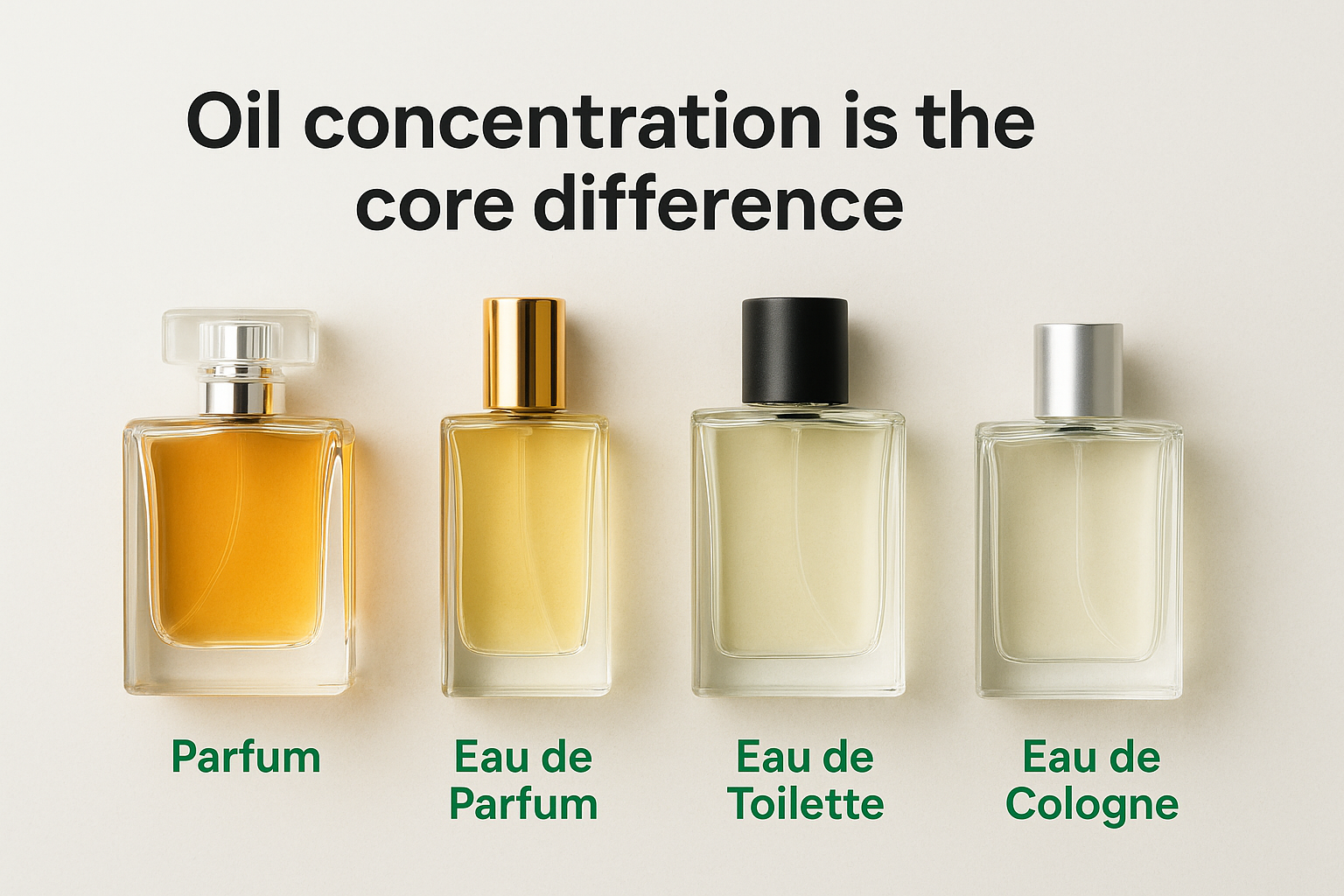
| Type | Fragrance Oil Concentration |
|---|---|
| Parfum (Extrait) | 20–40% |
| Eau de Parfum | 15–20% |
| Eau de Toilette | 5–15% |
| Eau de Cologne | 2–4% |
The label on your bottle tells you the concentration tier, not the overall quality of the scent.
What that means for the scent character
Higher concentrations tend to produce deeper, richer dry-downs because more fragrance oil interacts with your skin chemistry over time. You'll notice more of the base notes, the warm and lingering parts of a fragrance, with a Parfum or Eau de Parfum.
Eau de Toilette often emphasizes the top notes more heavily, meaning the initial spray smells bright and fresh but fades faster. Neither is inherently better. They simply behave differently on your skin and suit different settings and preferences.
How long they last and what affects wear time
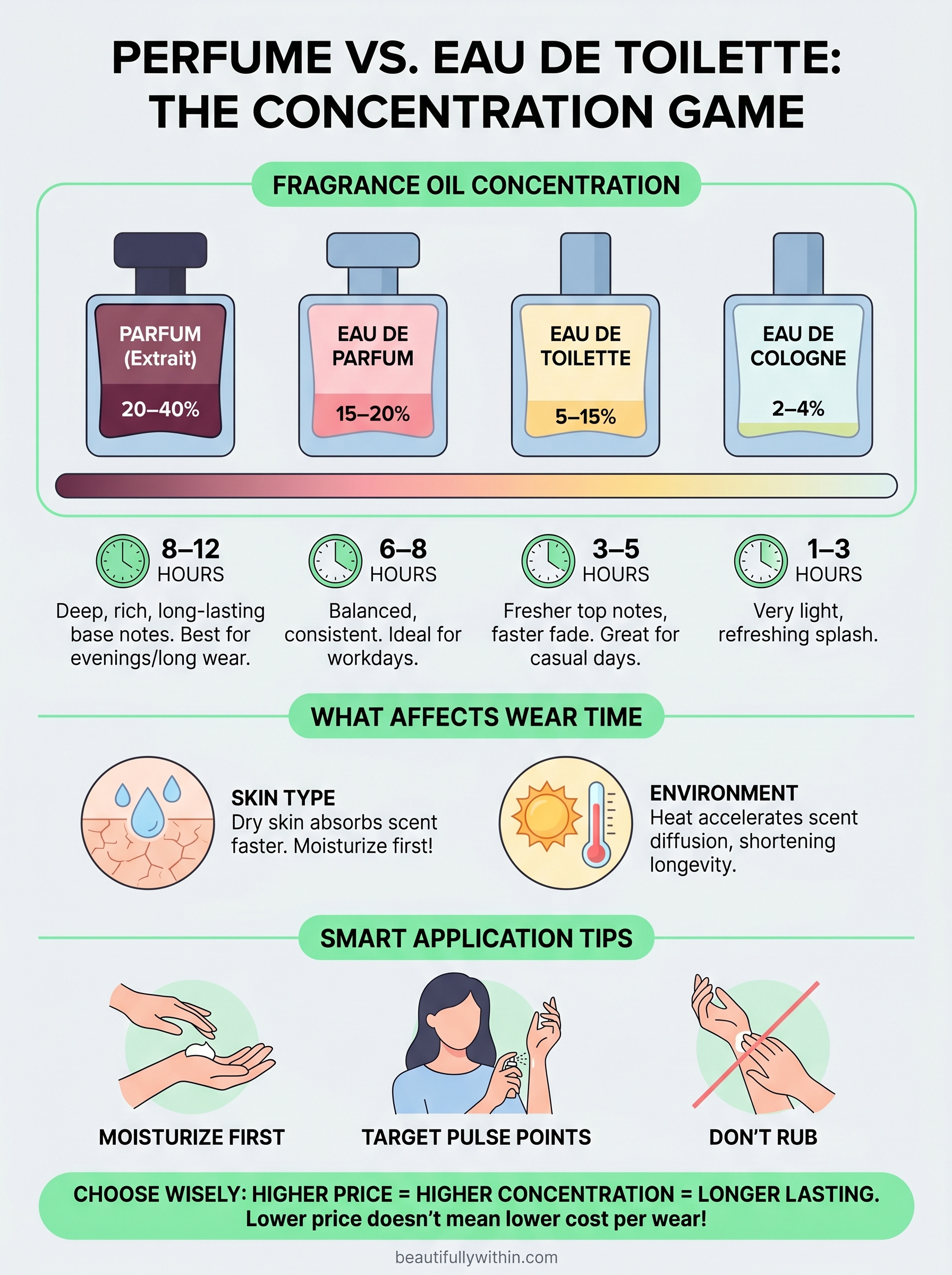
Wear time is where the difference between perfume and eau de toilette becomes most noticeable in your daily life. Parfum can last 8 to 12 hours on skin, Eau de Parfum typically runs 6 to 8 hours, and Eau de Toilette usually holds for 3 to 5 hours before it fades significantly. Those ranges aren't guarantees, though, because several factors influence how long any fragrance actually stays with you.
Your skin type plays a role
Dry skin absorbs fragrance faster than oily skin, which means a lighter concentration fades more quickly if your skin lacks moisture. Applying an unscented moisturizer before you spray your fragrance creates a base that helps the scent cling longer, regardless of which type you're wearing.
Hydrated skin gives the fragrance oil something to hold onto. If you skip moisturizing and apply directly to dry skin, even a high-concentration Parfum won't perform at its best.
Your skin chemistry is unique, so the same fragrance can smell and last differently on you than it does on someone else.
Heat and environment affect longevity
Warmer temperatures accelerate scent diffusion, which makes your fragrance project more strongly at first but can shorten how long it lingers overall. If you're spending time outdoors in summer heat or in a warm office, a higher concentration holds up better than a light Eau de Toilette through the end of the day.
How to choose between perfume and eau de toilette
The difference between perfume and eau de toilette isn't just technical. It's personal. The right choice depends on when and how you plan to wear the fragrance, as well as what your budget looks like across the life of a bottle.
Match the type to your use case
If you need a fragrance that holds up through a full workday or an evening out, Eau de Parfum or Parfum is worth the higher upfront cost. You'll apply less product and still get consistent scent without reaching for the bottle again halfway through the day.
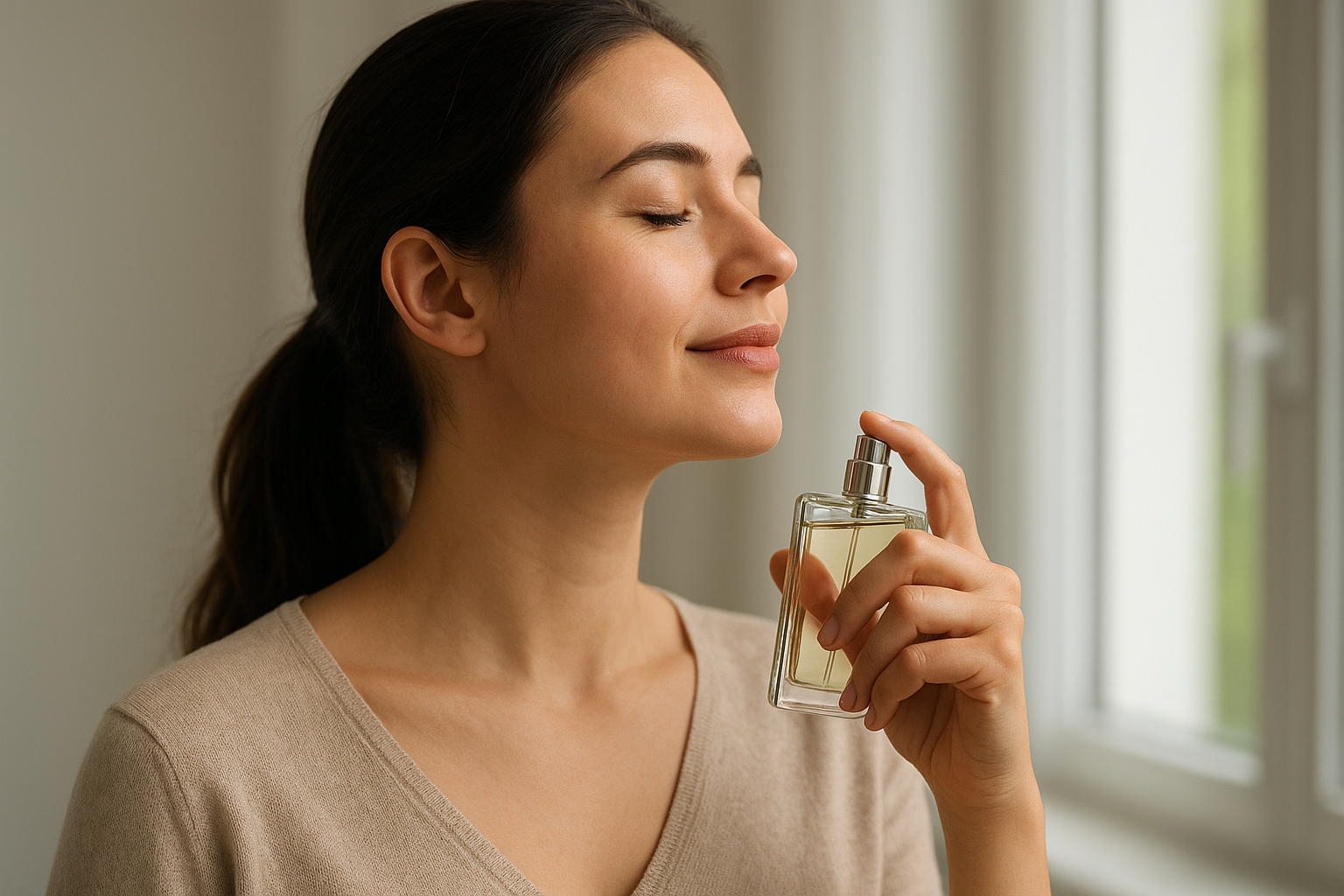
Eau de Toilette suits lighter daytime wear or casual settings well. It's also a practical pick if you like rotating scents often, since you're spending less per bottle and committing less to any single fragrance.
Saving a richer Parfum for evenings while wearing an Eau de Toilette during the day is a straightforward way to stretch your fragrance budget.
Consider your budget across the bottle's life
Price per bottle only tells part of the story. A $40 Eau de Toilette you go through in six weeks can cost more annually than a $70 Eau de Parfum that lasts four months. Before deciding, think about how often you apply and how quickly you typically run out.
Your skin type matters here too. Dry skin absorbs fragrance faster, which means a lighter formula fades quickly on you and reduces the value you get per bottle.
How to apply fragrance so it lasts longer
Knowing the difference between perfume and eau de toilette helps you buy smarter, but how you apply fragrance determines how well it actually performs on your skin. A few consistent habits extend wear time noticeably, regardless of which concentration you choose.
Apply to pulse points
Pulse points are spots where blood vessels sit close to the skin's surface, producing natural warmth that amplifies scent and helps it project. Target your wrists, neck, and inner elbows for the best results. Avoid rubbing your wrists together after spraying, since that friction breaks down the top notes faster and shortens how long the scent holds.
Spraying fragrance on your chest or collarbone is one of the most overlooked ways to get all-day wear from a single application.
Moisturize before you spray
Dry skin absorbs fragrance quickly because it lacks the surface moisture that helps fragrance oil bind and linger. Applying an unscented body lotion to your skin right before you spray creates a hydrating base that slows absorption and extends wear time significantly.
Layering your fragrance over a neutral moisturizer works especially well if you wear lighter concentrations like Eau de Toilette. Your skin holds the scent longer, and you get more value per bottle without needing to reapply throughout the day.
Quick recap and next steps
The difference between perfume and eau de toilette comes down to fragrance oil concentration, which drives everything from how long the scent lasts to what you'll pay per bottle. Parfum and Eau de Parfum carry higher concentrations for stronger projection and longer wear time. Eau de Toilette sits at a lighter concentration, making it the better fit for daytime use or casual settings where a subtle, fresh scent works well.
Choosing between them gets straightforward once you match the type to your routine. Think about how many hours you need the scent to hold, your skin type, and whether you'll wear one fragrance all day or rotate between a few. Moisturizing before you spray and targeting pulse points extends wear time regardless of which concentration you choose.
Ready to find your next signature scent? Browse our fragrance collection and discover options that fit your style and budget.
✨ Shop the Look at Beautifully Within
Loved this guide? Discover our hand-picked picks that pair perfectly with your routine:
- 👉 Long-Lasting Fragrance Oil — Fresh Woody Scent — Fragrance
- 👉 Dubai Amethyst Luxury Fragrance Body Butter — Fragrance
- 👉 Amber Oud Gold Eau de Parfum — 2oz — Fragrance
- 👉 Amber Rouge Eau de Parfum — 60ml — Fragrance
New customer? Get 15% off orders $50+ with code WITHIN15 — plus free shipping over $75.
0 comments