

You've probably stood in a store (or scrolled through a product page) staring at a moisturizer, wondering whether you actually need a lotion or a butter. They both hydrate. They both smell great. So what gives? The body lotion vs body butter debate comes down to more than just preference, it's about your skin type, the season, and how your skin absorbs moisture.
These two products serve similar purposes but work in very different ways. One is lightweight and fast-absorbing. The other is rich, thick, and designed to lock in moisture for hours. Choosing the wrong one can leave your skin either greasy or still dry, neither of which is the goal. Understanding the real differences in texture, ingredients, and absorption will save you money and frustration, something we care about at Beautifully Within because we believe looking and feeling your best starts with using what actually works for you.
This article breaks down exactly how body lotion and body butter compare, what makes each one effective, and which one suits your specific skin needs. Whether you're dealing with dry patches, sensitive skin, or just want a reliable daily moisturizer, you'll walk away knowing exactly what to reach for.
Why the difference matters for your skin barrier
Your skin barrier is the outermost layer of your skin, called the stratum corneum, and it does one main job: keep moisture in and irritants out. When you apply a body moisturizer, you're not just adding hydration, you're actively supporting this protective layer. Whether you reach for a lotion or a butter changes how much support your barrier actually gets.
What your skin barrier actually does
The skin barrier is made up of skin cells and lipids (fats) that hold them together, similar to bricks and mortar. These lipids include ceramides, fatty acids, and cholesterol, and they determine how well your skin holds onto water. A strong, intact barrier keeps skin soft, smooth, and resilient. A weak or damaged barrier leads to tightness, flaking, redness, and sensitivity, all signs your skin is losing moisture faster than it can retain it.
Your barrier doesn't just need water, it needs the right fats and occlusive agents to seal that water in place.
Why product choice directly affects barrier health
Not all moisturizers work the same way on your barrier. Lotions are water-based and work by delivering quick hydration to the skin's surface, which makes them solid for daily maintenance. Butters are oil and fat-based and act as occlusive agents, meaning they form a physical layer on top of your skin to slow down water loss. This process is called transepidermal water loss (TEWL), and reducing it is a core goal of any effective moisturizing routine.
When you pick between body lotion vs body butter, you're essentially choosing how deeply and how long you want to support your skin's ability to stay hydrated. Your barrier condition, skin type, and environment all factor into which one does that job better for you.
Body lotion vs body butter: the core differences
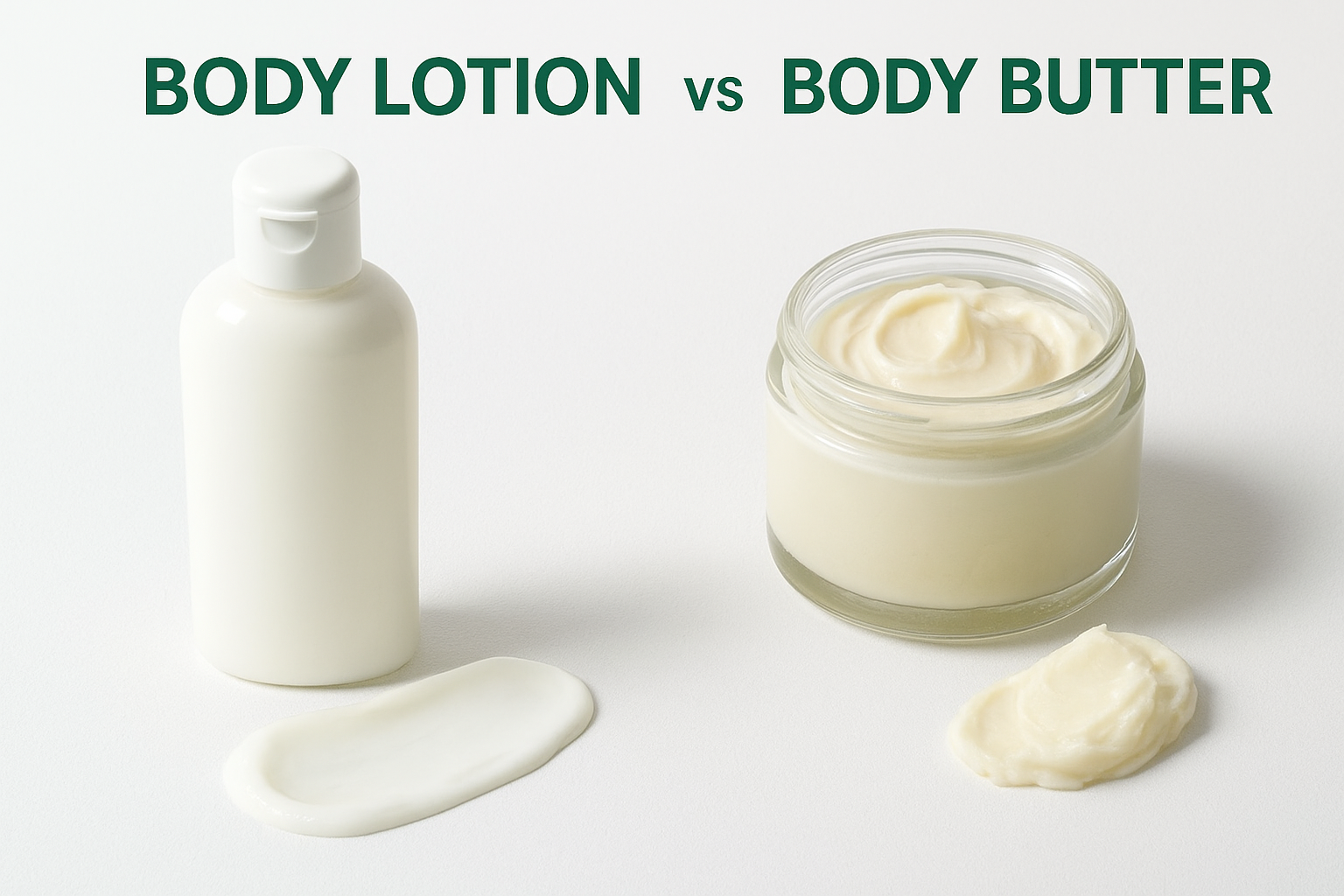
When you compare body lotion vs body butter, the biggest differences come down to water content, oil concentration, and how each product sits on your skin. Lotion is lighter; butter is denser. That density changes everything about how each one performs on a daily basis.
What sets body lotion apart
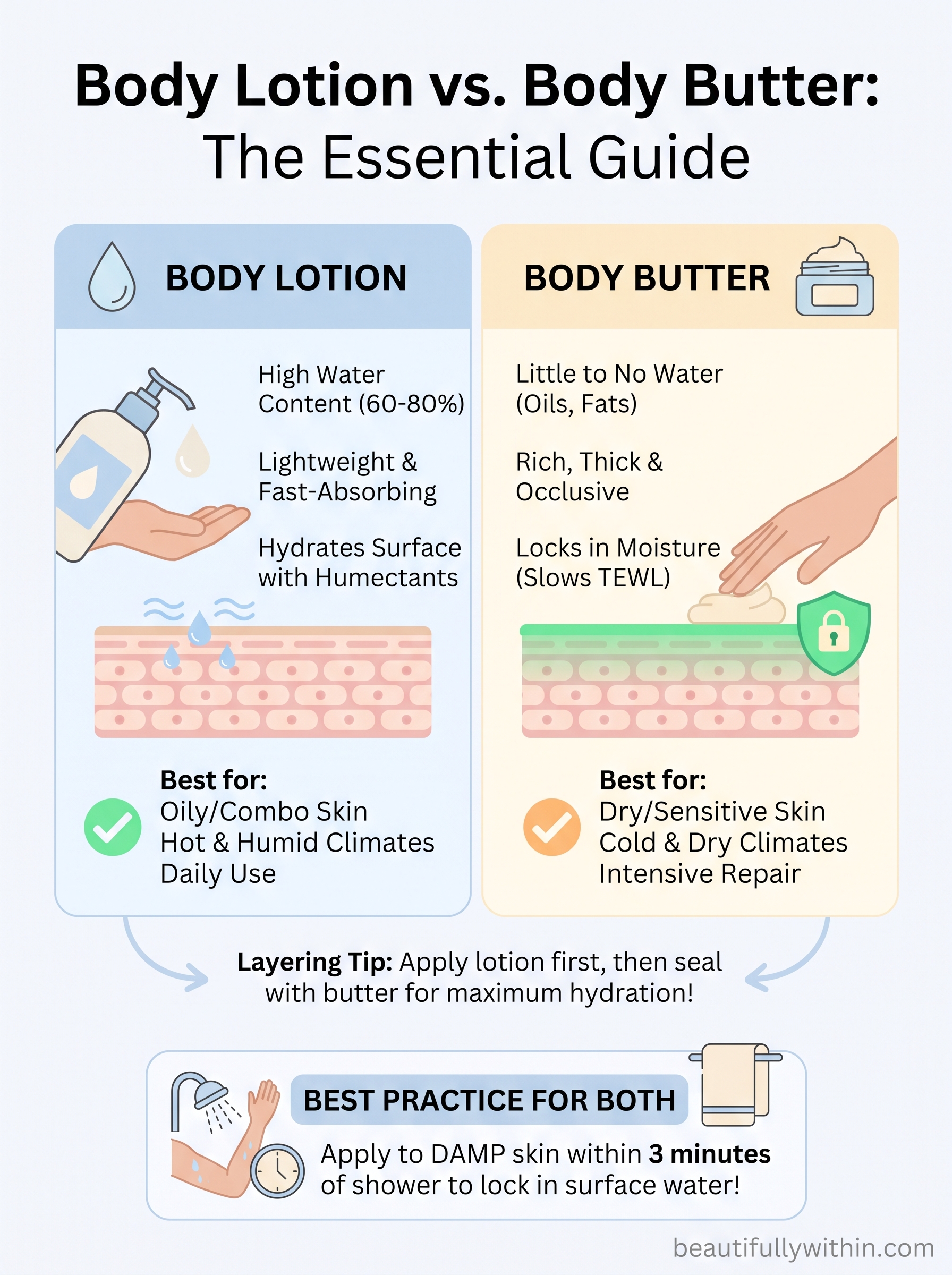
Body lotion is typically 60 to 80 percent water, which is why it feels light and absorbs quickly. It contains emollients and humectants like glycerin or hyaluronic acid that pull moisture into the skin. This makes lotion ideal for everyday use, especially when you want hydration without any heaviness or greasy residue left behind.
What sets body butter apart
Body butter contains little to no water and is built almost entirely from oils, butters, and waxes like shea, cocoa, or mango butter. These ingredients sit on top of your skin and form a physical barrier that slows moisture loss significantly. The trade-off is a richer, heavier feel that takes longer to absorb and can leave a noticeable coating on your skin.
If your skin feels tight within an hour of moisturizing, a butter's occlusive properties can seal in hydration far longer than a lotion will.
How to choose based on skin type and climate
Your skin type and the climate you live in are the two biggest factors when choosing between body lotion vs body butter. Get this right and your skin stays hydrated all day without feeling greasy or tight.
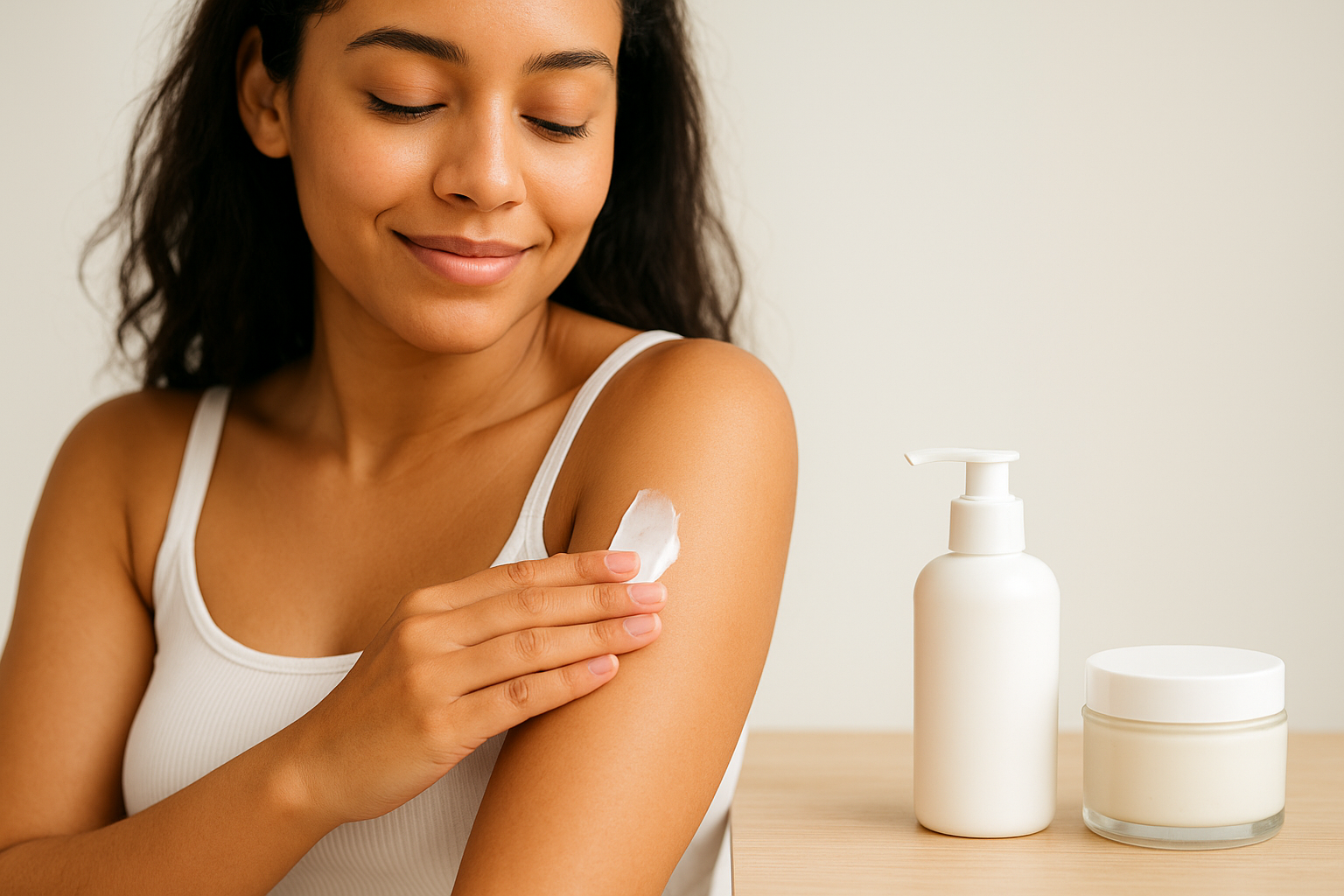
Matching the product to your skin type
Oily and combination skin does best with lotion since it hydrates without adding extra weight or clogging pores. Dry, very dry, or sensitive skin benefits more from body butter, which delivers the richer, longer-lasting moisture those skin types need.
| Skin Type | Best Choice |
|---|---|
| Oily or combination | Body lotion |
| Normal | Lotion daily, butter occasionally |
| Dry or very dry | Body butter |
| Sensitive | Body butter or fragrance-free lotion |
How your climate tips the scale
Hot, humid climates call for lotion since anything heavier feels suffocating and can leave your skin looking greasy. Cold or dry weather strips moisture fast, so body butter gives your barrier the extra protection it needs through fall and winter.
Keeping both on hand and switching seasonally is the simplest way to stay consistently moisturized year-round.
Many people stick with lotion through summer and switch to body butter when temperatures drop. Your skin's needs shift with the weather, and your moisturizer should shift too.
How to use them for best results
Applying your moisturizer correctly makes a real difference in how well it works. For both body lotion and body butter, the single most effective habit is applying right after a shower while your skin is still slightly damp. This locks in the water already sitting on your skin's surface and maximizes absorption no matter which product you choose.
Getting the most from body lotion
Apply lotion within two to three minutes of stepping out of the shower. Use a generous amount and work it in with light, circular motions. Your skin absorbs it quickly, so covering larger areas like your legs and arms first ensures nothing gets missed before it sinks in completely.
Getting the most from body butter
Body butter works best when you warm a small amount between your palms first, then press it into your skin rather than rubbing aggressively. Because it's dense, a little goes a long way. Applying it at night gives it time to fully absorb without transferring residue onto your clothes throughout the day.
Getting your application timing and technique right closes the gap between the body lotion vs body butter decision and actually seeing the results on your skin.
FAQs: layering, eczema, and other concerns
Common questions come up around layering products, managing skin conditions, and knowing when to switch between formats. Here are the most practical answers to what people ask most about body lotion vs body butter.
Can you layer lotion and butter together?
Yes, and layering works well for very dry skin. Apply your water-based lotion first, let it absorb for a minute or two, then follow with a small amount of body butter on top. This approach locks in the lotion's hydration and extends how long your skin stays moisturized.
Is body butter safe for eczema?
Body butter can genuinely help with eczema because its occlusive properties reduce transepidermal water loss, which is a key driver of flares. Choose fragrance-free, minimal-ingredient formulas with shea or cocoa butter and avoid anything with added dyes or alcohol.
Always patch test a new moisturizer on a small area of skin before applying it broadly, especially if your skin is reactive.
Does body butter clog pores on your body?
It can for some people, particularly on areas prone to congestion like the chest or upper back. If you notice breakouts, use a non-comedogenic lotion on those areas and reserve butter for drier zones like elbows, knees, and legs.
Final take
The body lotion vs body butter decision isn't complicated once you understand what each product actually does for your skin. Lotion gives you lightweight, fast-absorbing hydration that works well for daily use, oily skin, and warmer months. Body butter gives you dense, long-lasting moisture that actively supports your skin barrier when dryness, cold weather, or skin conditions like eczema push your skin past what a lotion alone can handle.
Your skin's needs will shift across seasons and life changes, so there is no single right answer that stays fixed forever. Using both strategically gives you better results than committing to just one. Start with your current skin condition and climate, then adjust as things change. A few small tweaks can make a real difference in how your skin feels day to day.
Ready to find products that actually deliver? Explore our skincare collection at Beautifully Within and find moisturizers and body treatments matched to your specific skin type and goals.
✨ Shop the Look at Beautifully Within
Loved this guide? Discover our hand-picked picks that pair perfectly with your routine:
- 👉 Daily Nourishing Hand & Body Moisturizer — Body Moisturizer
- 👉 Botanical Body Renewal Cream — Body Moisturizer
- 👉 Hemp Oil & Aloe Vera Deep Moisture Body Lotion — Moisturizer
New customer? Get 15% off orders $50+ with code WITHIN15 — plus free shipping over $75.
0 comments